
NEW YORK, July 17, 2026, 11:05 a.m. EDT
- The PHLX Semiconductor Index traded about 22% below its June 22 record close.
- An approximate calculation shows high-performance computing supplied 79% of Taiwan Semiconductor Manufacturing Co.’s NYSE:TSM five-year revenue increase.
- UBS Group AG NYSE:UBS sees hyperscaler capex growth slowing from 76% in 2026 to 6% in 2028.
U.S. chip stocks extended a sharp selloff in Friday morning trading. The PHLX Semiconductor Index was in bear-market territory and down more than 12% this week.
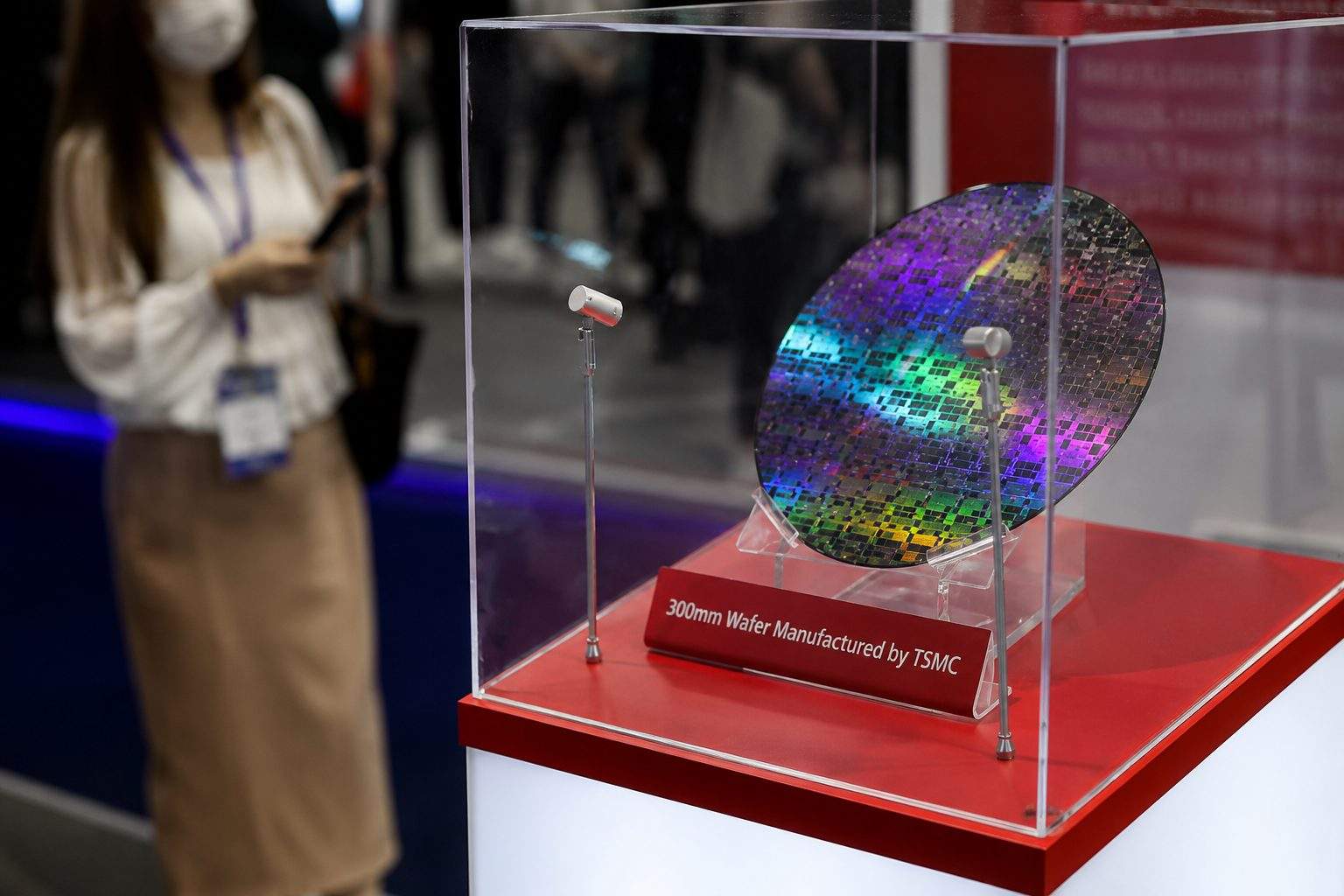
The retreat followed strong results from TSMC. That is the warning. Investors are testing whether AI spending can keep accelerating, not whether demand exists.
TSMC posted second-quarter revenue of $40.2 billion, up 33.7% in dollars. Gross margin reached 67.7%. It guided third-quarter sales to between $44.6 billion and $45.8 billion.
Chief Executive C.C. Wei said AI-related demand remained “extremely robust.” TSMC raised its 2026 dollar-revenue outlook to slightly above 40% growth. It lifted its capital budget to $60 billion-$64 billion.
Yet the revenue mix explains the market’s concern. High-performance computing supplied 66% of sales, up from 39% in 2021’s second quarter.
Using rounded company data, implied HPC revenue rose from about $5.2 billion to $26.5 billion. That business generated roughly four-fifths of TSMC’s total revenue increase.
| TSMC revenue snapshot | Q2 2021 | Q2 2026 | Approximate change |
|---|---|---|---|
| Total revenue | $13.29 billion | $40.20 billion | +202% |
| HPC share | 39% | 66% | +27 points |
| Implied HPC revenue | $5.18 billion | $26.53 billion | +412% |
| Smartphone share | 42% | 22% | -20 points |
| Implied smartphone revenue | $5.58 billion | $8.84 billion | +58% |
Approximate calculations use reported dollar revenue and rounded platform shares.
Smartphone revenue rose only about 58% over the same period. Total company revenue more than tripled.
That concentration makes semiconductor equities a second-derivative trade. Spending can remain enormous while its growth rate falls.
UBS expects hyperscaler capex to jump 76% to $673 billion this year. It forecasts 25% growth in 2027 and only 6% in 2028. The two-year deceleration is 70 percentage points.
Longer-term demand still looks powerful. McKinsey’s base case values the semiconductor market at $1.6 trillion in 2030, up from $775 billion in 2024. That implies about 12.8% annual growth. Most gains would come from leading-edge chips and high-bandwidth memory.
Those forecasts are not contradictory. They describe durable demand and much slower incremental growth. That gap now drives valuation risk.
By 10:50 a.m. EDT, TSMC’s ADRs were down 1.9% at $402.09. Nvidia Corp. NASDAQ:NVDA lost 1.6% to $203.98. Advanced Micro Devices Inc. NASDAQ:AMD fell 2.0%, while Applied Materials Inc. NASDAQ:AMAT dropped 4.4%.
Micron Technology Inc. NASDAQ:MU gained 1.0%. The VanEck Semiconductor ETF NASDAQ:SMH fell 2.2%, showing the retreat remained broad.
The sector still has two competing narratives. AI has either reset the old chip cycle, or merely stretched it. Friday’s mixed memory move did not settle the issue.
Positioning worsened the decline. A July survey found 82% of managers called semiconductors the market’s most crowded trade. None reported a short position. Chip-focused funds drew a record $10 billion through May.
Toni Meadows, BRI Wealth Management’s investment head, said valuations had “priced near-perfect demand.” The recent results were strong. The expectations were stronger. Reuters
The next test comes from Alphabet Inc. NASDAQ:GOOGL and Intel Corp. NASDAQ:INTC, both due next week. Alphabet’s capex outlook may matter more than reported chip shipments.
The risks run both ways. Fresh capex upgrades could restart the rally. Tighter financing, power limits or local data-center opposition could deepen the reset.
For investors, the decisive number is now the gap between spending growth and supplier expectations. TSMC showed demand remains strong. Friday’s tape showed strong may no longer be enough.
Related articles: NYSE:TSM