NEW YORK, July 17, 2026, 15:04 EDT — U.S. markets have opened.
- According to preliminary late-session figures, the Nasdaq declined 1.19%, while the S&P 500 lost 0.86%.
- Early data indicates July wiped out roughly 35% of the semiconductor index’s 2026 advance.
- Investors withdrew $7.18 billion from growth funds last week, while value funds saw $3 billion in inflows.
U.S. stocks declined late Friday, pressured by a selloff in semiconductor shares that weighed on multiple sectors. The Nasdaq Composite slipped 1.19%, following a 1.5% loss on Thursday. The S&P 500 declined 0.86%, and the Dow ended down 0.56%.
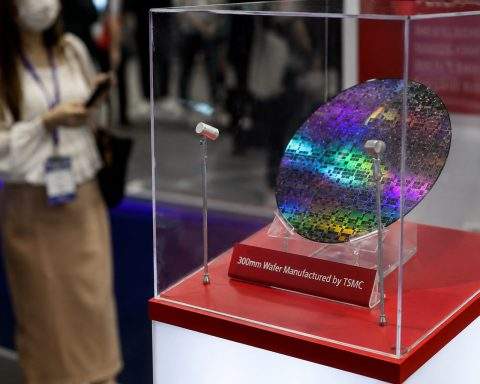
The issue for investors is not sluggish demand for chips, but rather the premium paid for almost flawless expansion. Taiwan Semiconductor Manufacturing NYSE:TSM reported revenue in dollars up 33.7% and net income up 77.4%. Yet, the company’s U.S.-listed shares slipped approximately 3%.
The Philadelphia Semiconductor Index is down 17% in July, but the index is still up 63.2% so far this year, compared to a 10% rise in the S&P 500. This data means there was a 96.6% gain before July began. Close to 35% of that 2026 increase has now been erased.
The buffer remains sizeable. Semiconductors are ahead of the S&P by 53.2 percentage points. This allows for additional multiple compression, even in the absence of an earnings downturn.
| Gauge | Move or flow | Investor signal |
|---|---|---|
| Nasdaq Composite | -1.19% intraday | Growth continues to weigh |
| S&P 500 | -0.86% intraday | Declines are more widespread |
| Semiconductor index | -17% in July; +63.2% YTD | Major pullback but leadership remains strong |
| U.S. growth funds | -$7.18 billion | Investors reduce growth allocations |
| U.S. value funds | +$3.00 billion | Value acts as a sector haven |
Fund movements indicate a shift rather than a broad withdrawal. Data from LSEG LON:LSEG Lipper revealed a $10.18 billion disparity between growth and value fund flows. Options traders continued to focus on less crowded sectors of the market, opting against an overall pullback.
Market breadth on Friday offered less reassurance, with declining stocks surpassing advancers by two-to-one on the New York Stock Exchange. On the Nasdaq, decliners led by a ratio of 1.59-to-one. Energy stood out as the only S&P sector in positive territory.
The selloff spread outside of AI stocks. Netflix NASDAQ:NFLX dropped roughly 7% following a disappointing earnings outlook. Intuitive Surgical NASDAQ:ISRG tumbled about 13% after maintaining its procedure forecast and noting some insurance-driven delays.
TSMC reported robust operating results as demand remained high. Second-quarter revenue totaled $40.2 billion, with advanced nodes contributing 77% of wafer revenue. The company projected third-quarter revenue between $44.6 billion and $45.8 billion. Results are strong, but shares traded lower.
Investors are focusing on the longer-term outlook. UBS Group NYSE:UBS projects that hyperscaler capital-expenditure growth will decline from 76% this year to 25% in 2027, with growth expected at just 6% in 2028. The trajectory is seen as more significant than current spending volumes.
“Valuations in semiconductor stocks had priced near-perfect demand,” said Toni Meadows, BRI Wealth Management’s investment chief. The decline has been exacerbated by leverage. On Friday morning, a triple-leveraged semiconductor fund traded 57% under its June peak. Reuters
Wider earnings reports remain strong. Ninety percent of the initial 49 S&P 500 companies exceeded expectations. Analysts are forecasting a 26% rise in second-quarter profits, compared to 19.2% on April 1. Strong performance alone is not sufficient anymore.
Key earnings reports are set for next week. Alphabet NASDAQ:GOOGL will release results on Wednesday, highlighting investment plans. Intel NASDAQ:INTC and Texas Instruments NASDAQ:TXN will report soon after. Over 80 S&P 500 companies are scheduled to announce earnings. Investors are looking for confirmation that AI spending continues to deliver returns.
Risks: An intensified oil surge linked to Iran may trigger renewed concerns about inflation and interest rates, potentially leading to a wider selloff. On the other hand, strong guidance from hyperscalers could spark a rapid chip recovery following the current leveraged pullback.
Related articles: NYSE:TSM