
TOKYO, August 15, 2026, 23:23 JST — Cash markets worldwide have shut for the weekend.
- The yen closed Friday at 159.37 against the dollar, only 0.63 yen away from the level that triggers market intervention.
- Markets are assigning a 76%–80% probability to a rate hike by the Bank of Japan in September.
- The policy test has global implications, as rate differentials continue to encourage carry trades worldwide.
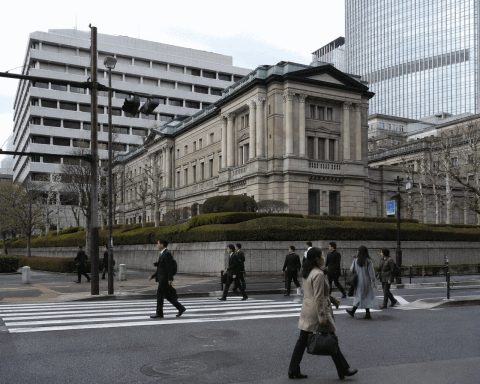
The Bank of Japan’s September meeting is shaping up as a key test for global carry trades, with the yen just 0.63 yen below the 160 mark. The currency rose a modest 0.08% on Friday but still recorded a weekly decline of around 1%, even after an unusual joint intervention in July.
This is significant as the policy gap is still wide. The BOJ’s interest rate is 1%, whereas the US 10-year Treasury closed at 4.688%. Elevated dollar yields are still incentivising investors to borrow yen and invest in assets with higher returns.
| Market | Friday close | Session move |
|---|---|---|
| USD/JPY | 159.37 | Yen up 0.08% |
| Dollar index | 99.67 | down 0.25% |
| US 10-year yield | 4.688% | rises 4.72 basis points |
| MSCI world equities | 1,160.01 | off 0.07% |
| S&P 500 | 7,785.76 | loses 0.17% |
Friday’s trading across different asset classes showed no significant signs of widespread selling. Global stocks eased by 0.07%, and US Treasury yields increased as an initial rally lost momentum. The yen made only slight gains. The moves imply that investors anticipate policy measures, but have not reversed the carry trade.
Market expectations shifted significantly. Investors currently see a 76%–80% likelihood of a Bank of Japan rate hike in September, up from 24% on July 30. In comparison, traders assign just a 31% probability to the Federal Reserve raising rates next month.
| Policy measure | Latest reading | Investor implication |
|---|---|---|
| BOJ policy rate | 1.00% | Matches highest level in 31 years, policy still loose |
| September BOJ hike probability | 76%–80% | Market broadly expects tightening |
| September Fed hike probability | 31% | US-Japan rate difference could narrow slightly |
| BOJ meeting | September 17–18 | First test of market expectations |
| Yen intervention reference | About 160 per dollar | Friday’s close trails by just 0.63 yen |
Three sources with knowledge of BOJ deliberations told Reuters a near-term rate hike is now being considered, with the central bank potentially moving at a faster clip afterwards. The five-year Japanese government bond yield hit a new high following the news.
Evidence for inflation is building. Expectations from households, businesses, and economists are near or above 2%. In July, wholesale inflation remained close to its highest level in three years. BOJ board member Naoki Tamura said in June that core inflation stood at 2% and that price risks were skewed to the upside.
| Analyst or institution | Recommendation or base case | Key level |
|---|---|---|
| Mizuho Financial Group NYSE:MFG | Forecasts next BOJ rate increase for September | Terminal rate at 1.75% |
| Sumitomo Mitsui Trust Group (TYO:8309) | Views rate rise as immediate solution | Prefers policy action instead of intervention |
| Bank of America NYSE:BAC | Fund managers believe further tightening required | 2.00% rate needed for yen stability |
| OCBC SGX:O39 | Says hawkish BOJ position must be confirmed | Postponement could spur more yen declines |
Analysts agree on the direction, but vary on the magnitude. Mizuho has lifted its terminal-rate estimate to 1.75% from 1.50%. Bank of America’s fund manager survey signals a 2% peak, implying four additional quarter-point hikes from now.
OCBC currency strategist Moh Siong Sim noted the market requires “validation” from a more hawkish Bank of Japan. “If they don’t do it, the yen will weaken,” he said. This highlights the asymmetry: a rate hike is widely anticipated, but a postponement could cause a significant surprise. Reuters
Intervention provides an additional safeguard. Mitsuhiro Furusawa, a former senior currency official, stated that coordinated action could take place “at any time.” He maintained that intervention serves mainly to gain time, adding that he believes the BOJ’s target rate is likely around 1.5%–1.75%. Reuters interview with Furusawa
A likely rate hike in September could strengthen the yen and challenge leveraged trades financed in Japan. This move could push up Japanese yields, reducing domestic investors’ incentive to buy foreign bonds. The initial impact would curb global risk appetite, while the latter could raise borrowing costs internationally.
Risks: The BOJ’s ability to move swiftly may be constrained if Japan’s economy remains fragile. Increased geopolitical tensions could lift the dollar and drive up import inflation. On the other hand, softer US data could reduce the rate differential even if Japan refrains from aggressive tightening.
The coming week opens with narrow trading ranges and significant policy pressure. With the yen at 159.37, the currency nears the 160 mark, putting pressure on officials. September expectations are already reflected in the market. How policymakers communicate could prove just as important as any initial rate adjustment.
Related articles: Stock Market