
WARSAW, August 17, 2026, 01:23 CEST — With U.S. cash markets shut, index futures have started trading for Monday’s session.
- U.S. stock index futures were little changed at the open, following the S&P 500’s third consecutive weekly advance.
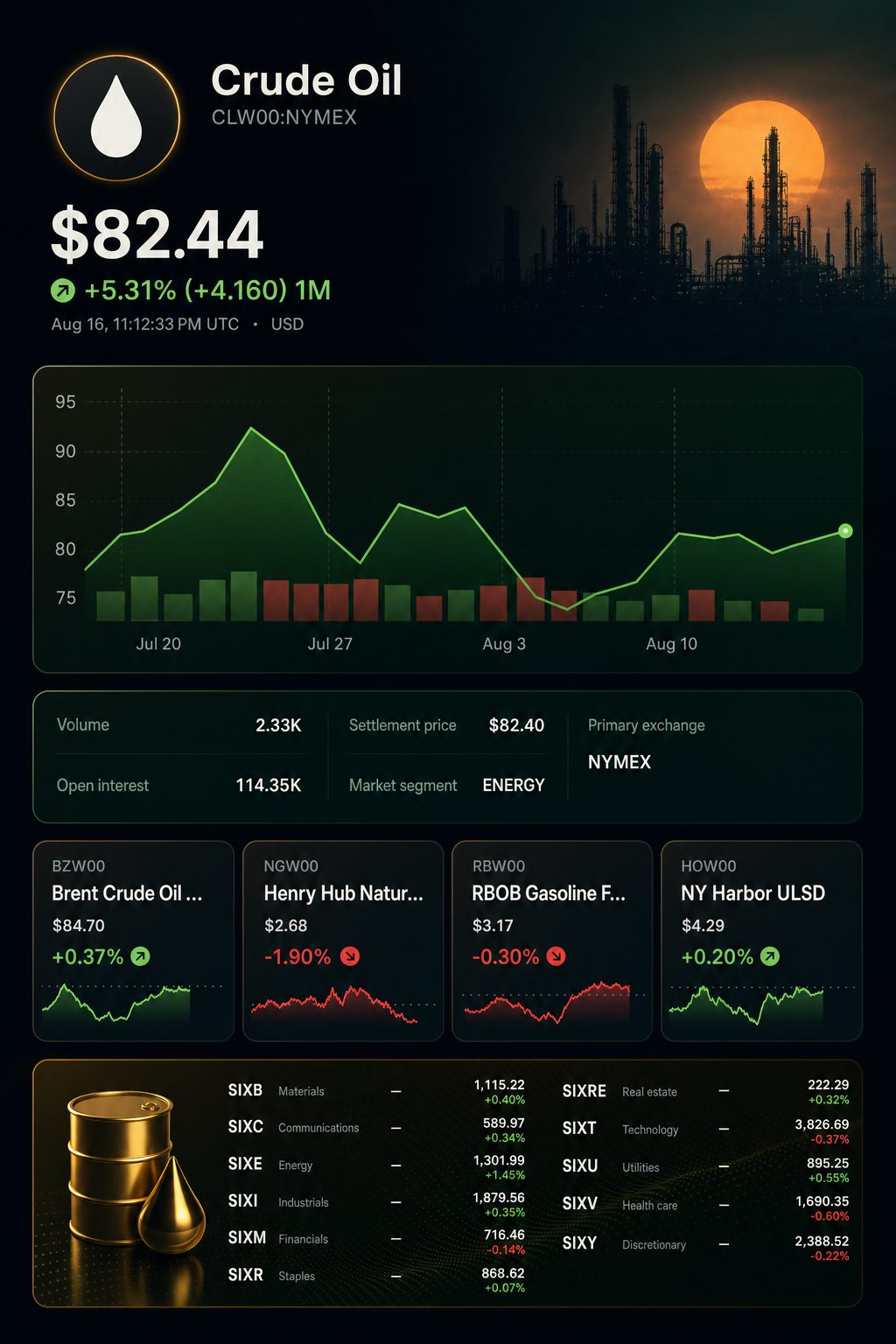
- Brent at $88.52 sustains inflation concerns while Hormuz traffic continues to face disruptions.
- The Empire State survey kicks off Monday, beginning a week focused on housing data, Fed minutes, and retail earnings reports.
U.S. stock futures showed little movement at the Sunday evening open, with Monday’s initial focus shifting to oil markets instead of stocks. Shortly after 6 p.m. ET, Dow and S&P 500 futures were steady, while Nasdaq-100 futures rose approximately 0.1%.
| Sunday futures snapshot | Move | Investor signal |
|---|---|---|
| Dow futures | Unchanged | No significant risk shift |
| S&P 500 futures | Unchanged | High valuation remains |
| Nasdaq-100 futures | +0.1% | Mild preference for growth shares |
| Brent crude, Friday settle | $88.52; +1.67% | Concerns for inflation and profit margins |
The quiet is significant. The S&P 500 dipped just 0.17% on Friday, closing at 7,785.76. Its forward price-to-earnings ratio is now back around 20, and the yield on the 10-year Treasury remains close to 4.7%. This combination offers limited cushion should oil drive an unexpected rise in inflation.
| Friday close | Level | Daily move | Weekly move |
|---|---|---|---|
| S&P 500 | 7,785.76 | -0.17% | +0.4% |
| Nasdaq Composite | 26,729.16 | -0.28% | +0.1% |
| Dow Jones | 53,732.41 | -0.20% | -0.6% |
| S&P 500 breadth | 1.1 advancers per decliner | Advancers outpace decliners | — |
The pullback on Friday was modest rather than chaotic. Advancing stocks outnumbered decliners by a ratio of 1.1 to one. Turnover totaled just 9.6 billion shares, compared with the 20-session average of 17.4 billion. The lighter trading undercut the negative signal from the index’s decline.
However, consumer sentiment weakened. Retail sales in July slipped by 0.6%, marking the first monthly fall in nine months. Core sales decreased 0.4%, falling short of expectations for a 0.3% rise. Goldman Sachs economists lowered their growth projection for the third quarter by 0.5 percentage points to 2.2%.
Sal Guatieri at BMO Capital Markets NYSE:BMO stated that the slowdown, softer labor market and muted core inflation increase the likelihood that the Fed will hold steady. After the data, futures implied about a 69% probability the Fed will keep rates unchanged in September.
The Empire State manufacturing index is due at 8:30 a.m. ET on Monday. The New York Fed’s survey of labor-market expectations comes out at 11 a.m. Both releases are lighter than Tuesday’s slate of housing and production data, but they will offer the initial signal for growth this week.
| Date and time, ET | Event | Primary market channel |
|---|---|---|
| Mon., 8:30 a.m. | Empire State manufacturing index | Growth, cyclicals |
| Tue., 8:30–9:15 a.m. | Import price data, housing starts, industrial output | Yields, dollar, homebuilder stocks |
| Wed., 2:00 p.m. | FOMC minutes from July 28–29 | Outlook for September rates |
| Thu., 8:30 a.m. | Weekly jobless claims, Philadelphia Fed index | Labor market, growth prospects |
The Fed’s meeting minutes reflect past conditions, preceding the soft July payroll and retail sales figures. As a result, investors should focus on how officials weighed inflation risks rather than interpret the release as up-to-date policy guidance. The minutes will be published Wednesday at 2 p.m. ET.
Company earnings provide another perspective. Fabrinet NYSE:FN will host its fiscal fourth-quarter earnings call on Monday at 5 p.m. ET, giving insights into demand for optical hardware. Home Depot NYSE:HD is scheduled to report at 9 a.m. ET Tuesday, as investors watch housing-related spending trends after a 0.4% increase in first-quarter U.S. comparable sales.
| Analyst recommendations and positioning signals | Verified view | Practical investor implication |
|---|---|---|
| J.P. Morgan NYSE:JPM | S&P 500 target for year-end lifted to 8,000 | Maintain core equity positions; maximum additional gain after Friday seen at 2.8% |
| Sal Guatieri, BMO Capital Markets | Soft consumer spending and job data support Fed waiting | Steer clear of bets on a near-term rate increase |
| Thomas Martin, GLOBALT Investments | Strong AI forecasts may outweigh positive earnings surprises | Stick to disciplined valuations in chip sector investments |
J.P. Morgan increased its S&P 500 year-end forecast to 8,000, pointing to robust earnings and rising optimism over AI benefits. The target is roughly 2.8% higher than Friday’s close. With a forward multiple of 20, the outlook hinges on continued profit growth rather than valuation increases.
That limitation was evident on Friday. Applied Materials NASDAQ:AMAT dropped 5.1% even after delivering a strong outlook. Broadcom NASDAQ:AVGO slid 5.9%, and Intel NASDAQ:INTC slipped 2%. Thomas Martin of GLOBALT noted that elevated expectations prompted a “beat and raise” sell-off.
Oil remains the main concern. Tankers have yet to return to normal activity in Hormuz, and negotiations have remained at a standstill. Brent closed at $88.52 on Friday. Nevertheless, Gulf stock markets posted gains on Sunday, indicating that local investors are separating the issue of shipping delays from general market turmoil.
Risks: Another shipping strike may push up oil prices and yields ahead of the New York open. On the other hand, lower energy costs or disappointing factory data could spur interest in duration trades. Light August volumes could intensify market swings in either direction.