
CUPERTINO, California, August 17, 2026, 01:33 PDT
- Reports point to a split launch, not a blanket iPhone 18 delay.
- iPhone generated 49.6% of Apple’s June-quarter revenue.
- Premium mix could support margins as memory costs rise.
Apple Inc. NASDAQ:AAPL is reportedly keeping its premium iPhone 18 models on a fall 2026 schedule while moving the standard model into early 2027. The distinction matters. It turns a release-date rumor into a test of pricing power and product mix.
The strategy would put higher-priced Pro models and a reported foldable device first. A standard iPhone 18 would follow in the first quarter of 2027, according to recent reports. Apple has not confirmed those dates.
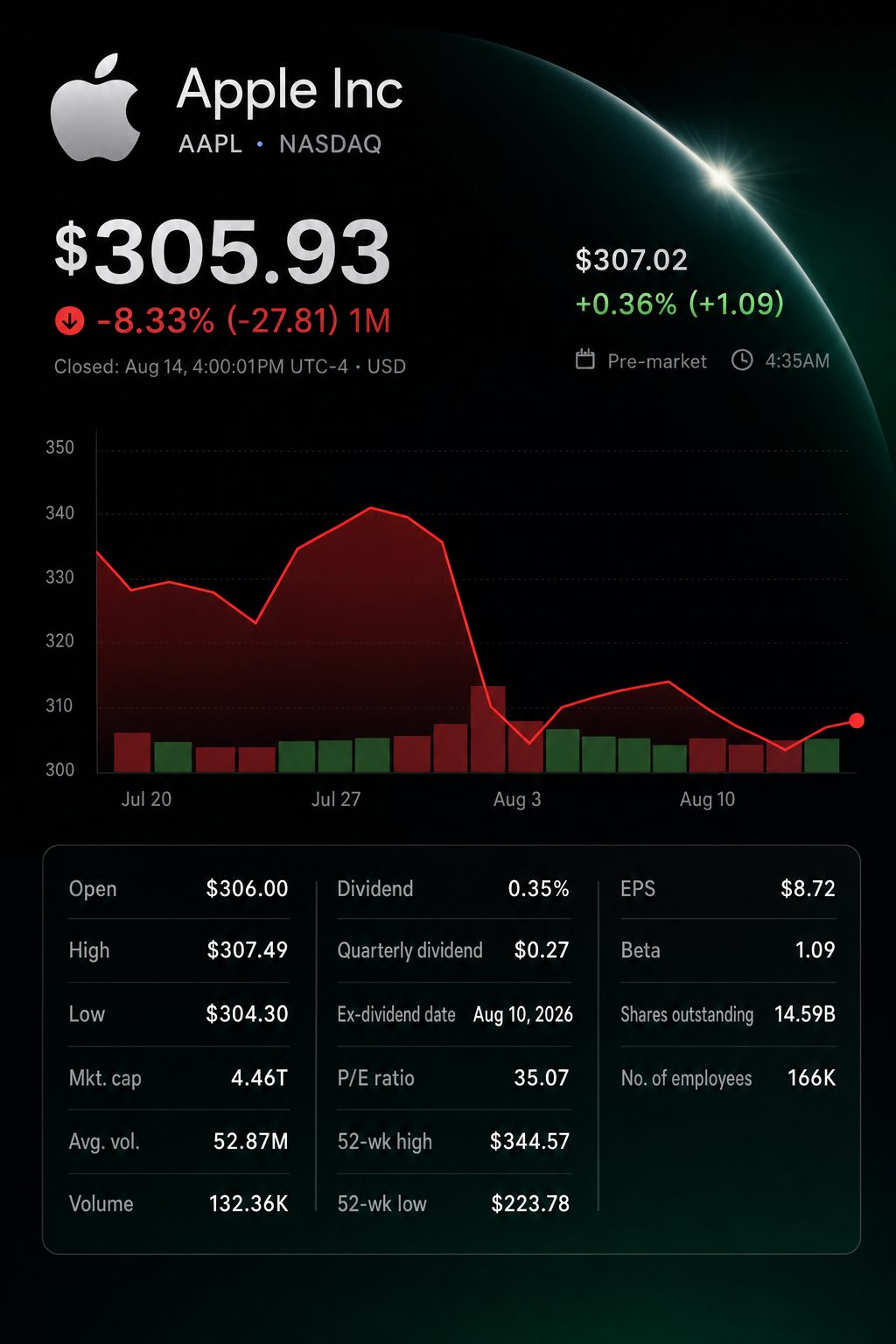
Apple shares closed Friday at $305.93, up 0.2% on the day. U.S. cash markets were closed early Monday. The stock ended the prior week below Monday’s $308.26 close after a fresh Jefferies downgrade.
| Reported model group | Reported launch window | Investor implication |
|---|---|---|
| iPhone 18 Pro and Pro Max | Fall 2026 | Premium mix remains in the holiday quarter |
| Foldable iPhone | Fall 2026 | New high-end price tier |
| Standard iPhone 18 | First quarter 2027 | Volume shifts out of the holiday launch |
| iPhone 18e and new Air | Early 2027 | Broader range arrives later |
The sequencing may reduce launch complexity during a memory and chip squeeze. Suppliers can concentrate scarce parts on devices with richer revenue per unit. It also leaves less room for a weak premium cycle.
Apple enters that test with strong demand. June-quarter revenue rose 16.4% to $109.4 billion. iPhone sales increased 21.7% to $54.3 billion.
| June-quarter category | FY2026 revenue | FY2025 revenue | Change |
|---|---|---|---|
| iPhone | $54.25 billion | $44.58 billion | +21.7% |
| Mac | $10.35 billion | $8.05 billion | +28.7% |
| iPad | $6.19 billion | $6.58 billion | -5.9% |
| Wearables, Home and Accessories | $7.88 billion | $7.40 billion | +6.5% |
| Services | $30.74 billion | $27.42 billion | +12.1% |
That strength also shows the concentration risk. iPhone represented 49.6% of total revenue and 69.0% of product revenue. A delayed standard model would therefore shift a meaningful volume driver, even if premium devices hold the fall slot.
Margins need a closer read. Product gross margin reached 40.1%, but tariff refunds added more than 2.5 percentage points. Excluding that disclosed benefit implies roughly 37.6%. That is a calculation, not a company-adjusted measure.
| Metric | June quarter FY2026 | June quarter FY2025 | Read-through |
|---|---|---|---|
| Total gross margin | 50.1% | 46.5% | Included about 2 points from refunds |
| Product gross margin | 40.1% | 34.5% | Included more than 2.5 points from refunds |
| Services gross margin | 75.6% | 75.6% | Stable year over year |
| R&D expense | $11.73 billion | $8.87 billion | +32.3% |
| Diluted EPS | $2.02 | $1.57 | +28.7% |
Chief Executive Tim Cook called it “our strongest June quarter ever.” Operating income rose 26.6% to $35.7 billion. The earnings base is firm, but the next comparison gets harder. Apple
Management guided September-quarter revenue growth to 9%–11%. That is slower than June’s 16.4% pace. Investors will now weigh near-term momentum against a reported two-stage 2026–2027 launch cycle.
Jefferies analyst Edison Lee moved to Underperform on August 10. He cut his target to $263.66 from $285.56, citing product-setback and margin concerns. The target sits 13.8% below Friday’s close.
| Firm | Recommendation | Price target | Implied move from $305.93 |
|---|---|---|---|
| Jefferies | Underperform | $263.66 | -13.8% |
| Rosenblatt | Neutral | $300 | -1.9% |
| Morgan Stanley | Overweight | $360 | +17.7% |
| Citi | Buy | $365 | +19.3% |
| HSBC | Buy | $366 | +19.6% |
| TD Cowen | Buy | $400 | +30.7% |
The target range is unusually wide. It reflects two competing views: stronger pricing and chip advances, or higher component costs and a thinner launch slate. The reported schedule supports both arguments.
The key evidence will arrive before the standard model. Investors should watch Pro demand, memory costs and product gross margin. Those signals will show whether premium mix offsets the deferred volume.
Risks: The launch timetable remains unconfirmed and may change. Supply constraints could ease, or premium demand could exceed expectations. A weaker foldable debut, higher memory prices or slower services growth would pressure the thesis.
Related articles: NASDAQ:AAPL