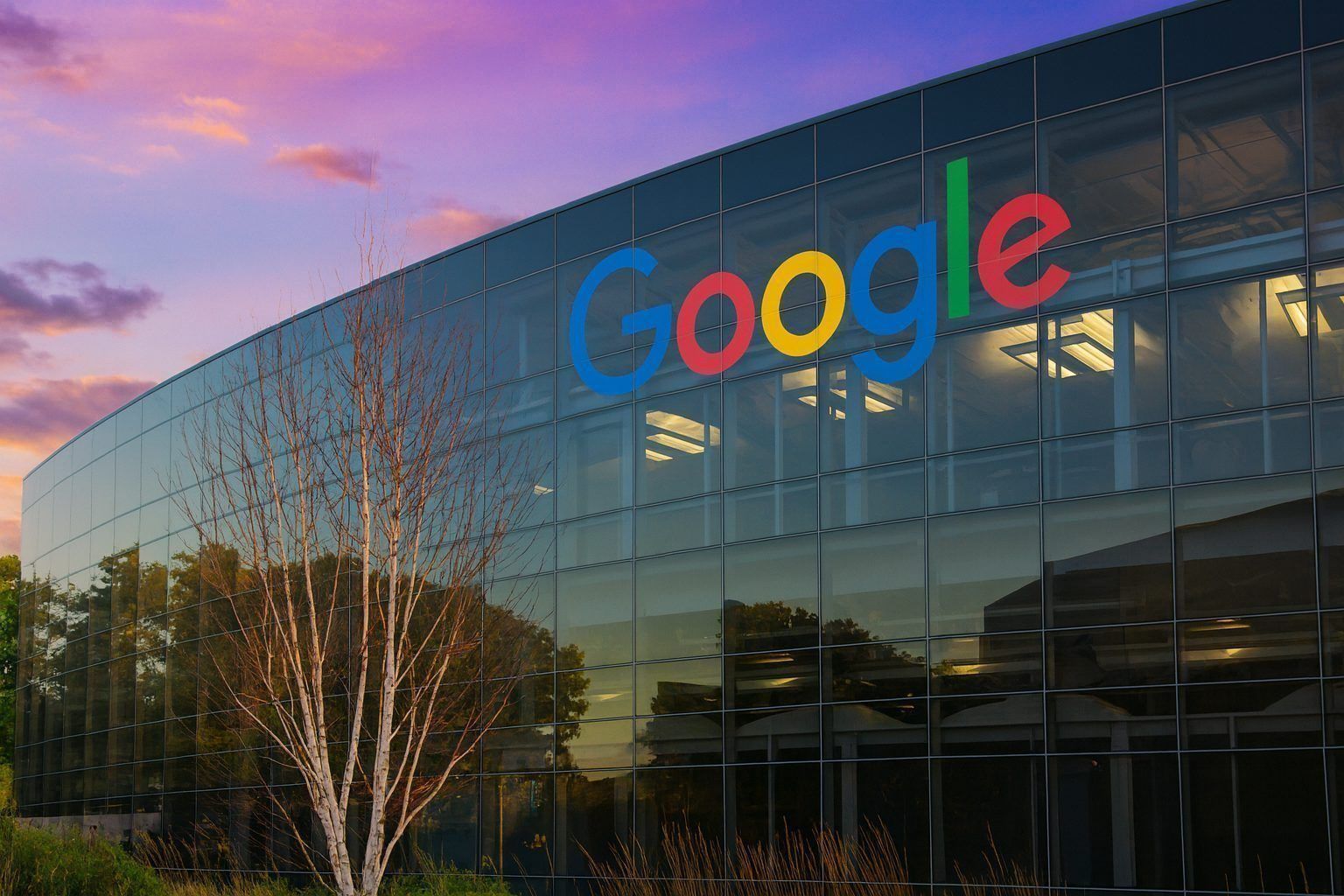
Alphabet Inc.’s Class C shares (NASDAQ: GOOG) are trading near record highs on 10 December 2025 after a spectacular AI‑driven run in 2025, even as fresh European Union investigations and massive capital spending keep risk firmly on the radar.
This article summarizes today’s price action, the latest news, and current Wall Street forecasts and long‑term scenarios for Alphabet’s Class C stock, as of 10 December 2025. It is intended for informational and Google News/Discover‑style use, not as personal investment advice.
1. GOOG Stock Snapshot on 10 December 2025
- Current price: Around $317–318 per share in midday U.S. trading. Several real‑time data providers peg Alphabet Class C at roughly $317.75 as of 10 December 2025. Appreciate Wealth
- Daily trading range (so far): Approximately $312.6–$318.7. Investing.com
- 52‑week range (Class C, GOOG): $142.66 – $328.67, with a ~61.5% gain over the past year. Investing.com
- Market capitalization: Data from CompaniesMarketCap and other global rankings place Alphabet’s overall market value at about $3.8 trillion, making it the third most valuable public company in the world as of December 2025. CompaniesMarketCap+1
- Valuation multiple: When Alphabet first crossed the $3 trillion mark in September, its stock traded at roughly 23× earnings, slightly above its 5‑year average multiple of about 22×. Reuters
Put simply, Alphabet today is an AI‑powered mega‑cap: a company with tech‑sector growth metrics but a market value more in line with the world’s largest blue‑chip giants.
2. Why Alphabet Stock Has Been Surging in 2025
2.1 Record 2025 rally and Magnificent Seven leadership
Across 2025, Alphabet has gone from “laggard” to leader of the Magnificent Seven:
- In mid‑November, Investopedia noted that Alphabet stock was up about 55% year‑to‑date, making it the best‑performing member of the Magnificent Seven, ahead of Nvidia, after a powerful AI‑driven rally. Investopedia
- Other data providers show Alphabet Class C up roughly 60–80% over the last 12 months, depending on the exact date and share class. Investing.com+1
This surge has been powered by three big narratives: AI leadership, record earnings, and a vote of confidence from Warren Buffett’s Berkshire Hathaway.
2.2 Berkshire Hathaway’s rare tech bet
In November, regulatory filings revealed that Berkshire Hathaway accumulated about $4.9–$5 billion of Alphabet stock in the third quarter of 2025—a rare major tech bet from Warren Buffett’s conglomerate. Shares of Alphabet jumped nearly 6% to a record high on the day the stake was disclosed, underscoring how powerful Buffett’s imprimatur still is for investors. Reuters+2Yahoo Finance+2
Subsequent analysis from firms such as Saxo framed Alphabet as an “AI infrastructure” champion—a company that marries huge cash generation with a long runway of AI‑ and cloud‑driven growth. Saxo Bank
2.3 AI comeback: Gemini 3 and “full‑stack” strategy
Alphabet’s AI story has been transformed over the last two years:
- Google’s Gemini 3 model was rolled out across Search and the Gemini app in November 2025 and has been praised for stronger reasoning, coding ability and multimodal performance. Investopedia+1
- Google executives reported that the Gemini app now has over 650 million monthly active users, signaling that AI is now a mainstream consumer product in Google’s ecosystem, not a side project. Investopedia
- Articles from outlets like INDmoney and PredictStreet describe Alphabet’s AI strategy as “full‑stack”—owning the chips (TPUs), the data centers, the models (Gemini), and the consumer and enterprise products that sit on top of them. Fortune+2INDmoney+2
Meanwhile, Fortune highlighted Alphabet’s custom TPU AI chips as a key reason the stock has rallied roughly 30% in the fourth quarter alone, making it one of the best performers in the S&P 500. Fortune
2.4 Cloud turns from “also‑ran” to growth engine
Once seen as a distant third in cloud behind AWS and Azure, Google Cloud is now a major growth and profit driver:
- In Q3 2025, Google Cloud revenue climbed about 34% year‑on‑year to roughly $15.2 billion, making it one of Alphabet’s fastest‑growing segments. Reuters+1
- Reuters called Cloud “one of Alphabet’s fastest‑growing businesses,” noting that years of investment in data centers, custom chips and networking gear are finally paying off. Reuters
Combined with resilient Search and YouTube advertising, Cloud has helped Alphabet simultaneously accelerate growth and expand margins, even while spending heavily on AI.
3. Today’s Biggest Headlines for Alphabet (10 December 2025)
3.1 EU opens fresh antitrust and AI content investigations
The most significant new risk for Alphabet today comes from Europe:
- The European Commission has opened an investigation into how Google uses online content to train its Gemini AI models, including whether YouTube creators and news publishers are being forced into giving up their content without fair compensation or a meaningful opt‑out. The Guardian+1
- Regulators are probing whether Google’s rules around YouTube content—where Google itself may use videos for AI training but restricts third‑party AI training—could unfairly disadvantage rivals. Benzinga
- This inquiry comes on top of existing EU antitrust cases and a broader crackdown on U.S. tech giants, which has already produced multiple multi‑billion‑euro fines for Alphabet in recent years. FinancialContent+1
For GOOG shareholders, the new EU probe doesn’t change day‑to‑day earnings immediately, but it raises the probability of new fines, licensing obligations, or product constraints around AI in Europe—one of Google’s most important markets.
3.2 Google’s 2026 AI smart glasses plan
On the opportunity side, Alphabet just signaled a fresh hardware push:
- A new report today details Google’s plans to launch AI‑powered smart glasses in 2026, in partnership with Samsung, Gentle Monster, and Warby Parker. CoinCentral
- Google is reportedly working on two versions:
- Audio‑only glasses that allow hands‑free interaction with the Gemini assistant.
- Glasses with an in‑lens display showing directions, live translation and other contextual information. CoinCentral
- The company is effectively taking a second shot at the smart‑glasses market after the failure of Google Glass in the mid‑2010s, but this time in a world where AI assistants are far more capable and consumer interest in AI wearables is growing fast. CoinCentral
If successful, these devices could extend Google’s Gemini ecosystem from phones and PCs into ambient computing, reinforcing the company’s grip on everyday digital interactions.
3.3 Continued institutional buying
Fresh 13F‑based updates from MarketBeat show that institutional investors are still adding to Alphabet positions:
- NewEdge Advisors LLC increased its stake in Alphabet by about 7.2% in Q2, adding more than 43,000 GOOG shares and bringing its total holdings to nearly 647,000 shares. MarketBeat
- Ardsley Advisory Partners LP boosted its GOOG stake by over 1,800%, buying 55,000 additional shares to reach 58,000 shares in total, making Alphabet one of its bigger holdings. MarketBeat
While 13F data is backward‑looking, these filings reinforce the narrative that large professional investors are willing to own Alphabet even after the stock’s massive run‑up.
3.4 Broader AI market context
Two further threads round out today’s backdrop:
- A Motley Fool/Finviz‑syndicated piece titled “1 Artificial Intelligence (AI) Stock That Should Be on Every Investor’s Holiday List” singles out Alphabet, arguing that the company’s AI investments are fueling broad‑based growth across Search, YouTube and Cloud, and that the stock still looks attractive for long‑term investors despite recent gains. Finviz+1
- At the same time, global investors at Abu Dhabi Finance Week warned about frothy AI valuations and the risk that heavy AI data‑center spending could outpace future demand—caution that implicitly applies to Alphabet alongside peers like Microsoft, Amazon and Nvidia. Reuters+1
In other words, Alphabet is both the poster child of the AI boom and a prime example of the valuation risks that boom has created.
4. Earnings Check: Record Q3 2025 Results
Alphabet’s third‑quarter 2025 earnings, released on 29 October 2025, underpin much of the bullishness around GOOG:
- Revenue:
- Total revenue:$102.3 billion, up 16% year‑on‑year (15% in constant currency), marking Alphabet’s first‑ever $100+ billion quarter. Q4 Capital+2SEC+2
- By segment (Q3 2025):FinancialContent+2SEC+2
- Google Services (Search, YouTube, Android, hardware, etc.): $87.1 billion (+14% YoY)
- Google Search & other ads: ~$56.6 billion (+15% YoY)
- YouTube ads: ~$10.3 billion (+15% YoY)
- Google subscriptions, platforms & devices: ~$12.9 billion (+21% YoY)
- Google Cloud: ~$15.2 billion (+34% YoY)
- Other Bets: ~$344 million in revenue, still loss‑making
- Profitability:
- Net income in Q3 reached roughly $34.9 billion, with diluted EPS of $2.87, up about 35% from $2.12 a year earlier and comfortably above analyst expectations. FinancialContent+2Investopedia+2
- Operating margin was about 30.5%, and would have been close to 34% excluding a European Commission fine recorded in the quarter. FinancialContent+1
- Cash flow & balance sheet:
- Alphabet generated roughly $48 billion in operating cash flow and about $24.5 billion in free cash flow in Q3 alone, leaving it with nearly $100 billion in cash and marketable securities and a very low debt‑to‑equity ratio. FinancialContent
CEO Sundar Pichai described 2025 as a “critical year” and emphasized on the earnings call that AI is now driving measurable business results across Search, YouTube, Cloud and new subscription offerings, not just experimental R&D. blog.google
5. AI, Cloud and Custom Chips: Alphabet’s Growth Engine
Alphabet’s investment strategy today is clear: spend aggressively on AI infrastructure, then monetize it across multiple lines of business.
Key elements include:
- Capex explosion: Alphabet now expects 2025 capital expenditures of about $91–$93 billion, up from earlier guidance near $85 billion, with the majority earmarked for AI‑focused data centers, networking and custom chips. Investopedia+2FinancialContent+2
- Data center and chip moat: Reports from Fortune and others highlight Alphabet’s Tensor Processing Units (TPUs) and large‑scale data center build‑out as a crucial “secret sauce” behind its recent stock surge. Fortune+1
- Gemini everywhere: Alphabet is weaving Gemini into Search (AI overviews), Workspace, YouTube, Android, and Cloud, as well as into a growing list of generative AI services offered to enterprises via Google Cloud’s Vertex AI and related tools. blog.google+2INDmoney+2
- Cloud as an AI platform: Google Cloud’s 34% growth is driven in part by demand for AI infrastructure and generative AI services—companies renting GPU/TPU capacity, deploying Gemini‑based models and using AI‑assisted productivity tools. Reuters+2FinancialContent+2
Commentators like those at INDmoney argue that this “full‑stack AI” approach—from chips to models to end‑user apps—may be Alphabet’s most important competitive advantage in the AI era. INDmoney+2Los Angeles Times+2
6. Strategic Investments and Geographic Expansion
Alphabet is also reshaping its physical and geographic footprint:
- Germany cloud investment: In November, Google announced a planned €5.5 billion (about $6.4 billion) investment in German cloud infrastructure by 2029, expected to support around 9,000 jobs. The news briefly coincided with a mild, roughly 0.3% dip in Alphabet’s share price as investors digested the additional capex. The Economic Times
- Toward $4 trillion? An INDmoney analysis, “Why is Google Rising? Alphabet’s Journey to $4T Explained,” argues that Alphabet’s diversified business—Search, Android, YouTube, Cloud, Other Bets—combined with its massive AI capex, makes a $4 trillion valuation plausible over time, while cautioning that it’s impossible to predict the exact timing. INDmoney+1
- Clean energy and data‑center power: Bloomberg reports that Google has joined other investors in backing geothermal startup Fervo, reflecting its need for reliable, low‑carbon power to feed AI data centers. Bloomberg+1
These moves suggest Alphabet is positioning itself not just as a software company, but as a global AI and infrastructure utility.
7. Analyst Ratings and 12‑Month Price Targets
Wall Street remains broadly bullish on Alphabet, though the recent rally means consensus price targets now sit close to the current share price.
7.1 Short‑term (12‑month) targets
Because most analysts publish targets for Class A (GOOGL), and GOOGL and GOOG trade almost identically, those estimates are usually applied to Class C as well:
- MarketBeat (GOOGL):
- 51 analysts
- Average 12‑month target:$312.65
- High:$380
- Low:$198
- The average implies a small downside (~1–2%) from current prices, reflecting how far the stock has already run. MarketBeat+1
- StockAnalysis (GOOGL):
- 43 analysts
- Consensus rating: “Strong Buy”
- Average target:$302.4
- Range:$190–$400
- Again, the average sits a few percent below today’s price, but the tone of the coverage remains positive. StockAnalysis+1
- TradingView (GOOG, Class C):
- Shows a 1‑year price increase of ~80.8% and an analyst target range with a maximum estimate around $432 and a minimum around $268 for GOOG. TradingView
In addition, Investopedia reported in November that 12 of 15 analysts tracked by Visible Alpha rated Alphabet a “buy”, with an average target near $324, implying mid‑teens upside from prices at that time. Investopedia
7.2 Longer‑term forecasts (2026–2030)
Longer‑dated forecasts are, by nature, speculative, but they give a sense of how bullish some commentators have become:
- A recent Yahoo Finance analysis titled “GOOG Stock Price Prediction: Where Alphabet Could Be by 2025, 2026, and 2030” cites analyst and model‑based scenarios where Alphabet could reach roughly $426 per share by 2030 if current growth and AI monetization trends hold. Yahoo Finance
- Another Yahoo‑syndicated opinion piece suggested that Alphabet stock could “soar” by 2030 based on a simple valuation model that extrapolates double‑digit revenue and earnings growth from AI and cloud. Yahoo Finance
- Additional forecast aggregators (such as Stocksguide and TradingView) show average 2026 targets in the low‑to‑mid‑$320s, with bullish houses going as high as $420–$432. StocksGuide+1
None of these are guarantees, but together they highlight the market’s expectation that Alphabet will continue to grow into—rather than shrink from—its enormous AI‑driven valuation.
8. Key Opportunities for GOOG Shareholders
Based on the latest news and analysis, several structural tailwinds stand out:
- AI monetization across Google’s ecosystem
Gemini and related AI tools are increasingly integrated into Search, YouTube recommendations, Workspace and Cloud, offering multiple ways to monetize AI via ads, subscriptions and enterprise contracts. blog.google+2INDmoney+2 - Cloud growth and margin leverage
Google Cloud’s 34% revenue growth and expanding operating margins suggest it could rival YouTube as Alphabet’s second‑largest profit engine over time, especially as enterprises pay for AI infrastructure. Reuters+2FinancialContent+2 - Hardware and wearables (smart glasses, devices)
The planned 2026 AI smart glasses, combined with Pixel phones, Nest devices and Android XR, give Alphabet a path into AI wearables and spatial computing, where rivals like Meta are currently leading but the market is still young. CoinCentral+1 - Multi‑billion‑dollar capex: barrier to entry
Only a handful of companies can realistically spend $90+ billion a year on AI and data‑center infrastructure. If that investment translates into durable AI and cloud leadership, Alphabet’s scale becomes a powerful moat. Investopedia+2INDmoney+2 - Shareholder returns
Alphabet has begun paying a modest quarterly dividend (~$0.21 per share) and continues to run large share buyback programs (roughly $70 billion authorized in 2025), returning a slice of its massive cash flows to shareholders. FinancialContent - Buffett endorsement and institutional support
Berkshire Hathaway’s stake and ongoing institutional buying from asset managers like NewEdge and Ardsley strengthen the perception of Alphabet as a core long‑term holding in large portfolios. MarketBeat+3Reuters+3Investopedia+3
9. Key Risks and Challenges
Despite the bullish narrative, several risks could weigh on GOOG going forward:
- Regulatory and antitrust pressure (especially in the EU)
The new EU investigation into AI training data and YouTube rules adds to existing antitrust scrutiny in both Europe and the United States. Potential outcomes include hefty fines, mandated changes to business practices, and stricter content‑licensing rules, all of which could add costs or limit some AI uses. The Guardian+2Benzinga+2 - AI capex and over‑build risk
With tens of billions of dollars pouring into AI data centers across Big Tech, major investors and economists warn that the sector could be over‑investing in capacity relative to eventual demand, which might compress returns and valuations if enthusiasm cools. Reuters+2Reuters+2 - Intense competition in AI and cloud
Alphabet faces heavy competition from Microsoft + OpenAI, Amazon, Meta and others. OpenAI’s release of new models like GPT‑5.x and its own ad‑supported products could erode Google’s AI differentiation or divert developer mindshare. Investors+1 - Advertising cyclicality and disruption risk
Alphabet still earns the majority of its revenue from advertising. A global downturn in ad spending, or a structural shift in how users search and discover information in an AI‑first world, could slow growth or pressure margins. FinancialContent+1 - Execution risk in new hardware and platforms
Smart glasses and XR platforms have a mixed track record industry‑wide. Google Glass famously failed, and Alphabet will have to execute flawlessly on design, privacy and user experience to avoid repeating that history in 2026. CoinCentral+1
10. Bottom Line: What Today’s News Means for Alphabet (GOOG) Class C Stock
As of 10 December 2025, Alphabet’s Class C stock sits close to its 52‑week highs and near the upper end of analyst price targets, powered by:
- Blowout Q3 results and broad‑based growth across Search, YouTube, subscriptions and Cloud. Investopedia+2FinancialContent+2
- A dramatic re‑rating of its AI capabilities, with Gemini 3 and custom TPUs now seen as genuine competitive advantages rather than defensive responses. Investopedia+2Fortune+2
- A symbolic backing from Warren Buffett’s Berkshire Hathaway and strong technical/institutional momentum. Investors+3Reuters+3Investopedia+3
At the same time, today’s EU antitrust probe into AI content usage underscores that Alphabet’s path from a $3 trillion to a potential $4 trillion market cap will not be smooth. Regulatory outcomes, AI monetization, competitive dynamics and the ultimate payoff from its massive capex plans will all shape returns from here. CompaniesMarketCap+3The Guardian+3Benzinga…
For now, the consensus view from major analyst aggregators remains constructive but more cautious: most rate Alphabet a “Buy” or “Strong Buy,” but average 12‑month price targets cluster only slightly above or even a bit below today’s share price, with more aggressive houses projecting $400+ over the next few years and long‑term models pointing to ~$426 by 2030 in bullish scenarios.