
New York, February 5, 2026, 16:04 EST — Trading after hours.
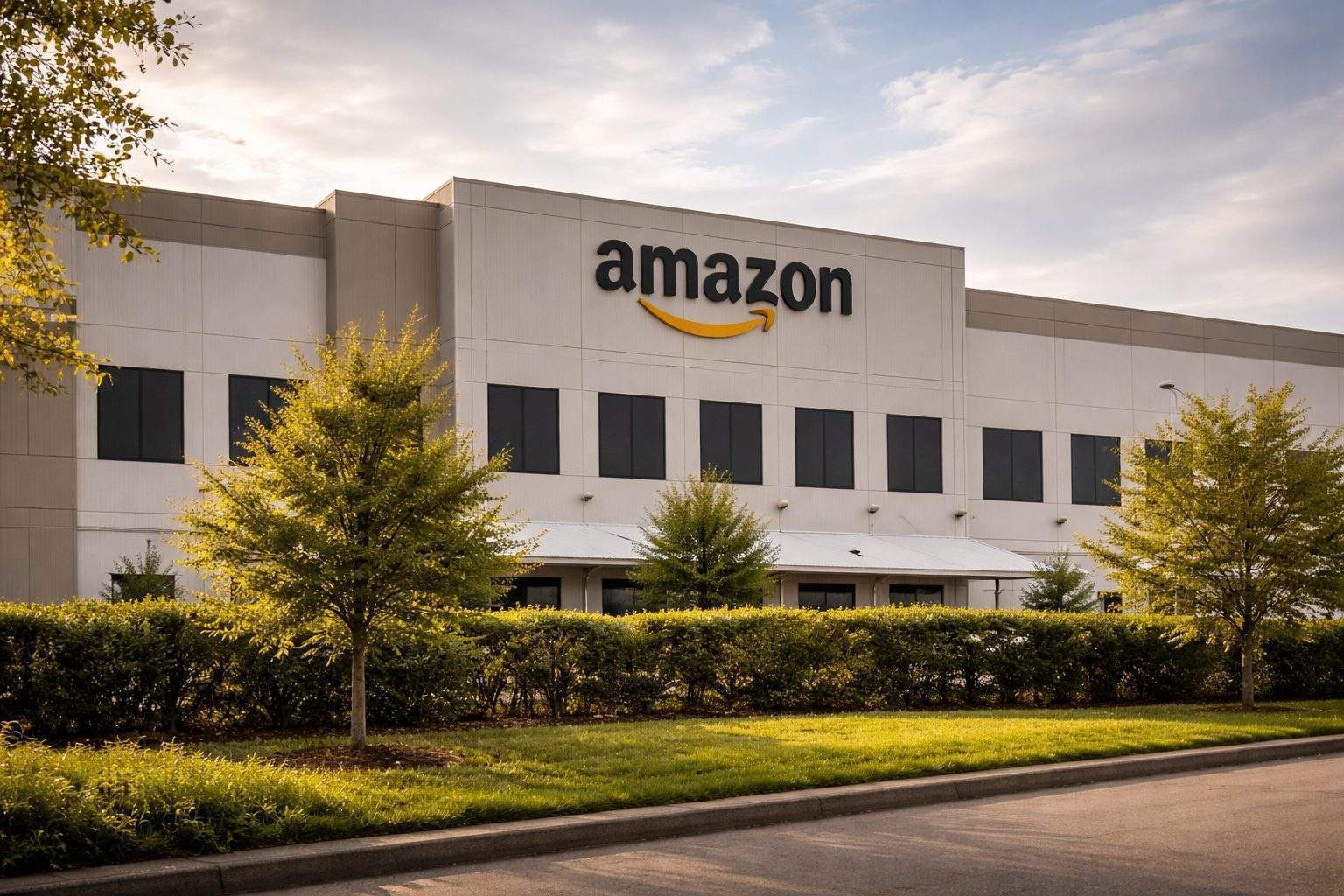
- Amazon shares dropped almost 8% in after-hours trading following the company’s announcement of a hefty spending plan for 2026 and a profit forecast that fell short of expectations.
- The stock closed the regular session roughly 5% lower, dragged down by a slump in tech shares amid growing concerns over AI spending.
- Investors await updates on AWS demand and capital spending during the company’s earnings call later today.
Amazon.com shares dropped close to 8% in after-hours trading Thursday following the company’s forecast of roughly $200 billion in capital expenditures for 2026 and a first-quarter operating income outlook that missed Wall Street’s estimates. The stock ended the regular session down 4.9% at $221.55.
Stocks fell late as investors grew uneasy over the rapid expansion of AI investments swelling tech companies’ balance sheets, with the market pushing for clearer returns. Wall Street ended sharply lower, led down by major tech firms.
Why it matters now: Amazon’s capital spending isn’t just a detail. It drives the pace for AWS, the cloud division investors see as the main profit engine, and it can quickly impact cash flow when the company ramps up investment in data centers and chips.
Amazon reported a 14% jump in fourth-quarter net sales, reaching $213.4 billion, while AWS revenue surged 24% to $35.6 billion. Operating income climbed to $25.0 billion, but the company noted special charges including $1.1 billion related to resolving a tax dispute in Italy and a lawsuit settlement, $730 million in estimated severance costs, and $610 million in impairments mostly tied to physical stores. Net income came in at $21.2 billion, or $1.95 per share. Looking ahead to the first quarter, Amazon projected net sales between $173.5 billion and $178.5 billion, with operating income forecasted between $16.5 billion and $21.5 billion. The earnings call is set for 5 p.m. ET.
Capital expenditures, or capex, refers to the funds companies allocate to long-term assets such as data centers, servers, and networking equipment. Traders keep a close eye on it since heavy capex can squeeze free cash flow — the cash remaining after these investments — even if revenue continues to grow.
Amazon’s spending spree keeps it locked in a fierce battle with hyperscalers like Microsoft and Alphabet, all ramping up investments in AI infrastructure. This shift explains why AMZN now trades less as a retailer and more as a play on cloud demand and compute power.
Amazon’s retail arm remains active. The company is pushing further into physical groceries, unveiling a new mega-store near Chicago aimed squarely at Walmart and Costco, according to Reuters this week. “Amazon knows that it needs to win in grocery,” said Martin Heubel, an Amazon seller consultant, highlighting the value of frequent grocery shoppers. Still, S&P Global’s Bea Chiem cautioned it might take “some time” for Amazon to catch up in the brick-and-mortar space. Reuters
Downside risks are evident. Amazon’s first-quarter profit forecast spans a broad range, with the company flagging higher expenses from its “Amazon Leo” initiative, investments in quick-commerce, and more aggressive pricing abroad — all factors that could squeeze margins despite steady sales.
Another risk: AI demand holds up but stays uneven, pushing Amazon to keep pouring money into spending before the revenue shows. If that plays out, the stock could end up moving more on capex news than actual operating results.
Next up: all eyes on management’s tone and any fresh insight into AWS demand and 2026 spending during the company’s earnings call at 5 p.m. ET.
Related articles: NASDAQ:AMZN