
NEW YORK, May 14, 2026, 18:29 (EDT)
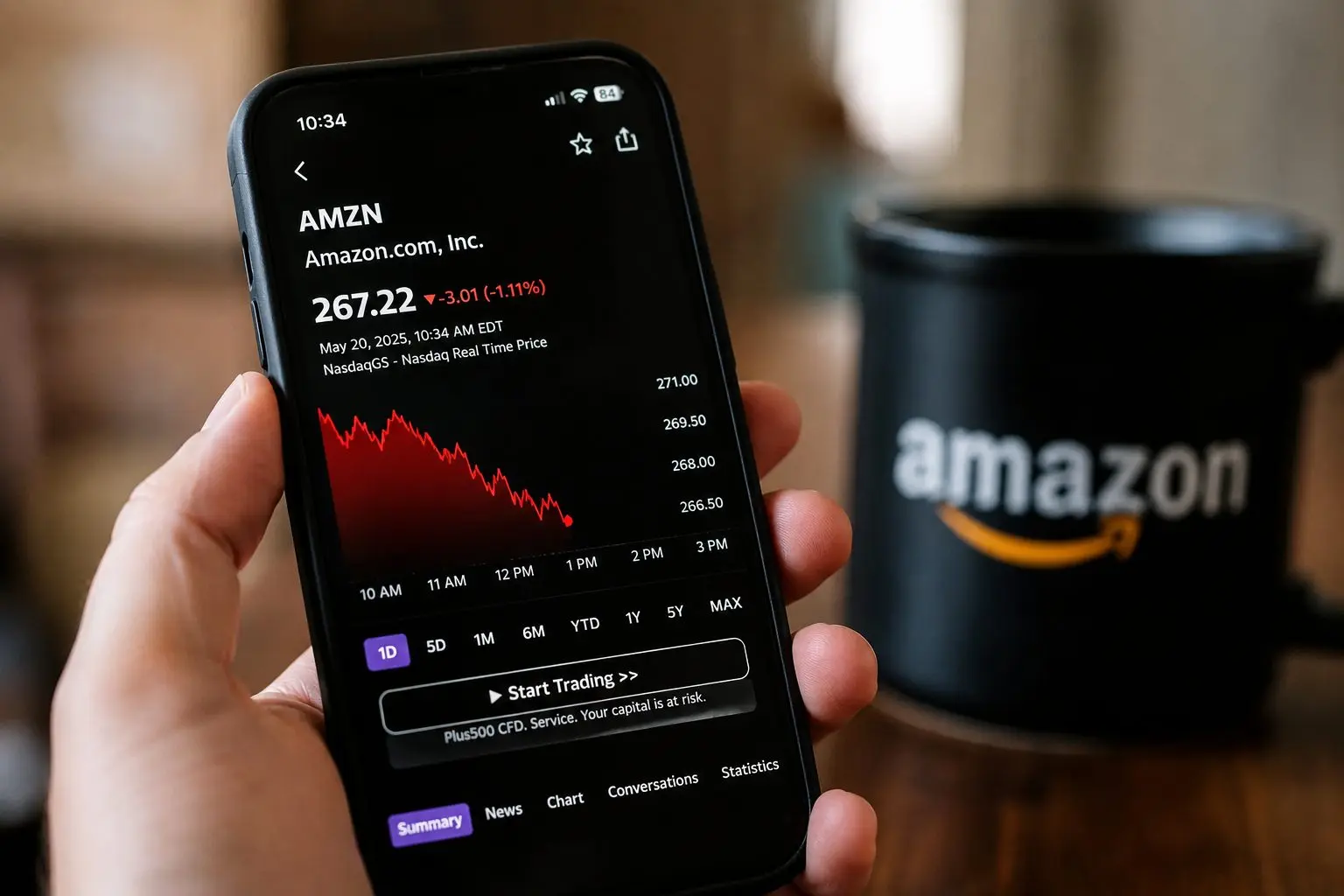
- Amazon dipped roughly 1.1% to $267.22, trailing the broader rally that pushed Wall Street to new highs.
- Amazon’s big bets on AI and cloud remained front and center for investors, despite new headlines on its retail delivery.
- Prediction markets gave little sign that lower U.S. rates would offer much relief soon.
Amazon.com shares slipped Thursday, lagging behind a surge in tech stocks. Investors shrugged off the company’s new delivery and AI-product announcements, staying focused on Amazon’s ongoing high spending.
Amazon shares slipped 1.1% to $267.22, trading between $266.71 and $270.58 over the session. Around 31.3 million shares changed hands.
That move caught attention in an otherwise bullish session. Both the S&P 500 and Nasdaq notched fresh records, while Nvidia rallied 4.4% on news that U.S. officials gave the green light for H200 chip sales to China. “You have to be in it to win it,” said Robert Pavlik, senior portfolio manager at Dakota Wealth, speaking to Reuters about the broader advance. Reuters
Amazon shares slid, but not because of a single, clear headline. The problem: expectations had already soared. Investors pushed the stock higher on accelerated growth at Amazon Web Services—the cloud unit—and on bets that AI-related outlays would translate into lasting revenue.
Rates tacked on more pressure. Growth names often stumble as interest rates climb, with future profits discounted more sharply. Polymarket traders were betting heavily—98% odds—that the Fed holds steady at its June 17 meeting; Kalshi’s economics board showed a 97% chance for “Maintain rate” in June. Polymarket
Bulls still had ammo in Amazon’s latest numbers. First-quarter revenue clocked in at $181.5 billion, up 17%. AWS sales jumped 28% to $37.6 billion, while operating income reached $23.9 billion. Free cash flow, though, saw a sharp drop — down to $1.2 billion from $25.9 billion. That slide was mostly the result of heavier spending on property and equipment for AI. CEO Andy Jassy flagged AWS’s growth as the fastest it’s been in 15 quarters.
Amazon isn’t letting up on retail speed. This week, the company announced its Amazon Now service—30-minute delivery for groceries and essentials—has reached millions in the U.S., with plans to hit tens of millions more before year-end. “In 30 minutes or less,” is how Udit Madan, Amazon’s senior vice president of Worldwide Operations, described the offering for customers looking for ultra-fast delivery. Amazon News
The news goes some way toward why analysts are still largely upbeat. On May 12, TD Cowen’s John Blackledge stuck with his Strong Buy and kept his $350 target, according to StockAnalysis. Stifel’s Mark Kelley held on to his $319 target as of May 1.
But Amazon’s rivals are closing in. AWS is up against Microsoft and Alphabet, both pouring money into AI infrastructure and cloud. Over in retail logistics, the need to speed up deliveries is intensifying the fight with Walmart and delivery apps. Faster shipping, though, also means heftier costs and leaves less room for error.
AP said Amazon’s 30-minute push is built around smaller hubs loaded with high-demand, urgent goods. But analysts cautioned that making ultra-fast delivery profitable at scale is a tough nut to crack. “Companies can get into trouble when they start overpromising speed,” Gartner’s Brad Jashinsky told AP. AP News
For bears, the danger is that Amazon’s hefty outlays might end up looking more like strategic bets on the next AWS expansion than simple cash burn. Should AI demand remain robust, shares could rebound in a hurry.
The bear case isn’t complicated: Should rates remain elevated and operating costs climb—think fuel, delivery—plus a slower payoff from AI investments, investors could keep pricing Amazon beneath rivals with more obvious near-term AI leverage.
Amazon shares dropped as investors waited for more convincing evidence. Growth is happening. The real issue: what’s the cost to sustain it?
Related articles: NASDAQ:AMZN