NEW YORK, Feb 3, 2026, 16:49 EST — After-hours
- AMD shares dropped roughly 5% in after-hours trading despite the chipmaker’s first-quarter revenue forecast beating estimates.
- The stock closed the regular session down 1.6%, dipping to a low of $237 during a volatile day.
- Investors want specifics on AI accelerator supply, China exposure, and memory constraints during the 5 p.m. conference call.
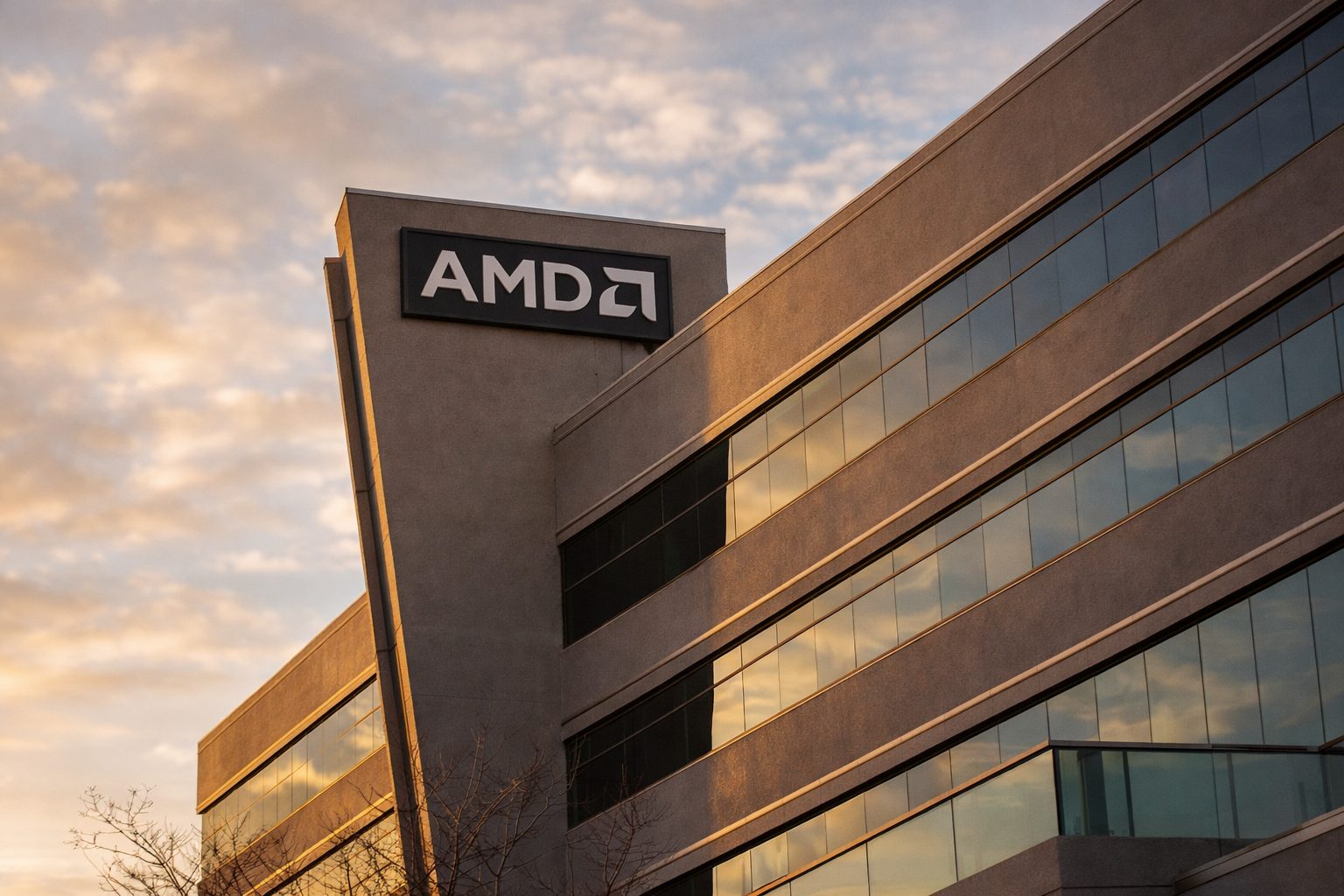
Shares of Advanced Micro Devices dropped roughly 5% in after-hours trading Tuesday, despite the company posting quarterly results and projecting first-quarter revenue that topped Wall Street estimates.
This shift is significant as AMD occupies a key spot in a heavily trafficked trade: investors have been willing to pay premiums for firms linked to data-center expansions, only to punish any report that falls short on details about supply, margins, and orders.
The news hits amid a rocky session for U.S. tech shares, as investors fret over how fast AI investments will translate into profits and if current leaders can hold their ground. Such jitters tend to magnify even minor surprises, particularly in after-hours action. Source
AMD projects first-quarter revenue around $9.8 billion, with a $300 million margin either way. That’s higher than the $9.39 billion analysts had predicted, according to LSEG data. Source
AMD posted record fourth-quarter revenue of $10.3 billion, with adjusted earnings hitting $1.53 per share. CEO Lisa Su highlighted that the company is “entering 2026 with strong momentum across our business.” Source
The data center segment remained in the spotlight. AMD reported a 39% jump in data center revenue year-over-year, hitting $5.4 billion. This boost came from strong sales of EPYC server processors and ongoing growth in Instinct GPU shipments.
China continues to play a pivotal role. AMD reported that its full-year 2025 results factored in roughly $440 million in net inventory and related charges linked to U.S. export restrictions on its Instinct MI308 data center GPUs. The company also disclosed that fourth-quarter MI308 sales to China reached about $390 million.
AMD is seen as Nvidia’s main competitor in AI chips and is steadily grabbing server CPU market share from Intel. Unlike Intel, AMD depends on Taiwan’s TSMC to produce many of its chips—a move analysts say helps ease supply constraints when demand surges.
High bandwidth memory, or HBM, is one to watch — it’s a pricey, high-speed memory paired with leading AI chips. Reuters reports the sector faces tight HBM supply, which could limit shipments despite robust demand.
AMD shares closed the regular session at $242.21, slipping 1.65%, and later dipped to $229.94 in after-hours trading, according to Investing.com. Source
The risk hasn’t disappeared: AMD’s guidance points to a sequential drop in revenue from the December quarter. Any sign that memory shortages, China regulations, or pricing pressure are taking a toll could quickly force a reset in expectations.
Investors are eyeing AMD’s 5 p.m. EST conference call for details on AI accelerator supply, what’s shaping gross margins, and if the company can keep up its data-center growth momentum into the March quarter.