
NEW YORK, January 1, 2026, 14:50 ET — Market closed.
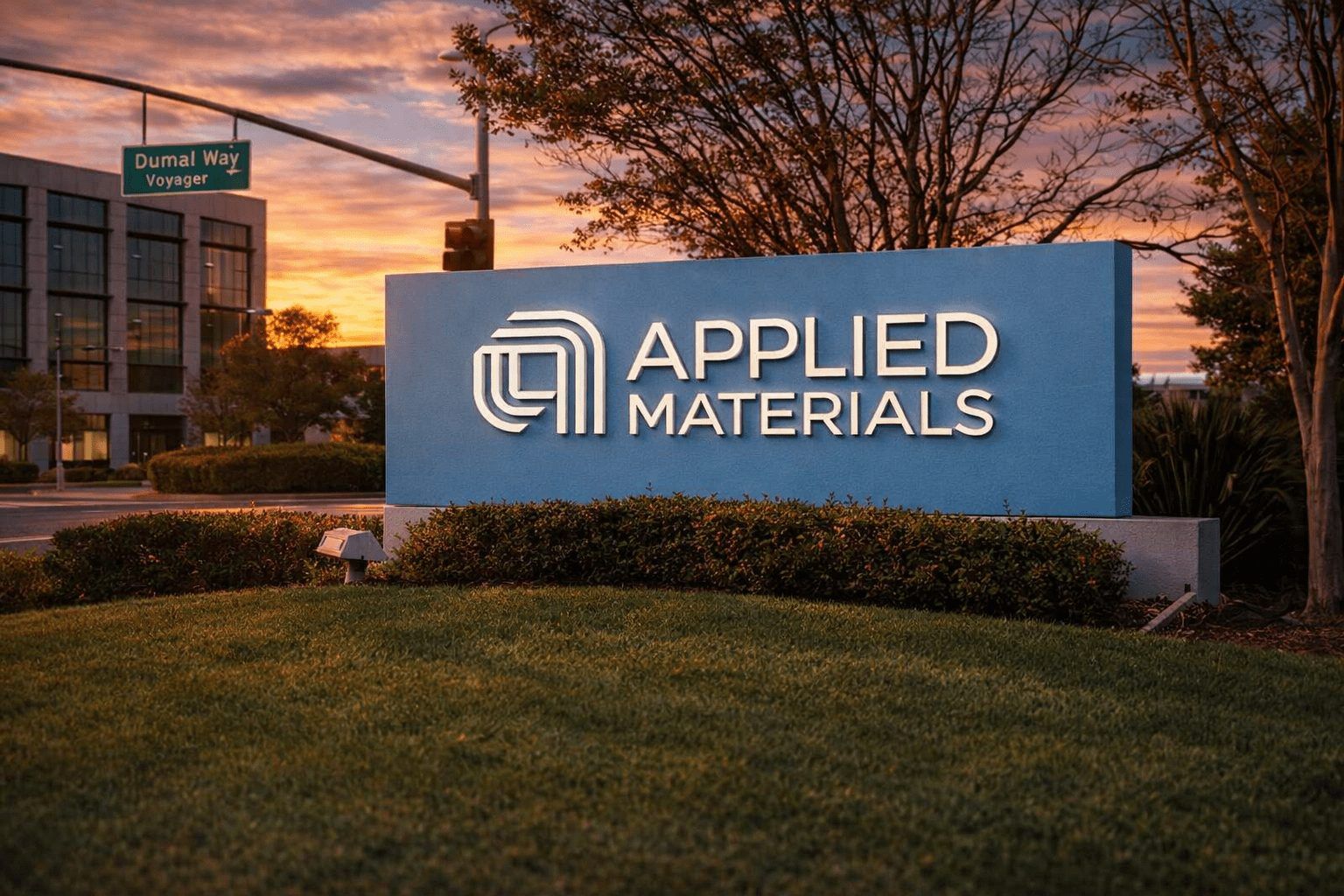
Applied Materials ended the last U.S. session down 1.15% at $256.99, with Wall Street shut on Thursday for the New Year’s Day holiday.
The stock’s next catalyst is not a product launch or an earnings pre-release. It is policy: fresh signals from Washington and Beijing that could change how chipmakers buy — and where they buy — the expensive tools used to make semiconductors.
That matters for Applied because it sells wafer-fab equipment, the specialized machines used to deposit, etch and measure layers on silicon wafers. Small shifts in export rules and local-content mandates can move orders between quarters and between suppliers.
On Tuesday, Reuters reported the U.S. granted Samsung Electronics and SK Hynix annual licenses for 2026 to bring chipmaking equipment into their China facilities, and said a similar annual license was granted to Taiwan Semiconductor Manufacturing Co for its Nanjing site. Reuters said the exemptions known as “validated end user” status — a pre-approval that helped customers receive certain U.S.-origin tools without shipment-by-shipment export licenses — expired on Dec. 31. Reuters+1
Separately, Reuters reported China has told chipmakers seeking state approval to build or expand plants that at least half the equipment used to add new capacity must be domestically made, a requirement the news agency said is not publicly documented and is enforced through procurement tenders. Reuters reported authorities typically reject applications that do not meet the threshold, while also granting flexibility when supply constraints bite and relaxing requirements for advanced production lines where local tools are not yet fully available.
The semiconductor equipment group moved lower into year-end. Lam Research fell 1.52% and KLA dropped 2.29% in Wednesday’s session.
A choppy final trading day left investors debating whether the next leg is driven by chip spending or by the policy backdrop that shapes where that spending lands. “We think the next two years are going to be about the diffusion of AI capabilities throughout the economy,” said Scott Ladner, chief investment officer at Horizon in Charlotte, North Carolina. Reuters
Applied’s shares have now logged two straight daily declines after a seven-session run-up ended on Tuesday, in holiday-thin volume.
For traders, the near-term question is whether annual export licenses become a stable operating framework — or a recurring source of renewal risk — for multinational chipmakers running China fabs. Any shift that slows tool deliveries or changes what can be serviced and upgraded would flow through the order books of U.S. equipment suppliers.
Beijing’s domestic-equipment push adds a second variable. If local-content thresholds steer incremental spending toward Chinese toolmakers on mature-node lines — older manufacturing processes used for many mainstream chips — foreign suppliers may face tougher competition even where their tools remain available.
Before the next U.S. session on Friday, investors will be watching for any follow-on detail from regulators and companies on how the annual-license system will be administered, and whether further U.S.-China measures emerge early in 2026.
Macro events are also back in view as liquidity normalizes after the holiday. The Federal Reserve’s calendar shows its next policy meeting is Jan. 27-28, while the U.S. labor market’s next major read — the Employment Situation report for December 2025 — is scheduled for Jan. 9.
The next company-specific checkpoint is Applied’s earnings. TipRanks lists Applied’s next report date as Feb. 12, after the close. Investors typically focus on management’s demand outlook, order cadence and any commentary on China-related rules that could affect shipments and service activity.
Applied finished Wednesday about 6.92% below its 52-week high of $276.10 reached on Dec. 10, MarketWatch data showed, leaving policy headlines as a key driver until the next hard set of numbers arrives.