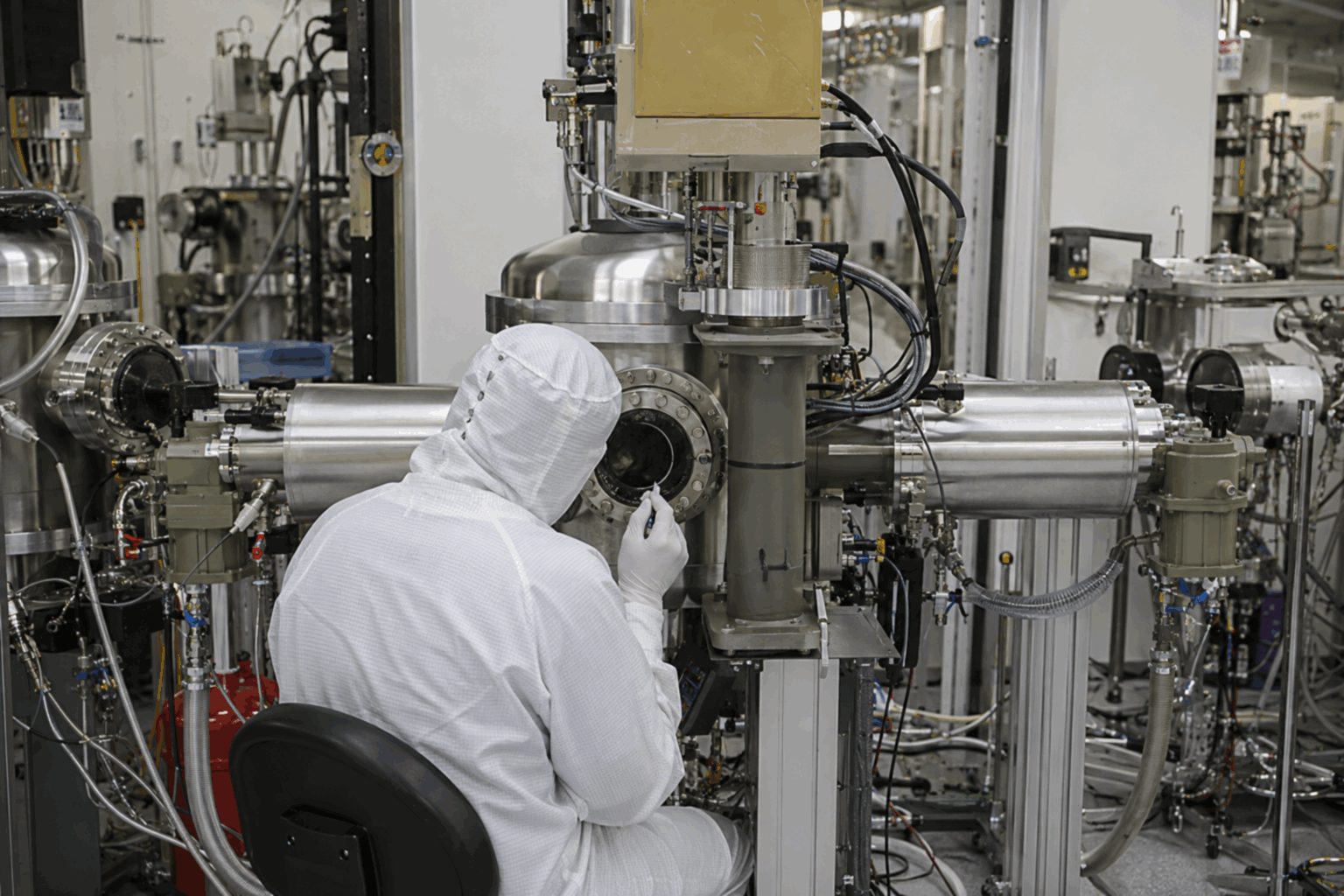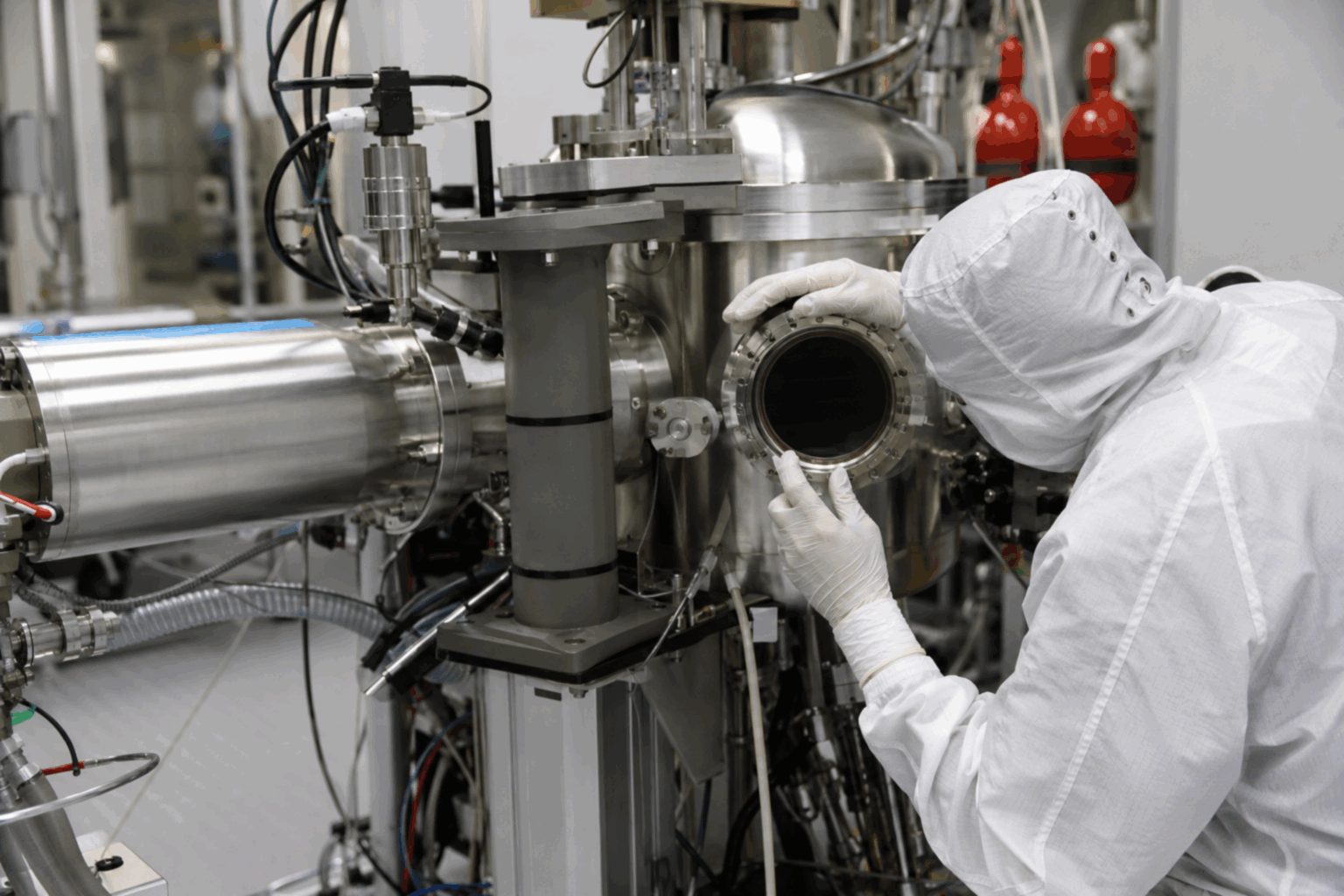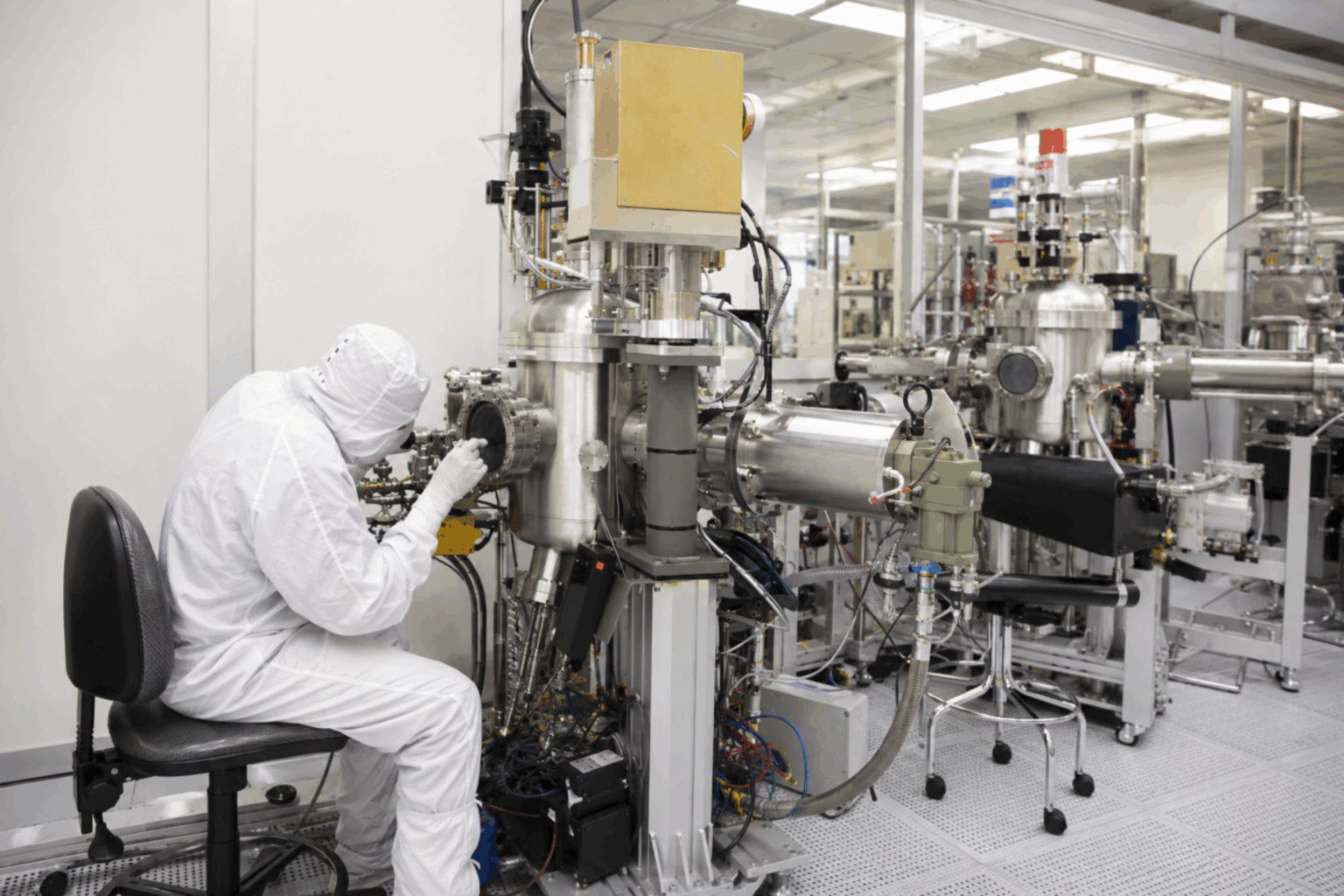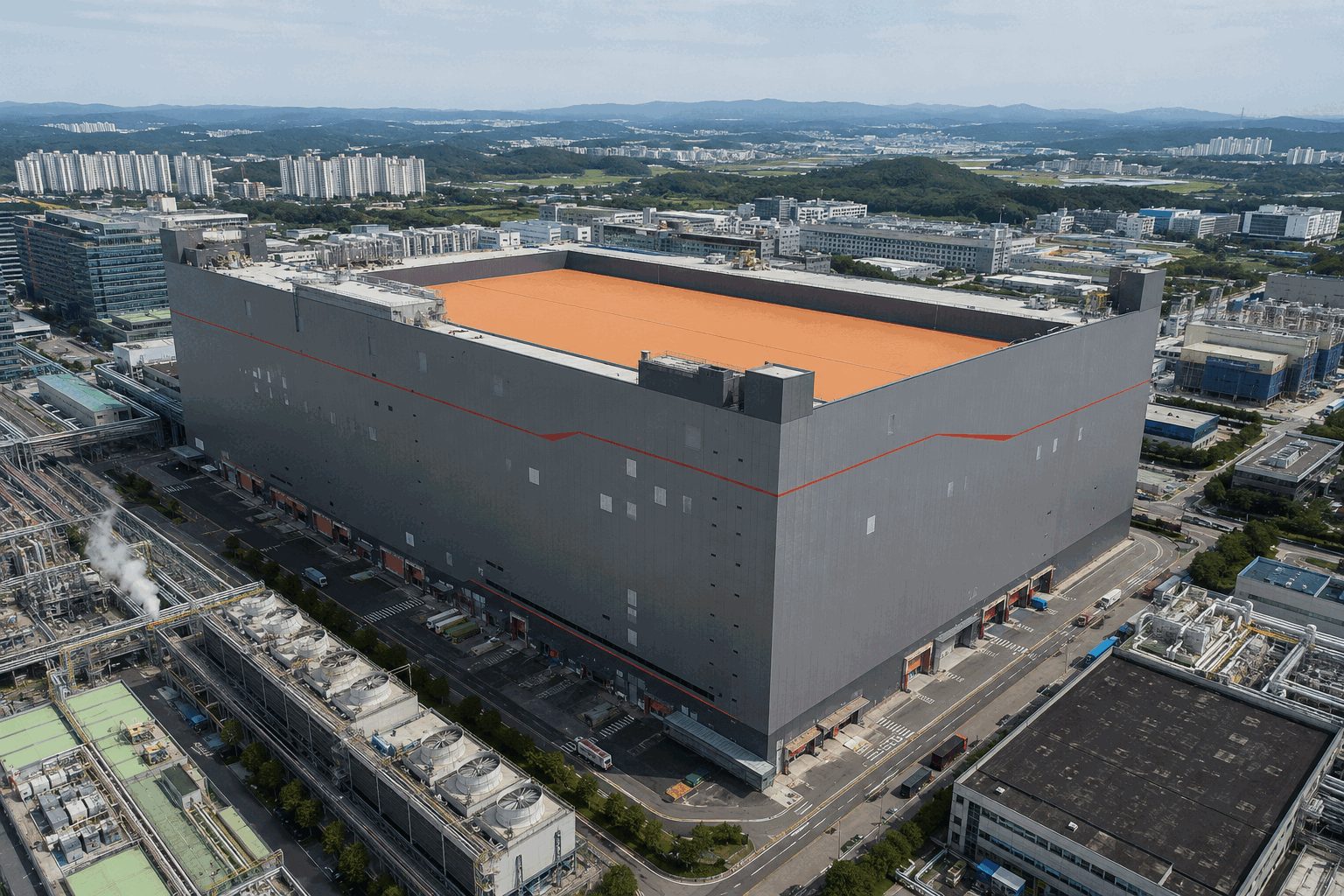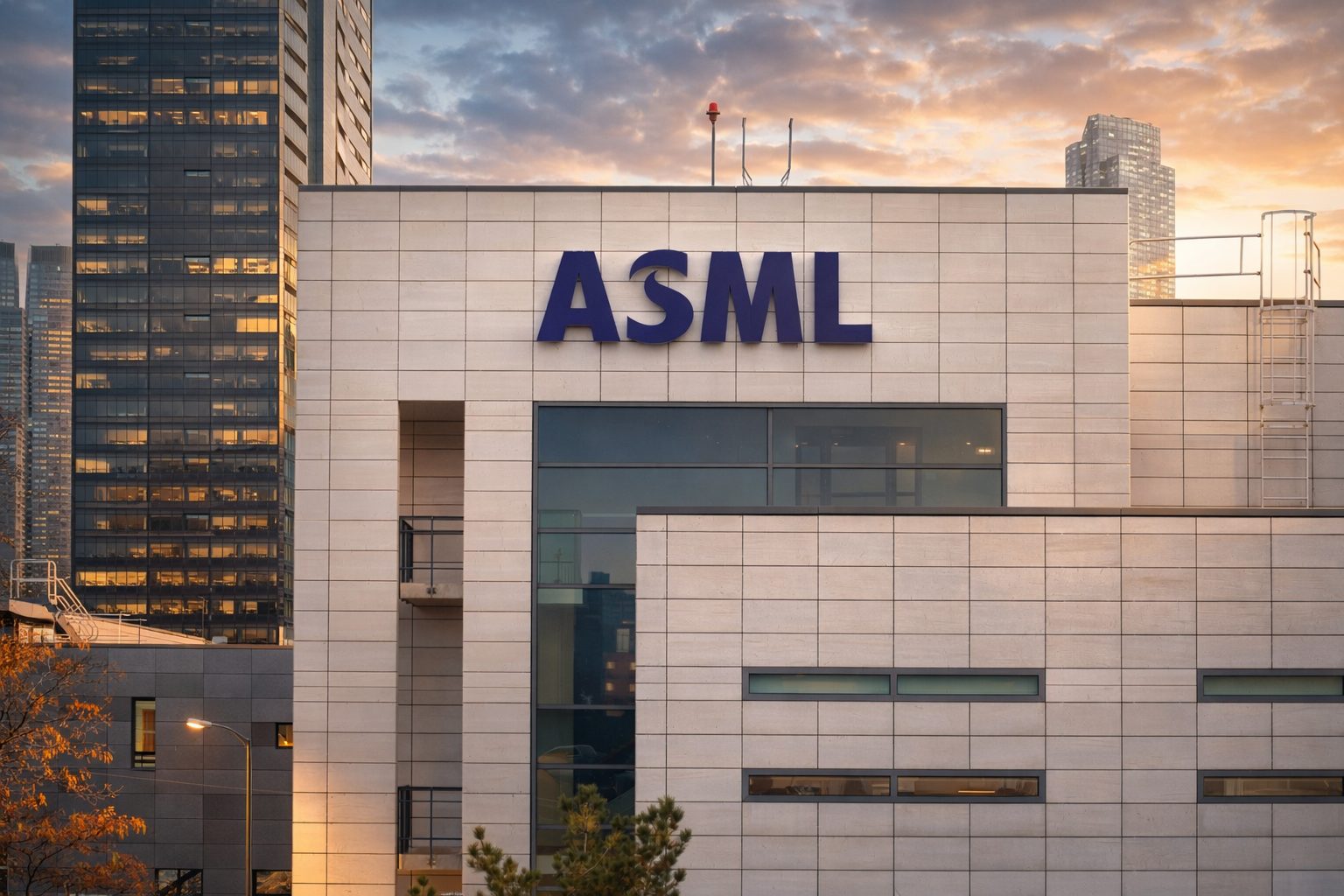

ASML Holding N.V. NASDAQ:ASML is having one of those “welcome to semiconductors” days: the stock is getting hit by long‑term moat anxiety at the exact moment the company’s next growth engine—High‑NA EUV lithography—is moving from lab legend to factory reality.
As of early December 18, 2025 (UTC), ASML’s U.S.‑listed ADR traded around $1,015, down roughly 5%–6% from the prior close, leaving the shares below recent highs and highlighting how sensitive the market remains to any headline that challenges ASML’s unique position in advanced chipmaking.
Below is what’s driving the move, what today’s news changes (and what it doesn’t), and where the latest forecasts and analyst views sit heading into 2026.
Why ASML stock is down today: “China has an EUV prototype” is the new fear headline
The immediate shockwave came from a Reuters investigation detailing China’s state‑backed effort to develop a domestic extreme ultraviolet (EUV) lithography system—the ultra‑complex class of machine that has been a cornerstone of ASML’s competitive moat.
According to Reuters, China’s program (described as a semiconductor “Manhattan Project”) has produced a prototype capable of generating EUV light, reportedly becoming operational in early 2025, though it is not yet producing chips. Reuters also reports the initiative has involved recruiting experienced talent (including ex‑ASML engineers), reverse engineering, and coordination with major players such as Huawei, under tight security. Reuters
Why the market cares (even if commercial EUV is still brutally hard)
Investors aren’t suddenly concluding ASML is “done.” What they’re repricing is duration of dominance:
- ASML’s EUV monopoly is strategic, not just commercial. EUV tools sit at the center of leading‑edge logic (AI chips, premium mobile) and advanced memory.
- If China can field an EUV tool that’s “good enough” for meaningful volume at advanced nodes—even if behind the frontier—that could reduce the structural scarcity value investors assign to ASML’s future cash flows.
- Reuters notes China has set ambitions around domestic chips by 2028, while insiders suggest 2030 is more realistic—still earlier than many investors had assumed.
In short: today’s selloff is less about next quarter and more about moat longevity.
The counter‑headline investors shouldn’t ignore: High‑NA EUV is hitting real milestones
Almost simultaneously, a very different story is also breaking in ASML’s favor: High‑NA EUV, the next generation of EUV lithography, is making tangible progress toward production‑grade readiness.
Intel published details on a major milestone with ASML: the companies reached “acceptance testing” on ASML’s TWINSCAN EXE:5200B High‑NA EUV system, citing output of 175 wafers per hour and overlay performance of 0.7 nanometers. Intel Community+1
Tom’s Hardware, summarizing the development, frames the EXE:5200B as a production‑oriented step beyond earlier High‑NA systems and emphasizes the tool’s role in scaling past what today’s “low‑NA” EUV can do without extra complexity. Tom’s Hardware
What High‑NA means for ASML’s business model
High‑NA is not just “a better machine.” It can be a bigger economic flywheel:
- Higher tool value and service pull‑through: The more essential the lithography step, the more customers pay for tools, spares, upgrades, uptime support, and long‑tail servicing.
- Rising “lithography intensity”: More advanced nodes typically require more lithography capability per wafer, which can increase ASML’s share of fab spending over time (a key theme in bullish analyst notes—more on that below).
- Technology lock‑in: High‑NA extends ASML’s lead at the cutting edge because it ties together optics, light source power, precision stages, metrology, computational lithography, and process ecosystems.
ASML’s own product positioning for the EXE:5200B describes it as designed to support volume production of sub‑2 nm logic nodes and leading‑edge DRAM, highlighting higher numerical aperture (0.55 NA) and improved imaging capability.
So today’s tape is a tug‑of‑war: fear of future competition vs. evidence of next‑gen leadership.
The bigger demand backdrop: SEMI sees semiconductor equipment spending climbing into 2027
Even if daily headlines whipsaw the stock, the medium‑term demand setup still looks supportive for the entire semiconductor equipment complex—and ASML is a prime beneficiary.
SEMI’s year‑end outlook projects global semiconductor manufacturing equipment sales reaching $133 billion in 2025, rising to $145 billion in 2026, and $156 billion in 2027, citing AI‑driven investment in leading‑edge logic, memory, and advanced packaging.
Reuters, citing SEMI, also highlights wafer‑fab equipment growth—forecasting equipment used for manufacturing chip wafers rising to $126 billion in 2026 and $135 billion in 2027—and notes ASML accounts for roughly a quarter of sales in this market.
The implication for ASML stock is straightforward: even with cycle noise, the industry’s base case remains that AI compute + HBM memory + leading‑edge node competition keep capex elevated.
Analyst forecasts and price targets: more bullish numbers, but not without debate
Despite today’s drop, recent analyst actions into December have been largely constructive:
- BofA raised its price target on ASML to $1,331 (from $1,092) and kept a Buy rating, calling fiscal 2027 an inflection point and arguing lithography intensity should rise while mix could support margins.
- Citi raised its price target to €1,200 (from €1,050) and maintained a Buy rating, citing AI‑driven demand and positive estimate momentum into 2026.
- Deutsche Bank lifted its target to €1,150 (from €1,000) and kept a Buy rating.
- Cantor Fitzgerald raised its target to €1,300 (from €1,150) and kept an Overweight rating, pointing to AI‑era demand across compute, networking, memory and equipment.
On broader consensus, MarketBeat lists an average 12‑month price target around $1,171.83 (range $935 to $1,331)—implying upside from today’s depressed level, though targets vary widely by macro and cycle assumptions.
The “but…” that keeps volatility high
Two forces can coexist:
- Analysts can like the fundamentals (High‑NA ramp, AI‑driven capex), while
- the market punishes uncertainty around geopolitics, export controls, and the sustainability of AI infrastructure spending.
That’s visible not only in ASML but across global tech today, as Reuters reports broader “tech jitters” tied to AI investment and infrastructure concerns weighing on markets. Reuters
Geopolitics remains the swing factor: scrutiny, controls, and “who can buy what”
ASML’s relationship with China has been a recurring pressure point for years, and the Reuters EUV‑prototype report reinforces why: sanctions can slow progress, but may also motivate substitution at any cost.
Separately, Reuters reported earlier this month that ASML customers include at least one firm with links to the Chinese military, based on Dutch media reporting—another reminder that compliance, licensing, and customer vetting can become headline risk.
For investors, the uncomfortable truth is that geopolitics can move ASML stock even when quarterly demand is fine—because geopolitics can reshape the addressable market and competitive landscape.
Buybacks: ASML is still returning capital while the narrative battles rage
While headlines swing the multiple, ASML continues to execute shareholder returns.
ASML disclosed recent repurchases under its buyback program (Program 34), reporting daily share buybacks in early December with weighted average prices in the mid‑€900s per share range.
The company’s broader 2022–2025 buyback plan was sized up to €12 billion, with a portion intended to cover employee share plans and the remainder expected to be cancelled.
Buybacks don’t immunize a stock from a geopolitical gut‑punch, but they do matter for long‑term per‑share economics—especially for a high‑margin platform business like lithography plus services.
What to watch next for ASML stock
Near‑term catalysts (weeks to months)
- Follow‑through on the China EUV story: additional reporting, policy responses, or technical validation could either calm fears or amplify them.
- High‑NA adoption signals: continued customer milestones and tool readiness indicators (throughput, uptime, overlay, resist/process ecosystem progress) remain crucial.
- Macro sentiment toward AI capex: broader market risk‑off moves have already been pressuring “AI winners,” including semis and their supply chain. Reuters
Medium‑term drivers (2026–2027)
- Equipment upcycle durability: SEMI’s forecast implies expanding spending through 2027, which would be supportive if it materializes.
- ASML’s “share of wallet” thesis: multiple analysts are explicitly framing 2027 as an inflection point where lithography intensity and mix could improve the model. TipRanks
Bottom line
On December 18, 2025, ASML stock is reacting to a powerful narrative threat—China pushing closer to EUV capability—even as the fundamental case for ASML’s next chapter strengthens via High‑NA EUV progress and an industry demand outlook that still points higher into 2026–2027.
That combination virtually guarantees volatility: ASML is not a “set it and forget it” stock; it’s a bet on physics, execution, and geopolitics all at once. The good news is that, for now, ASML continues to sit at the center of the world’s most expensive manufacturing arms race—exactly where investors usually want a toll collector to be.




![US Stock Market Today 08/24/2026 [UPDATE: 03:26 EDT] [Memory Selloff Holds Into Final Overnight Hour]](https://ts2.tech/wp-content/uploads/2026/08/US-market-dashboard-2026-08-24-0321-480x384.jpg "US Stock Market Today 08/24/2026 [UPDATE: 03:26 EDT] [Memory Selloff Holds Into Final Overnight Hour]")