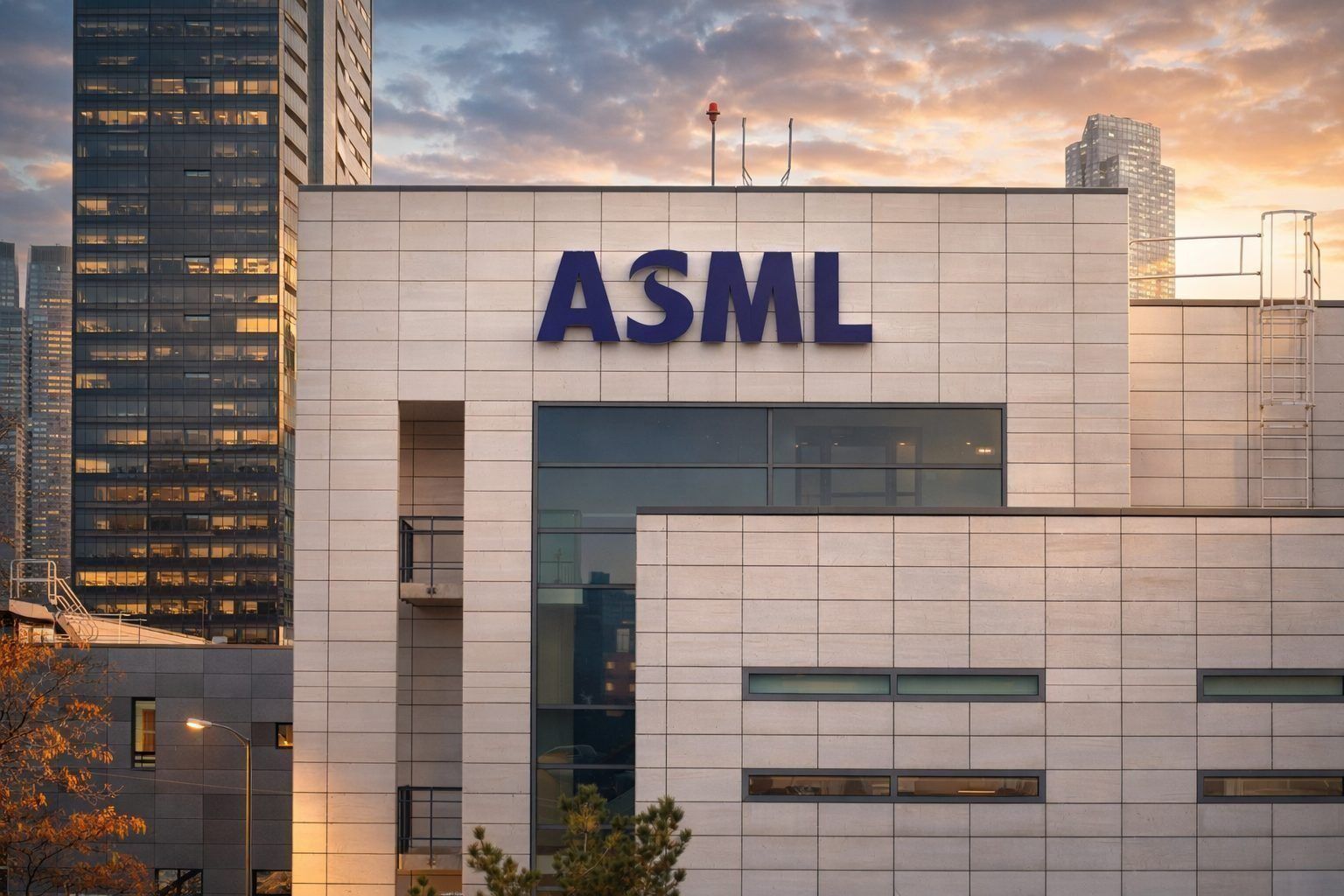
Amsterdam, January 5, 2026, 11:57 CET — Regular session
- ASML shares rose about 3% after Bernstein upgraded the stock and lifted its price target to 1,300 euros.
- The call leans on a pickup in DRAM investment and sustained demand for advanced chips tied to AI buildouts.
- Investors’ next checkpoint is ASML’s Jan. 28 results for fresh guidance and order signals.
ASML (ASML.AS) shares rose 3.2% on Monday after brokerage Bernstein upgraded the Dutch chipmaking equipment maker to “outperform” and raised its price target to 1,300 euros from 800 euros. Reuters
The move matters now because Wall Street is trying to pin down whether 2026 brings a broader rebound in semiconductor capital spending, particularly from memory makers. ASML’s tools sit at the heart of that cycle, since lithography is the process of printing circuits onto silicon wafers.
The timing is tight, with ASML due to report fourth-quarter and full-year 2025 results on January 28, a read-through on bookings and 2026 demand that often sets the tone for the sector. ASML
Bernstein’s new target implies about 32% upside from current levels, and the broker said ASML stands to gain from a DRAM upswing and firmer “logic” chip demand linked to AI, according to Investing.com. Bernstein analyst David Dai said the three largest DRAM makers are adding as much as 250,000 wafers per month of new “greenfield” capacity in 2026 and accelerating the transition to the 1c node. “This is great for ASML, as litho intensity for 1c is 28% based on our estimates, much higher than previous nodes of 20–24%,” Dai wrote; lithography intensity is a rough gauge of how many patterning steps are needed per wafer. Investing
The firm also sees 2026 and 2027 as “big years” for extreme ultraviolet tools, or EUV, the high-end machines used to make the most advanced chips. TipRanks
EUV matters because ASML is the only supplier at that end of the market, and customers must secure tool slots well ahead of production ramps. The flip side is that order timing can swing sharply as chipmakers shift delivery schedules.
Investors will be listening on Jan. 28 for two numbers: bookings — orders received, a forward-looking demand indicator — and any change in the company’s 2026 shipment assumptions. Comments on EUV demand, and on how much of any memory spending is structural rather than cyclical, will steer the next leg.
The risk is that the anticipated memory investment wave arrives later or smaller than expected, especially if end-demand weakens or customers slow fab buildouts. A second overhang remains the policy backdrop, with export restrictions and compliance requirements capable of reshaping where tools can be shipped and serviced.
For now, traders are marking January 28 as the next catalyst, when ASML’s results and guidance will test whether the upgrade-driven optimism can be translated into orders and a firmer 2026 outlook.