Updated December 11, 2025
AST SpaceMobile, Inc. (NASDAQ: ASTS) has gone from obscure space telecom hopeful to one of 2025’s wildest stocks. After surging more than 200% year-to-date and hitting an all‑time high above $100 in October, the stock now trades around $78 per share, closing at $78.00 on December 11, 2025.StockAnalysis+1
A Federal Reserve rate cut, the imminent BlueBird 6 satellite launch on December 15, and a balance sheet stuffed with newly raised cash have energized the bulls. At the same time, a Q3 earnings “double miss,” heavy dilution from convertible notes, high short interest and extreme options pricing underline how speculative AST SpaceMobile stock has become.
Here’s what is driving ASTS right now — and how analysts, traders and short sellers are framing the 2026 story.
AST SpaceMobile stock today: a volatile high-flyer
Over the last week, ASTS has been behaving more like a meme stock than a sleepy telecom name:
- Dec 3–10: The shares ripped from the high‑50s to just over $79, including an 18%+ jump on December 4 and an 8.5% move on December 10.StockAnalysis+1
- Dec 11: The stock cooled slightly, closing at about $78, still far above where it started the month.StockAnalysis
- From January to mid‑December 2025, ASTS is up well over 200% year-to-date, with some analyses pegging the gain closer to 225–250% depending on the reference date.Barchart.com+1
A big near-term catalyst was the U.S. Federal Reserve’s 25 bps rate cut this week. Benzinga notes that ASTS jumped roughly 9% intraday to around $79–80 as investors piled into high‑beta growth stocks seen as major beneficiaries of cheaper capital.Benzinga
With ASTS still trading near its recent highs and far above its April 2024 low around $2, the stock is now a classic “story plus momentum” name — and the story is all about funding, satellites and 2026 service launch promises.TradingView
Q3 2025: a “double miss” but explosive growth and huge liquidity
AST SpaceMobile’s third-quarter 2025 results, reported on November 10, show why the stock divides opinion so sharply:
- Revenue: About $14.7 million, up more than 10x from roughly $1.1 million a year earlier, but below Wall Street expectations that ran around $19–22 million.Timothy Sykes+2Yahoo Finance+2
- Earnings: A loss of roughly –$0.45 per share, wider than the consensus forecast (around –$0.21) but better than last year’s –$1.10.Timothy Sykes+1
Several outlets, including Zacks and Barron’s, described the quarter as “lackluster” or a “double miss,” while still acknowledging the sharp improvement versus 2024.Yahoo Finance+2Barron’s+2
Where the bulls lean in is the balance sheet:
- On its Q3 call, management said AST had around $3.2 billion in cash, equivalents, restricted cash and committed liquidity after two convertible note deals and heavy use of an at‑the‑market (ATM) equity program.Investing.com+2Space Intel Report+2
- Those convertible offerings total about $1.6 billion of net proceeds, including a $1.0 billion 2.00% 10‑year note convertible at roughly $96.30 per share — a bit over a 22% premium to the stock price when the deal was struck in October.Securities and Exchange Commission+2Reddit…
- AST has also equity-converted roughly $410 million of older 4.25% convertible notes, leaving only about $50 million outstanding on that 2032 issue.Investing.com+1
The result is a pre‑revenue satellite company claiming it is “fully funded” to build and launch a first constellation of more than 100 satellites — at the cost of substantial dilution to existing shareholders.Investing.com+1
Barron’s reports that Street forecasts now call for AST’s revenue to grow from about $56 million in 2025 to roughly $267 million in 2026, with 2027 EBITDA estimates around $500 million — and notes that the stock is valued at roughly 50x that 2027 EBITDA, up from about 12x at the start of the year.Barron’s
That valuation math is where many of the skeptics focus.
BlueBird 6: the near-term catalyst that could re-rate the story
The single biggest operational catalyst in front of AST SpaceMobile is BlueBird 6.
According to an AST SpaceMobile press release, BlueBird 6 is:
- A U.S.-licensed satellite scheduled to launch December 15 from the Satish Dhawan Space Center in India.Stock Titan+1
- The first of the company’s next-generation “Block 2” satellites.
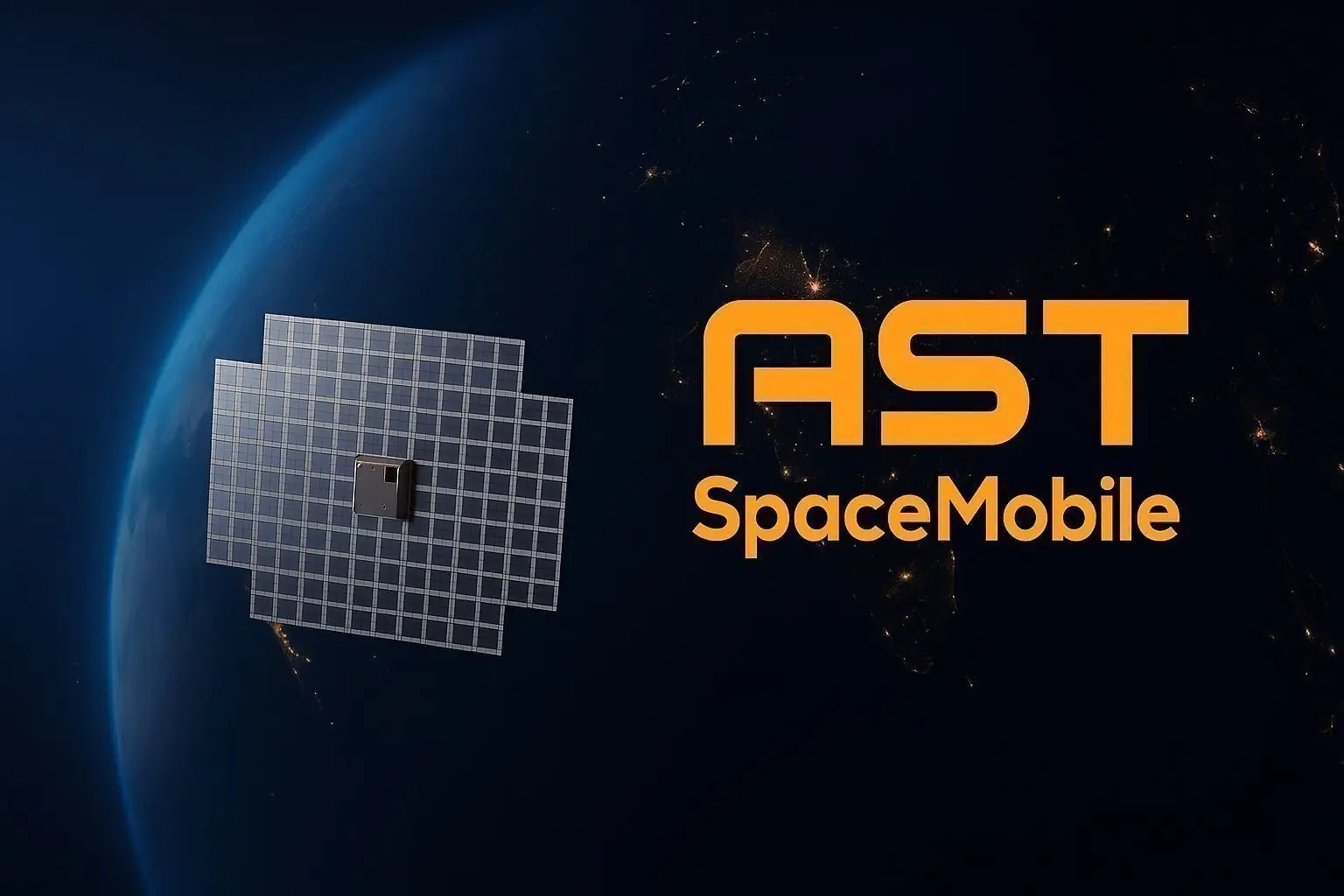
- Carrying a phased array of nearly 2,400 square feet — more than 3.5x larger than the first wave of BlueBirds — and designed for roughly 10x the data capacity.Stock Titan
Benzinga notes that BlueBird 6 is now “on the launch pad” and calls it key to unlocking true 5G broadband from space, a view echoed by bullish commentators who see it as the first real test of AST’s production‑grade satellite architecture.Benzinga
Beyond this one satellite, the roadmap is aggressive:
- AST says it plans five Block 2 launches by the end of Q1 2026, then a cadence of one launch every one to two months.Stock Titan+1
- The company aims to have 45–60 BlueBird satellites in orbit by the end of 2026, enabling continuous service across the U.S., Europe, Japan and other “strategic markets,” with a longer-term target of 90 satellites.techblog.comsoc.org
- Launch partners now include ISRO, SpaceX and Blue Origin; ISRO will loft BlueBird 6, while later launches are expected from Cape Canaveral on Falcon 9 and New Glenn rockets.techblog.comsoc.org+1
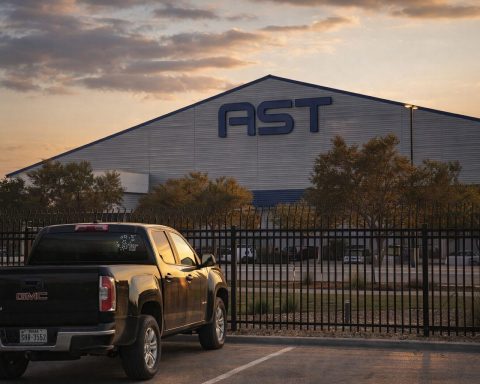
The company also highlights an expanding manufacturing footprint: an article on AST’s Texas and Florida production sites cites a manufacturing and operations base approaching 500,000 square feet and a workforce of nearly 1,800 people, mostly in the U.S., with capacity to build about six satellites per month.Timothy Sykes+2techblog.comsoc.org+2
The catch: AST itself warns that launch timing can slip due to launcher readiness, weather and other factors outside its control.Stock Titan
For a stock priced as if 2026 will be the year of commercial liftoff, any substantial delay in the BlueBird 6 campaign would matter.
2026 service plan: intermittent first, then continuous
AST SpaceMobile is not promising a magic “switch-on” of full service on day one. Instead, the company and third‑party analysts lay out a phased rollout:
- An IEEE Communications Society blog summarizing AST’s Q3 call says the company plans “intermittent nationwide” direct‑to‑device coverage in the U.S. and selected markets in early 2026, using about 25 satellites (five first‑gen plus 20 Block 2).techblog.comsoc.org
- As more satellites go up, AST targets continuous coverage later in 2026 once 45–60 BlueBirds are in orbit.techblog.comsoc.org
That same analysis notes that:
- AST has secured more than $1 billion in contracted revenue commitments,
- Signed definitive commercial agreements with Verizon, AT&T and Saudi Telecom Company (stc), and
- Has deals with over 50 mobile network operators, covering nearly 3 billion subscribers worldwide.techblog.comsoc.org+1
In other words, AST is pre‑selling the future network to big carriers rather than trying to build a consumer brand itself.
Strategic partners and the “Not-Starlink” narrative
AST’s partnerships are not just a nice‑to‑have; they’re part of a broader telecom and political chess game.
A widely discussed analysis on Light Reading argues that AST SpaceMobile and Amazon’s LEO initiative are being supported as deliberate alternatives to a potential Starlink monopoly in satellite broadband and direct‑to‑device services.Light Reading
Key points from that piece:
- AT&T and Verizon committed spectrum and capital to AST as early as 2024, despite knowing it would lag Starlink in deployment and initial capacity.Light Reading
- The article frames AST as a kind of “compliance cost” for carriers — a hedge that preserves network sovereignty so they are not entirely dependent on Elon Musk’s SpaceX for critical infrastructure.Light Reading
- This makes AST’s survival partly a strategic and regulatory story, not just a technology race.
Meanwhile, AST has been expanding its footprint in Europe:
- A recent company release highlights an EU-focused constellation and a European satellite operations centre in Germany in partnership with Vodafone, described as part of a push for European “digital sovereignty.”Stock Titan+1
On top of the telcos, Alphabet (Google’s parent) has invested around $200 million in AST as part of a broader strategic bet on satellite connectivity, according to Investors.com, which also notes that AST has secured a 10‑year, $175 million contract with Saudi telco STC and a $43 million U.S. Space Development Agency award.Investors
This web of carrier and big‑tech backing underpins many “stay bullish” arguments despite the company’s operational delays and current lack of service revenue.
Funding, dilution and balance-sheet risk
The flip side of being “fully funded” is that AST has raised that capital in ways that meaningfully dilute existing shareholders and add complexity to the capital structure.
Recent moves include:
- $1.0 billion of 2.00% convertible senior notes due 2036, with a conversion price around $96.30 per share (a bit over a 22% premium when issued).Securities and Exchange Commission+1
- Roughly $600 million of earlier convertible notes, much of which has now been equity‑converted, leaving just $50 million outstanding.Investing.com+1
- Hundreds of millions raised via ATM share sales in 2025 alone.Investing.com
On the Q3 call, AST’s CFO argued that this financing wave means the company now has over $3.2 billion in cash and liquidity and is “fully funded” for a constellation of 100+ satellites, even after factoring in capex and operating expenses.Investing.com+2techblog.comsoc.org+2
For equity holders, the math is simple but uncomfortable:
- If the revenue and EBITDA forecasts materialize, existing shareholders get to own a larger, fully funded, very high‑margin network with limited incremental capex.
- If execution slips or service economics disappoint, the company may need even more capital, potentially at lower share prices — which could mean another round of heavy dilution on top of what 2025 already delivered.
Insider trading, institutional flows and short interest
The tape around ASTS is crowded with strong opinions — and you can see that in both insider activity and positioning data.
Insiders: one notable sale, one small buy
According to Quiver Quantitative:
- CTO Huiwen Yao sold 40,000 shares of ASTS on December 5, worth roughly $2.9 million, reducing their holdings of that class of stock by about 89% to just 4,750 shares. Over the past six months Yao has sold about 96,000 shares in total.Quiver Quantitative
- Across the last six months, AST insiders have executed 11 open‑market trades: 2 buys and 9 sells.Quiver Quantitative
Balancing that, a small but symbolically important insider buy:
- On December 10, director Keith R. Larson bought 675 shares at an average price of $72.71, for about $49,079, via an IRA, according to an Investing.com summary of the Form 4.Investing.com
That same article stresses that ASTS has delivered about 224% return over the past year and 121% over six months, underlining how “buying the dip” is not exactly low‑risk at this stage.Investing.com
Institutions and hedge funds
The Quiver report also flags robust institutional interest:
- Vanguard, UBS, Wells Fargo and others significantly increased their ASTS holdings in Q3 2025, with some positions up over 1000%.Quiver Quantitative
That mix — insiders trimming, institutions loading up — fits a classic pattern for a speculative high‑growth name.
Short interest: still elevated, but easing
Short sellers have not gone away. Fresh short‑interest data show:
- About 36.6 million shares sold short as of November 28, 2025 — roughly 14–17% of the public float depending on the source.MarketBeat+1
- That’s down around 5% from the prior report, but still well above the ~5% average short interest of AST’s peer group, according to Benzinga and MarketBeat.Benzinga+1
- With average daily volume near 10–12 million shares, it would take roughly 3.5–4 trading days for shorts to cover at current volumes.MarketBeat+1
High short interest doesn’t guarantee either a squeeze or a crash. It just means a lot of sophisticated money is betting against the story, even as institutions add on the long side.
Options market: implied volatility above 100%
If you want a quick sanity check on how uncertain the market feels, look at the options.
A detailed Barchart analysis notes that:
- ASTS options with the heaviest activity all show implied volatility (IV) well above 100% on both calls and puts across multiple strikes.Barchart.com
- Such pricing suggests options traders are paying up for protection and speculation in both directions, rather than placing a simple directional bet.
- Using historical price windows and a probability distribution, the author estimates that 10‑week forward price “clusters” tend to form in the mid‑$70s, with a specific quant signal (a 4‑up‑6‑down week pattern) pointing to a likely range roughly between the low‑$70s and low‑$80s.Barchart.com
The article even proposes a specific bull call spread trade structure, underlining that ASTS has effectively become an options‑centric story for many sophisticated traders. Retail investors should treat that as a huge red flag on volatility, not as a how‑to manual.
Analyst ratings, targets and the bull vs. bear debate
Analyst and commentator views on AST SpaceMobile now split into two broad camps.
The bull case
Bullish notes emphasize:
- Unique technology: A large, space‑based, direct‑to‑device cellular network that can talk to unmodified smartphones — if it works at scale — is an enormous prize.
- Commercial traction: Over $1 billion in contracted revenue commitments from carriers, including long‑term deals with Verizon, AT&T, Vodafone and STC.techblog.comsoc.org+2Investors+2
- Strong liquidity: That $3.2 billion funding cushion and Alphabet’s involvement are often cited as proof the company can actually build the first constellation.Investing.com+2Investors+2
Recent bullish commentary includes:
- A widely shared article titled “Delays Present a Buying Opportunity”, arguing that AST’s technical setbacks are temporary and that the balance sheet and backlog justify a premium valuation.Seeking Alpha
- Trading commentary highlighting Deutsche Bank’s price target increase to $81 and Clear Street’s target to $87, both with positive ratings, as noted in coverage of AST’s Texas and Florida expansion.Timothy Sykes
- A Motley Fool piece asking “Can ASTS Stock Beat the Market in 2026?”, positioning ASTS as a potential market‑beater if the company hits its launch and service milestones but warning about volatility and execution risk.Yahoo Finance
The bear (or cautious) case
On the other side, skeptics point to:
- Valuation stretch: Barron’s calculates that the stock now trades at roughly 50x projected 2027 EBITDA, a multiple more associated with early‑stage software than capital‑intensive satellite infrastructure.Barron’s
- No recurring service revenue yet: Almost all current revenue comes from gateway equipment sales and government contracts, not from actual consumer or enterprise usage of the SpaceMobile network.techblog.comsoc.org+1
- Competition: Starlink is already rolling out direct‑to‑cell capabilities with T‑Mobile, and Amazon’s LEO effort is heavily backed by regulators and the BEAD broadband program. AST will likely launch later and with lower capacity than its biggest rival.techblog.comsoc.org+1
- Execution risk: Engineering, launching and operating dozens of enormous LEO satellites, then integrating them seamlessly into terrestrial networks, is not exactly plug‑and‑play.
Yahoo Finance has run pieces under headlines like “Reddit traders push AST SpaceMobile higher despite analyst Sell ratings and extreme multiples”, highlighting that some Wall Street analysts still rate the stock Sell or Underperform even after raising their formal price targets.Yahoo Finance+1
Put bluntly: the bull case is that AST builds a quasi‑monopolistic D2D network with huge operating leverage; the bear case is that investors are paying that price before the network is proven.
Key risks to watch
For anyone tracking AST SpaceMobile — whether as an investor, trader or just a fascinated spectator — the main risks to keep in mind are:
- Launch and technology risk
BlueBird 6 is the first true production‑grade satellite. A failed launch, major technical issue or prolonged delay in ramping Block 2 satellites would directly challenge the 2026 revenue and coverage story.Stock Titan+1 - Regulatory and spectrum risk
AST relies on mobile operators’ spectrum and regulatory approvals across multiple jurisdictions. Its filings explicitly flag regulatory timing and policy changes as key risk factors.Stock Titan+1 - Financing and dilution
Even with $3.2 billion of liquidity, building and operating a global LEO constellation is hugely capital‑intensive. If revenues lag expectations, the company could come back to markets for more equity or debt, further diluting existing shareholders.Investing.com+2Securities and Exchange Com… - Competitive pressure
Starlink’s scale and Amazon’s regulatory backing mean AST is unlikely to enjoy an uncontested market. Light Reading’s analysis emphasizes that AST’s main advantage may be its role as “not Starlink” in the eyes of big carriers and policymakers — a strategic edge, but not necessarily a technical one.Light Reading+1 - Market and sentiment risk
With high short interest, options IV above 100%, and price action heavily influenced by retail and social‑media chatter, ASTS is subject to violent swings on relatively small bits of news — up or down.Yahoo Finance+3Benzinga+3MarketBeat+3
Bottom line: AST SpaceMobile stock is a pure execution story
AST SpaceMobile is trying to do something genuinely hard and genuinely important: build a space‑based cellular broadband network that talks directly to everyday phones and fills in the world’s coverage gaps.
As of December 11, 2025, here’s the reality:
- The market cap is in the mid‑$20–30 billion range, depending on the quote source.Robinhood+2Stock Titan+2
- The company has billions in cash, over $1 billion in contracted revenue commitments and partnerships with tier‑one carriers and Alphabet.Space Intel Report+3Investing.com+3techblo…
- It also has no service revenue yet, a Q3 earnings double miss, significant convertible‑note overhang, elevated short interest, and a valuation that assumes a lot will go right between now and 2027.Barron’s+2MarketBeat+2
For now, ASTS is a high‑risk, high‑reward space‑telecom experiment wrapped in a very volatile stock. BlueBird 6’s launch, the early‑2026 “intermittent” service phase, and the pace of subsequent launches are likely to determine whether the current price looks visionary or euphoric in hindsight.