AST SpaceMobile, Inc. (NASDAQ: ASTS), the company trying to build the world’s first space‑based cellular broadband network for ordinary smartphones, is back in the market’s crosshairs.
On December 4, 2025, ASTS is trading around $70 per share, up roughly 14% intraday and extending a three‑day surge that has seen the stock climb more than 30% since December 1. Over the past year, ASTS has delivered a total return of about 170%, and is up close to 200% year‑to‑date, massively outperforming the broader U.S. market.
Behind the latest move is a cluster of fresh catalysts:
- The December 15 launch of the BlueBird 6 satellite and a planned five‑launch campaign through Q1 2026
- A major U.S. manufacturing expansion in Texas and Florida
- A recently announced $1 billion funding package
- New and continuing carrier partnerships and regulatory wins
- A wave of new analysis and commentary published today, December 4
Here’s a detailed, news‑driven look at AST SpaceMobile’s stock, fundamentals, and the competing bullish and bearish narratives now shaping ASTS in early December 2025.
ASTS stock today: three‑day surge caps a wild year
ASTS closed at $52.61 on December 1, slumped from late‑November highs, then ripped higher:
- Dec 2: +8.14% to $56.89
- Dec 3: +8.00% to $61.44
- Dec 4 (intraday): trading near $70, with a day range in the low‑60s to low‑70s and heavy volume over 9–11 million shares.
Over the last twelve months, the stock has swung from an all‑time low near $2 in April 2024 to an all‑time high above $100 in mid‑October 2025, before pulling back to current levels.MacroTrends+1 That volatility has pushed ASTS firmly into the “story stock” category for both retail traders and institutions.
A snapshot of recent performance:
- 1‑year return: ~168% vs. ~13% for the S&P 500.
- 2024 performance: +335%
- 2025 performance (so far): ~184% on a price basis.
That kind of move inevitably raises two questions: What is driving this rally, and does it have room to run? Today’s news flow offers some clues.
What’s driving the latest rally?
1. BlueBird 6 launch countdown and five‑launch campaign
The most immediate catalyst is the upcoming launch of BlueBird 6 (BB6), AST’s first next‑generation satellite in its constellation.
- AST SpaceMobile and multiple industry outlets confirm that BlueBird 6 is scheduled to launch on December 15, 2025, from the Satish Dhawan Space Centre in India, using an ISRO rocket.
- BB6 is described as about 3.5x larger than earlier BlueBird satellites and capable of roughly 10x the data capacity, using a massive phased‑array antenna.
- AST expects five orbital launches by the end of Q1 2026, building out its direct‑to‑device constellation.
Fresh pieces published today — including a TechStock² breakdown and multiple trading‑desk blogs — explicitly link ASTS’s latest spike to “BlueBird 6 launch countdown” headlines and renewed focus on the company’s aggressive launch cadence over the next four months.TechStock²+2Red94+2
2. Factory build‑out in Texas and Florida
The rally is also anchored in tangible, on‑the‑ground expansion.
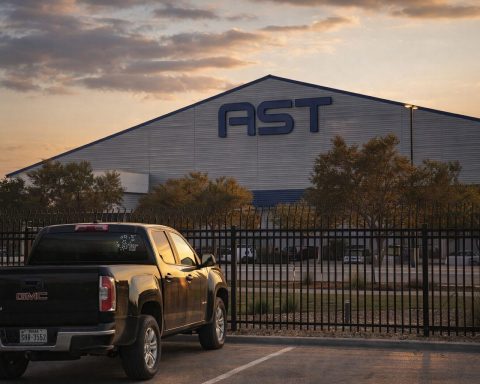
In late November, AST SpaceMobile announced a major U.S. manufacturing build‑out, adding new facilities in Midland, Texas and Homestead, Florida:
- Texas is now the primary manufacturing hub, with five facilities including a new Midland plant that can take BlueBird satellites from raw materials all the way to finished spacecraft.
- The Florida site expands capacity and diversifies AST’s footprint into another “business‑friendly” state.
- AST now has around 500,000 square feet of global manufacturing space and has more than doubled its workforce to over 1,800 employees, most of them in West Texas.
- Local coverage pegged AST’s market cap near $20 billion in late November, while earlier October analysis put the figure around $31 billion, underscoring how quickly the valuation can swing.
Articles today on trading sites frame this factory expansion as the “industrial backbone” for the BlueBird constellation, helping convince some traders that AST’s roadmap is moving from PowerPoint into hardware.TechStock²+1
3. New funding: $1 billion to fuel the constellation
Big constellations require big capital, and AST has just raised more of it.
In November, AST SpaceMobile announced a $1 billion financing package, combining convertible notes and a direct share offering to fund satellite production and launches.
- The stock initially fell about 5% on the dilution fears.
- But follow‑up analysis has reframed the raise as a critical step to extending cash runway while the company is still pre‑profit. Payload and other space‑industry outlets highlight that AST now boasts about $1.2 billion in cash and roughly $1 billion in contracted backlog.
Today’s tech‑stock recaps explicitly connect the funding, factory build‑out, and BB6 launch into a single narrative: AST is arming itself with the capital, capacity, and hardware needed to move from trial coverage to early commercial service.
4. Fresh institutional buying and conference visibility
Another small but symbolic catalyst arrived this morning: filings show that the State Board of Administration of the Florida Retirement System has added ASTS shares, a move highlighted in a MarketBeat instant alert today.
Meanwhile, AST has announced it will participate in the UBS Global Media and Communications Conference, giving management another high‑profile platform to pitch the story to institutional investors in early December.
Taken together, these developments help support the perception that AST is graduating from speculative micro‑cap to a name that larger funds have to at least consider.
Business snapshot: what AST SpaceMobile actually does
At its core, AST SpaceMobile wants to make your existing 4G/5G smartphone work directly with satellites, no special hardware required.
Key elements of the network:
- BlueWalker 3 prototype: Launched in 2022, it enabled the world’s first voice, video and 5G data calls from space to standard smartphones.
- BlueBird 1–5 commercial satellites: Launched in September 2024, these early‑generation satellites carry ~700‑square‑foot phased arrays and have already supported space‑based video calls with AT&T, Verizon, Vodafone, Rakuten, and Bell.
- Next‑gen BlueBirds (starting with BB6): AST says the new 2,400‑square‑foot satellites can support 10 GHz of processing bandwidth and peak speeds of up to 120 Mbps per coverage cell, enabling millions of daily connections (voice, messaging, video, and data).
- MNO integration: AST has partnerships or agreements in place with over 50 mobile network operators, representing nearly 3 billion subscribers, and will use spectrum licensed from those partners plus its own holdings.
- Regulatory progress: In January 2025, the FCC granted special temporary authority allowing AST to test satellite‑to‑cell service in the U.S. using AT&T and Verizon spectrum.
On top of earlier agreements with AT&T and Vodafone, AST recently signed a major partnership with Verizon to bring space‑based coverage to remote U.S. areas starting in 2026.
The broader market backdrop is also compelling: research firms estimate the direct satellite‑to‑phone cellular market could grow from about $2.5 billion in 2024 to more than $43 billion by 2034, with an annual growth rate over 30%.
This is the opportunity AST bulls are fixated on.
Q3 2025 results: rapid revenue growth, heavy losses
The last formal checkpoint for investors was Q3 2025 earnings, released on November 10.
Top line
- GAAP revenue:$14.7 million, up from about $2 million in the prior quarter and roughly $1.1 million in the year‑ago Q3 — a more than tenfold year‑over‑year jump.
- Revenue was driven largely by gateway hardware sales and milestones on U.S. government service contracts, not yet mass‑market consumer service.
However, the quarter missed Wall Street expectations:
- Analysts had been looking for roughly $19–20 million in revenue; the reported $14.7 million was around 30% below consensus.
Bottom line
- EPS: About –$0.45 per share, versus expectations near –$0.21 to –$0.22.
- Net loss: Approximately $122.9 million for the quarter, an improvement from roughly $172 million in Q3 2024 but still substantial.
Some trading commentary today notes pre‑tax losses near $160 million, highlighting how capital‑intensive AST’s rollout remains even as revenue scales.
Guidance and backlog
- AST reiterated second‑half 2025 revenue guidance of $50–75 million, implying a very heavy Q4 weighting after Q3’s $14.7 million.
- The company reported more than $1 billion in contracted revenue commitments (backlog).
Reactions were mixed: some outlets (Barron’s, Zacks, Nasdaq) emphasized the earnings and revenue miss, while others focused on improving year‑over‑year trends, the growing backlog, and the sustained demand from telecom partners.
Analyst forecasts: upside potential, but a wide spread
As of early December 2025, analyst forecasts for ASTS are all over the map.
Price targets and ratings
Different aggregators show different snapshots:
- MarketBeat forecast page:
- Average 12‑month target: about $45–46
- Range:$30 to $60
- That average represents significant downside from current prices, reflecting the fact that the stock has run well ahead of many previously published targets.
- MarketWatch analyst estimates:
- Average target price: around $73
- Average rating: “Overweight” across 12 ratings.MarketWatch
- TipRanks:
- Average target: roughly $72
- High: about $95
- Low: about $43
- The average target implies a move of roughly 20–30% relative to the price when those estimates were compiled.
- Public.com (retail‑focused broker):
- Shows 7 analysts with a “Buy” consensus and a 2025 price prediction near $59 — now below the live price after the recent rally.Public+1
A separate MarketBeat commentary note from late November characterizes overall sentiment as “mixed”, with roughly 3 Buy, 5 Hold, and 3 Sell ratings, and points out that ASTS recently traded well above one widely cited average target near $45.MarketBeat+1
In other words, depending on which dataset you consult, ASTS ranges from a consensus Buy with modest upside to a fully valued or even over‑extended story.
Revenue and earnings expectations
On the fundamentals side, most analysts still expect years of losses, but also a steep ramp in sales:
- Barron’s notes that consensus models see 2025 revenue around the mid‑$50 million range and 2026 revenue around $260–270 million, implying multiple‑fold growth year over year.
- Zacks highlights that consensus loss estimates for 2025 and 2026 have widened sharply after Q3, now implying deeper per‑share losses than previously forecast for both years.
A Trefis analysis in October argued that with a market cap around $31 billion, ASTS was trading at roughly 500x consensus 2025 revenue and more than 100x 2026 revenue, a valuation that assumes very optimistic execution.
Even after the subsequent pullback from October’s triple‑digit highs, AST still trades at lofty multiples of near‑term revenue by most traditional measures.
The bull case: “cell towers in space” and first‑mover advantage
A bullish thesis on AST SpaceMobile that resurfaced today on InsiderMonkey — summarizing a hedge‑fund‑style write‑up — captures much of the pro‑ASTS narrative:
- Massive addressable market
- Direct satellite‑to‑phone connectivity could be a $40+ billion global market by the 2030s, and that’s just one part of a broader satellite connectivity boom.
- Around 15% of the world’s 5.2 billion mobile users are disconnected at any given time — a gap AST wants to fill.
- True broadband, not just emergency texts
- Unlike Apple’s and Globalstar’s emergency‑only satellite texting or early Starlink/T‑Mobile text‑and‑basic‑app offerings, AST aims to provide full‑fledged 4G/5G broadband (voice, video, messaging, data) to standard phones.
- Deep telco partnerships and spectrum access
- Long‑term commercial agreements with AT&T and Vodafone, plus partnerships with Verizon, Rakuten, Bell, and many others, give AST direct access to licensed spectrum and built‑in distribution via existing carrier plans.
- A new joint venture (“SatCo”) with Vodafone aims to serve mobile operators across Europe, with Germany as a major operations hub.AST SpaceMobile+1
- Technology and patents
- AST claims roughly 3,800 U.S. patents and patent‑pending claims around its constellation and phased‑array technology.
- BlueWalker 3 and BlueBird 1–5 have already demonstrated real world video and 5G calls to regular smartphones on multiple continents — not just lab demos.
- Operating leverage if it works
- Once a critical mass of satellites is in orbit, incremental revenue could scale much faster than incremental costs, creating a potentially high‑margin recurring revenue business if adoption is strong.
For believers, ASTS is a high‑risk, high‑reward bet on becoming the “cell tower in space” platform of choice for global carriers — with today’s price turbulence seen as noise on a path to much larger long‑term value.
The bear case: huge losses, fierce competition, and sky‑high valuation
Skeptics — including recent notes from Zacks, Nasdaq, and Trefis — see a very different picture.
Key concerns:
- Persistent heavy losses and cash burn
- Despite revenue ramping from $2 million to $14.7 million quarter‑over‑quarter, AST still lost roughly $123 million in Q3 alone and is forecast to remain deeply unprofitable through at least 2026.
- Q3 EPS was more than double consensus loss expectations, raising questions about cost control and forecasting.
- Dilution and capital intensity
- The recent $1 billion convertible plus equity offering is a reminder that AST’s roadmap requires repeated access to capital markets — and that existing shareholders can be diluted along the way.
- Valuation vs. fundamentals
- With market cap estimates in the tens of billions and 2025 revenue likely under $100 million, AST trades at extreme multiples of near‑term sales, even by growth‑tech standards.
- Barron’s recently highlighted that AST was valued at roughly 50x projected 2027 EBITDA based on consensus, up from about 12x earlier in the year, after the stock’s massive rally.
- Intense competitive landscape AST is not the only company chasing direct‑to‑device connectivity:
- Starlink + T‑Mobile (“T‑Satellite”) are already rolling out text and app‑based satellite connectivity in the U.S., with more than 650 satellites in orbit and expanding support for apps like WhatsApp, Google Maps, and X.T-Mobile+2Starlink+2
- Lynk Global (which recently announced plans to merge with Omnispace) is also pursuing D2D, claiming proven, commercially licensed technology with mobile network partners.
- Apple and Globalstar provide satellite‑enabled emergency messaging and are exploring broader satellite features inside the iPhone ecosystem.
- Execution, regulatory, and technical risk
- AST must flawlessly execute multiple launches, scale manufacturing, maintain regulatory approvals in many countries, and integrate with dozens of carrier networks — all while its technology is still early in commercial deployment.
- Any launch failure, technical shortfall, or regulatory setback could materially impact the business case and the stock.
From this vantage point, ASTS looks like a speculative satellite startup priced more like a mature, high‑margin platform, leaving little room for error.
What to watch next
For traders and longer‑term investors following AST SpaceMobile, the coming weeks and months are packed with potential catalysts:
- BlueBird 6 launch — December 15, 2025
- The most immediate event. Successful launch and early performance data will be scrutinized for how well the new design scales, and whether AST can smoothly coordinate subsequent launches through March 2026.
- Updates on the five‑launch campaign
- Management has indicated plans for five launches by the end of Q1 2026. Investors will be watching the timeline, any schedule slips, and early metrics like coverage area, uptime, and throughput.
- Commercial milestones with AT&T, Verizon, and Vodafone
- Specific service launch dates, pricing structures, and early user metrics (even for limited‑beta coverage) will be key proof points that the model works outside of tests.
- Q4 2025 results and 2026 guidance
- To hit the $50–75 million second‑half revenue target, AST will likely need a big Q4. The company’s guidance and 2026 outlook will either reinforce or undermine the growth story.
- Further capital raises or balance sheet updates
- With capex demands remaining high, investors will keep a close eye on whether the recent $1 billion raise is enough to fund the next phase, or whether more capital — and dilution — is required.
- Evolving competitive landscape
- Starlink/T‑Mobile, Lynk/Omnispace, Apple/Globalstar and others continue to move quickly. Changes in their plans, new government programs, or shifts in spectrum policy could all impact AST’s runway.
Bottom line
On December 4, 2025, AST SpaceMobile sits at the center of one of the market’s most hotly debated stories:
- The bull side sees a company with real hardware in orbit, blue‑chip carrier partners, a first‑mover advantage in true broadband‑grade satellite‑to‑phone service, and exposure to a rapidly growing market that could be worth tens of billions of dollars.
- The bear side points to massive current losses, ongoing dilution, fierce competition, and a valuation that already prices in near‑flawless execution, arguing that the risk‑reward has become skewed after the stock’s multi‑hundred‑percent run.
For now, ASTS remains a high‑volatility, high‑conviction bet on a very specific vision of the future of mobile connectivity: one where “no signal” truly disappears.
As always, anyone considering the stock should carefully weigh technology risk, competitive dynamics, capital needs, and personal risk tolerance before making decisions.
This article is for informational and news purposes only and does not constitute investment advice, an offer, or a solicitation to buy or sell any securities.