NEW YORK, December 30, 2025, 10:25 ET
- AST SpaceMobile director Keith Larson bought 625 shares at $80 each, a regulatory filing showed.
- AT&T said BlueBird 6’s launch moves satellite-to-phone service closer, with beta testing targeted for the first half of 2026.
- The company is scaling a direct-to-device network that aims to connect standard smartphones from space, putting it in the same arena as SpaceX’s Starlink.
AST SpaceMobile director Keith Larson bought 625 shares of the company’s Class A stock at $80 apiece, according to a Form 4 filing dated Dec. 29. The filing said the transaction was executed under a Rule 10b5-1 plan — a pre-arranged trading plan — and left Larson with 2,015 shares held indirectly through an IRA.
The purchase lands as investors watch whether AST can turn its “direct-to-device” pitch into paying service. The term refers to connecting ordinary phones to satellites without special hardware, extending coverage where cell towers don’t reach.
AT&T has positioned that shift as near-term. In a Dec. 29 post, AT&T executive Robert Walters wrote that BlueBird 6’s launch was “bringing us one step closer to making broadband satellite connectivity available to our customers,” and said AT&T plans a beta satellite service for select customers and FirstNet users in the first half of 2026. ATT Newsroom
AST shares were down $0.48, or about 0.7%, at $71.47 by midday on Monday, MarketBeat reported. The stock has traded between $17.50 and $102.79 over the past 52 weeks, according to the same report.
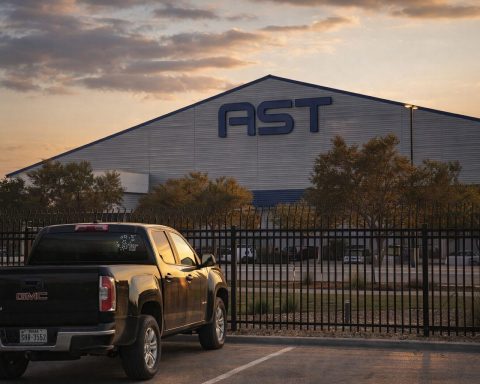
AST, based in Texas, is building a space-based cellular network that it says can deliver 4G and 5G broadband directly to everyday smartphones. That approach depends on large antenna arrays in orbit and ground “gateways” that link satellite traffic back into terrestrial networks.
The company says its next-generation BlueBird satellites use communications arrays of nearly 2,400 square feet and target peak speeds of 120 megabits per second per coverage cell — the footprint a satellite beam can serve at a time. AST says BlueBird 6, the first of the next-generation fleet, launched on Dec. 23 from India’s Satish Dhawan Space Center.
Jalopnik described BlueBird 6 as the largest satellite to reach low-Earth orbit and said AST plans to send about 50 more satellites up next year as it builds out its constellation. The report framed the push as a challenge to SpaceX’s Starlink network, the best-known satellite internet system.
For shareholders, the near-term question is whether AST can keep adding satellites on schedule while proving the service works at scale. Coverage, latency and handoffs between towers and satellites are among the operational hurdles.
The market is also watching how quickly carriers move from demonstrations to commercial offerings. Satellite-to-phone service is typically pitched as a complement to existing networks, filling coverage gaps and providing resiliency in disasters.
Insider activity can draw attention in companies with big buildout costs and long lead times. Rule 10b5-1 plans, like the one cited in Larson’s filing, are often used to set trades in advance and reduce the risk of trading on material nonpublic information.