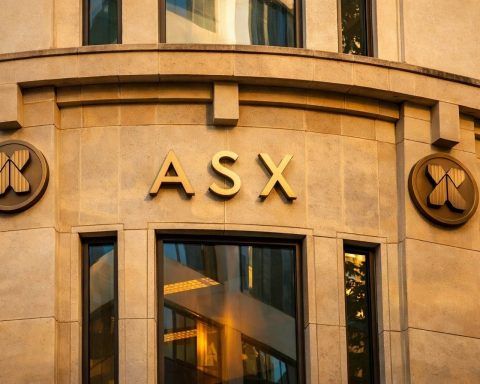

Australia’s share market ended Friday deep in the red, capping a bruising week as doubts over global interest rate cuts and a sharp Wall Street tech sell‑off rippled through the ASX.
The S&P/ASX 200 index closed at 8,634.5, down 118.9 points or 1.36%, its weakest finish since mid‑July and the fourth straight daily loss.Market Index+1 Roughly A$37 billion in value was erased in a single session, while the index now sits about 5% below record highs hit last month, translating to around A$140 billion in market losses from the peak.
All major sectors fell except energy, with technology, banks and miners leading the slide. For investors, Friday’s rout underscored just how tightly the ASX is now tied to global rate expectations, AI‑fuelled tech valuations and Chinese growth data.
ASX stock market snapshot – Friday 14 November 2025
Key closing levels on the ASX were:Market Index+1
- S&P/ASX 200: 8,634.5 (‑1.36%)
- All Ordinaries: 8,907.0 (‑1.41%)
- Small Ordinaries: 3,652.2 (‑1.74%)
- S&P/ASX All Tech: 3,592.5 (‑2.75%)
For the week, the benchmark index shed about 1.5%, marking its third straight weekly decline, and is now around 5% below its recent record, effectively wiping out roughly four months of gains.
Breadth was very weak: in the broader S&P/ASX 300, decliners outnumbered gainers by nearly 5 to 1 (228 vs 47), highlighting just how widespread the selling pressure was.
Why the ASX tumbled: Wall Street tech slide, rate‑cut doubts and weak China data
1. Wall Street’s worst day in a month hits local sentiment
Friday’s decline in Sydney followed a sharp and broad sell‑off on Wall Street, where US tech stocks led the biggest one‑day fall in about a month. The S&P 500 dropped around 1.7% and the tech‑heavy Nasdaq fell about 2.3%, as investors questioned whether AI‑linked stocks had simply run too far, too fast.
Those concerns spilled across global markets. Futures had already pointed to a steep fall in the ASX 200 at the open, and the index never meaningfully recovered through the day.
2. Rate‑cut hopes are fading – in the US and Australia
The bigger story behind the volatility is a rapid repricing of interest‑rate expectations:
- US traders have grown less confident the Federal Reserve will deliver a widely expected rate cut in December, particularly after policymakers such as Neel Kashkari signalled hesitation.
- Bond yields have pushed higher, undercutting appetite for expensive growth stocks – especially tech and AI names.
Locally, the picture is similar:
- A strong Australian labour market, with employment jumping more than expected and unemployment edging down to 4.3%, has led several major banks and economists to push back expectations for RBA easing.
- Earlier‑than‑expected inflation prints have reinforced the view that the Reserve Bank of Australia may need to keep rates high for longer, or at least move more cautiously on cuts.
In short: the market had priced in a smoother, faster rate‑cut cycle. As that narrative unravels, equity valuations – especially in long‑duration, growth and AI‑exposed names – are being squeezed.
3. Soft Chinese data adds pressure to miners
Fresh data from China showed industrial production and retail sales growing at their slowest pace in over a year, stoking worries about global demand and commodity consumption.
For an index heavily skewed towards mining giants and resource stocks, weaker Chinese growth is a direct hit to sentiment. That dynamic was painfully obvious on Friday, as the materials sector lagged.
Sector breakdown: tech wreck, banks under strain, energy just in the green
Performance by major sectors in Friday’s session (S&P/ASX sector indices):Market Index+2Business Recorder+2
- Information Technology: ‑4.42%
- Financials: ‑1.86%
- Materials: ‑1.43%
- Consumer Discretionary: ‑1.30%
- Health Care: ‑0.92%
- Real Estate: ‑0.69%
- Industrials: ‑0.68%
- Communication Services: ‑0.70%
- Consumer Staples: ‑0.16%
- Utilities: ‑0.07%
- Energy: +0.20% (the only sector to finish higher)
Technology: steepest falls as “AI darlings” derate
The Information Technology sector once again bore the brunt of selling, sliding more than 4% on the day and almost 19% over the past month.
Notable moves included:
- Megaport (MP1): ‑9.6%
- Weebit Nano (WBT): ‑8.6%
- Catapult Sports (CAT): ‑7.8%
- Life360 (360): ‑6.7%
- Xero (XRO): another decline after heavy falls earlier in the week.
These are precisely the kinds of high‑growth, high‑valuation tech names that benefit most when rates are falling – and feel the most pain when rate‑cut bets are dialled back.
Banks: CBA leads big four lower amid rate uncertainty
The big banks were hammered as investors weighed the prospect of “higher for longer” rates against competition for deposits and potential margin pressure:
- Commonwealth Bank (CBA) dropped around 1.8% on the day and 11% for the week, its sharpest weekly fall in roughly two years.
- ANZ slumped about 2.6%, NAB fell 1.7%, and Westpac declined 1.6%.
Reuters data showed the financials index down as much as 1.9% intraday, marking its weakest level since mid‑August and leaving the sector on track for its worst week since March.
Miners and gold stocks: caught between China worries and metals volatility
Resource stocks also came under heavy pressure:
- The miners sub‑index lost about 2.7%, with BHP and Rio Tinto down around 2% intraday and about 1.3–1.4% at the close.
- Fortescue slipped around 1%, while South32 shed more than 3%.
Despite a firmer gold price over the week, gold producers dropped sharply on Friday, with names like Evolution Mining, Newmont and Northern Star falling between roughly 2% and 3%, as traders locked in profits after a strong recent run in the gold sub‑index.
Energy: rare bright spot on a dark day
Energy stocks were the only sector to finish in positive territory, with the energy index eking out a 0.2% gain.
- Santos rose about 1.2%, and Woodside Energy edged around 0.3% higher, helped by a roughly 2% jump in global oil prices after supply concerns flared following a drone strike on a key Russian oil hub.
Biggest ASX winners and losers today
TPG Telecom’s 32% plunge – but there’s a twist
On paper, TPG Telecom (TPG) was the standout loser on the ASX, with the share price down just over 32% by the close.
However, this crash was largely technical rather than fundamental:
- TPG traded ex‑dividend following approval of a A$3 billion capital return, equal to A$1.61 per share – comprising a capital reduction and a special dividend.
- Once the right to that payout detached, the share price adjusted lower by a similar amount, amplifying the apparent fall on an already weak day for the broader market.
In dollar terms, the roughly A$1.66 share price drop was broadly in line with the A$1.61 per share capital return, meaning most of the move reflects that distribution rather than a sudden collapse in underlying value.
Tech and growth names dominate the losers’ list
According to FNArena’s “Winners and Losers” table for the ASX 300:FNArena.com+1
Top decliners (% change):
- TPG Telecom (TPG): ‑32.14%
- Megaport (MP1): ‑9.62%
- Weebit Nano (WBT): ‑8.63%
- Lotus Resources (LOT): ‑8.33%
- Hub24 (HUB): ‑7.98%
- Catapult Sports (CAT): ‑7.76%
- Silex Systems (SLX): ‑7.58%
These names reflect the core themes of the day: high‑beta tech, growth and rate‑sensitive financials under pressure.
Top gainers (% change):
- Immutep (IMM): +5.77%
- DroneShield (DRO): +3.56%
- Propel Funeral Partners (PFP): +2.12%
- Orica (ORI): +1.92%
- Karoon Energy (KAR): +1.84%
- Domino’s Pizza Enterprises (DMP): +1.49%
- Ebos Group (EBO): +1.29%
Notably, Orica, Santos, Pilbara Minerals and Amcor all featured among the day’s better‑performing large caps, suggesting investors were rotating towards more defensive or cash‑generative names, plus selected energy and lithium stocks.
Property & REITs: AREITs slump as sentiment softens
Real estate investment trusts (REITs) did not escape the broader risk‑off tone:
- The ASX 200 AREIT Index fell 2.58% over the week, with most major listed property names in the red.
- HMC Capital (‑6.1%), Ingenia Communities (‑5.9%) and Goodman Group (‑4.6%) were among the worst weekly performers, while retail and diversified REITs such as Growthpoint, HomeCo Daily Needs REIT and Vicinity Centres also slipped.
Rising bond yields typically pressure yield‑sensitive sectors like REITs, as investors reassess the relative attractiveness of property income against safer fixed‑income returns.
Is this the start of a deeper correction?
Market participants are increasingly debating whether Friday’s sell‑off is just a shake‑out or the next leg of a deeper equity market correction:
- Some local strategists told ABC that a correction “has already started”, warning that further downside is possible if US data or corporate earnings disappoint.ABC
- The volatility index (VIX) in the US has spiked, signalling heightened uncertainty and rising demand for downside protection.
At the same time, trading volumes on the ASX suggest that:
- Demand stepped back rather than outright capitulated – prices fell sharply early and then tracked sideways, with below‑average volumes in some parts of the market.
- That can indicate a “buyers’ strike” rather than aggressive forced selling, leaving room for sharp counter‑rallies if macro news stabilises or improves.
What ASX investors are watching next
Looking ahead, several events are likely to steer the ASX over the coming days and weeks:Small Caps+2MarketPulse+2
- RBA minutes (Tuesday):
Markets will comb through the minutes of the latest Reserve Bank meeting for any hints on how worried policymakers are about sticky inflation and how firmly they are leaning against near‑term cuts. - US Federal Reserve commentary & data:
Any fresh speeches or economic releases that influence the odds of a December Fed rate move will likely ripple directly into global risk assets – including the ASX. - Chinese economic data and commodity prices:
Given the heavy weighting of miners, traders will closely track iron ore, copper and energy prices, along with any signs of stabilisation or further weakness in Chinese industrial activity. - Local corporate updates and AGM season:
Trading updates, capital‑management decisions (such as TPG’s capital return) and AGM commentary will continue to drive stock‑specific volatility.
Takeaways for investors
For investors following “ASX stock market today” updates or reading this via Google News and Discover, Friday’s session on 14 November 2025 highlights several key themes:
- Valuation risk is real: High‑multiple tech and AI‑linked names are most exposed when the market questions the rate‑cut path.
- Macro drives micro: Moves in the US Federal Reserve, Chinese data and domestic economic prints are directly shaping daily price action on the ASX.
- Defensives and cashflow matter: On a day of heavy selling, companies with robust balance sheets, clearer earnings visibility and essential‑service characteristics held up relatively better.
- Corrections can create opportunities – and traps: A 5% pull‑back from record highs, plus a wipe‑out of four months of gains, will tempt bargain hunters, but volatility and macro uncertainty remain elevated.
As always, this coverage is general news and information, not financial advice. Anyone considering changes to their portfolio should assess their own objectives, risk tolerance and time horizon and consider consulting a licensed financial adviser.