Marcin Frąckiewicz

CEO of TS2 Space and founder of TS2.tech. Expert in satellites, telecommunications, and emerging technologies, covering trends in space, AI, and connectivity.

Connected Malaysia 2025: A Complete Guide to Fiber, Mobile, Satellite & Public Internet Access

Connected Malaysia 2025: A Complete Guide to Fiber, Mobile, Satellite & Public Internet Access

JENDELA (Jalinan Digital Negara) runs 2020–2025 and, by 2022 Phase 1 exceeded targets with 4G reaching about 97% of the population and fiber broadband deployed to 7.74 million premises, with Phase 2 targeting 100% population coverage in populated areas by end-2025. 4G coverage is about 97% of populated areas, with roughly 3% in geographies where access remains difficult, particularly in remote Sabah and Sarawak. Starlink Malaysia received a 10-year license in 2023, became commercially available mid-2023, with a monthly RM220 service, hardware kits priced around RM2,300 (standard) or RM11,000 (enterprise), delivering up to about 100 Mbps down and 20–40 ms
15 May 2025
Internet Access in Singapore: A Comprehensive Overview

Internet Access in Singapore: A Comprehensive Overview

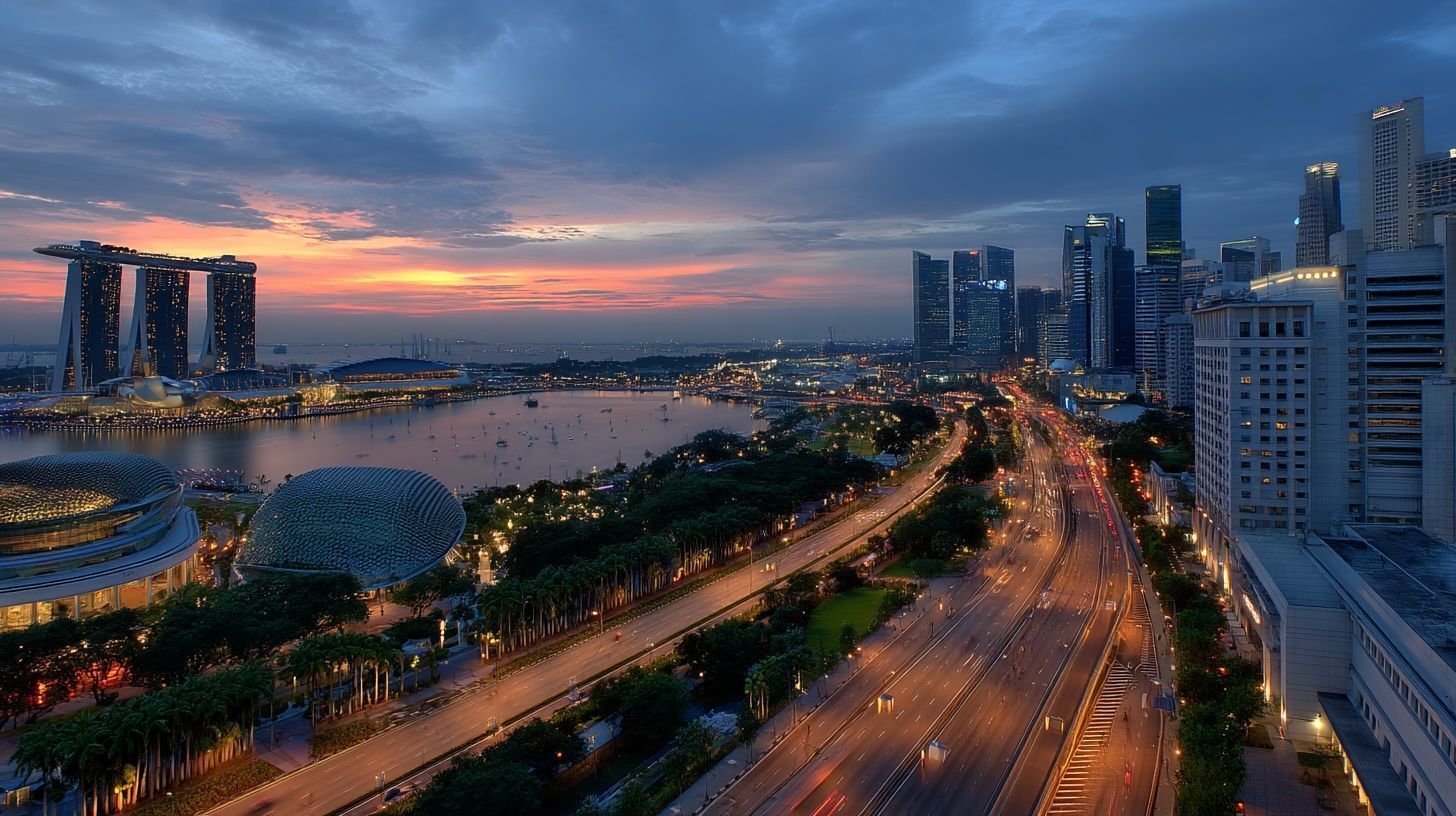
The nationwide fiber backbone, the Next Gen NBN, uses NetLink Trust for passive infrastructure and a structural separation that lets Singtel, StarHub, and M1 jointly serve over 98% of fixed-line subscribers. Singapore’s average fixed broadband speed was about 336 Mbps in January 2025, making it the fastest globally. The government plans a 10 Gbps symmetric nationwide upgrade by 2026, with 10 Gbps trials already underway by MyRepublic. By end-2024, 5G coverage was effectively island-wide, with StarHub reporting >99% outdoor coverage and Singtel delivering full 5G across MRT underground lines. 3G networks were retired in 2024, with M1 shutting down in
15 May 2025
Internet Access in Bangkok, Thailand: A Comprehensive Guide

Internet Access in Bangkok, Thailand: A Comprehensive Guide

Bangkok’s connectivity is among Southeast Asia’s best, with Thailand ranking 13th globally for fixed broadband speeds in early 2025 at about 237 Mbps, driven by Bangkok’s dense fiber backbone and data centers. Bangkok was among the first Thai cities to deploy FTTH, making fiber the default home internet in urban areas with typical speeds from 100 Mbps to 1 Gbps and providers offering plans such as AIS Fibre 100 Mbps for 399 THB/month and 1 Gbps for 999 THB/month. 4G coverage is essentially universal in Bangkok and 5G began in 2020, with 5G in the city center typically around 100
15 May 2025
Internet Access in Phuket: A Tourist-Focused Overview

Internet Access in Phuket: A Tourist-Focused Overview

Phuket has widespread fiber-to-the-home (FTTH) with speeds up to 1 Gbps, and some cases 2 Gbps. AIS announced by mid-2024 that its 5G network reached 95% of Thailand’s population, including Phuket. 5G launched in 2020 and Phuket was among the first areas to receive it, along with Bangkok and Chiang Mai. Patong City launched free citywide Wi‑Fi using Cisco and CAT Telecom, via the SmartCityFreeWiFi network managed by Meraki. AIS tourist SIMs include an 8-day package for about 399 THB with 25 GB of high-speed data, plus 15- and 30-day options. 4G speeds in Phuket typically range 30–100 Mbps, while
15 May 2025
Maldives’ Internet Revolution: From Remote Atolls to a 5G-Powered Paradise

Maldives’ Internet Revolution: From Remote Atolls to a 5G-Powered Paradise

Dhiraagu (Dhivehi Raajjeyge Gulhun) was established in 1988 as the Maldives’ first telecom operator and former state monopoly. By 2000, basic telephone service had reached all inhabited islands and dial-up internet was available nationwide. In 2003 Focus Infocom received a second ISP license, and in 2005 Wataniya (Ooredoo Maldives) entered mobile service, ending Dhiraagu’s 17‑year monopoly. The Maldives’ telecom market is a duopoly dominated by Dhiraagu and Ooredoo, with Dhiraagu posting about MVR 2.8 billion revenue in 2019 and Ooredoo about MVR 2.03 billion, and Dhiraagu is 52% owned by Batelco and roughly 42% by the Maldivian government. 2G service
16 April 2025
Thailand’s High-Speed Internet Revolution: 5G, Fiber, and the Battle to Bridge the Digital Divide

Thailand’s High-Speed Internet Revolution: 5G, Fiber, and the Battle to Bridge the Digital Divide

Thailand connected to the international Internet in the late 1980s and moved to full TCP/IP by 1992. In 2004, unmetered flat-rate broadband plans were introduced, spurring rapid broadband growth from 2005 onward. The Net Pracharat Village Broadband Internet project extends high-speed internet to over 75,000 villages. Thailand’s fixed broadband ranking rose from 34th in 2018 to 11th fastest globally by January 2024. By 2022, about 21.3 million households in Thailand had fixed broadband, nearly doubling from 2016. In late 2023 AIS acquired fixed ISP 3BB and its fiber assets, becoming the largest fixed broadband provider with about 4.7 million subscribers
12 April 2025
Wi-Fi on Everest, Firewalls in Lhasa: Inside Tibet’s Internet Revolution

Wi-Fi on Everest, Firewalls in Lhasa: Inside Tibet’s Internet Revolution

A China Mobile 5G base station was installed at Mount Everest base camp at 6,500 meters in 2020, making it the world’s highest 5G site. By 2019, more than 98% of Tibet’s villages had fiber‑optic broadband and 4G mobile coverage due to government investment. By 2018, government universal service projects connected over 5,000 villages with broadband across Tibet. End of 2019 Tibet had about 50,000 mobile base stations, rising to 60,500 by late 2022. By 2023, 5G network coverage extended to all towns in Tibet. By November 2022 Tibet had 1.28 million fixed broadband internet users, with 98% of those
12 April 2025
High-Speed Himalayas: Inside Nepal’s Race to Connect Every Peak and Village

High-Speed Himalayas: Inside Nepal’s Race to Connect Every Peak and Village

Nepal’s mobile market is led by Nepal Telecom with about 57% share, Ncell around 36%, and Smart Telecom about 6%. WorldLink Communications is the largest fixed broadband ISP with 972,781 subscribers as of 2024, roughly 30% of Nepal’s fixed broadband connections. FTTH subscribers surpassed 2.5 million in January 2023 and reached about 2.89 million by late 2024, with home plans typically 20 Mbps to 100–300 Mbps and premium options up to 600 Mbps or 1 Gbps. 4G coverage reached about 88% of the population by 2023, with Nepal Telecom reporting 11.5 million 4G users and total mobile broadband subscriptions around
5 April 2025
Bridging 17,000 Islands: Inside Indonesia’s Internet Revolution

Bridging 17,000 Islands: Inside Indonesia’s Internet Revolution

Telkomsel dominates Indonesia’s mobile market with about 45% of subscribers (roughly 153 million) in 2024, and IndiHome now accounts for roughly 75% of fixed broadband after the integration. IndiHome fiber-to-the-home footprint has passed 38 million homes, with at least around 10 million connected by mid-2024. The Palapa Ring backbone spans over 13,000 km of fiber, linking western, central, and eastern Indonesia to provide high-capacity backhaul beyond Java. Internationally, Indonesia is tied to multiple undersea cables, including new trans-Pacific links Project Echo and Bifrost (Meta) that will boost trans-Pacific capacity by about 70%, along with the Apricot cable planned to deliver
2 April 2025
From Yurts to YouTube: Inside Mongolia’s Internet Revolution

From Yurts to YouTube: Inside Mongolia’s Internet Revolution

Univision LLC leads Mongolia’s internet market with about 62% market share and is part of the Unitel group, offering fiber-optic broadband and IPTV. MobiCom Corporation (including Mobinet) is the second-largest ISP with roughly 15% market share, and operates both mobile networks and internet services. Skymedia Corporation holds around 10% of the ISP market and Mobinet LLC about 3%, with smaller providers like ONDO filling the rest. In mobile, Mongolia is served by four operators—MobiCom, Unitel, Skytel, and G-Mobile—with 2014 data showing MobiCom at about 39.5% and Unitel at about 35.5% of mobile subscriptions. About 69% of Mongolia’s population lives in
2 April 2025
Internet Access in Kiribati: Bridging the Digital Divide Across Remote Pacific Islands

Internet Access in Kiribati: Bridging the Digital Divide Across Remote Pacific Islands

Kiribati comprises 33 atolls spread across 3.5 million square kilometers of ocean. As of January 2024, there were about 73,300 internet users, representing 54.4% of the population. In early 2024, there were about 69,200 mobile cellular connections, equal to 51.4% of the population. All international and inter-island connectivity currently depends on satellite links, and Kiribati has no submarine fiber cable. Amalgamated Telecom Holdings Kiribati Ltd (ATHKL), trading as Vodafone Kiribati, is the main operator after acquiring Telecom Services Kiribati Ltd in 2015 and upgrading 3G/4G coverage in Tarawa and Kiritimati. Ocean Link launched in 2019 to introduce competition and extend
22 March 2025
Internet Access in Somalia: Growth, Challenges, and the Future of Connectivity

Internet Access in Somalia: Growth, Challenges, and the Future of Connectivity

As of early 2024, Somalia had about 5.08 million internet users, a 27.6% penetration, up from around 2% in 2017, with more than 13 million people offline. Internet use is concentrated in urban centers such as Mogadishu and Hargeisa, while fixed broadband remains scarce, with only about 1% of Somalis having a high-speed fixed connection (>256 kbps). There were 10.10 million cellular mobile connections active in early 2024, about 54.8% of the population, and 4G LTE coverage reaches roughly 50–60%. By late 2024, at least three telecoms had launched initial 5G services in major urban centers, with Hormuud planning to
20 March 2025

Stock Market Today

Broadcom Stock Gets a Google AI Spend Lift as Jefferies Sees 60% Upside

Broadcom Stock Gets a Google AI Spend Lift as Jefferies Sees 60% Upside

7 February 2026
Google raised its 2026 capital expenditure forecast to $175 billion–$185 billion, with most spending expected on data-center chips. Broadcom shares rose about 2% after the announcement, while Nvidia and AMD slipped. Jefferies reiterated a buy rating on Broadcom, maintaining a $500 price target, implying a 62% upside from Wednesday’s close.
No $2,000 IRS stimulus check is coming in February 2026 — but Trump’s tariff-check talk keeps the rumors alive

No $2,000 IRS stimulus check is coming in February 2026 — but Trump’s tariff-check talk keeps the rumors alive

7 February 2026
The IRS has not announced new federal stimulus payments for February 2026, and Congress has not approved fresh checks. Trump told NBC he is considering $2,000 tariff rebate checks but has not committed, saying any payout would likely come later in 2026. The IRS warns taxpayers to ignore texts and emails about “stimulus payments” and verify notices through official channels.
Go toTop