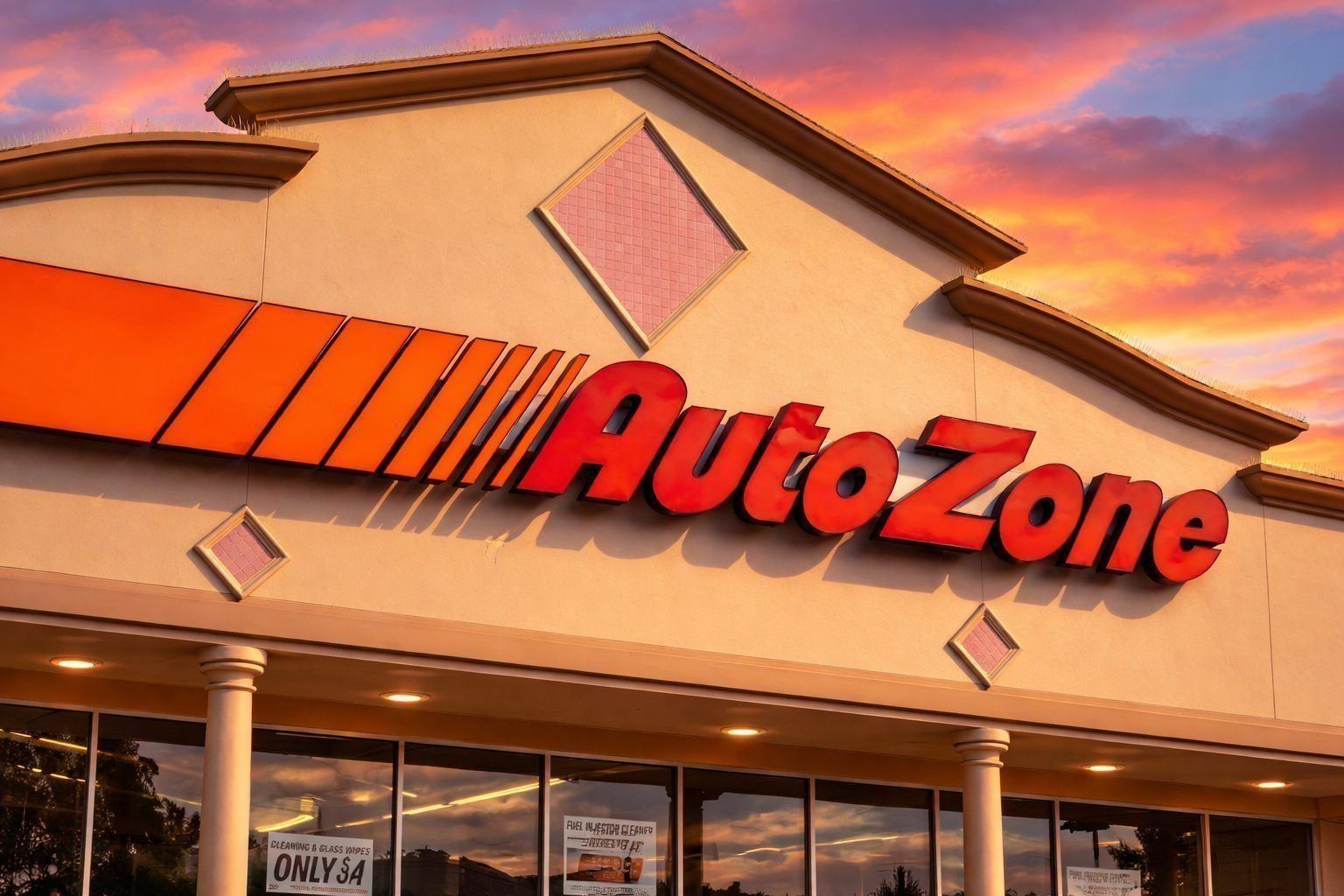
AutoZone, Inc. (NYSE: AZO), the largest U.S. retailer of aftermarket auto parts and accessories, just delivered a volatile 48 hours on Wall Street. After fiscal Q1 2026 earnings missed expectations, the stock dropped sharply and analysts rushed to trim price targets — but most still argue the long‑term story is intact. Wikipedia+1
As of December 10, 2025, AutoZone shares are trading in the mid‑$3,400s, roughly 20–25% below their 52‑week high near $4,388, giving the company a market cap around $58 billion. StockAnalysis+1
AutoZone Stock Today: From Record Highs to a Post‑Earnings Hangover
- Recent price action: The stock plunged about 6.7% on December 9, closing near $3,516 and ranking as the single worst performer in the S&P 500 that day after earnings disappointed Wall Street. Barron’s+1
- Current levels (Dec 10): AZO is fluctuating around $3,400–$3,450 intraday, down roughly 1–2% on the session and well off its 52‑week high of $4,388.11, but still above the 52‑week low of $3,162.00. StockAnalysis+1
- Valuation snapshot:
- Trailing twelve‑month EPS is around $143–147 per share.
- That puts AZO at roughly 23–24× trailing earnings, versus about 19× for the average U.S. specialty retailer and a higher multiple for some peers. Simply Wall St+1
- Beta is low (≈0.4), underscoring the stock’s historically defensive character. StockAnalysis+1
In other words, investors are not dumping a broken business — they’re repricing a high‑quality growth story that just hit some near‑term turbulence.
What AutoZone Reported in Fiscal Q1 2026
AutoZone reported results for its first quarter of fiscal 2026 (12 weeks ended in late 2025) on December 9.
Top line: Strong sales growth
- Revenue: About $4.63 billion, up 8.2% year‑over‑year from roughly $4.28 billion. AInvest+1
- Same‑store sales (comps):
- Global same‑store sales grew around 4.7–5.5%, slightly below Wall Street’s 5.6% expectation. AInvest+2Nasdaq+2
- Domestic comps were roughly 4.8%, while international comps were stronger, with double‑digit growth in some markets. Finviz+1
- Commercial business: Commercial (do‑it‑for‑me) sales rose around 14–15%, continuing a multi‑year trend of outgrowing the DIY segment. AInvest+1
In short, customers kept coming; the issue was profitability, not demand.
Earnings and margins: The heart of the problem
- Earnings per share (EPS):
- EPS came in a bit above $31 per share, down about 4–5% from the prior year’s ~$33.4 and below analyst expectations that clustered in the mid‑$32 range. AInvest+2Insider Monkey+2
- Net income:
- Net income fell about 6% to roughly $531 million, compared with about $565 million a year ago. AInvest
- Profit margins:
- AutoZone’s trailing net margin slipped from 14.2% to 12.8%, even as revenue continued to grow. Simply Wall St+1
- Management and analysts point to two main culprits:
Despite this pressure, AutoZone has reportedly remained profitable in this quarter for more than 20 consecutive years, underscoring the resilience of its business model. AInvest+1
Expansion at Full Throttle: $1.6 Billion Capex and 7,700+ Stores
While margins got hit, AutoZone is pressing the accelerator on long‑term growth.
Store footprint and megahubs
- AutoZone now operates more than 7,700 stores worldwide, including the U.S., Mexico and Brazil. AInvest+2We Are Memphis+2
- In Q1 alone, the company opened 53 net new stores:
- 39 in the U.S.
- 12 in Mexico
- 2 in Brazil. AInvest+1
- The chain has 137 megahub locations, large, high‑inventory stores that feed surrounding outlets. Management plans to open at least 30 more megahubs in FY 2026 and ultimately reach about 300 megahubs worldwide. We Are Memphis+1
Capital expenditure plan: Big spending, bigger ambitions
On the Q1 call, CEO Phil Daniele outlined a bold investment program: We Are Memphis+2AInvest+2
- $1.6 billion in capital expenditures (Capex) in FY 2026, focused on:
- New stores in the U.S. and international markets
- Distribution centers and supply chain capacity
- Technology and automation in key hubs
- The company intends to repeat roughly the same level of Capex in FY 2027, signaling a multi‑year expansion cycle.
For investors, this raises the key question: Will this spending drive enough traffic, sales and operating leverage to offset the current margin squeeze?
Why AutoZone Shares Suddenly Plunged
The numbers themselves aren’t disastrous — sales are growing solidly, and AutoZone remains highly profitable. So why did the stock get hammered?
1. A classic expectations reset
The sell‑off was primarily about expectations vs. reality:
- EPS in the low $31s vs. expectations in the mid‑$32s.
- Same‑store sales growth just a tick below forecasts. Nasdaq+2Barron’s+2
- Margins squeezed harder than many investors modeled, with net margin dropping more than a full percentage point over the last year. Simply Wall St+1
With AZO trading near record highs and at a premium multiple before earnings, the bar was high — and the market punished even a modest miss.
2. Tariffs, LIFO and higher SG&A
Commentary around the results highlighted three key headwinds: AInvest+2Nasdaq+2
- Tariffs – Higher import costs on auto parts weighed on gross margin.
- LIFO accounting – A roughly $98 million LIFO charge reduced EPS, even though the impact is non‑cash.
- Higher operating expenses – Selling, general and administrative (SG&A) costs rose as AutoZone accelerated store and megahub openings, boosted technology investments, and increased wages.
Analysts generally view some of these pressures — especially LIFO and growth‑driven SG&A — as temporary or strategic, but the market reaction shows investors hate surprises, even if they’re “good” spending.
3. Leverage and negative equity make misses more sensitive
Simply Wall St and other analysts flagged AutoZone’s high leverage and negative shareholders’ equity, largely the result of years of aggressive share buybacks. Simply Wall St+1
That structure has historically boosted EPS growth and returns on equity — but it can also make investors more nervous when margins compress, because:
- There’s less balance‑sheet cushion if growth slows.
- The company is choosing to pour billions into buybacks and Capex simultaneously.
How Wall Street Reacted: Price Targets Cut, Ratings Still Strong
The morning after earnings, Wall Street analysts moved fast — not to downgrade the stock, but to trim price targets.
Fresh price target cuts (Dec 10, 2025)
Recent actions include: MarketBeat+3Benzinga+3TipRanks+3
- DA Davidson: Target cut from $4,850 to $4,500, rating Buy.
- BMO Capital: Target $4,600 → $4,400, rating Outperform.
- Guggenheim: Target $4,600 → $4,400, rating Buy.
- Mizuho: Target $4,050 → $3,850, rating Outperform.
- Barclays: Target $4,510 → $4,318, rating Overweight.
- UBS: Target $4,800 → $4,325, rating Buy, citing elevated investment spending. Investing.com+1
- Truist: Target $4,499 → $4,076, rating Buy / Strong Buy, noting near‑term margin pressure from LIFO and higher SG&A. TipRanks
The theme: lower numbers, same bullish stance.
Consensus: Still a “Strong Buy” with double‑digit upside
Across major data providers, the picture is remarkably consistent:
- StockAnalysis.com:
- 21 analysts cover AZO, with a “Strong Buy” consensus.
- Average 12‑month price target: about $4,396, implying roughly 28% upside from recent prices.
- Range: $3,678–$4,850. StockAnalysis+1
- Public.com:
- 22 analysts; 55% Strong Buy, 45% Buy, 0% Hold/Sell.
- Average target around $4,456. Public
- GuruFocus (BMO article):
- Average Street target near $4,486, about 28% above a pre‑selloff price around $3,497.
- Average brokerage recommendation roughly equivalent to “Outperform.” GuruFocus
Even after across‑the‑board target cuts, Wall Street, as a group, still sees meaningful upside from today’s level — but with more emphasis on execution risk.
Earnings and Revenue Forecasts: Can AutoZone Grow Into Its Multiple?
Analyst models suggest AutoZone’s current valuation assumes steady mid‑ to high‑single‑digit growth in the years ahead.
From StockAnalysis’ aggregated forecasts: StockAnalysis+1
- Revenue:
- FY 2025 (actual): ~$18.9 billion
- FY 2026 (forecast): $20.67 billion (+9.15%)
- FY 2027 (forecast): $22.08 billion (+6.8%)
- EPS:
- FY 2025: about $144.9
- FY 2026: $155.5 (+7.4%)
- FY 2027: $183.5 (+18.0%)
Simply Wall St’s research points to similar expectations: roughly 8–9% annual earnings growth and 7% revenue growth over the medium term. Simply Wall St
If AutoZone can hit those numbers while stabilizing margins near current levels, today’s mid‑20s P/E multiple looks demanding but not outrageous for a durable, high‑return compounder. If not, the stock’s premium could compress further.
Technical and Sentiment Check: Breakdown or Buy‑the‑Dip?
Short‑term technical and sentiment signals are…mixed.
- Technical rating: Some platforms, like Investing.com, currently flag AZO as a “Strong Sell” on short‑term technical indicators after the breakdown from recent highs. Investing.com
- Trend‑following view: MarketBeat/Finviz argue that the pullback is a “textbook trend‑following buy signal”, noting that the long‑term uptrend remains intact and that price has pulled back toward multi‑year support. Finviz
- Institutional ownership: Institutions own well over 90% of AZO shares and have generally been net buyers in 2025, though they took some profits in early Q4 as the stock peaked. Finviz+1
In other words, momentum traders see a broken chart; trend‑followers see a retest of support in a long‑running uptrend. Which camp you agree with depends on your time horizon.
Key Risks Investors Are Watching
Before deciding whether this dip is attractive or dangerous, it’s worth highlighting the main risk factors the latest reports have brought into focus:
- Margin pressure could stick around
- Tariffs and cost inflation may not recede quickly.
- Elevated SG&A from rapid expansion and technology upgrades may keep operating margins under pressure for several quarters. AInvest+2TipRanks+2
- Leverage and negative equity
- AutoZone’s strategy of heavy buybacks has created negative shareholders’ equity and a leveraged balance sheet.
- While this can amplify returns when times are good, it reduces flexibility if growth slows or macro conditions worsen. Simply Wall St+1
- Execution risk on a huge Capex plan
- The company plans to spend $1.6 billion annually on Capex for at least FY 2026 and FY 2027.
- Those dollars must translate into higher sales, better service levels and stronger competitive positioning — otherwise, investors may see it as expensive growth for modest incremental returns. We Are Memphis+2AInvest+2
- Macro and sector headwinds
- Auto parts retail has historically been resilient, but extended economic weakness, changes in driving behavior, or faster‑than‑expected EV adoption could weigh on long‑term demand for certain categories.
What Might Make the Bull Case Work?
Despite the sell‑off, there is a coherent bull case that explains why so many analysts remain positive:
- Resilient demand: The automotive aftermarket tends to be defensive — people maintain vehicles longer in uncertain times. AutoZone’s revenue growth and comps show that demand remains healthy. Nasdaq+2AInvest+2
- Scale and network advantage: With over 7,700 stores and a fast‑expanding megahub network, AutoZone is difficult to match on availability and speed for many competitors. We Are Memphis+2Wikipedia+2
- Commercial growth runway: High‑teens growth in the commercial business suggests AutoZone can keep gaining share from independent garages and smaller distributors. AInvest+1
- Share repurchases: The company continues to buy back stock — about 108,000 shares for $431 million in Q1, with roughly $1.7 billion remaining on the authorization — which can support EPS growth if operating results cooperate. AInvest+2Finviz+2
If management delivers on its plan to open more stores, ramp megahubs, and improve supply chain efficiency, the recent margin dip could eventually look like a temporary speed bump on a much longer road.
Bottom Line: How to Think About AZO After the Drop
From an informational and analytical perspective, here’s how AutoZone’s stock looks as of December 10, 2025:
- The business remains strong: sales and comps are growing, the commercial segment is booming, and AutoZone continues to invest aggressively in its footprint and infrastructure. AInvest+1
- The stock re‑rated lower because margins compressed more than expected and guidance implied that elevated Capex and non‑cash charges could keep near‑term earnings under pressure. Simply Wall St+2TipRanks+2
- Wall Street still likes the story: Nearly all covering analysts rate AZO a Buy or Strong Buy, with consensus price targets clustering around $4,400–$4,500, implying roughly 25–30% upside from current prices — though those targets have just been cut. MarketBeat+3StockAnalysis+3Public+3
- For would‑be investors, time horizon and risk tolerance are crucial:
- Short‑term traders face technical pressure and potentially choppy trading as the market digests new guidance. Investing.com+1
- Longer‑term holders focused on cash generation, store growth and competitive position may view the sell‑off as an opportunity — if they’re comfortable with leverage and temporary margin headwinds.