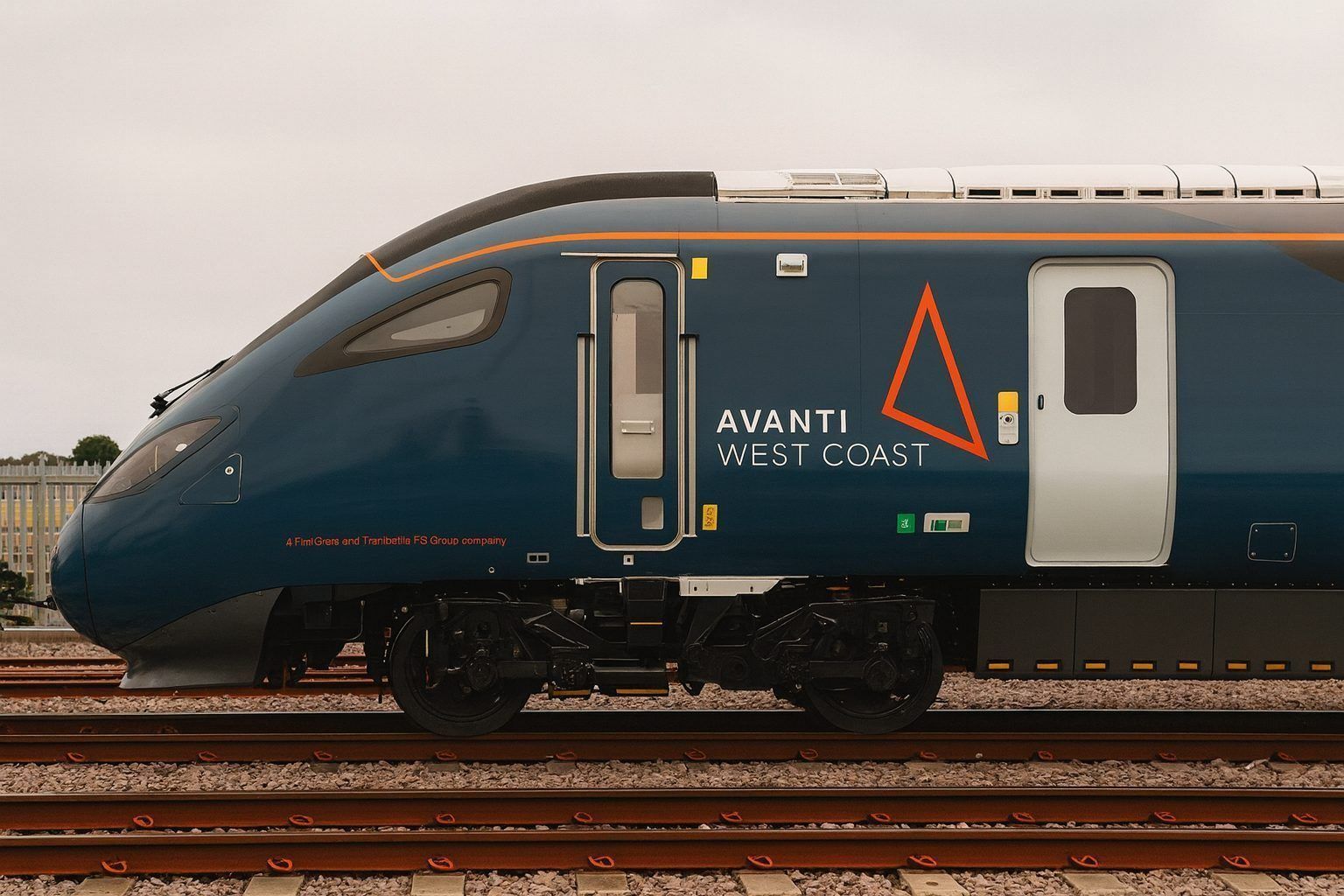
A flagship peak‑time train from Manchester to London is set to become Britain’s most infamous “ghost train” – running almost every weekday morning with a full crew but no passengers on board.
From 15 December 2025, the 7:00 Avanti West Coast service from Manchester Piccadilly to London Euston, one of the UK’s fastest intercity trains, will be barred from carrying paying customers for around five months following a ruling by the rail regulator, the Office of Rail and Road (ORR).BBC News Feeds+2The Guardian+2
The service will still depart Manchester at 07:00 and arrive in London just before 09:00, but will operate solely as “empty coaching stock” used to move staff and trains into position for later services. The arrangement is expected to last until at least the May 2026 timetable change and could see more than 100 staff‑only journeys made between the two cities.BBC News Feeds+1
The decision, first revealed at the weekend and expanded upon in new coverage on 1 December, has provoked outrage from passengers, business leaders and politicians across the North of England, who argue the move undermines both the economy and public confidence in Britain’s railways.The Independent+2The Times+2
What exactly is changing on the Manchester–London route?
The 7am Avanti West Coast train is a non‑stop express after Stockport, completing the journey in around 1 hour 59 minutes – an important selling point in a market where most services take closer to 2 hours 15 minutes. It has long been popular with politicians, executives and other commuters needing to be in central London before the start of the working day, and peak single fares can reach £193 in standard class and £290 in first class.The Guardian+2The Independent+2
Under the new timetable:
- Avanti will still run the physical train at 07:00, but
- The ORR has barred the company from selling any seats on it, turning it into a staff‑only movement.
- The train will be treated operationally as “empty coaching stock” (ECS), even though passengers on the platform will see a full‑length intercity service depart as usual.BBC News Feeds+1
The 7am express is not the only casualty. Avanti has confirmed four other weekday services and one Sunday service will lose their passenger‑carrying rights under the same ruling:BBC News Feeds+1
- 07:00 – Manchester Piccadilly → London Euston (Mon–Fri)
- 12:52 – Blackpool North → London Euston (Mon–Fri)
- 09:39 – London Euston → Blackpool North (Mon–Fri)
- 19:32 – Chester → London Euston (Mon–Fri)
- 17:53 – Holyhead → London Euston, now terminating at Crewe (Sun)
For Manchester–London commuters, the fastest remaining option will take about 2 hours 15 minutes, meaning those needing to arrive by 9am will have to catch an earlier train around 06:29 instead of the 7am express.The Guardian+1
Why the regulator wants an empty train
The ORR insists its decision is rooted in network reliability rather than hostility to northern passengers. According to the regulator and Network Rail, the 7am slot sits within a “firebreak path” on the West Coast Main Line – a deliberately reserved gap in the timetable that can be used to absorb delays and prevent small problems cascading into major disruption later in the day.BBC News Feeds+2The Standard+2
Running the train as a flexible, non‑timetabled staff movement rather than a booked passenger service gives operators more freedom:
- It can be held back if another service is late and needs priority.
- It can be rerouted more easily in the event of incidents or congestion.
- It can be cancelled at short notice without triggering the compensation, customer‑care obligations and knock‑on delays associated with axing a busy commuter train.BBC News Feeds+1
The ORR also notes that Avanti’s right to run the service in this slot was granted only temporarily for the May–December 2025 timetable period. That access was always conditional on future capacity being set aside for new open access operators – in this case FirstGroup’s low‑cost Lumo services, which are due to expand from December 2025.AOL+3BBC News Feeds+3The Guardian+3
In short, regulators argue they are trying to balance:
- Reliability on an already congested main line
- Competition from new, privately funded operators
- The need to avoid repeating timetable chaos like that seen across parts of the network in 2018.The Guardian+1
Why Avanti and passengers are furious
Avanti West Coast has been unusually blunt in its response. The operator says it is “disappointed” by the ORR’s decision and warns that removing four weekday services and truncating the Holyhead route will “clearly impact” customers who rely on them. The company stresses that it will still add services elsewhere on the network, including extra trains on the Liverpool route, but argues that forcing a crucial peak‑time express to run empty is a poor outcome for passengers and taxpayers.RailUK Forums+3BBC News Feeds+3The Standar…
Passengers, meanwhile, have reacted with disbelief. On social media and in reader comments, many have branded the move “absurd”, “ridiculous” or simply “madness”, while the train has quickly been nicknamed a “ghost train” – a fully crewed, long‑distance service that commuters can see but not board.Reddit+3The Standard+3The Sun+3
Critics point out that the train will still consume track capacity, energy and public subsidy whether or not it carries passengers. Running it empty, they argue, wastes scarce railway resources at precisely the time when the government is urging people to travel more sustainably and when many intercity services remain busy at peak times.The Sun+2The Times+2
Northern leaders say the North is being treated as “second class”
The controversy has quickly taken on a political dimension. Greater Manchester mayor Andy Burnham has condemned the decision, arguing that it exemplifies how rail policy still treats northern passengers as “second‑class citizens” compared with those in the South. He has called the 7am express “the last service that should be sacrificed” given its importance to connecting two of the country’s most significant economic centres.The Independent+1
Burnham warns that running the train but refusing to let passengers board risks turning it into a potent symbol of a system that prioritises operational convenience over the people who pay for – and depend on – the railway.The Independent+1
Henri Murison, chief executive of the Northern Powerhouse Partnership, has also attacked the ruling. He argues that removing a high‑revenue, peak‑time service “denies business people in Manchester access to London” and undermines the long‑term finances of the planned Great British Railways structure, by shifting revenue away from taxpayer‑backed operators towards new open‑access competitors.Wikipedia+3The Guardian+3Evrimagacı+3
Their interventions come against a wider backdrop of uncertainty over major rail investments such as Northern Powerhouse Rail and the curtailed HS2 scheme, reinforcing fears that the North is losing out on both infrastructure upgrades and day‑to‑day connectivity.Northern Powerhouse Partnership+1
What is “empty coaching stock” – and why not just let people on?
To industry insiders, the idea of a non‑revenue‑earning train is not new. Railways routinely move trains around the network at the start and end of the day, or between depots and stations, as empty coaching stock (ECS). These ECS moves often run at quieter times or on less‑used routes, and they enable operators to be sure the right trains and crew are in the right place to start passenger services.BBC News Feeds
What makes the Avanti case unusual is that the ECS train:
- Runs at a peak commuter time,
- Follows a high‑demand intercity route, and
- Uses a path that already exists in the timetable and has, until now, been sold as a premium product.The Guardian+2The Guardian+2
The ORR’s argument is that keeping the service as ECS rather than as a booked passenger train provides “flexibility” – it can be delayed, diverted or cancelled to help recover the timetable during disruption, without stranding hundreds of fare‑paying commuters.BBC News Feeds+2The Standard+2
Opponents counter that if a train is going to run anyway, especially on a busy, high‑fare corridor, it should be open to passengers by default. Some rail experts have suggested compromises such as limiting ticket sales, requiring advance reservations only, or allowing passengers to board except during major disruption, but these ideas have not found favour with the regulator so far.RailUK Forums+2Railway Supply+2
How will Manchester–London commuters be affected?
For regular users of the 7am service, the impact is immediate and practical:
- Earlier starts: Those needing to reach central London by 9am will have to catch earlier trains, likely around 06:29, reducing the appeal of rail for many business trips from Manchester.The Guardian
- Longer journeys: The fastest remaining services take roughly 2 hours 15 minutes, adding at least 15–20 minutes each way compared with the axed express.The Guardian+1
- Higher crowding risk: Demand from the former 7am train is expected to spill onto earlier and slightly later services, potentially increasing crowding in both standard and first class.The Sun+1
Businesses in Manchester and across the North West warn that the change will make day trips to London less convenient, pushing some travellers back into cars or onto flights and eroding the competitive advantage of rail for intercity journeys under three hours.Evrimagacı+2LinkedIn+2
Beyond one train: what this row says about Britain’s rail model
The “ghost train” saga touches on several deeper tensions in Britain’s rail system:
- Capacity vs. competition
The ORR is charged with both regulating performance and promoting competition. Allowing new open‑access operators like Lumo to run low‑fare services can bring benefits to passengers, but every extra train must fit onto infrastructure that is already close to full in parts of the day. The regulator’s July 2025 decisions on new services stressed the need to protect resilience through measures like firebreak paths.Office of Rail and Road+2railmagazine.com+… - Taxpayer value vs. private risk
Revenue from Avanti’s contracted services flows largely to the government under the current management model, while revenue from open‑access operators goes directly to private companies shouldering more commercial risk. Critics of the ORR ruling say that curtailing a high‑yield Avanti service in favour of new open‑access paths may reduce net income to the public purse.The Guardian+2Evrimagacı+2 - Levelling up vs. London‑centric decisions
For northern leaders, the optics are particularly bad: a heavily used train linking Manchester to London is being sacrificed, even as long‑promised upgrades like Northern Powerhouse Rail have been delayed or scaled back. The ghost train risks becoming a shorthand for perceived London‑centric decision‑making and slow progress on rebalancing the economy.The Independent+2Northern Powerhouse Partn…
Could the decision be reversed – and what happens next?
As things stand, the 7am Manchester–London train is expected to run without passengers from 15 December 2025 until the next national timetable change in May 2026, though the ORR could, in theory, revisit its decision if new evidence emerges or ministers apply political pressure.The Guardian+2BBC News Feeds+2
Local leaders, industry figures and passenger groups are already lobbying for a rethink. Burnham and other northern voices want the regulator to reinstate passenger rights on the service, at least on a trial basis, while some rail specialists are urging a broader review of how firebreak paths and open‑access slots are allocated on the West Coast Main Line.Railway Supply+3The Independent+3The Times…
For now, though, the outcome is stark: one of Britain’s fastest and most lucrative intercity trains will glide out of Manchester Piccadilly at 7am on weekdays, lights on and staff aboard – but with its doors firmly closed to the very commuters it was built to serve.