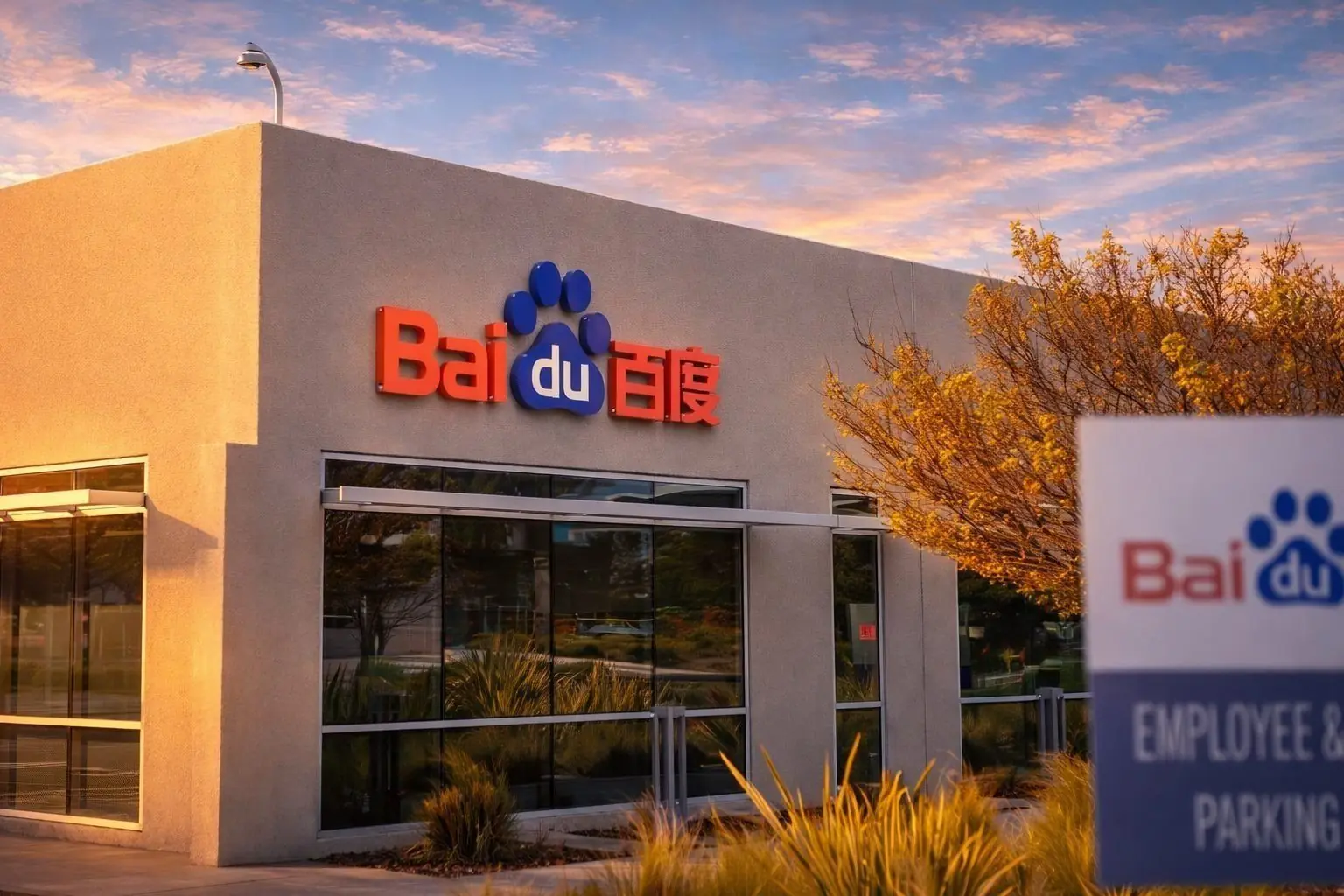
NEW YORK, January 4, 2026, 06:55 ET — Market closed.
Baidu, Inc. (BIDU) shares closed up 14.9% at $150.30 on Friday, January 2, after the company disclosed plans to spin off and seek a Hong Kong listing for its artificial intelligence chip arm, Kunlunxin. The stock gained $19.50 and hit $151.05 intraday, just shy of its 52-week high. Business Insider
The announcement lands as Chinese investors crowd into domestic AI-hardware stories, with U.S. export rules tightening supply for some top-end Nvidia processors in China. Recent Hong Kong listings have drawn heavy demand as Beijing pushes semiconductor self-sufficiency. Barron’s
Hong Kong’s fundraising backdrop has also improved. A total of 114 companies raised $37.22 billion on the exchange’s main board in 2025, London Stock Exchange Group data showed, and UBS banker John Lee Chen-kwok pointed to a pipeline of more than 300 would-be issuers. South China Morning Post
Baidu said it confidentially submitted a listing application to the Hong Kong Stock Exchange and has not finalised the size or structure of any offering. It said the spin-off — a transaction that would list Kunlunxin separately from its parent — remains subject to regulatory approvals and may not proceed. Citi analyst Alicia Yap wrote, “While timing is a bit sooner, it is within our expectation.” Investing
Jefferies analyst Thomas Chong raised Baidu’s price target to $181 from $159 and kept a buy rating, arguing the move could help “unlock” value. He estimated Kunlunxin at $16 billion to $23 billion, implying $9 billion to $13 billion of value to Baidu based on its stake, according to the note. TipRanks
A confidential filing lets a company start the vetting process without immediately publishing detailed IPO documents. It can keep timing flexible if market conditions change.
For Baidu investors, the questions now shift to when the Hong Kong process becomes public and how Kunlunxin’s valuation holds up once investors can examine its financials. Traders will also watch how much chip demand comes from outside customers versus Baidu’s own data-centre needs.
Baidu still leans on online advertising for much of its revenue, even as it spends heavily on AI cloud services and autonomous-driving technology. A separate listing would give the chip business its own financing channel and make its performance easier to benchmark against semiconductor peers.
The size of Friday’s move leaves the shares exposed to broader swings in risk appetite, particularly for U.S.-listed Chinese names. The stock ended near the top of its session range, a sign momentum traders remain active heading into Monday.
Before the next session, investors will look for any follow-up disclosure on timing and regulatory milestones for Kunlunxin. Analysts’ target changes and positioning in China ADRs could set the tone at Monday’s open.
Baidu’s next scheduled catalyst is earnings. Nasdaq’s earnings calendar currently estimates the company will report around February 17, putting a near-term focus on AI cloud demand, advertising trends and capital spending linked to chip development. Nasdaq
Macro data could also steer the tape this week. The Bureau of Labor Statistics has the December employment report scheduled for Friday, January 9 at 8:30 a.m. ET, with ISM surveys and other labour-market readings due earlier in the week. Bureau of Labor Statistics