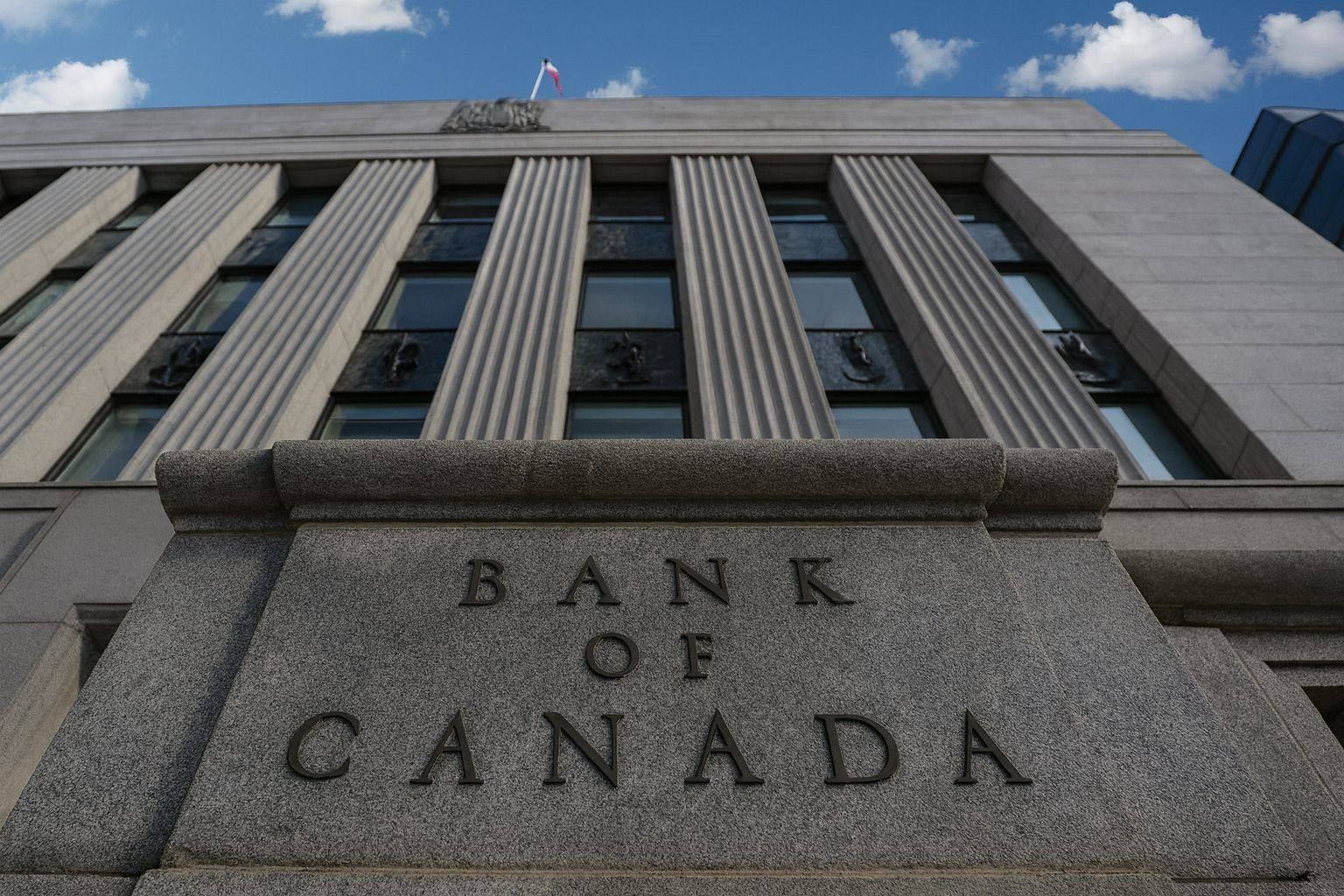
With just two days to go before the Bank of Canada’s final interest rate announcement of 2025, attention in global markets is firmly fixed on Wednesday, December 10. The decision will land within minutes of a highly anticipated U.S. Federal Reserve meeting, setting up a rare dual rate day on both sides of the border.RBC+1
The Bank of Canada (BoC) will release its policy decision and statement at 9:45 a.m. Eastern, followed by a press conference with Governor Tiff Macklem and Senior Deputy Governor Carolyn Rogers at 10:30 a.m. in Ottawa.Bank of Canada Markets overwhelmingly expect the Bank to leave its overnight rate unchanged at 2.25%, capping an aggressive easing cycle that has sliced 275 basis points from the peak since 2024.Reuters+2nesto.ca+2
At the same time, investors are almost fully pricing in another quarter‑point “hawkish cut” from the U.S. Federal Reserve, which would deepen the divergence between a still‑easing Fed and a BoC that appears ready to pause.MarketWatch+3RBC+3Reuters+3
Key takeaways ahead of the December 10 BoC rate announcement
- Policy rate now at 2.25%, after one of the deepest easing cycles in the G10. The BoC has delivered 275 bps of cuts since 2024, bringing the overnight rate to 2.25% and signaling in October that this level is “about the right” setting for achieving its inflation target.Bank of Canada+3Reuters+3RBC+3
- Markets and economists see a near‑certain hold this week. A Reuters poll of 33 economists conducted December 2–5 found unanimous expectations for no change on December 10, with a majority seeing rates frozen until at least 2027.Reuters+1 Interest‑rate futures and mortgage‑market probability trackers similarly put odds of a hold well above 90%.True North Mortgage+1
- Inflation has eased back into the target range. Headline CPI slowed to 2.2% year‑over‑year in October, down from 2.4% in September, while core measures are hovering around 2.7–3.0%, close to but slightly above the BoC’s 2% target.Bank of Canada+3Statistics Canada+3Reuters…
- Growth and jobs are stronger than expected. Canada’s economy grew at a 2.6% annualized pace in Q3, well above earlier forecasts, and the labour market posted a third straight month of solid job gains in November, pulling the unemployment rate down to 6.5%.Reuters+2RBC+2
- Economists see “no major compelling reason” for another cut right now. A widely cited analysis carried by Yahoo Finance and the Financial Post argues that with inflation near target, GDP surprising to the upside and jobs strengthening, the BoC lacks a strong justification to ease again this week.Yahoo Finance+2BizToc+2
- Fed expected to cut while BoC holds. RBC Economics expects a third consecutive 25‑bp cut from the Fed on Wednesday, even as the BoC stands pat — a contrast that could shape the Canadian dollar and bond yields into 2026.Reuters+3RBC+3Reuters+3
Where the Bank of Canada rate stands going into December 10
The BoC’s overnight rate sits at 2.25%, following its most recent cut on October 29, 2025, when policymakers reduced the benchmark by 25 basis points and signaled that policy was now close to neutral.Bank of Canada+1
Over the last 18 months, the Bank has shifted from one of the most aggressive hiking campaigns in decades to one of the most forceful cutting cycles among advanced economies:
- Policy peaked around 5.0%, as the BoC battled post‑pandemic inflation.Reuters+1
- Through a sequence of rate cuts — including moves in September and October — the overnight rate was lowered by a cumulative 275 bps, landing at its current 2.25% level.Reuters+2RBC+2
In its October Monetary Policy Report, the Bank noted that the Canadian economy is adjusting to trade tariffs and weaker external demand, with total inflation “around 2%” and underlying inflation roughly 2½%.Bank of Canada+1 That combination — inflation back near target, but persistent cost pressures and tariff‑related uncertainty — sets the backdrop for this week’s decision.
Consensus: markets and economists are aligned on a hold
As of December 8, markets and forecasters are unusually united:
- Unanimous economist call. All 33 economists in a Reuters survey expect the BoC to keep the overnight rate at 2.25% on December 10. Most respondents see no further cuts at least through 2027, suggesting that the easing cycle is effectively over absent a major shock.Reuters+1
- Market pricing. Interest‑rate futures and options markets imply very high odds (90–97%) of no move this week, with a first full 25‑bp hike only fully priced by late 2026.Reuters+1
- Think‑tank advice. The C.D. Howe Institute’s Monetary Policy Council has recommended holding the overnight rate at 2.25% over the coming year, arguing that inflation is broadly under control but uncertainty around tariffs, growth and housing warrants caution.C.D. Howe Institute+1
- Mortgage‑market forecasts. A December update from mortgage platform Nesto notes that major Canadian banks’ year‑end forecasts all show the policy rate at 2.25%, with the prime rate at 4.45%, implying no near‑term change.nesto.ca
Housing‑focused analysts at Canada Housing Market reach a similar conclusion: a December hold is the base case, with most experts expecting a period of rate stability after two years of volatility.Canada Housing Market
In short, if the BoC does move this week, it would be a genuine surprise.
Why economists see “no major compelling reason” to cut again now
The idea that there is “no major compelling reason” for another cut has become a shorthand for the current consensus. Under the hood, several data points support that view.
1. Inflation is near target — and could prove sticky
- Headline CPI: Canada’s inflation rate slowed to 2.2% in October, down from 2.4% in September, largely due to lower gasoline prices and softer food inflation.Statistics Canada+2Reuters+2
- Core measures: Bank of Canada core indicators such as CPI‑median and CPI‑trim are running around 2.9–3.0%, still slightly above target and signalling some underlying price pressure.Reuters+2Government of Nova Scotia+2
RBC Economics notes that underlying inflation pressures remain above the BoC’s 2% goal and could be “stickier” than the Bank would like if consumer and government spending stay strong into 2026.RBC+1
For a central bank that just spent two years wrestling inflation down from multi‑decade highs, cutting again with core measures near 3% would be a high‑bar decision.
2. Growth has surprised to the upside
The Q3 GDP report was a critical turning point. Instead of the near‑stall the BoC had projected, Canada’s economy expanded at a 2.6% annualized pace, with strength in crude‑oil exports and government investment helping the country avoid a technical recession after a contraction in Q2.Reuters+1
The same data showed:
- Monthly GDP up 0.2% in September, in line with expectations.
- A flat profile for business investment and soft household consumption, reflecting the drag from earlier high rates and U.S. tariffs.Reuters+1
Economists at multiple banks argue that this “good‑enough” growth removes the urgency for further easing. Reuters summed it up by noting the GDP surprise “strengthened economists’ view that the Bank of Canada will not cut interest rates on December 10.”Reuters
3. The labour market is stabilizing, not collapsing
Recent employment data have been stronger than many had expected:
- Jobs: November saw around 54,000 jobs added, following solid gains in September and October — the third consecutive upside surprise.RBC+2Advisor.ca+2
- Unemployment: The national jobless rate fell to 6.5%, a 16‑month low, suggesting that earlier fears of an imminent labour‑market slump were overstated.Reuters+1
A Yahoo/Reuters piece on the November jobs report noted that the run of stronger‑than‑expected numbers has “quashed hopes” of a near‑term rate cut, even as economists caution that many of the gains are concentrated in part‑time work.Yahoo Finance+1
RBC points out that, while tariff‑exposed manufacturing sectors remain under pressure, economy‑wide layoffs are still limited, and household spending has been supported by earlier rate cuts and rising financial wealth.RBC
4. Housing is beginning to respond to lower rates
Despite a roughly 3.2% decline in average home prices earlier in 2025, analysts now expect a gradual rebound:
- Reuters’ December poll projects home prices rising 1.8% in 2026 and 3.5% in 2027, with most analysts saying affordability for first‑time buyers will improve over the coming year.Reuters+1
- RBC’s Robert Hogue argues that rate cuts in September and October have already improved affordability and are unlocking pent‑up demand, particularly in markets where prices had cooled.Reuters+2RBC+2
With the housing market starting to pick up and more than 60% of mortgages due for renewal in the next two years, further rapid cuts could risk reigniting froth just as affordability begins to heal.nesto.ca+1
5. Policy credibility after an aggressive easing cycle
Finally, there is a communication challenge. The BoC has already delivered a large, front‑loaded easing cycle, and in October it effectively told Canadians that 2.25% is now close to the “right” level for achieving low, stable inflation.RBC+1
Moving again so soon — in the absence of a clear deterioration in data — could undermine that guidance and raise questions about the Bank’s reaction function. That’s a big part of why economists say there’s no compelling case for an additional cut right now.
Fed vs. BoC: Diverging paths on interest rates
The December 10 BoC decision arrives on the same day as the U.S. Federal Reserve’s latest rate announcement — and the two central banks are not on identical paths.
According to RBC Economics and multiple Wall Street houses:
- The Fed is widely expected to deliver a third consecutive 25‑basis‑point cut, even as it signals a more cautious approach to further easing — the classic “hawkish cut”.MarketWatch+3RBC+3Reuters+3
- The BoC, by contrast, is viewed as already having done enough. RBC characterizes a hold in Canada as “relatively uncontroversial” compared with the Fed’s more contentious internal debate.RBC+1
A Reuters currency report notes that markets expect no change from the BoC this week, even as traders fully price a BoC hike by December 2026, underscoring expectations that Canada will move from easing to on‑hold and eventually into tightening later in the decade.Reuters+2Reuters+2
This divergence has several implications:
- It narrows the U.S.–Canada rate gap in the short term, easing some pressure on the Canadian dollar.
- But if the Fed slows or stops cutting in 2026 while the BoC remains on hold, the rate differential could widen again.
- The BoC will need to balance exchange‑rate stability with domestic inflation and growth, particularly if tariffs or global demand shocks intensify.Bank of Canada+2Bank of Canada+2
Implications for mortgages, housing and the Canadian dollar
Mortgages and household borrowing
For households, a BoC hold at 2.25% is likely to mean stability rather than fresh relief in the near term:
- Variable‑rate mortgage holders should see little change in monthly payments immediately after the announcement, assuming banks keep prime around 4.45%.nesto.ca+1
- Fixed mortgage rates are heavily influenced by bond yields, which have already priced in much of the BoC’s easing and expectations for a Fed cut. Unless bond yields fall further, fixed rates may drift only modestly lower from here.nesto.ca+2Reuters+2
Nesto’s December forecast suggests that mortgage rates could edge down over the next year as funding costs decline and lenders compete for business, but it also emphasizes that cuts are likely to be gradual and data‑dependent.nesto.ca
Housing market
For the housing market, a period of rate stability at relatively low levels is already starting to show up in the data:
- The Reuters poll expects home prices to stop falling and resume moderate growth in 2026 and 2027, helped by lower borrowing costs and new federal housing investments.Reuters+1
- RBC and housing commentators note that buyers who were sidelined during the era of 5% rates are gradually returning, particularly in Ontario and the major metros.RBC+2Canada Housing Market+2
That said, affordability challenges remain significant in many markets, and policy makers will be keen to avoid another rapid run‑up in prices.
Canadian dollar and financial markets
On the currency front, strong jobs data have already pushed the Canadian dollar to a 10‑week high, with the loonie boosted by both improving labour‑market numbers and rising oil prices.Reuters+1
If Wednesday delivers:
- A BoC hold and
- A “hawkish” Fed cut
…then currency strategists expect the Canadian dollar to trade largely within recent ranges, with further moves driven more by U.S. guidance for 2026 than by the BoC’s near‑term stance.Reuters+1
Equity markets are already in “wait‑and‑see” mode. The TSX opened flat on Monday as investors paused ahead of this week’s central‑bank double‑header.Reuters
What to watch in Wednesday’s BoC statement and press conference
Even if the policy rate is unchanged, the language around the decision will matter a great deal.
Here are the key elements to monitor in the 9:45 a.m. statement and 10:30 a.m. press conference:Bank of Canada+1
- Forward guidance on future cuts or hikes
- Does the Bank continue to say the current rate is “about right,” or does it shift toward a more explicit bias to hold?
- Any hint that the next move is more likely to be a hike than a cut — in line with futures pricing and the Reuters poll — would be significant.Reuters+2Reuters+2
- Inflation language
- Look for how the BoC characterizes October’s 2.2% CPI print and the core measures around 3%.
- If it emphasizes upside risks — for example from tariffs, wage growth or government spending — that would argue for a longer hold.Bank of Canada+3Reuters+3Government of Nov…
- View on growth and tariffs
- After Q3’s 2.6% annualized GDP surprise, the Bank must reconcile stronger‑than‑expected output with signs of cooling business investment and the drag from U.S. tariffs.Reuters+2Bank of Canada+2
- Labour‑market assessment
- Any suggestion that the labour market is “tightening again” would strengthen the case for a prolonged pause; emphasis on underemployment or part‑time job growth could tilt in the opposite direction.RBC+2Reuters+2
- Comments on housing and household debt
- The Bank will be watching whether lower rates are encouraging excessive leverage or speculative buying — particularly with so many mortgages set to renew at higher rates than borrowers enjoyed pre‑2022.nesto.ca+2Reuters+2
Interest rate outlook for 2026–2027
While this week’s decision is likely to be uneventful in headline terms, the medium‑term path of interest rates is still hotly debated.
- Reuters poll: A majority of economists (18 of 29) surveyed see the BoC holding at 2.25% until at least 2027, with only a minority expecting hikes before then.Reuters+1
- Mortgage‑market view: Nesto and other consumer‑oriented forecasters see scope for further, gradual easing over the next few years if growth softens and global risks intensify, though those projections are explicitly conditional on incoming data.nesto.ca+1
- Long‑run “neutral” rate: Analytics firm Perch and other housing commentators argue that once inflation is firmly anchored and tariffs uncertainty fades, the BoC could slowly guide rates back toward a higher neutral level later in the decade — meaning that today’s ultra‑low settings are unlikely to last forever.Canada Housing Market+2Perch+2
In practice, the path will depend on a few big unknowns:
- The durability of Canada’s growth in the face of trade friction
- How sticky core inflation proves, especially in services and shelter
- The pace and scale of Fed easing in 2026 and beyond
For now, the most probable scenario is a long plateau: rates low by historical standards, but no longer falling.
What it all means for Canadians
For households, businesses and investors, Wednesday’s decision is less about a single rate print and more about a shift into a new phase:
- From rapid cutting to patient watching
- From crisis‑driven moves to fine‑tuning around a neutral setting
If the BoC does hold at 2.25% as expected, Canadians can likely look forward to:
- Stable variable mortgage payments in the near term
- Modest, data‑driven moves in fixed rates rather than big swings
- A housing market that is gradually thawing, but still constrained by affordability
- A Canadian dollar influenced as much by U.S. policy and global risk sentiment as by domestic rate changes
As always, the details of your own finances — your debt load, renewal timing, income stability and appetite for risk — matter at least as much as what Governor Macklem announces on Wednesday. Those are best discussed with a qualified financial advisor.
What the data already make clear, though, is that December 10, 2025 is less likely to herald another big rate cut and more likely to confirm a new era of cautious, on‑hold monetary policy in Canada.