
Cambridge, Massachusetts, May 15, 2026, 10:08 EDT
- Biogen has wrapped up its purchase of Apellis; the Waltham biotech now operates as a wholly owned subsidiary.
- Apellis holders are set to receive $41 per share in cash, with the chance for additional payouts depending on Syfovre sales.
- Biogen picks up two commercial drugs—Empaveli and Syfovre—with this deal, gaining a stronger foothold in kidney disease as well.
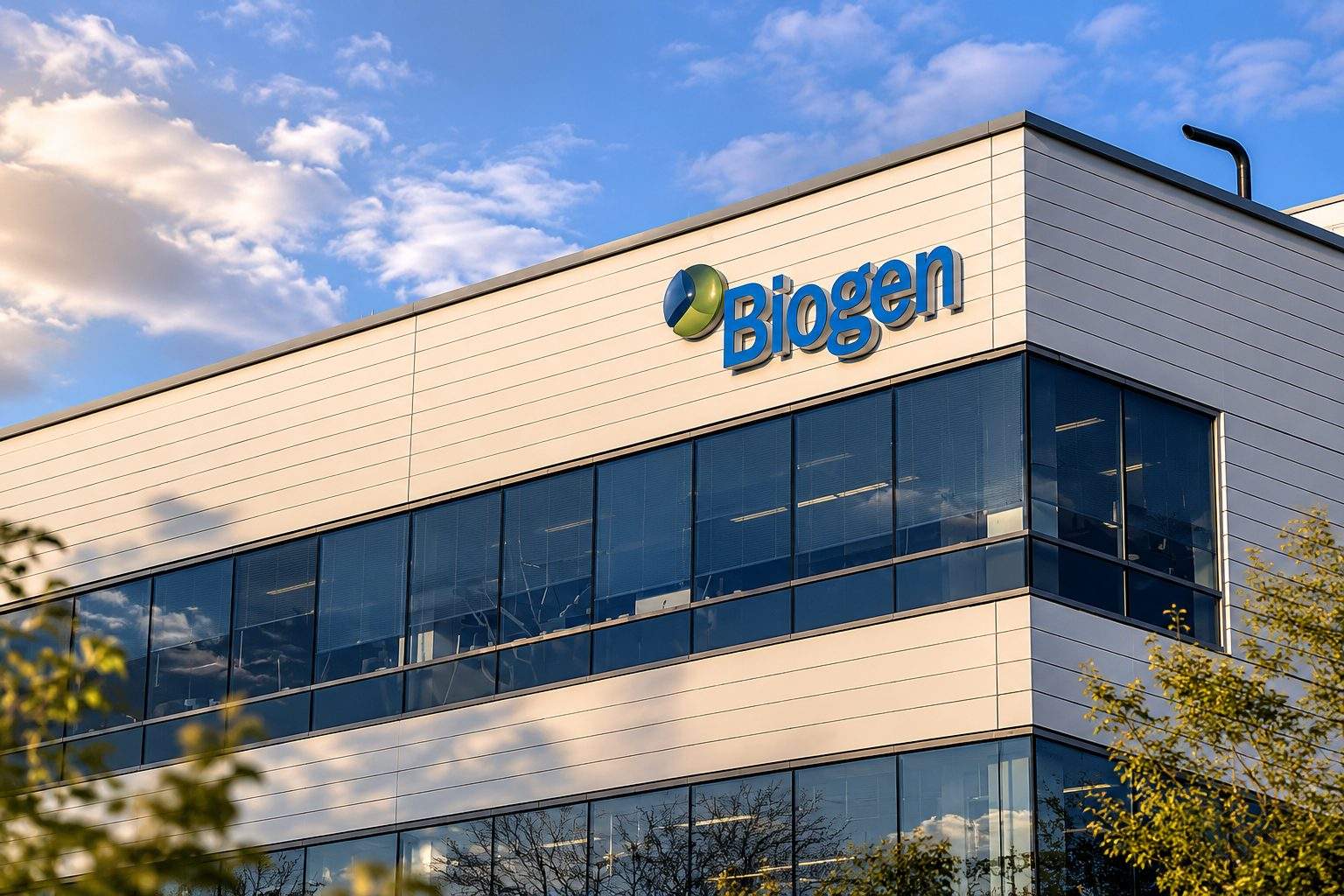
Biogen said Thursday it has wrapped up its purchase of Apellis Pharmaceuticals, bringing Apellis under its wing as a fully owned subsidiary. The deal takes Apellis off the Nasdaq as an independent biotech, and hands Biogen ownership of its two approved drugs, which join Biogen’s rare-disease division.
With Apellis shares now halted on Nasdaq, the focus moves squarely to what happens next—deal execution. According to a filing, Apellis requested Nasdaq suspend trading as of 8 p.m. Eastern time on May 13, and begin the process of delisting and deregistering the stock following the merger.
Biogen is looking to push beyond its established neurology focus with this acquisition. Sales from Empaveli and Syfovre reached $689 million in net product revenue in 2025. The company expects the transaction to boost adjusted earnings per share by 2027.
The tender offer wrapped up shortly after 11:59 p.m. Eastern on May 13. Investors tendered around 105.7 million Apellis shares—about 82.4% of all shares outstanding, the depositary said.
Apellis shareholders are set to receive $41 per share in cash, plus a contingent value right, or CVR, entitling them to additional cash if certain milestones are achieved. That CVR could deliver up to $4 per share, provided Syfovre hits annual global net sales thresholds of $1.5 billion and $2.0 billion within designated years.
Biogen tapped $2 billion in fresh, unsecured term loans to back the offer and merger, according to a separate filing. The loans split into two parts: one comes due in 2027, the other in 2028.
Apellis hands Biogen two key products: Syfovre, targeted at geographic atrophy—a severe form of dry age-related macular degeneration that threatens central vision—and Empaveli, which treats rare immune-mediated disorders. The deal also plugs Biogen into a nephrology sales network as it gears up for felzartamab, a kidney-disease therapy in late-stage development. The first Phase 3 data for that drug is due out in the first half of 2027.
Back in March, Biogen CEO Christopher Viehbacher described the acquisition to Reuters as a move that secures Biogen’s entry into the kidney disease space, plus a direct link to nephrologists on the commercial side. Asked about the price tag, Viehbacher said, “what really matters is the intrinsic value,” highlighting Apellis’ kidney portfolio in particular. Reuters
BMO Capital’s Evan Seigerman, speaking to Reuters, noted that bringing Syfovre and Empaveli into the fold might “meaningfully change” investor sentiment around Biogen’s near-term revenue outlook, with the company working through falling sales in its multiple sclerosis lineup. Biogen shares edged up in early Friday trade on the Nasdaq. Reuters
The Syfovre payoff could easily slip past expectations—that’s the core risk here. Biogen’s own filing makes it clear: there’s no guarantee any CVR milestone gets hit. Plus, Syfovre is up against Astellas’ Izervay, which already holds U.S. approval in the geographic atrophy market.
The agreement takes one more public player out of the already limited set of U.S. complement-drug firms. Complement, a segment of the immune system, is the focus for Apellis, which has centered its portfolio on medicines that target this pathway in disease situations.
Biogen plans to release new financial guidance alongside its second-quarter results in July. That’s when investors will get their first concrete look at Apellis’s contribution following the close of the deal.
Related articles: Pharmaceutical Industry