
New York, June 2, 2026, 09:09 (EDT)
Bluejay Diagnostics (BJDX) rallied in premarket trade Tuesday after saying it will partner with Argonaut Manufacturing Services on U.S. production for its Symphony near-patient test system. Shares were up 148.4% at $5.39 at 8:43 a.m. EDT, according to StockAnalysis, after closing Monday much lower. Benzinga had BJDX quoted at $6.79, up 212.9%.
Nasdaq made the move in premarket hours, before its regular session, with June 2 landing between its scheduled May 25 and June 19 market holidays. Nasdaq said its normal trading runs 9:30 a.m. to 4 p.m. Eastern, putting the price move squarely in the thinly traded premarket.
Why it matters now: this isn’t a sales deal. It’s about manufacturing, and it comes as Bluejay is still pushing Symphony through clinical checks, regulatory steps and maybe turning it into a product.
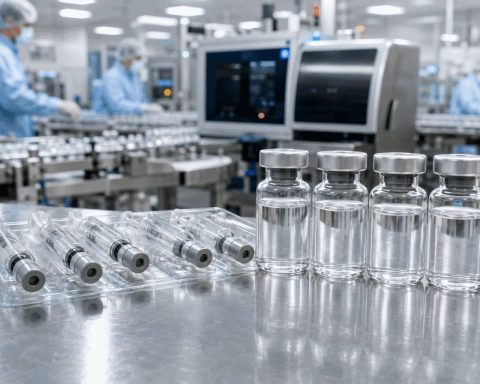
Bluejay disclosed in an SEC filing that it struck its Argonaut deal on May 27. The agreement includes planning, engineering, sourcing, supply-chain management, formulation, filling and finishing, quality-control testing, equipment procurement, storage, delivery and distribution for Bluejay’s IL-6 testing products. Orders will be made over time through purchase orders.
IL-6, or interleukin-6, is a protein tied to inflammation. Bluejay is using IL-6 as a biomarker in a sepsis test aimed at assessing patient risk near the point of care, not in a central lab. The company says its first IL-6 test is designed to give results in roughly 20 minutes.
Bluejay said its agreement with Argonaut is designed to cut reliance on foreign production, expand U.S. manufacturing, and help future distribution. Neil Dey, who serves as Bluejay’s president and CEO, called the deal part of building a “scalable and quality-focused operational foundation.” Argonaut CEO Rick Hancock said his firm wants to drive tech that helps “improving clinical decision-making.” GlobeNewswire
The regulatory question is still in focus. Bluejay said the SYMON-II study is designed to back a 510(k) submission to the U.S. Food and Drug Administration. A 510(k) is a device filing where a company asks the FDA to say its product is substantially equivalent to something already on the market.
The company says Symphony is still waiting on FDA clearance and can’t be sold as a diagnostic in the U.S. without it. Tuesday’s move is traders betting on the company delivering, not on an approved test.
Bluejay is facing off with bigger rivals in the sepsis diagnostics market. bioMérieux sells sepsis diagnostic tests, and T2 Biosystems has its FDA-cleared T2Bacteria Panel for suspected bloodstream infections. Bluejay’s IL-6 method takes another tack, with its focus on risk and monitoring instead of going after direct pathogen ID.
Bluejay reported in April that it had enrolled 624 patients in SYMON-II, short of its 750 target, and said it expected to finish in two or three months, depending on site activity and patient flow. At the time, Dey said the milestone “positions us well to complete enrollment in the near term.” Bluejay Diagnostics, Inc
Bluejay’s balance sheet stayed tight. The company posted $3.68 million in cash and equivalents as of March 31. Net loss for the quarter came in at $1.92 million, and it used $1.59 million in cash on operations. Bluejay said its cash should cover operations through Q3 2026 but warned it will need more money in the next year.
Bluejay’s risk statement is direct: the Argonaut deal doesn’t clear Symphony, back the clinical results, guarantee demand or fix Bluejay’s funding gap. If trial results miss, FDA review is delayed, ramping up manufacturing takes longer, or new money can’t be raised, the rally could reverse fast. The filing warned that Bluejay may have to consider strategic options, including liquidation under U.S. bankruptcy law, if it can’t raise capital soon.
The opening trade is key here. StockAnalysis put Bluejay’s market cap around $2.25 million, with about 1.03 million shares outstanding. That’s a thin float for a public company, so big percentage swings can come from how few shares are out there, not just from shifts in fundamentals.