
NEW YORK, April 6, 2026, 11:14 EDT
Latest opinions from TipRanks and The Motley Fool added fuel to the debate around Boeing stock Monday. Bulls highlighted Boeing’s hefty backlog and its defense contracts, while bears zeroed in on ongoing safety issues, the company’s mounting debt, and a price tag that doesn’t allow for many slip-ups. Shares gained roughly 1.4% as of late morning.
This split takes center stage as Boeing heads into its first-quarter report on April 22. Investors want to see if CEO Kelly Ortberg’s turnaround is translating into more reliable output and healthier cash flow. Demand isn’t the sticking point now—execution is.
Monday’s piece from The Motley Fool pointed to Boeing’s order backlog and highlighted a fresh seven-year Pentagon pact with Lockheed Martin targeting increased PAC-3 missile seeker output. On Sunday, a separate article suggested that, despite these positives, Boeing’s safety and quality issues remain a concern for investors.
TipRanks put it in market language. In a note from the period, AI models on the platform gave Boeing scores ranging from 47 to 62. The higher numbers hinged on backlog, delivery pace and outlook for generating cash. On the other hand, the lower scores reflected concerns over debt, slim margins and the risk tied to certification.
If you’re looking for ammo, Boeing’s most recent numbers seem to have something for everyone. In January, the company reported a 34% jump in revenue for 2025, landing at $89.5 billion. The backlog hit a record $682 billion, stacked with more than 6,100 commercial jets still on order. Ortberg pointed to “significant progress” for Boeing in 2025. Boeing Investors
The cash situation at Boeing looks patchy. Free cash flow hit $375 million in Q4, but for the full year, it came in negative at $1.9 billion. Debt: $54.1 billion as of year-end. In January, CFO Jay Malave projected 2024 free cash flow somewhere between $1 billion and $3 billion, though that number hinges partly on when the 777X, 737-7, and 737-10 actually get delivered.
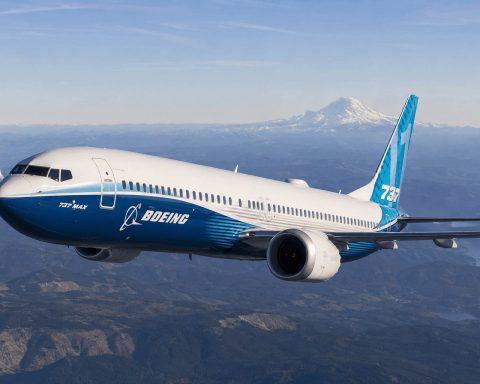
Some improvement is showing up on Boeing’s factory lines. The company delivered 51 jets in February—the strongest February tally since 2018. Senior supply-chain executive Ihssane Mounir said in February that Boeing was spending 40% less time on supplier fixes than it did in 2024. Over at Spirit AeroSystems, defects have dropped by 60%.
Analysts are watching production discipline more closely than new orders when it comes to Boeing’s next stock move. Doug Harned at Bernstein flagged the current output of 42 MAX jets a month as sustainable for now, thanks to previously built inventory. But he cautioned that ramping up to 47 jets monthly could stretch the supply chain. Over at BNP Paribas, Matthew Akers argued the company will need to show free cash flow topping $10 billion soon to keep bullish investors on board.
The bear scenario hardly needs much imagination. Two deadly Boeing 737 MAX crashes in 2018 and 2019 killed 346 people, and then in January 2024, an Alaska Airlines 737 MAX 9 lost a door panel mid-flight, reopening safety investigations. Boeing is still stuck in the certification process for the 737-7, 737-10, and 777X, and in March, the company flagged wiring damage on roughly 25 undelivered 737s—enough to hit its first-quarter delivery numbers.
Boeing finds itself stuck in a tricky spot. The company finally outpaced Airbus on new orders in 2025—a first in years—and it’s ramping up missile work with both the Pentagon and Lockheed Martin. Still, Airbus is the main threat in the commercial arena, and now Boeing’s commercial airplane business isn’t seen turning a profit until 2027. At this point, what matters for the stock isn’t the size of the backlog; it’s about Boeing actually converting that backlog into real deliveries, real cash, and a lot fewer nasty jolts.
Related articles: NYSE:BA