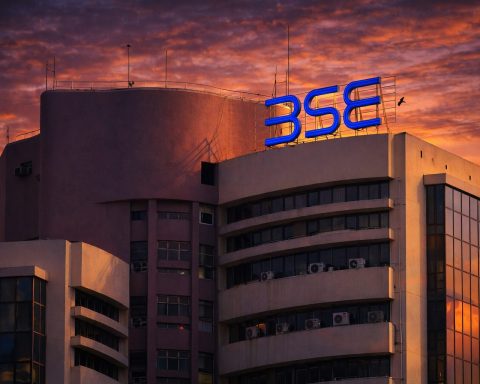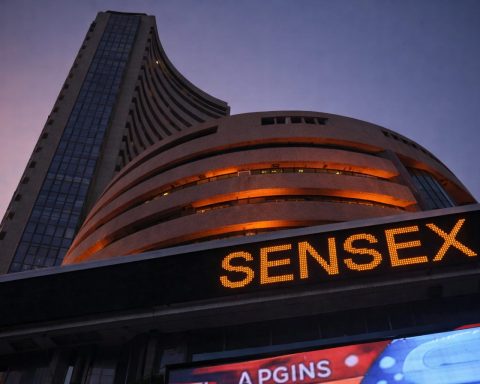
Updated: 14 December 2025 (Sunday). Indian markets are closed today, so the latest official data points reflect Friday’s close (12 Dec 2025).
BSE Ltd (NSE: BSE) ended Friday at ₹2,735, up about 1.34% on the day, with a market cap around ₹1.11 lakh crore and a 52-week range of roughly ₹1,227–₹3,030. mint+1
That headline close hides a more interesting reality: BSE stock just had a choppy week, swinging sharply before stabilizing into the weekend—while a cluster of corporate updates (mutual fund distribution expansion, ESG rating disclosure, stake divestment, and investor meetings) kept attention on the exchange operator.
Below is a practical, news-first view of what mattered this week (Dec 8–12) and what could matter in the week ahead (Dec 15–19)—plus where analysts broadly see the stock settling over the next year.
BSE Ltd stock snapshot (as of last close: Fri, 12 Dec 2025)
- Last price: ₹2,735 mint+1
- Market cap: ~₹1,11,076 crore mint+1
- 52-week range: ~₹1,227 to ₹3,030 mint+1
- How far from extremes: ~9.7% below the 52-week high and ~123% above the 52-week low mint+1
- Friday volume: ~3.8 million shares (reported by major market trackers) Moneycontrol+1
What BSE shares did this week: volatility first, then a bounce
BSE’s week looked like a mini-drama in three acts:
- Early strength,
- a sharp mid-week drawdown,
- and a recovery into Friday’s close.
Using end-of-day price points from this week’s trading sessions, BSE closed around ₹2,798.8 (Dec 8), slipped to ₹2,715.8 (Dec 9), fell hard to ₹2,581.7 (Dec 10), rebounded to ₹2,698.8 (Dec 11), and finished at ₹2,735 (Dec 12). Smart Investing+1
Compared with the prior Friday close (₹2,815.9 on Dec 5), the stock ended the week down roughly 2.9%, but it did so after a big intraday/weekly swing—highs near ₹2,915 and lows near ₹2,575 in this same window. Trendlyne.com+1
Translation: the stock didn’t trend in a straight line. It shook—and then it reset.
Why that matters: BSE Ltd is a “market activity proxy” in the eyes of many traders and analysts. When volatility rises, turnover and derivatives activity often rise too—helpful for exchange earnings. But when risk sentiment turns, high-beta financial market stocks can also get hit harder.
The headlines that mattered in the last few days
1) BSE + India Post: a distribution push for mutual funds
The biggest mainstream headline in the last couple of days is BSE’s new collaboration with the Department of Posts (India Post) to widen mutual fund distribution access via the BSE StAR MF platform. The deal aims to train and onboard selected postal employees/agents as certified mutual fund distributors—leveraging India Post’s last-mile network. The Economic Times+2Business Standard+2
Key detail investors noticed: BSE StAR MF is described as accounting for 85%+ of exchange-based mutual fund transactions, with 7 crore+ monthly transactions (as cited in business reporting around the MoU). The Economic Times+1
Why the market cares: even if revenue-per-transaction is small, distribution scale can be a compounding machine—especially when it plugs into secular trends like SIP growth and broader financialization.
2) ESG rating disclosure: “71” for FY2025 (NSE Sustainability)
BSE disclosed that NSE Sustainability Ratings & Analytics assigned it an ESG rating of 71 for FY2025, while also clarifying the company did not engage NSE Sustainability for the rating and that the report was prepared independently based on public-domain information. NSE Searchives
This won’t typically move price alone, but it can influence institutional screening, especially for funds with ESG constraints.
3) Stake divestment: BSE Technologies exits Ebix Insuretech associate
Another corporate update: BSE Technologies Pvt Ltd (BTPL)—a wholly owned subsidiary—divested its entire stake in Ebix Insuretech Pvt Ltd (formerly BSE Ebix Insuretech) via a share purchase agreement dated 9 Dec 2025. The company noted Ebix Insuretech would cease to be an associate subject to pre-closing obligations. NSE Searchives
Investors generally read such moves in two ways:
- portfolio simplification / focus on core growth engines, and/or
- cleaning up the structure around smaller/adjacent ventures.
4) Investor meetings: Janchor (Dec 12) and Citi Financials Tour (Dec 16)
BSE filed schedules for analyst/investor interactions:
- Janchor Partners investor meeting (physical, Mumbai) on Friday, 12 Dec 2025 NSE Searchives
- Citi 2025 India Financials Tour investor meeting (physical, Mumbai) on Tuesday, 16 Dec 2025 NSE Searchives
These aren’t earnings releases—but they can shape near-term narrative, especially if investors are probing sustainability of derivatives-led growth.
5) SEBI tightens governance expectations for “MIIs” (stock exchanges included)
A broader but relevant regulatory development: SEBI issued/implemented a governance framework for Market Infrastructure Institutions (MIIs)—which includes stock exchanges, clearing corporations, and depositories.
Reporting around the framework highlights requirements such as appointment of two Executive Directors (one for “critical operations,” another for regulatory/compliance/risk/investor grievances) and revised reporting lines to strengthen oversight. mint+2Moneycontrol+2
For BSE shareholders, the likely read-through is mixed:
- Positive: stronger governance can support trust in market plumbing.
- Watch item: implementation could mean organizational changes and compliance overhead (usually manageable for large MIIs, but still not “free”).
Fundamentals refresher: what BSE itself says is driving growth
Even though the fresh corporate news is December-heavy, much of the current valuation debate still sits on BSE’s latest reported performance.
From BSE’s Q2 FY26 earnings conference call transcript, management highlighted:
- Record quarterly topline:₹1,139 crore, marking the 10th consecutive quarter of record revenue (as described in the call) NSE Searchives
- Operational revenues:₹1,068 crore, up strongly year-on-year NSE Searchives
- Transaction charges:₹794 crore (covering equity cash, equity derivatives, mutual fund and clearing house income), up year-on-year NSE Searchives
- Other operating income:₹93 crore, including items like data dissemination, co-location, index services NSE Searchives
- EBITDA (incl. contribution to core SGF):₹680 crore, with margin expansion referenced in the call NSE Searchives
- Net profit attributable to shareholders:₹558 crore, up from ₹346 crore (year-on-year comparison cited in the call) NSE Searchives
Management also pointed to operational scale markers such as:
- BSE SME platform growth (657 listed companies as of October 2025, per the call), and cumulative capital raised since launch NSE Searchives
- BSE index business expansion, including passive AUM tracking BSE indices (figures cited in the call) NSE Searchives
Put simply, the company’s “story engine” remains: transaction-linked income + listings + market data/co-location + distribution rails (like StAR MF) + index monetization.
The India Post tie-up fits neatly into that last-mile distribution rail narrative. The Economic Times+1
Forecasts and analyst targets: what the street expects (and how split it is)
Analyst targets for BSE are unusually revealing right now because many consensus averages sit close to the current price—suggesting the market has already priced in a lot of the “good news,” even while some analysts still see upside.
Here are the main consensus snapshots visible across major trackers:
- Trendlyne (14 analysts): target around ₹2,700; forecast revenue growth ~36.4% and profit growth ~69.2% for FY26 (as shown on its consensus estimates page). Trendlyne.com+1
- MarketScreener (14 analysts): “OUTPERFORM” mean consensus; average target ~₹2,699.69 vs last close ₹2,735 (i.e., slightly below). High target ₹3,200 is meaningfully higher. MarketScreener
- TradingView (15 analysts): average 1-year target ₹2,830.60, with a published range that includes a max estimate of ₹3,303 and min estimate of ₹2,202; overall rating calculated as “buy” (per its aggregation). TradingView
- Trendlyne research reports page: average target ₹2,687.33, showing a small downside from ₹2,735. Trendlyne.com
What this means (without pretending we own a crystal ball)
- Base case (consensus): “BSE is fairly valued around here,” give or take.
- Bull case: if derivatives, listings, and distribution scale surprise on the upside, targets in the ₹3,200–₹3,300 zone appear in analyst ranges. MarketScreener+1
- Risk case: valuation is already premium by many metrics, so any disappointment in volumes, regulation-driven costs, or competitive pressure can hit the stock quickly.
Technical and derivatives chatter: the levels traders are watching
BSE has been a frequent feature in technical write-ups this year. One Economic Times technical note (from November) described the stock as breaking out of a multi-month consolidation, with a move toward the ₹3,000 zone discussed by technicians (with a risk level/stop referenced in that piece). The Economic Times
More near-term, the price action this week left some clean “memory zones” on charts:
- Near-term support zones (watch): ~₹2,680 (Friday’s low zone) and the deeper breakdown area near the week’s lows around ~₹2,575–₹2,582 Moneycontrol+1
- Overhead resistance (watch): ~₹2,800–₹2,900 (psychological + recent swing region), then ~₹2,915 (this week’s visible high) Smart Investing
On derivatives positioning, one options-focused note observed robust call option activity clustered around ₹2,900 and ₹3,000 strikes ahead of a late-December expiry, interpreting it as a bullish tilt among traders. Treat that as “market color,” not prophecy. Markets Mojo
Week ahead (Dec 15–19): the catalysts that can actually move BSE stock
Because BSE’s revenues are tightly linked to market participation, the stock can react to both company-specific triggers and market-wide “risk-on/risk-off” impulses.
Here are the clean, dated items to watch next week:
1) Macro trigger: India WPI inflation (Mon, 15 Dec 2025)
The Indian WPI inflation release is flagged as a high-importance data point on market calendars for Monday, 15 Dec 2025. Zerodha+1
Why it matters for BSE: inflation surprises can shift rate expectations and sentiment, which can change trading activity (and therefore exchange-related earnings expectations).
2) Company trigger: Citi investor meeting (Tue, 16 Dec 2025)
BSE has scheduled participation in the Citi 2025 India Financials Tour (physical, Mumbai) on Tuesday, 16 Dec 2025. NSE Searchives
No numbers are expected from such events by default, but Q&A themes often influence short-term narratives: sustainability of derivatives growth, product pipeline, regulatory posture, and monetization of distribution/index businesses.
3) Regulatory backdrop: MII governance implementation narrative
SEBI’s governance framework for MIIs has defined timelines and reporting/leadership expectations that the market may continue to digest as implementation details become clearer. mint+1
Even if the direct financial impact is modest, governance changes can affect how investors model long-term “license-to-operate” risk.
4) The “silent driver”: market volumes
This is the unglamorous but powerful one: if the broader market becomes more volatile next week (global inflation prints, central bank signaling, geopolitical headlines), trading volumes often rise—and exchange operators can benefit. Conversely, a sleepy market can cool the narrative fast.
Bottom line: BSE is trading like a premium “market infrastructure growth” play
BSE Ltd enters the new week with:
- Fresh positive narrative fuel (India Post MoU on mutual fund access expansion) The Economic Times+1
- Clean corporate updates (ESG rating disclosure, divestment, investor meeting schedule) NSE Searchives+2NSE Searchives+2
- Solid recent fundamentals (record quarterly revenue and strong profit growth as discussed in its latest earnings call) NSE Searchives
- Analyst targets clustered near current price, with some upside cases still on the table depending on volumes and execution TradingView+2MarketScreener+2
The trade-off is classic: high-quality, scalable market infrastructure with strong operating leverage—but also valuation sensitivity and volume dependence.