
DATELINE: NEW YORK, June 21, 2026, 18:02 EDT
KEY TAKEAWAYS:
- Campbell’s Company NASDAQ:CPB ended at $21.15, up 0.19%. Volume hit 62.1 million shares during the index-rebalance window.
- S&P Dow Jones Indices said it will take CPB out of the S&P 500 and move it to the S&P SmallCap 600 ahead of the June 22 open.
- Information gain: Campbell Soup shares change hands near $21.15, putting them around 9.4–9.8 times forward FY2026 adjusted EPS guidance. The stock yields an annualized 7.4% at that price.
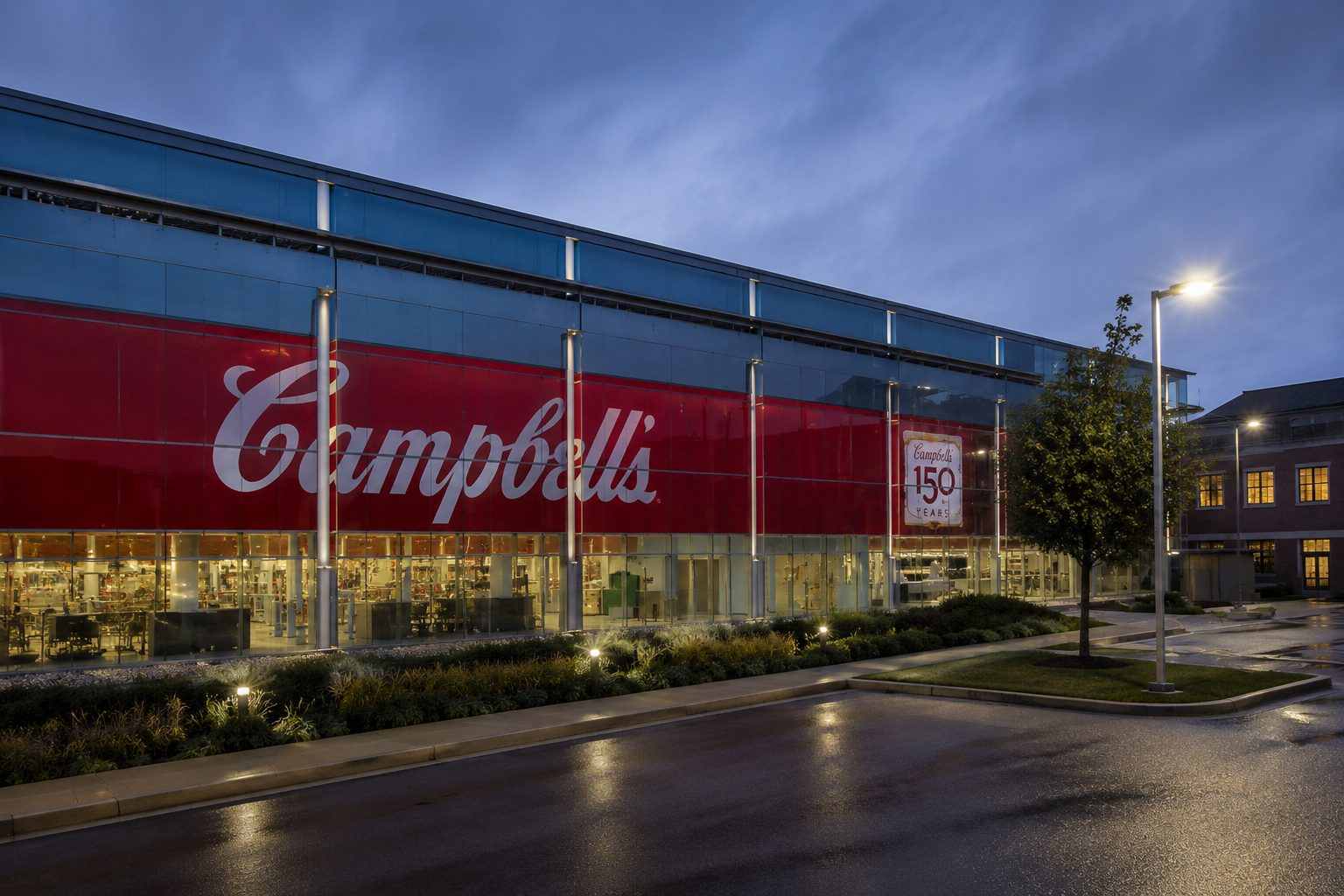
Campbell’s Company NASDAQ:CPB is coming into Monday’s session facing index selling, not the usual moves for the soup maker. CPB finished last at $21.15, up 0.19%, with 62.1 million shares exchanged on June 18. S&P Dow Jones Indices plans to drop Campbell’s from the S&P 500 and place it inside the S&P SmallCap 600 before markets open June 22. With U.S. markets closed June 19 for Juneteenth, the big volume from Thursday is still the most recent trade.
Campbell’s Company NASDAQ:CPB dropped about 7.3% in just four sessions, falling from $22.81 on June 12 to $21.15 at the last close. Retail traders watching CPB are debating if the forced-index-flow trade has run its course or is just getting started. On June 18, volume soared to nearly 5.9 times the previous session, with 10.5 million shares traded.
S&P’s move is mechanical, but there are some changes worth noting. Marvell Technology and Flex will be added to the S&P 500. Pool Corp and Campbell’s are coming out. Campbell’s shifts to the S&P SmallCap 600. For Monday, it’s a liquidity shakeup: funds tracking the S&P 500 will drop CPB, but small-cap tracker demand is a different game and may not offset S&P 500 sellers in full.
Information gain: Campbell closed at $21.15, and its FY2026 adjusted EPS guidance of $2.15 to $2.25 puts the forward adjusted earnings multiple at just under 10 times at either end—9.8 for the low, 9.4 for the high. The latest quarterly dividend is still $0.39 per share, or $1.56 annualized, which works out to a yield of about 7.4% based on the latest close. The payout stands out, but isn’t a free ride: guidance points to adjusted EPS falling 23% to 26% below the 52-week-adjusted FY2025 base.
Campbell’s weekend push is brighter. The company is rolling out its first gluten-free condensed chicken noodle soup, teaming with chickpea-pasta brand Banza. Suggested price is $1.99 a can. Campbell’s estimates about 30% of Americans look for gluten-free foods. Benjamin Crook, Campbell’s senior VP of soup, pitched the drop as delivering the “same classic chicken noodle taste.” Barchart.com
Innovation is key because Campbell’s core business hasn’t shown enough yet. For fiscal Q3, Campbell’s net sales fell 4% to $2.37 billion. Adjusted EBIT dropped 24%, landing at $274 million. Adjusted EPS plunged 32% to $0.50. CEO Mick Beekhuizen said the quarter was still hit by “top-line softness and inflation-driven margin headwinds.” He pointed to steady at-home cooking demand for Campbell’s, Rao’s, and Swanson. The Campbell’s Company
Volume is the issue. Meals & Beverages organic net sales dropped 4% as volume/mix slipped 5%; U.S. soup was off 8%. Snacks came in with a 4% decline in organic sales, volume/mix down 6%, and segment operating earnings slumped 32%. The market sees the soup launch as a test of relevance, not a shortcut to better earnings.
Campbell’s is moving ahead with leadership changes. On June 17, the company tapped Melissa Nippert as chief transformation officer and Beth Jolly as chief communications officer. The shuffle comes as two senior executives get set to retire at the end of the fiscal year. Beekhuizen called both roles critical to efforts to “strengthen operations, build capabilities, align stakeholders and execute” Campbell’s growth plan. The Campbell’s Company
Campbell’s kept its annual outlook unchanged after a cut earlier this year, but still sees pressure on U.S. consumers, Reuters reported. CFO Todd Cunfer said the low end of guidance is “probably more realistic.” Private-label competition, changing demand related to GLP-1 drugs, and higher logistics costs from Middle East tensions are also pressuring the company, according to Reuters. Reuters
Monday’s rebalance could just be another technical setback, bears say, not a reset for CPB. If shares slip under the $20.84–$20.95 range from the June 17–18 lows, traders are looking at the May 21 low near $19.56 as the next line down. There’s also a risk that the dividend yield keeps moving up for the wrong reasons—if investors start to doubt earnings guidance, volumes or margin recovery.
Bull case is tighter but still there. Campbell’s kept its FY2026 guidance, booked $839 million in operating cash flow for the first nine months, and has already cut $200 million in costs on the way to its $375 million fiscal 2028 goal. As long as Monday’s open can handle the index cut without dropping below the low-$20 range, CPB’s next move won’t hinge on its soup launch. The question for the tape is whether SmallCap 600 buyers can step in and steady the stock after the S&P 500 drop.
Disclaimer: This piece is only for information and isn’t investment advice, a recommendation, or an offer to buy or sell any security. Investors should do their own research and talk to a qualified financial adviser before they make any trading or investment calls.
Related articles: Stock Market