Saudi Arabia’s High-Speed Internet Revolution: Fiber Booms, 5G Soars, and Satellites Race to Connect the Kingdom

Saudi Arabia’s High-Speed Internet Revolution: Fiber Booms, 5G Soars, and Satellites Race to Connect the Kingdom

Saudi Telecom Company (stc) accounted for about 67% of Saudi Arabia’s telecom market by revenue in Q3 2022, and held roughly 50–55% of mobile subscribers, with Mobily at 20–25% and Zain at 10–15%. The Saudi Open Access agreement in 2020 allows all six major network operators—stc, Mobily, Zain, Salam, Dawiyat, and GO Telecom—to share towers and fiber networks to boost coverage. By 2022, internet penetration reached about 98–99% of the population, and around 3.7 million households had access to high-speed fiber. Fiber broadband accounted for about 64% of fixed subscriptions by the end of 2023, signaling a fiber-led broadband transition.

11 March 2025
Internet Access in North Korea. How North Korea’s Secret Internet Works: Discover the Hidden World of Kwangmyong

Internet Access in North Korea. How North Korea’s Secret Internet Works: Discover the Hidden World of Kwangmyong

Kwangmyong is North Korea’s nationwide domestic intranet that is completely isolated from the World Wide Web and hosts roughly 1,000–5,500 internal websites. Global Internet access is restricted to a tiny elite; only a few dozen websites are reachable from abroad, with a 2016 leak noting 28 .kp domains and North Korea having about 1,024 Internet addresses. Star Joint Venture Co., created around 2009 as a North Korea–Thailand partnership between the Ministry of Post and Telecommunications and Loxley Pacific, is the gatekeeper for international connectivity and IP allocations. Koryolink launched North Korea’s 3G network in December 2008; by 2011 it had
11 March 2025
Internet Access in Japan: A Comprehensive Overview

Internet Access in Japan: A Comprehensive Overview

SoftBank Corp. holds about 21% of fixed internet subscriptions, KDDI about 19%, NTT Communications (OCN) about 12%, NTT Docomo about 8%, and J:COM about 4%. Japan’s mobile market is led by NTT Docomo with about 42% of mobile subscriptions, KDDI around 30%, SoftBank roughly 25–26%, and Rakuten Mobile about 2% as of 2022. As of 2023, there are approximately 36.6 million FTTH subscriptions out of ~44 million fixed broadband lines, meaning over 80% of fixed connections are fiber. By end of 2024, fiber networks reached about 99.9% of premises, with 1 Gbps residential plans standard and 10 Gbps services like
10 March 2025
Internet Access Services in Kenya

Internet Access Services in Kenya

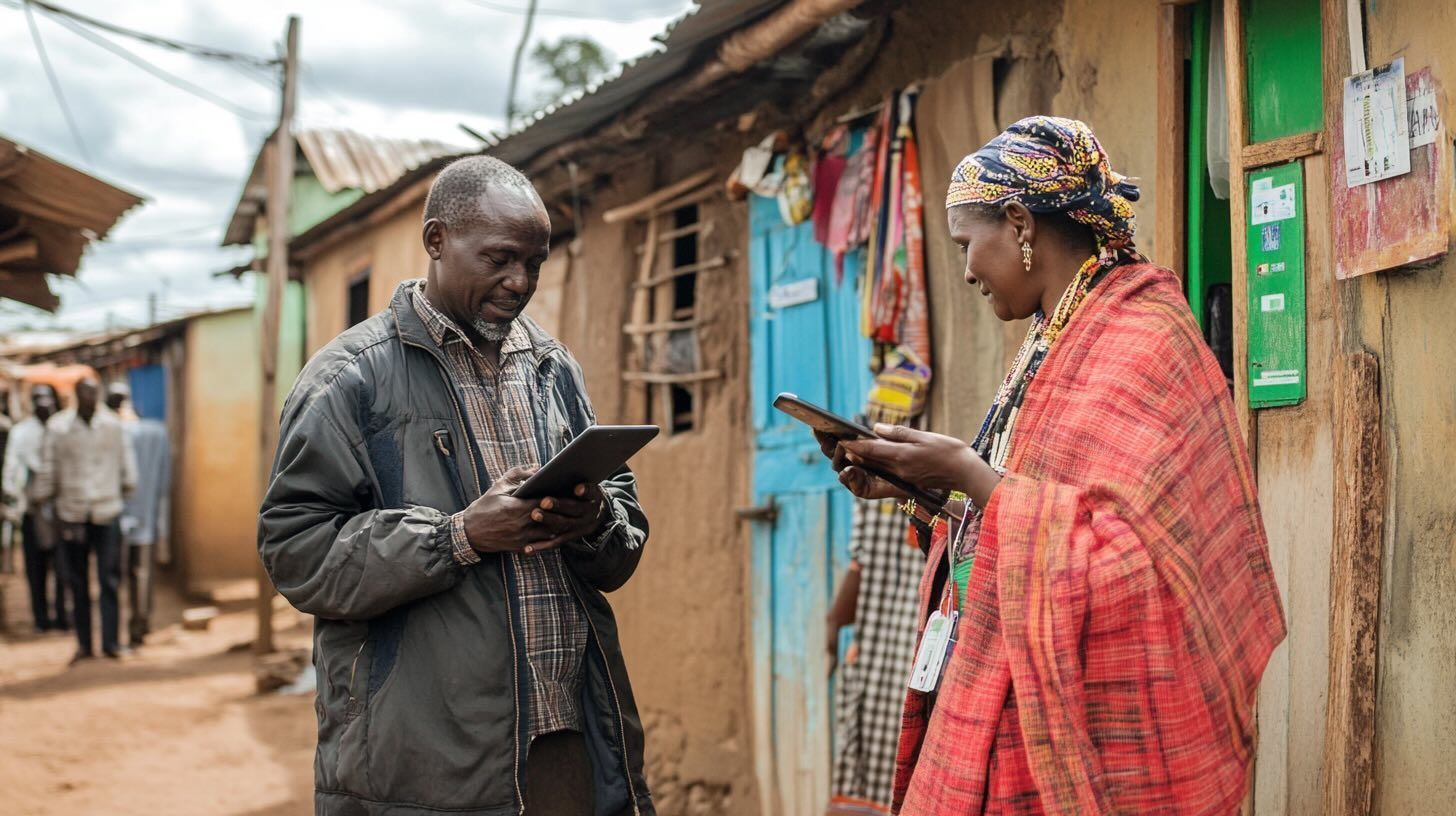
As of early 2024, about 22.7 million Kenyans were internet users, representing 40.8% penetration. Safaricom had 545,812 fixed subscriptions and 36.4% of the fixed broadband market as of mid-2024. Jamii Telecom Faiba held 24.0% of the fixed broadband market, while Wananchi (Zuku) had 17.5%. Poa Internet accounted for about 13.2% of fixed broadband market share. Starlink entered Kenya in July 2023 and reached 16,746 subscribers by January 2025 (about 1.1% of subscriptions). NOFBI aims to reach 100,000 km of fiber by 2026 and has connected all 47 counties. Safaricom expanded its fiber footprint to 14,000 km by March 2023 and
10 March 2025
Internet Access Services in Kazakhstan

Internet Access Services in Kazakhstan

Kazakhtelecom accounts for roughly 60% of Kazakhstan’s telecom market by revenue in 2023 and owns major stakes in mobile operators Kcell and Tele2/Altel. Kar-Tel/Beeline Kazakhstan (VEON) holds about 28% market revenue and is a leading mobile and broadband provider. In internet traffic by autonomous networks, Kazakhtelecom is largest at around 26%, Beeline about 20%, Tele2 Kazakhstan about 19%, and Kcell about 9%, indicating a consumer market duopoly. The Digital Kazakhstan program has expanded fiber nationwide, deploying more than 20,000 kilometers of fiber by 2021 and achieving 118 cities and over 4,500 villages with broadband, covering 97.2% of the population. By
10 March 2025
Internet Access in Nigeria: A Comprehensive Overview

Internet Access in Nigeria: A Comprehensive Overview

Infrastructure and Major Service Providers Nigeria’s internet infrastructure relies on a combination of undersea fiber-optic cables, terrestrial networks, and a handful of dominant service providers. Multiple international submarine cables land in Nigeria, connecting it to global internet hubs. Key cables include: These undersea cables terminate in Lagos and other coastal landing stations, feeding into national fiber backbones. A number of companies have deployed fiber-optic networks crisscrossing the country, including Phase3 Telecom, MainOne, Globacom, Suburban Telecom, and MTN​ Ecoi. Internet exchange points (IXPs) in at least five regions help route domestic traffic locally​ Ecoi, improving speed and reducing costs. Nigeria’s internet
Internet Access in Sudan

Internet Access in Sudan

Sudan’s internet backbone is centered at Port Sudan and links land via the East Africa Submarine System (EASSy) and FLAG/FALCON, with terrestrial fiber reaching Egypt and Ethiopia. Sudatel (Sudani) is over 60% state-owned and operates the national backbone along with fixed-line, mobile, and internet services under the Sudani brand. Zain Sudan, a subsidiary of Kuwait’s Zain Group, is the largest mobile operator with roughly 50% of the mobile market and offers nationwide 2G/3G/4G services. MTN Sudan, part of South Africa’s MTN Group, holds about a 25% share of the mobile market and provides mobile voice and data. Canar Telecom is
25 February 2025
Internet Access in Yemen: Overview and Key Aspects

Internet Access in Yemen: Overview and Key Aspects

Yemen’s bandwidth is dominated by a single aging subsea cable, the FALCON/FLAG system, landing at the Red Sea port of Hodeidah, with only a narrow backup via Djibouti and some satellite links. During the civil war, land fiber links to Saudi Arabia were destroyed, leaving Yemen largely dependent on undersea cables. AdenNet was launched in mid-2018 by the internationally recognized government in Aden to provide fiber to institutions and 4G LTE to consumers, independently of Sana’a’s infrastructure and with tens of thousands of subscribers. There are four mobile operators—YOU (Yemeni Omani United, formerly MTN Yemen), Sabafon, Yemen Mobile, and Y
24 February 2025
Internet Access in Iraq

Internet Access in Iraq

The Ministry of Communications (MoC) controls the national fiber backbone and international gateways and leases bandwidth to private ISPs at wholesale prices around $50 per 1 Mbps. As of 2021, Iraq had about 2.1 million fixed-line/FTTH subscribers, with most of the deployment concentrated in Baghdad. Iraq has over 40 million mobile subscriptions, with 4G LTE launched in January 2021 across Zain Iraq, Asiacell, and Korek, reaching approximately 98% of the population by 2023. By early 2024, about 36.2 million Iraqis were internet users, representing 78–79% of the population. The Iraqi National Backbone project, led by Earthlink and Nokia, will span
24 February 2025
Internet Access in Afghanistan: A Comprehensive Overview

Internet Access in Afghanistan: A Comprehensive Overview

Mobile subscriptions grew from zero in 2001 to nearly 100% penetration by 2021. A nationwide fiber-optic backbone was being rolled out, including a 400 km cross-border fiber link to China via the Wakhan Corridor that was near completion in 2021. The Taliban’s return to power in August 2021 stalled or halted many fiber and broader connectivity projects. The five dominant providers are Afghan Telecom (Aftel/Salam), AWCC, Roshan, Etisalat Afghanistan, and MTN Afghanistan, with MTN planning to exit the Afghan market. An Internet Exchange Point (IXP) was established in Kabul to route local traffic domestically. Since August 2021, Taliban authorities blocked
24 February 2025
Internet Access in Ukraine: Overview

Internet Access in Ukraine: Overview

Over 4,200 ISPs were registered in August 2024, with Kyivstar leading the market at about 19%, Vodafone Ukraine around 9%, and Lifecell around 5%. Ukraine has 52 active data centers and 24 IXPs, and about 63% of popular content is cached within the country. Starlink became a pivotal connectivity lifeline during the war, with SpaceX granted an official operator license as provider #1 in April 2022 and roughly 42,000 terminals in use by 2023. There were about 55.6 million active cellular connections in 2024, equal to 149% of the population. As of early 2024, median fixed broadband speed was about
24 February 2025
Internet Access in Mozambique

Internet Access in Mozambique

Mozambique’s internet infrastructure is heavily mobile-dominated, with three main operators—Vodacom Mozambique (about 50% market share), Movitel, and Tmcel—while fixed-line broadband remains minimal. Tmcel has accumulated over $400 million in debt and is undergoing restructuring to avoid bankruptcy. Mozambique is connected to SEACOM and EASSy submarine cables, landed in 2009–2010, and the 2Africa subsea cable landed in Maputo and Nacala in 2023. MozIX Internet Exchange Point keeps local traffic within Mozambique. <li Vodacom launched Mozambique's first limited 5G service in Maputo in 2023, with plans to extend coverage to about 75% of the population by 2025. 3G/4G networks cover most urban
23 February 2025

Stock Market Today

Wall Street Feels the Heat (and Thrill): Fed Cuts, Tariffs & Mega-Mergers Set NYSE Buzz

Stock Market Today 07.02.2026

7 February 2026
LIVEMarkets rolling coverageStarted: February 7, 2026, 12:00 AM ESTUpdated: February 7, 2026, 12:18 AM EST Dollar Dips as Stocks Rally and US Data Influences Fed Rate Expectations February 7, 2026, 12:18 AM EST. The **dollar index** fell 0.17%, pressured by a rebound in equity markets reducing demand for the safe-haven currency. Weaker-than-expected U.S. labor market data raised the odds of a Fed rate cut to 18% for March, though consumer sentiment improved to a six-month high, limiting losses. Hawkish comments from Atlanta Fed's Raphael Bostic emphasized maintaining restrictive monetary policy. The dollar faces medium-term weakness amid expectations for rate cuts
Seagate (STX) stock jumps nearly 6% as Citi hikes target — what to watch next week

Seagate (STX) stock jumps nearly 6% as Citi hikes target — what to watch next week

7 February 2026
Seagate shares rose 5.9% to $429.32 Friday after Citigroup raised its price target to $480 and reiterated a buy rating. The gain ended a two-day slide but left the stock 6.6% below its Feb. 3 high. CEO Dave Mosley sold 20,000 shares on Feb. 2 under a pre-arranged plan, SEC filings show. U.S. jobs and inflation data next week are seen as key tests for tech stocks.
Cummins (CMI) stock price rebounds after earnings whipsaw as investors eye data-center power demand

Cummins (CMI) stock price rebounds after earnings whipsaw as investors eye data-center power demand

7 February 2026
Cummins shares jumped 6.8% to $577.73 Friday, recovering from a nearly 9% post-earnings drop the day before. The company reported Q4 revenue up 1% to $8.54 billion, took a $218 million charge tied to its hydrogen business, and guided for 2026 EBITDA of 17–18% of sales. Demand for data center generators offset weakness in North American truck markets. Analyst reaction was mixed; Truist raised its price target.
Corning stock hits first record close since 2000 as jobs, CPI data loom

Corning stock hits first record close since 2000 as jobs, CPI data loom

7 February 2026
Corning shares surged 8.3% to $122.16 Friday, their highest close since the dot-com era, after Meta agreed to buy up to $6 billion in fiber-optic cables. The stock is up 40% since late 2025, fueled by strong first-quarter guidance and AI data-center demand. Insiders sold shares following the rally, SEC filings show. Investors await next week’s U.S. jobs and inflation data for rate signals.
Go toTop