Browse Category

Infrastructure News 4 June 2025 - 24 June 2025

The High-Speed Secret: How Finland Quietly Built One of the World’s Best Internet Networks

The High-Speed Secret: How Finland Quietly Built One of the World’s Best Internet Networks

By September 2023, 71% of Finnish households had gigabit fixed broadband (1 Gbps) and 78% had 100 Mbps+ speeds, driven by 61% fiber access by end-2023. Finland aims for every household to have at least 100 Mbps connectivity (upgradeable to 1 Gbps) by 2025, with a national plan to reach full 1 Gbps nationwide by 2030. 4G coverage exceeds 99% of the population and 5G coverage reached about 88–90% by early 2023, with Elisa reporting 90% 5G home-area coverage by end of 2023 and DNA at 86% by March 2023. Starlink became available in Finland in late 2022, with a

The Real Wi-Fight: Romania’s Race to Connect Every Corner of the Country

The Real Wi-Fight: Romania’s Race to Connect Every Corner of the Country

Romania’s first Internet connection was established in 1993 via ici.ro. In the late 1990s and early 2000s, urban residents built “rețele de cartier” by stringing Ethernet cables between buildings, helping the country leapfrog DSL. By 2020 Romania ranked third in the world for fastest fixed internet speeds, behind Singapore and Hong Kong. As of 2024, 88.6% of Romanian households had internet at home, with 92.5% of urban and 83.2% of rural households online. Fiber dominates the fixed network, with about 93% of localities passed by FTTH/B and about 93% of localities able to access gigabit speeds. Digi (RCS&RDS) had about
State of Internet Access in Vietnam: From Fiber to Satellite Skies

State of Internet Access in Vietnam: From Fiber to Satellite Skies

As of mid-2024, 82.2% of fixed broadband households in Vietnam were connected via fiber-optic FTTH, with universal fiber access targeted by 2025 under the Digital Infrastructure Strategy. 4G LTE coverage reaches 99.8% of the territory, with about 168.5 million mobile subscriptions (roughly 170% of the population) and 91.9 mobile broadband subscriptions per 100 people by mid-2024. Commercial 5G service launched in October 2024, with 5G base stations in all 63 provinces by late 2024 and targets of over 50% of the population by 2025 and 99% by 2030. International connectivity has been fragile due to undersea cables, with 4 of
Satellites, Submarine Cables & Cell Phones: Inside Haiti’s Battle for the Internet

Satellites, Submarine Cables & Cell Phones: Inside Haiti’s Battle for the Internet

As of early 2025, about 39.3% of Haitians—roughly 4.65 million people—were using the internet. By 2025 there were about 10.2 million active mobile connections in Haiti, equating to 86% of the population, with many subscribers holding multiple SIMs. Approximately 93.7% of mobile connections use 3G, 4G, or other broadband technologies, while only around 40% of Haitians are covered by 4G LTE networks. Fixed broadband uptake is extremely low, with well under 1% of residents subscribing to wired services. Digicel Haiti and Natcom are the two main mobile operators, with Digicel holding about two-thirds of subscribers and Natcom being the state-Viettel
Reconstruction of Ukraine: Plans, Progress, and Outlook (Mid-2025)

Reconstruction of Ukraine: Plans, Progress, and Outlook (Mid-2025)

Direct war damage reached $176 billion by end-2024, with 72% of losses concentrated in frontline regions Donetsk, Kharkiv, Luhansk, Zaporizhzhia, Kherson, and Kyiv oblasts. An updated needs assessment estimates Ukraine will require about $524 billion (€506 billion) over the next decade to repair and rebuild, roughly 2.8 times the country’s 2024 GDP. Housing is the largest reconstruction need at about $84 billion, with 13% of housing stock damaged or destroyed by December 2024, affecting more than 2.5 million households. As of early 2025, about 3.7 million people were internally displaced; 6 million Ukrainians had fled abroad; and 12.7 million would
13 June 2025
Telecommunications Infrastructure in Ukraine (2022–2025): Destruction and Resilience

Telecommunications Infrastructure in Ukraine (2022–2025): Destruction and Resilience

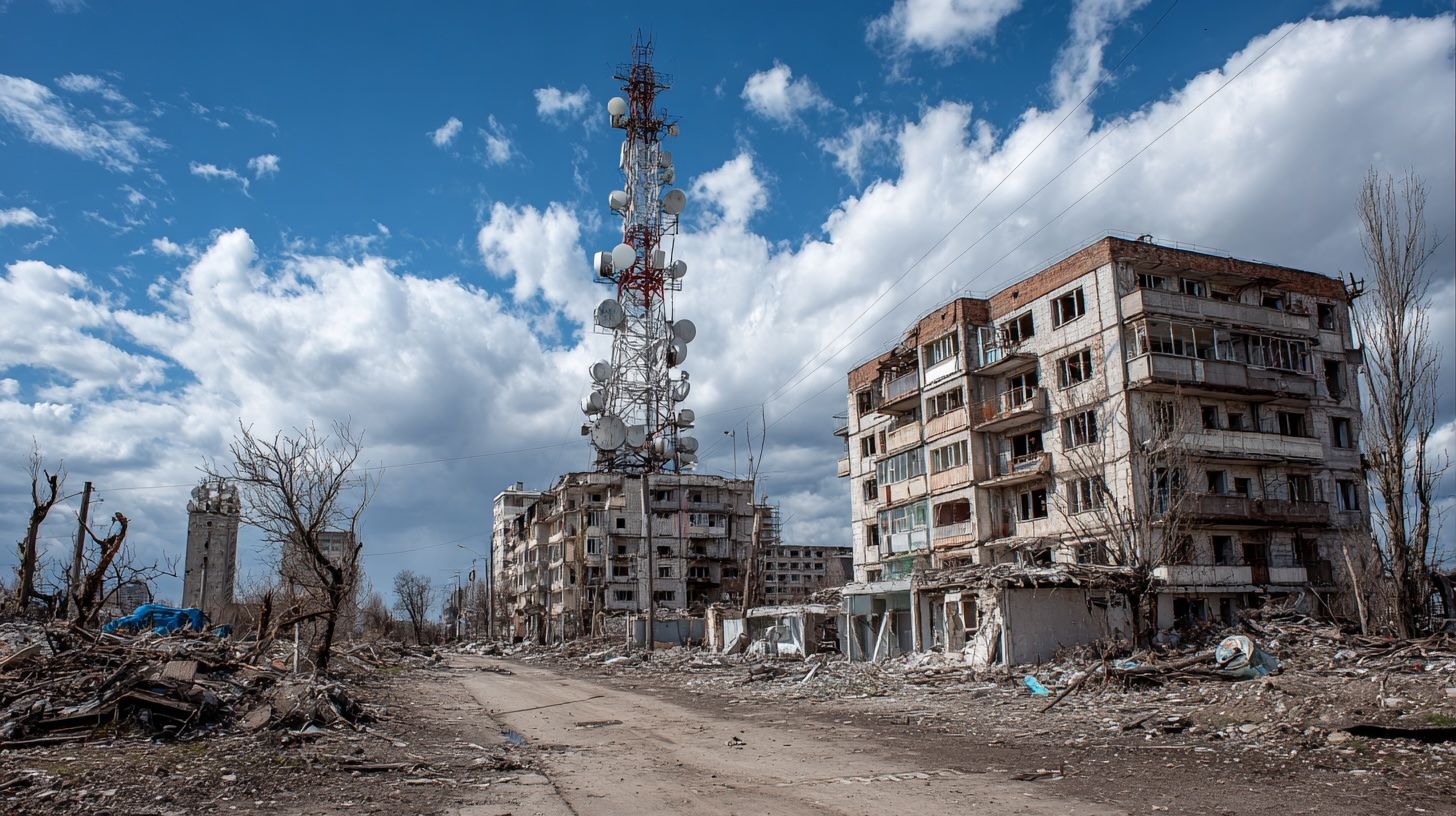
Overview: Types of Infrastructure Targeted Ukraine’s telecommunications network encompasses a wide range of critical infrastructure that has come under attack since 2022. These include: Together, these attacks have aimed to sever Ukraine’s connectivity – both civilian communications and military command links – by dismantling the physical pillars of the internet, phone, and broadcast systems. The following sections detail the timeline of destruction, the regional impacts, and how Ukraine has kept communications running against the odds. Chronology of Major Damage (2022–2025) People examine the wreckage of a broadcasting tower destroyed by a Russian missile strike in Kharkiv (April 2024) euronews.com. Critical telecom
Internet Access in Cape Verde: Current Status and Outlook

Internet Access in Cape Verde: Current Status and Outlook

As of early 2025, about 73.5% of Cape Verde’s population were internet users, roughly 387,000 people out of ~526,000. Fixed broadband subscriptions totaled about 38,000 in 2023, approximately 7 per 100 people. Cape Verde Telecom (CVTelecom) reported passing over 22,000 FTTH homes by the end of 2021, primarily in urban areas. There were over 600,000 mobile cellular connections active in early 2025, about 115% of the population, with 91% of connections broadband-capable (3G/4G). Total internet subscription density reached about 90 per 100 inhabitants in mid-2023, while around 73% of people were online. In early 2024, the median fixed broadband download
Internet Access in Cameroon: The Race to Connect a Nation

Internet Access in Cameroon: The Race to Connect a Nation

As of early 2025, about 12.4 million Cameroonians were internet users, representing 41.9% of the population. As of 2024, roughly 60% of Cameroonians live in urban areas, with internet access heavily concentrated in cities and rural areas almost inaccessible. Cameroon’s fiber backbone extends over 12,000 kilometers and is connected to five landfall cables: SAT-3, WACS, ACE, SAIL, and NCSCS, with SAIL linking Kribi to Brazil. Plans are underway to add more than 4,000 kilometers of fiber, expanding the backbone to about 17,000–22,000 km and improving regional redundancy. The mobile market is dominated by Orange Cameroon (about 11.7 million subscribers, 39.6%
1 6 7 8

Stock Market Today

CapitaLand Investment share price jumps as CapitaLand REIT payouts roll in — what’s next for 9CI

CapitaLand Investment share price jumps as CapitaLand REIT payouts roll in — what’s next for 9CI

7 February 2026
CapitaLand Investment shares rose 1.3% to S$3.12 on Friday, bucking a 0.8% drop in Singapore’s benchmark index. CapitaLand Integrated Commercial Trust reported a 16.4% jump in second-half distributable income, while CapitaLand Ascendas REIT posted a 1.4% full-year rise. CapitaLand China Trust saw full-year DPU fall to 4.82 cents amid weaker yuan and occupancy. CLI reports FY2025 results on Feb. 11.
Keppel stock holds near 12-year high after profit jump, special dividend; buyback adds support

Keppel stock holds near 12-year high after profit jump, special dividend; buyback adds support

7 February 2026
Keppel shares closed at S$11.64 on Friday, up 0.17%, after surging 6.1% the previous day on stronger FY2025 profit and a larger dividend plan. The company bought back 151,400 shares for about S$1.74 million. Keppel reported a 29% rise in full-year profit to S$1.02 billion and proposed a total distribution of 47 cents per share, including a special dividend partly paid in Keppel REIT units.
Go toTop