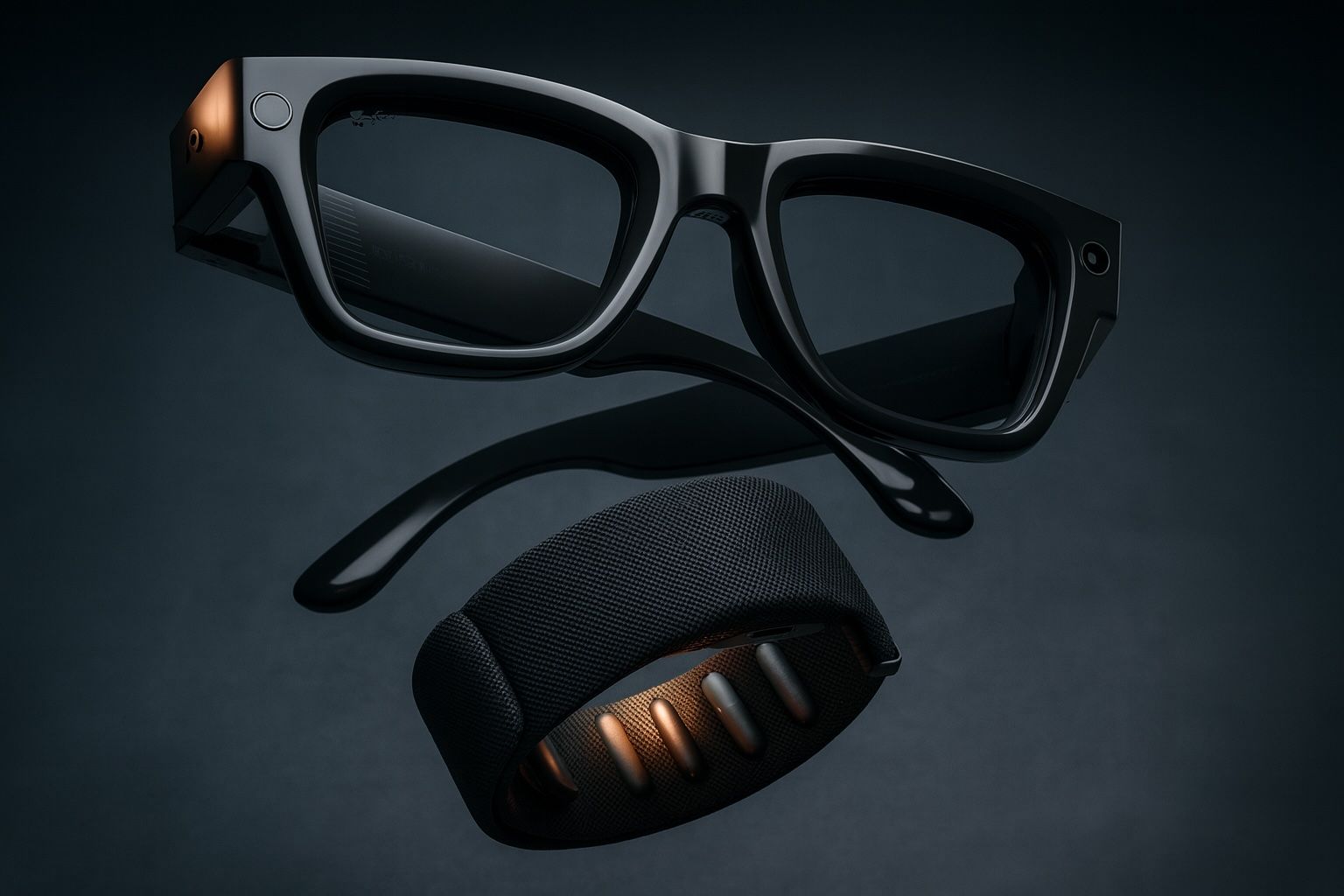
Camera & Video: Ray-Ban Meta is one of the few in this class with an integrated camera. It packs a 12MP ultrawide camera capable of snapping 4K-resolution stills and recording up to 3 minutes of video in 3K at 30fps tomsguide.com tomsguide.com. This is a big step up from the previous 1080p limit. Users can tap a temple button or use voice commands to capture life’s moments hands-free. A forward-facing LED blinks on during capture, but as noted, its subtlety has raised eyebrows from privacy regulators merriam-webster.com. By comparison, Snapchat Spectacles have dual cameras for depth and can record AR video with effects, but their primary draw is the see-through 46° AR display rather than high-res video en.wikipedia.org en.wikipedia.org. Apple’s Vision Pro goes to an extreme – it features 12 cameras and can record 3D spatial videos, essentially filming your surroundings in immersive depth, but it’s a full headset, not everyday glasses. Google’s prototype AR glasses also include cameras to enable AI vision, though Google has explicitly disabled face recognition on device for privacy gizmodo.com. Notably, Amazon Echo Frames and most AR media glasses omit cameras entirely – their focus is elsewhere, so they pose no recording capability. For consumers, the choice comes down to whether you value first-person photography and “lifelogging.” Ray-Ban Meta 2’s camera makes it a powerful tool for hands-free content creation – for instance, travel vloggers can livestream from their POV – whereas audio-only glasses keep you in the moment without raising bystander concerns.