
Operation Midnight Hammer: How Stealth Bombers, Fighters, and Bunker Busters Obliterated Iran’s Nuclear Sites

June 21–22, 2025 – In a massive overnight strike, the United States unleashed a coordinated assault on Iran’s most fortified nuclear facilities – Fordow, Natanz, and Isfahan – under the code name Operation Midnight Hammer. This unprecedented attack, conducted in the early hours of June 22 local time, brought together America’s most advanced stealth bombers, fighter escorts, naval firepower, and specialized munitions in a highly choreographed operation airandspaceforces.com twz.com. U.S. officials confirmed that the strikes “obliterated” Iran’s nuclear ambitions twz.com by devastating critical enrichment sites buried deep underground. President Donald Trump announced that “a full payload of bombs was dropped on the primary site, Fordow,” and declared “all planes are safely on their way home”, lauding that “there is not another military in the world that could have done this” en.wikipedia.org. This report examines every platform and unit involved – from B-2 Spirit stealth bombers and F-22/F-35 fighters to Tomahawk cruise missiles and cyber units – and how they combined to deliver a historic blow to Iran’s nuclear program.

The Ultimate Global Missile Guide: Secret Weapons and Strategic Arsenals Revealed

The Ultimate Global Missile Guide: Secret Weapons and Strategic Arsenals Revealed

Missile technology forms the backbone of modern military power, from intercontinental nuclear-tipped rockets to precision-guided tactical weapons. This comprehensive country-by-country guide details the world’s missile systems – ballistic missiles, cruise missiles, anti-ship and air-defense missiles, air-to-air weapons, and more – including those in service, in development, or recently retired. For each nation, we outline key missile systems with technical specifications, their origin, and intended roles. Read on to discover the secret arsenals and cutting-edge missiles that shape global security.

From Jammers to Laser Cannons: Inside the Cutting-Edge Anti-Drone Tech Defending the Skies

From Jammers to Laser Cannons: Inside the Cutting-Edge Anti-Drone Tech Defending the Skies

As drones proliferate in both civilian and military arenas, the need to counter rogue or malicious drones has become urgent. High-profile incidents – from drones causing airport shutdowns to UAVs menacing critical infrastructure – have underscored the threat. For example, the NFL reported a staggering 20,000% increase in drone incursions at football games between 2017 and 2023 dronelife.com. In response, governments and industries worldwide are investing heavily in anti-drone or counter-UAS solutions. These counter-drone technologies range from detection systems that can spot and identify drones, to interception measures that can disable or capture them mid-air. The global anti-drone market is consequently booming coherentmarketinsights.com, driven by security and terrorism concerns and the need to protect airports, prisons, power plants, battlefields, and other sensitive sites from intrusive eyes or airborne attacks coherentmarketinsights.com. In the sections below, we explore the major categories of anti-drone technology – how drones are detected, the methods used to neutralize them, the integration of these tools into cohesive defense systems, the key industry players, the legal framework governing their use, and emerging trends that will shape the future of drone defense.
Global Navigation Showdown: How GPS III, Galileo, BeiDou & GLONASS Upgrades Will Change How You Navigate

Global Navigation Showdown: How GPS III, Galileo, BeiDou & GLONASS Upgrades Will Change How You Navigate

Have you ever taken GPS for granted on your phone and wondered if other countries have their own “GPS”? It turns out an intense global navigation space race is underway – and the upgrades are astonishing. The U.S., Europe, China, and Russia are modernizing and expanding their Global Navigation Satellite Systems like never before. From America’s next-gen GPS III satellites to Europe’s cutting-edge Galileo, China’s ambitious BeiDou system, and Russia’s resilient GLONASS, each is adding new technology, signals, and services. These upgrades promise higher accuracy, stronger signals, new augmentation services, and even centimeter-level precision, redefining how we navigate and use timing worldwide. In this report, we’ll explore each system’s historical background, technical specs, modernization efforts, augmentation services, strategic goals, and use cases. We’ll also compare the systems and peek into the future of navigation. Buckle up – your understanding of “GPS” is about to expand globally!
Military Satellite Services: Complete Guide to Secure Communications

Military Satellite Services: Complete Guide to Secure Communications

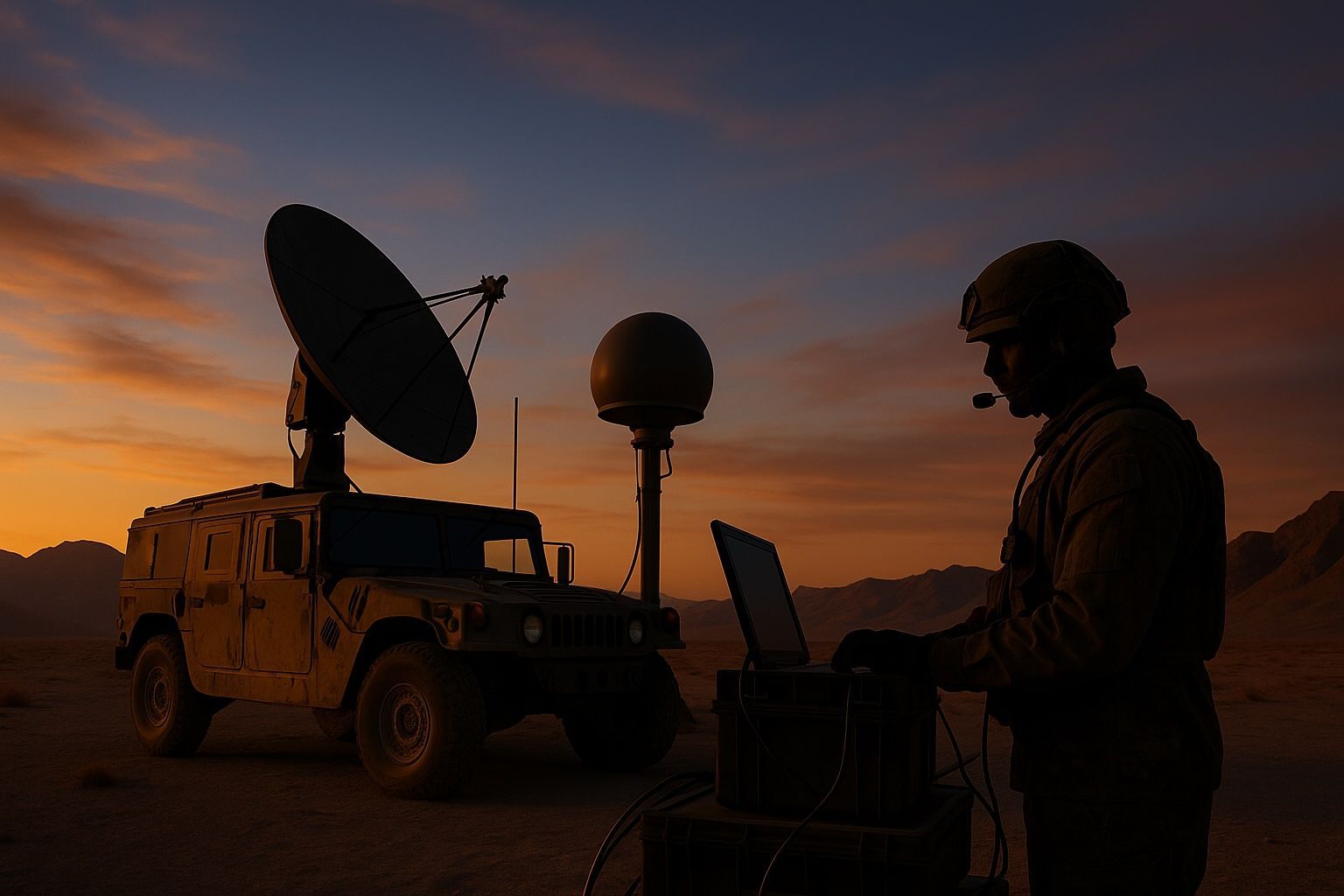
Introduction: Modern military forces rely heavily on satellites as force multipliers and intelligence assets in space. Over the last few decades, warfare has shifted toward highly technology-driven operations, making space-based capabilities central to strategic planning nsin.us. Military satellites – once limited to Cold War-era spy missions – now form the ever-watchful “eyes in the sky,” delivering critical communications, surveillance, navigation, and early warning services to militaries worldwide nsin.us. These orbital platforms enable real-time intelligence and global connectivity that dramatically enhance a nation’s military reach and responsiveness. In this report, we explore the types of military satellite services, their roles in modern warfare, the technologies that empower them, and the global landscape of military space capabilities. We also discuss recent innovations, emerging threats, and future trends shaping the next generation of military satellites.
1 5 6 7

US Stock Market Today Updates

AI PORTFOLIO

Top Stock Picks

Today’s highest-ranked model selections.

#1 Strong Buy

NVIDIA

94/100
#2 Strong Buy

Meta Platforms

89/100
#3 Buy

Alphabet

87/100
#4 Buy

Amazon

84/100
#5 Selective Buy

Microsoft

80/100
View full portfolio
Editorial model selection. Not personalised advice.