As of 7 December 2025, the UN’s nuclear watchdog has confirmed that the giant steel arch built to contain the wreckage of the 1986 Chernobyl disaster is so badly damaged by a February drone strike that it can no longer fully perform its main safety function of confining radiation. The finding marks the most serious deterioration in the site’s safety barriers since the collapse of the Soviet-era reactor, and it is intensifying global concern over the risks of warfare around nuclear facilities.
Despite this alarming assessment, the International Atomic Energy Agency (IAEA) and Ukrainian authorities stress that current radiation levels at and around Chernobyl remain normal and stable, and there has been no detected release of radioactive material so far. The danger lies not in an immediate leak, but in the shrinking safety margin: the protective shield is now compromised at a site that still holds large quantities of long‑lived radioactive debris.
What the IAEA Has Confirmed This Week
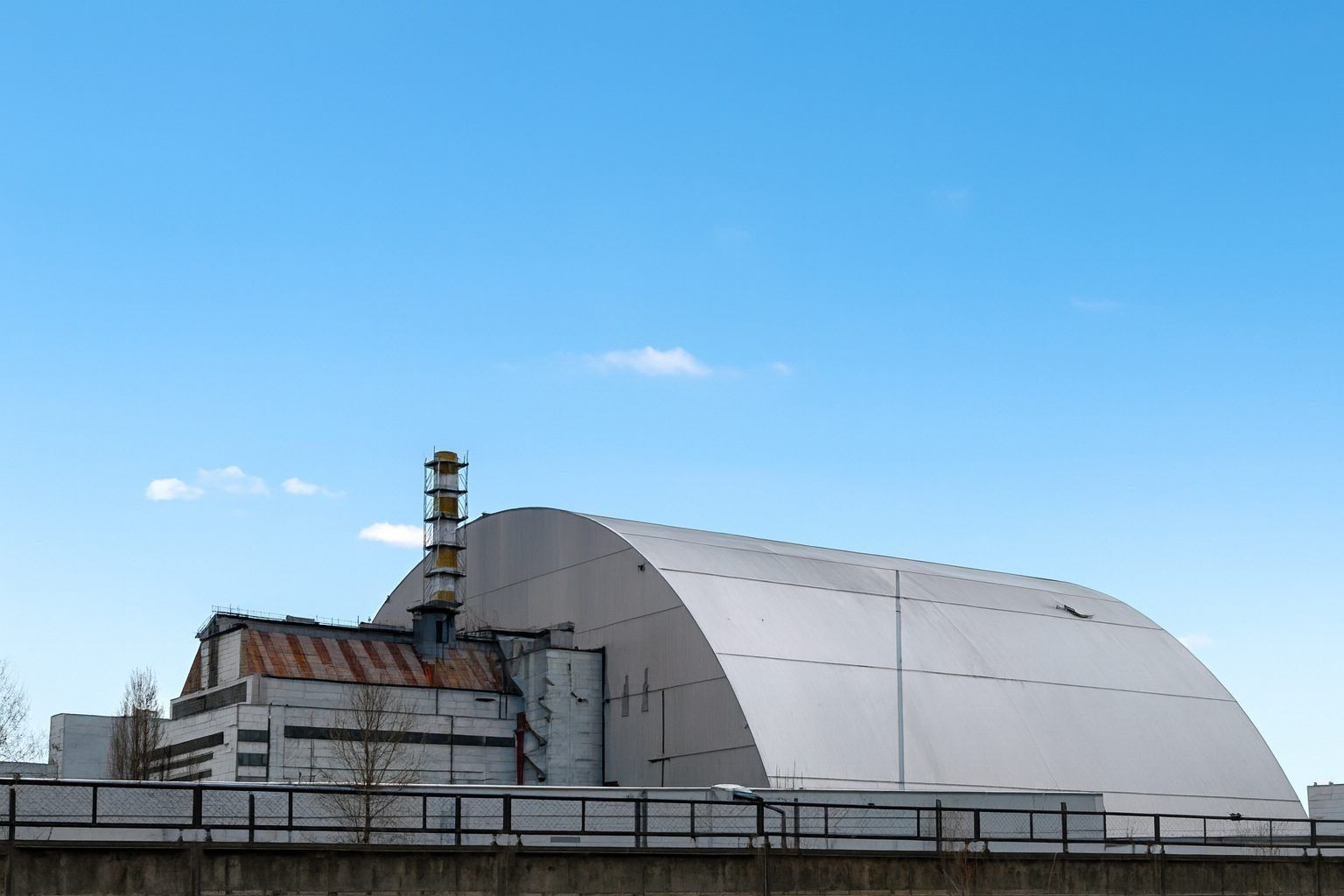
In a statement published this week and reported globally on 5–7 December 2025, the IAEA said that an inspection mission to Chernobyl’s New Safe Confinement (NSC) — the massive steel structure that covers the ruins of Reactor 4 — found it had been “severely damaged” by a February 2025 drone strike and has “lost its primary safety functions, including the confinement capability.” Reuters+2The Guardian+2
Key points from the IAEA’s latest assessment:
- The NSC can no longer reliably perform its main safety role, which is to keep radioactive dust and debris from escaping into the environment.
- Load‑bearing structures and monitoring systems remain intact, meaning the arch is not at immediate risk of collapse and radiation sensors are still functioning.
- Some limited repairs have already been carried out, but the IAEA says “comprehensive restoration remains essential” to prevent further deterioration and to restore long‑term safety. Reuters+2The Guardian+2
- IAEA teams remain deployed in Ukraine as part of a wider programme monitoring damage to nuclear sites and critical power infrastructure across the country.
In simple terms: the shield is still standing and sensors still work, but it no longer gives the level of protection it was designed to provide.
A €1.5 Billion Shield Built to Fix a Soviet Emergency
The compromised structure is the New Safe Confinement, a giant arch that:
- Cost around €1.5 billion as part of an international, Europe‑led project.
- Was assembled next to the old reactor and slid into place in 2016, with the project fully completed in 2019.
- Was designed to last at least 100 years, allowing engineers to safely dismantle the original concrete “sarcophagus” hastily built by the Soviet Union after the 1986 explosion, and to slowly remove and manage the melted nuclear fuel inside. The Guardian+1
The NSC is not a reactor itself; it’s a gigantic containment shell placed over the shattered remains of Reactor 4 and the older sarcophagus. Its job is to:
- Keep radioactive dust and debris inside, even in storms or structural failures underneath.
- Provide a controlled environment for robotic and human cleanup operations.
- Protect the old structures from weathering, which could otherwise slowly release contamination.
When the IAEA says the NSC has lost its primary safety functions, it means that its ability to guarantee containment under stress — for example, during extreme weather or another strike — is no longer assured, even if conditions remain stable for now.
How the February 14 Drone Strike Damaged Chernobyl
The damage at the heart of this week’s alarm traces back to 14 February 2025, when a drone hit the NSC in the early hours of the morning.
According to IAEA assessments, Ukrainian officials, and subsequent reporting:
- A Shahed‑136 / Geran‑2 kamikaze drone, widely used by Russia, struck the roof of the NSC over Unit 4.
- The impact blew a hole of around six metres through the shelter’s outer and inner cladding and ignited flammable insulation materials, sparking a hidden fire inside the roof layers.
- Firefighters worked in freezing conditions to reach and extinguish smouldering hotspots, a process that took weeks, guided in part by thermal imaging.
- The IAEA’s early inspections concluded that radiation levels stayed within normal limits, and that core structural beams appeared intact, though the outer protective shell and insulation had been seriously damaged.
Ukraine has blamed Russia for the attack, calling it a deliberate strike on critical nuclear infrastructure. Russia has denied responsibility, suggesting instead that Kyiv was exploiting the incident for political purposes.
For months, the working assumption was that emergency repairs would restore full safety functions. The IAEA’s December statement overturns that optimism: even after partial fixes, the shield’s confinement capability remains compromised.
What Has Changed Now — and What Hasn’t
What has not changed:
- No spike in radiation: All available monitoring shows radiation levels at and around the site remain normal and stable, both immediately after the strike and in recent measurements.
- No casualties or acute health impacts from the February attack have been reported.
- The reactor itself has long been shut down; there is no ongoing nuclear chain reaction as there was in 1986.
What has changed:
- The NSC is no longer considered a fully effective barrier against the release of radioactive material in the event of further shocks — such as another strike, structural failure beneath it, or extreme weather.
- The IAEA is now publicly calling for major, comprehensive repairs, not just patch‑up work, to restore long‑term safety.
- The incident has moved from being a localised war‑damage problem to a global nuclear‑safety concern, with headlines across Europe, Asia and the Americas highlighting the risk of combat around Chernobyl.
In short, the immediate risk to public health remains low, but the margin for error has shrunk, and the tolerance for further damage is much lower than it was before the strike.
How Dangerous Is the Situation?
Experts and officials emphasise a few key points when assessing risk:
- No new meltdown is possible
Reactor 4 is destroyed and defuelled; the danger now is not a runaway nuclear reaction but the dispersal of long‑lived radioactive dust and debris if protective structures fail. - The worst‑case scenarios involve structural failure or repeat strikes
- If another drone or missile hit exactly the wrong place, it could further deform the NSC or the older sarcophagus beneath it.
- A partial collapse of roof sections could shake loose contaminated materials and allow radioactive particles to escape, especially in windy conditions.
- Some media and analysts describe this as a risk of a “catastrophic leak”, not in the sense of another 1986‑style explosion, but of a large‑scale release of dust that might force evacuations and long‑term exclusion zones. The Sun+1
- Current monitoring is a major line of defence
Because radiation sensors and structural monitoring still work, any change in conditions should be detected quickly, giving authorities time to respond and — if necessary — expand protective zones around the plant. - The greatest risk is long‑term neglect in a war zone
Nuclear safety structures are built to be maintained, inspected and gradually upgraded. As long as the site sits in an active conflict area, regular maintenance and large‑scale engineering projects become far more difficult and expensive, increasing the risk of future failures.
So while there is no cause for immediate panic, the Chernobyl site has undeniably become less secure than it was before the February strike — and more dependent on swift international action to repair the damage.
Why Chernobyl Remains a Strategic and Symbolic Target
The renewed focus on Chernobyl is not just technical; it is deeply political and symbolic:
- The 1986 disaster spread radioactive contamination across much of Europe and remains a defining symbol of nuclear risk and Soviet secrecy.
- During the early weeks of Russia’s 2022 full‑scale invasion, Russian troops briefly occupied Chernobyl, dug trenches in contaminated soil and disrupted site operations, prompting global alarm at the time.
- The February 2025 strike took place amid larger Russian drone campaigns against Ukraine’s energy infrastructure, which also threaten other nuclear sites such as the Zaporizhzhia Nuclear Power Plant.
By demonstrating that Chernobyl’s state‑of‑the‑art protective arch can be damaged in war, the incident underscores a larger IAEA warning: no nuclear facility is fully safe in an active conflict zone, even if the reactors are offline.
The Price Tag and the Politics of Repair
Fixing the NSC will not be cheap, fast or easy.
- Ukraine’s finance ministry has previously estimated that restoring the arch after the drone strike could cost more than €100 million, far exceeding the roughly €19 million still available in an existing Chernobyl fund managed by the European Bank for Reconstruction and Development.
- France has already pledged an additional €10 million toward repairs, but that still leaves a significant funding gap.
- Reporting this weekend suggests that temporary stabilisation work may run into the “tens of millions” of euros and continue well into 2026, with more substantial long‑term fixes requiring fresh commitments from Western governments and international lenders. The Economic Times+1
The challenge is not just money:
- The Chernobyl Exclusion Zone is heavily militarised and subject to air‑raid risks, complicating the movement of foreign engineers and heavy equipment.
- Any large project must be coordinated tightly with IAEA monitors to ensure work itself does not destabilise contaminated structures.
The longer full repairs are delayed, the more weather and corrosion can widen the existing damage, which is why the IAEA is pressing for “timely and comprehensive” restoration. Reuters+2The Guardian+2
Key Facts at a Glance (for Fast Readers and Searchers)
- What happened?
A drone strike on 14 February 2025 hit the New Safe Confinement arch over Chernobyl’s Reactor 4, blowing a hole in the roof and starting a fire in the insulation. - Who is blamed?
Ukraine says a Russian Shahed‑136 drone carried out the attack; Russia denies targeting the plant. - What did the IAEA find now?
An inspection in late November confirmed that the NSC has lost its primary safety functions, including confinement, even though its main structural supports and monitoring systems remain intact. - Is radiation leaking?
No. Radiation levels at the site and in surrounding areas are still reported as normal and stable, with no detected release linked to the February strike. - Why is this serious, then?
Because the margin of safety has shrunk. The NSC is no longer guaranteed to hold back radioactive dust in the face of further damage or extreme conditions, increasing the risk of a future contamination incident. - How much could repairs cost?
Early estimates suggest over €100 million may be needed, on top of the original €1.5 billion price of the arch.
What This Means for Ukraine and the World
The Chernobyl drone strike and the IAEA’s latest findings are about more than one damaged structure:
- They highlight the global stakes of fighting around nuclear facilities — even those that are shut down.
- They show that high‑tech containment systems are not designed for direct military attack, forcing governments and regulators to rethink what “safety” means in wartime.
- They put pressure on Western governments, international financial institutions and Ukraine’s partners to fund and execute a complex repair operation in a war zone.
For people following this story via Google News and Discover, the bottom line is:
- There is no immediate radiation emergency at Chernobyl.
- The IAEA’s warning is real and serious: a crucial layer of protection built after 1986 is no longer doing its full job.
- The risk of future problems will depend heavily on how quickly and effectively the international community helps Ukraine repair the damage — and on whether the site is spared from further attacks.