Inside a dim, long-abandoned control room at Ukraine’s Chornobyl (Chernobyl) nuclear power plant, the instrument panels are a reminder of a catastrophe the world still hasn’t finished cleaning up. Nearly four decades after the 1986 explosion and fire at Reactor 4—widely regarded as the worst civil nuclear accident in history—engineers are once again racing to prevent radioactive material from escaping, this time in the shadow of a modern war. Dawn+1
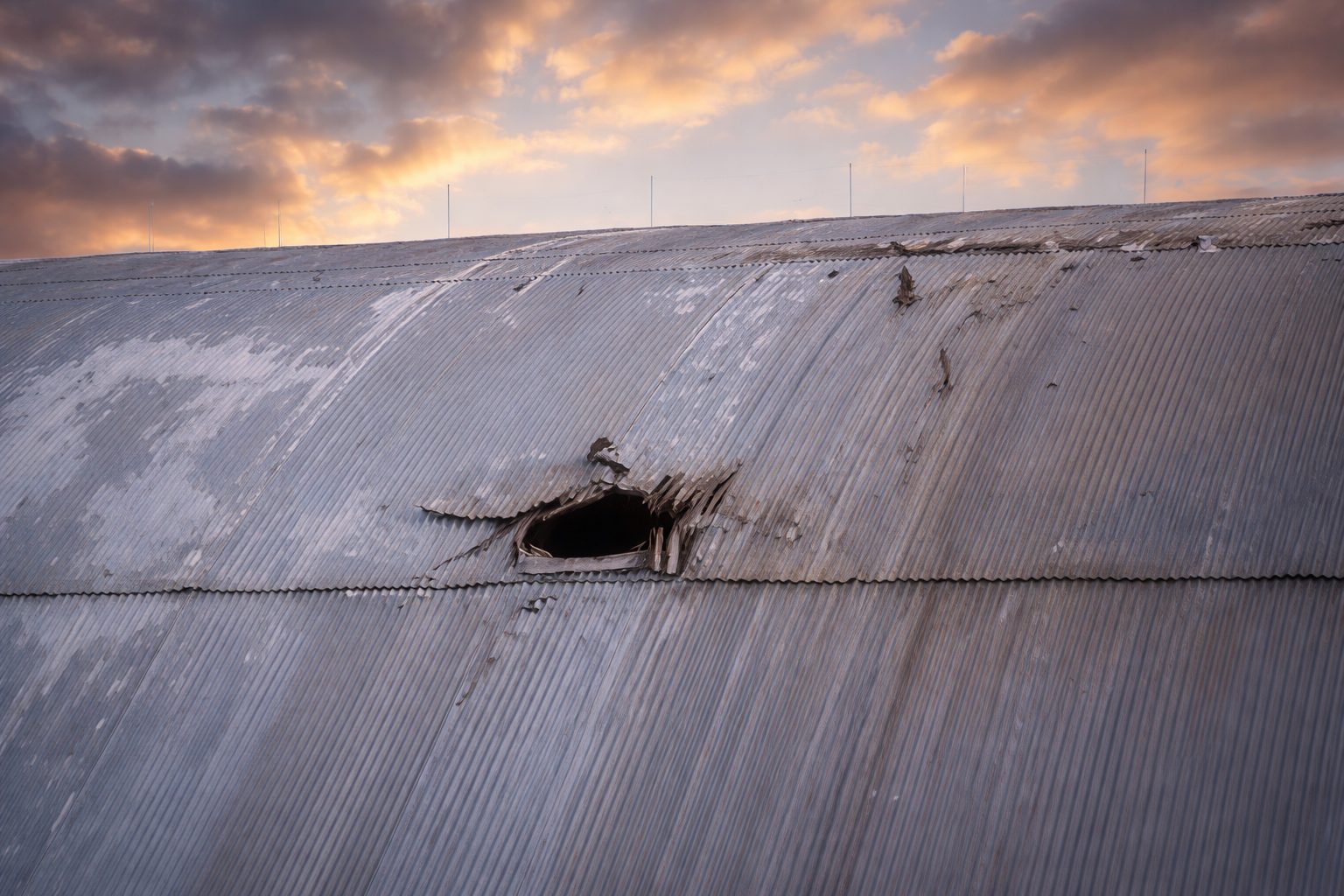
The new danger centers on the New Safe Confinement (NSC)—the massive, arched, steel-and-concrete structure built to cover the ruins of Reactor 4 and the older “sarcophagus” shelter erected hastily after the disaster. Ukraine says a drone strike on February 14, 2025 tore into the NSC, igniting a fire and damaging the outer shell. Russia denied responsibility. While radiation readings around the site have remained stable, the International Atomic Energy Agency (IAEA) later concluded that the shelter can no longer perform its main safety function: reliably confining radioactive material over the long term. Reuters+2Reuters+2
Now, the story of Chernobyl’s “cover” is no longer just about engineering—it’s about time, weather, corrosion, funding, and the escalating reality that critical nuclear-safety infrastructure is being tested by weapons it was never designed to withstand. Reuters+2EBRD+2
What happened at Chernobyl on February 14, 2025
According to Reuters, Ukrainian President Volodymyr Zelenskyy said a Russian drone caused “significant” damage to the radiation containment shelter at Chornobyl, triggering a fire that was later extinguished. Zelenskyy and the IAEA said radiation levels remained normal after the incident. Reuters+1
At the site, Chornobyl’s chief engineer Oleksandr Tytarchuk told reporters that the barrier meant to prevent radioactive spread “ceased to function according to its original design.” He said the drone pierced the outer cover and exploded inside the system—and warned that if the blast had occurred 15–20 meters away, it could have struck the older, aging shelter beneath. Reuters
Reuters also cited Marcel Plichta, a Fellow at the Centre for Global Law and Governance at the University of St Andrews, who said visuals released by Ukrainian authorities “almost certainly” showed a Shahed-136-type drone (known in Russia as “Geran-2”), noting that typical warheads are around 30 kg—enough to cause major damage to cladding and systems even if not comparable to a large missile strike. Reuters
The Associated Press similarly reported that the drone punched a hole in the outer shell and briefly started a fire, while the IAEA said the strike did not breach the inner containment and radiation levels did not increase. AP News
The IAEA’s warning: the NSC “lost its primary safety functions”
In early December 2025, Reuters reported that the IAEA concluded the NSC “can no longer perform its main safety function” due to the February drone damage, citing an inspection mission that found the structure’s integrity had been degraded. Reuters
IAEA Director General Rafael Grossi said the mission confirmed the NSC had “lost its primary safety functions, including the confinement capability,” while also finding no permanent damage to load-bearing structures or monitoring systems. He added that repairs had been carried out, but comprehensive restoration is essential to prevent further deterioration and ensure long-term nuclear safety. Reuters
A separate industry report from NucNet echoed these findings and reported that the IAEA recommended further restoration and protective work—including humidity control measures, an updated corrosion monitoring program, and upgrades to integrated monitoring systems associated with the shelter. NucNet
Why the New Safe Confinement matters
The NSC is not simply a “roof.” It is a complex nuclear-safety system designed to stabilize one of the most contaminated industrial sites on earth and enable decades of controlled dismantling and waste management.
According to the European Bank for Reconstruction and Development (EBRD), the NSC cost €1.5 billion, financed by 45 donor countries and institutions, and was officially handed over for operation in 2019. It encloses the destroyed Reactor 4 and the provisional shelter built after the accident—still containing the reactor’s molten core and an estimated 200 tonnes of highly radioactive material. EBRD+1
The EBRD also describes the NSC as the most prominent component of the broader €2.1 billion Shelter Implementation Plan, which included stabilization and infrastructure projects needed for long-term work at Chornobyl. EBRD+1
In engineering terms, the structure is enormous: the EBRD notes a span of 257 meters, a length of 162 meters, a height of 108 meters, and a total weight of more than 36,000 tonnes, making it the largest moveable land-based structure ever built. EBRD
This scale matters because the NSC’s job is to maintain controlled conditions—keeping moisture out, limiting corrosion, and preventing radioactive dust from becoming airborne—while allowing remote dismantling work inside. EBRD+1
How extensive is the damage?
Ukrainian operators and nuclear-industry reporting have described damage that goes well beyond a single puncture.
World Nuclear News (WNN) reported that operators said the drone caused a 15 square metre hole in the external cladding, with defects affecting roughly 200 square metres, and damage to some joints and bolts. World Nuclear News
In a later WNN update, citing IAEA information, emergency work to fight the fire resulted in approximately 330 openings in the outer cladding—each averaging 30–50 cm—and a preliminary assessment identified extensive damage to stainless-steel panels, insulation materials, and a large portion of the membrane located between insulation layers that helps keep out water, moisture, and air. World Nuclear News
WNN also reported that the main crane system (critical for future dismantling work) and its maintenance garage area were damaged and not operational, while ventilation and climate-control systems were functional but had not been in service since the strike. Radiation and other monitoring systems remained functional, and no increase in radiation levels was detected during or after the incident. World Nuclear News+1
In parallel, an AFP report published by Pakistan’s Dawn described a “large hole” in the NSC that had been covered with a protective screen, and said roughly 300 smaller holes created during firefighting still needed to be sealed. Chornobyl plant director Sergiy Tarakanov told AFP that it could take three to four years before the outer dome regains its primary safety functions. Dawn
“Repairs could take years” — and the clock is not on Ukraine’s side
On paper, patching holes in a structure sounds straightforward. In reality, restoring the NSC is slow, specialized, and expensive for three reasons:
1) The radiological environment limits access and methods.
Any major work near Reactor 4 must be engineered to reduce worker exposure, often requiring remote tools, specialized materials, and strict contamination controls. World Nuclear News+1
2) The shelter’s confinement function depends on systems, not just steel.
The NSC is designed to maintain controlled internal conditions; once membranes, cladding layers, and critical systems are compromised, the risk becomes less about an immediate spike and more about long-term degradation—especially corrosion, moisture intrusion, and dust control. World Nuclear News+2NucNet+2
3) Funding and wartime logistics shape timelines.
The EBRD says it is working closely with the Chornobyl plant to assess restoration options, but notes that the scale of the damage and complexity could push total repairs to several hundred million euros. EBRD
In other words: even if radiation readings remain “normal,” the NSC’s purpose is to hold the site stable for decades. When the confinement function is degraded, time becomes an adversary.
The international response: emergency money now, bigger bills later
Because the NSC was built with international financing and oversight structures, the response has also been international.
In May 2025, the EBRD announced that France pledged €10 million to the EBRD-managed International Chernobyl Cooperation Account (ICCA) to support restoration of key NSC functions. The EBRD said the drone strike rendered systems designed to ensure the NSC’s 100-year lifespan non-operational and increased the risk of further deterioration without swift repairs. It stated that initial measures would include repairing external cladding to stop water ingress, followed by longer-term work to restore core functionality and minimize the release of contaminated dust into the environment. EBRD
In June 2025, the EBRD said the European Union would contribute up to €25 million and the United Kingdom up to €6.7 million, with funds used for emergency repairs. The EBRD warned the total cost of emergency works could exceed €100 million, even before any full restoration plan is completed. EBRD
On its Chornobyl project page, the EBRD notes that it is assessing emergency repair options and that the estimated cost of repairs could amount to several hundred million euros, underscoring that emergency funding is only a first step. EBRD
“One more hit” — why Ukraine fears the next strike even more than the last
Ukrainian officials and site managers have repeatedly stressed that the NSC was never built to withstand modern warfare.
In the AFP interview published by Dawn, plant director Sergiy Tarakanov warned that another strike—or even a powerful nearby impact—could create vibrations like a “mini-earthquake,” raising the risk that the inner radiation shell could collapse. “No one can guarantee that the shelter facility will remain standing after that,” he said, calling it the main threat. Dawn
Ukrainian media outlet TSN quoted Hryhoriy Plachkov, a former head of Ukraine’s State Nuclear Regulatory Inspectorate, arguing that structures like the sarcophagus and NSC are extraordinarily complex but were “never designed for warfare,” and that any direct hit by modern weapons could have serious consequences. ТСН.ua
It is important to be precise about what is—and is not—at risk. Reactor 4 was destroyed in 1986, and the danger is not a repeat of that same type of runaway reactor accident. The hazard is the potential release of radioactive dust and contamination if confinement degrades further or if structural collapse occurs inside the shelter, making the decades-long dismantling and remediation effort far more dangerous. World Nuclear News+2NucNet+2
Beyond drones: power cuts add another layer of risk
Direct strikes aren’t the only threat. The NSC depends on electricity for monitoring and essential systems—and wartime damage to Ukraine’s grid has repeatedly tested that lifeline.
In October 2025, ABC News reported that Russian drone attacks cut power to the Chernobyl site for more than three hours, and Ukraine’s energy ministry said the New Safe Confinement facility was left without power supply. The IAEA said the plant experienced “fluctuations” after losing external power, though alternative lines were used initially and power was later restored. ABC
The AFP report in Dawn similarly referenced an October strike on a substation near Chernobyl that cut power flowing to the confinement structure. Dawn
Even short outages can increase stress on systems designed to keep conditions stable inside a sealed shelter—and they underscore why nuclear sites, even decommissioned ones, remain strategically sensitive in war. ABC+1
What happens next: temporary repairs, then full restoration—if and when conditions allow
According to NucNet, the IAEA said “limited temporary repairs” had been carried out, but emphasized that timely comprehensive restoration is essential. It also reported that, in 2026, and with EBRD support, the Chornobyl site plans additional temporary repairs aimed at re-establishing the NSC’s confinement function—paving the way for full restoration once the conflict ends. NucNet
The EBRD, meanwhile, has framed the challenge bluntly: the complex radiological environment and scale of the damage make precise cost estimates difficult, but the bill could reach hundreds of millions of euros. EBRD
For residents of Ukraine—and for neighbors across Europe—the central fact is both reassuring and unsettling: radiation readings have remained stable, but the structure designed to keep it that way for the next century has been compromised. Reuters+2Dawn+2
Chernobyl was built as a monument to technological confidence. The NSC was built as a monument to repair. Now, in wartime, it has become a test of whether the international community can protect the infrastructure that prevents yesterday’s nuclear disaster from becoming tomorrow’s environmental emergency. EBRD+2Reuters+2