
BEIJING, April 25, 2026, 23:02 (China Standard Time)
- China warned that U.S. export-control bills targeting semiconductors risk upending global chip supply chains.
- That warning came just after the House Foreign Affairs Committee advanced the MATCH Act and several other export-control proposals in a vote.
- Micron has urged Congress to tighten restrictions on chipmaking equipment available to Chinese competitors, according to Reuters.
China on Saturday cautioned that U.S. export-control legislation focused on semiconductors threatens to shake up global chip supply chains, following a House panel’s move to push forward measures tightening China’s access to chipmaking gear. Beijing added it is keeping a close eye on the U.S. bills as they move through the legislative process.
The warning carries new weight as the battle shifts away from agency regulations and lands in Congress. Lawmakers are pushing the Multilateral Alignment of Technology Controls on Hardware Act, known as the MATCH Act, which would slap export restrictions on certain semiconductor manufacturing gear and components, bill records show. Export controls, put simply, block sales of sensitive goods for national-security reasons.
China’s Commerce Ministry criticized what it described as the overreach of national security concerns and misuse of export controls. The ministry warned that the proposed bills would disrupt the global economic and trade order, threatening the stability of the semiconductor supply chain. It also said China would respond with “necessary measures” to defend its companies. MOFCOM
The House Foreign Affairs Committee pushed the MATCH Act forward on April 22 during a markup focused on tightening export controls. Chairman Brian Mast argued the bill aims to restrict China from getting its hands on “critical machines and parts” tied to advanced chip production. Representative Michael Baumgartner pressed for allies to “move in lockstep” to shore up any holes in these controls. Republican Foreign Affairs Committee
This bill hits at a key vulnerability in Washington’s approach to chips: While Lam Research and Applied Materials in the U.S. are already restricted on certain sales to China, Chinese chipmakers could still turn to overseas suppliers for equipment or service. Reuters noted the legislation would push foreign toolmakers serving Chinese fabs to match U.S. limits.
Micron Technology, the top U.S. maker of memory chips, is leading the charge here, according to Reuters, which cited sources close to the situation. The draft measure zeroes in on facilities run by ChangXin Memory Technologies, Yangtze Memory Technologies, and Semiconductor Manufacturing International Corp—three major Chinese chip manufacturers at the heart of Beijing’s drive to ramp up its own production.
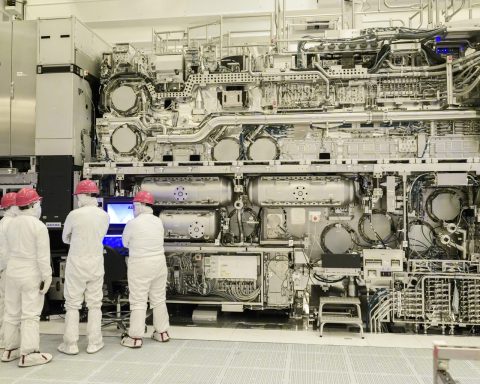
According to Reuters, the updated bill takes a slimmer approach than its predecessor but keeps a nationwide ban on ASML’s deep ultraviolet immersion lithography systems. These DUV machines—essential for printing circuit layouts onto wafers during chip production—remain squarely in the crosshairs. The legislation also lays out license requirements for servicing machinery at certain Chinese sites.
ASML finds itself stuck in the thick of the standoff. The Dutch powerhouse in lithography equipment isn’t calling it yet—CFO Roger Dassen told reporters this week it’s simply too soon to predict the impact of the proposed U.S. legislation. Still, he did point out, “the need for capacity remains” if new restrictions target a particular region. Reuters
The argument behind the bill: it’s the tools, not just the chips, that could lock in export controls for the long haul. Janet Egan and Michelle Nie, writing for the Center for a New American Security this week, put it bluntly—“the machines that make them matter more.” Still, they point out, getting allies on the same page is tricky; nobody wants to be the first to lose access to China’s huge market. CNAS
Pressure is mounting on the Bureau of Industry and Security, the Commerce Department arm that handles export controls. Kate Koren, who worked at BIS and now sits at the Center for Strategic and International Studies, told Reuters there’s “pretty strong bipartisan consensus” that the bureau hasn’t been up to par this past year. Reuters
The MATCH Act hasn’t made it into law yet. After passing committee, the bill faces a tough climb: it needs green lights from the full Congress, and that’s before lawmakers get into wrangling over which products or companies get covered, not to mention pushback from allies and chipmakers. Too broad, and the rules could clip toolmakers’ China revenues and potentially send chip manufacturing abroad. Too narrow, critics on Capitol Hill say, and China might just sidestep the restrictions anyway.
Beijing’s latest move ratchets up an already tangled tech dispute. In Washington, officials frame the measures as a matter of national security and artificial intelligence. China, for its part, argues the bills undermine trade rules and supply lines. The real test: will Congress lock these efforts into law?
Related articles: NASDAQ:AMAT