On December 25, 2025, the U.S. stock market is closed for Christmas Day—yet two very different kinds of “traffic” are still building: foot traffic in Manhattan’s West Village, where a Central Asian supermarket has become a social-media magnet, and digital traffic on investor feeds, where Lucid Group (NASDAQ: LCID) remains one of the most polarizing EV stocks heading into the final trading days of the year. Nasdaq
The common thread is attention—and what happens when a niche product suddenly finds itself in the spotlight. In New York, that’s dumplings and hot-bar plov. On Wall Street, it’s liquidity, dilution fears, and whether Lucid’s “SUV era” can arrive fast enough to change the company’s financial trajectory. The Guardian
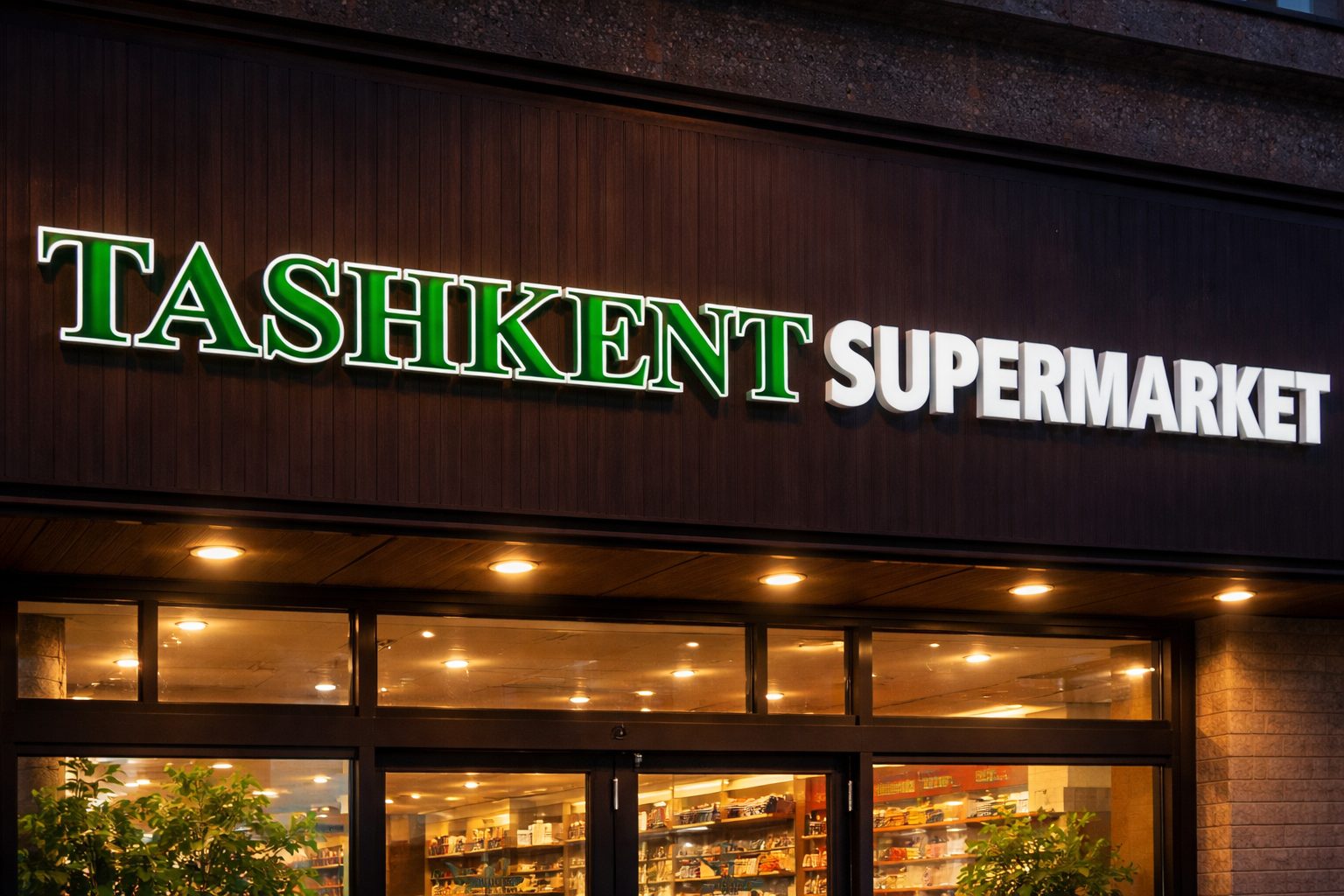
West Village’s Tashkent Supermarket turns Central Asian comfort food into a NYC must-try
The Guardian’s December 24 feature (still circulating widely through Christmas Day) captures the rise of Tashkent Supermarket’s West Village location as more than another “new neighborhood grocery.” It’s a cultural checkpoint—part prepared-foods destination, part diaspora pantry, part influencer-friendly spectacle. The Guardian
At the center of the buzz is the hot bar: trays of plov (a rice-and-meat dish with cumin and carrots) and samsas (flaky pastries dotted with sesame seeds) that are now routine stops for food creators filming “what to eat in NYC” content. The Guardian notes that since March, social media helped turn dishes that many New Yorkers once overlooked into citywide “must-tries.” The Guardian
And the appeal isn’t just novelty. The reporting describes the deeply personal pull the store holds for people from across the former Soviet space—customers seeking foods like manty (dumplings commonly filled with minced beef and onion, sometimes pumpkin) and chak-chak (fried dough bound with honey syrup). The Guardian
From post-Soviet staple to Manhattan destination
Tashkent’s story in New York stretches back well before the West Village hype cycle. According to The Guardian, founder Odiljon Tursunov and his family opened the first Tashkent location in 2012 in Coney Island, shortly after Hurricane Sandy, after struggling to find the traditional bread and halal sausages they missed from Uzbekistan. The Guardian
Over time, the business expanded into a small empire: five New York locations, plus a wholesale sausage company and slaughterhouse facility in New Jersey, per The Guardian’s reporting. The Guardian
The Manhattan outpost also has a clear, practical explanation for why it feels like it was “inevitable”: demand. Eater reported that the West Village location opened at 378 Sixth Avenue after years of anticipation and delays, becoming the brand’s first Manhattan supermarket. Eater NY
What’s actually on the shelves?
This isn’t just a hot bar with a grocery section attached. The Guardian describes a supply chain that reaches across the former Soviet Union and Central Asia: cheeses from Georgia, bread from Ukraine, and wholesale nuts and raisins from Uzbekistan—alongside familiar American products. The Guardian
That “fusion” matters in a neighborhood known for trend-chasing. The West Village store becomes a place where longtime patrons hunt for nostalgic staples, while newcomers “browse the unfamiliar” and build a takeout box based on curiosity rather than tradition. The Guardian
Even New York politics wandered into the conversation
One detail that helped push the supermarket from “viral food spot” toward mainstream New York chatter: the Guardian notes that mayor-elect Zohran Mamdani posted a rave review of Tashkent’s manty. The Guardian
Mamdani’s status as mayor-elect is also reflected in election coverage, with NPR reporting that Zohran Mamdani won the 2025 New York City election for mayor. NPR Visuals
Prices, congestion, and the cost of Manhattan visibility
There’s a downside to arriving in Manhattan: cost. The Guardian reports that higher real estate costs—and the effects of congestion pricing on delivery trucks—contributed to at least a $1 increase in hot-food prices this year at the West Village location. The Guardian
In other words, the same forces that make a West Village storefront valuable—visibility, density, convenience—also raise the stakes for the business and its loyal customers.
With markets closed on Dec. 25, Lucid stock (LCID) becomes a “headline stock” again
Christmas Day is a market holiday in the U.S. (NYSE and Nasdaq closed), so investors are working with the last full set of prices from the early close session on December 24. Nasdaq
Lucid is exactly the kind of name that resurfaces on holidays: highly debated, heavily shorted, and often driven by narrative as much as numbers.
Where LCID stands heading into Dec. 26 trading
Nasdaq’s listing showed LCID around $11.81 as of Dec. 24, 2025, with the market closed for the holiday. Nasdaq
A December 25 “where things stand” roundup from TS2.tech framed Lucid as still pinned near the lows that defined much of 2025, emphasizing three forces pulling the stock at once: execution risk (can Gravity ramp?), liquidity vs. dilution, and sentiment. TechStock²
Jim Cramer’s blunt message: “sell, sell, sell”
One reason Lucid is in the conversation this week is media sentiment—especially from TV. Insider Monkey reported that when a caller asked Jim Cramer about Lucid, he responded with a clear refrain: “sell, sell, sell.” Insider Monkey
Insider Monkey also reported that, in explaining his view to a young caller, Cramer suggested that if someone wanted exposure to a “progressive” EV theme, he would choose Rivian over Lucid. Insider Monkey
Whether investors agree or disagree, moments like that amplify what LCID already is: a stock where opinion can move faster than fundamentals.
The downgrade that keeps coming up: Morgan Stanley’s profitability timeline and dilution warning
Another major December driver is Wall Street research—especially when it’s bearish.
An Investing.com report said Morgan Stanley downgraded Lucid to Underweight from Equal Weight and reduced its price target to $10, arguing that it doesn’t expect Lucid to reach gross profitability until 2028 and flagging “significant dilution” risk, including a projected need for a $2 billion equity raise by the second half of 2026. Investing
That kind of call doesn’t just hit a single day’s trading. It shapes how every subsequent catalyst—deliveries, financing, new models—gets interpreted: as progress, or as “not enough, not fast enough.”
Lucid’s financing moves: convertible notes designed to buy time
In late 2025, Lucid executed a financing strategy that remains central to the bull/bear debate.
The offering structure (and why investors watched it closely)
On November 11, Lucid announced it intended to offer $875 million of convertible senior notes due 2031, with an option for initial purchasers to buy up to an additional $100 million in notes. The company said it planned to use proceeds to repurchase a portion of its existing convertible notes due 2026 and for general corporate purposes, and noted support involving Saudi Arabia’s Public Investment Fund (PIF) via a prepaid forward. PR Newswire
On November 12, Lucid said it had priced an offering of $875 million of 7.00% convertible senior notes due 2031, again noting the additional $100 million option and targeting settlement around November 17. PR Newswire
The closing: $975 million gross, plus a 2026 note repurchase
By November 17, Lucid said it closed the private offering at $975.0 million aggregate principal amount (including the full exercise of the $100 million option). In the same release, Lucid said it agreed to repurchase roughly $755.7 million principal amount of the existing 1.25% convertible notes due 2026. PR Newswire
The core takeaway: Lucid appears focused on extending runway and reducing nearer-term refinancing pressure. The pushback from skeptics: converting debt, future dilution risk, and persistent cash burn remain hard to ignore.
Why the 2025 reverse stock split still matters for Lucid headlines
Any time LCID is described as “near lows,” investors also have to remember a key technical change: Lucid’s 1-for-10 reverse stock split in 2025.
An SEC filing states the reverse split became effective at 5:00 p.m. ET on Aug. 29, 2025, with split-adjusted trading expected to begin at market open on Sept. 2, 2025 under the same ticker (LCID). The filing also says the reverse split reduced outstanding shares from about 3,072.6 million to about 307.3 million, subject to fractional-share adjustments. SEC
This doesn’t “fix” the business—but it does affect how people interpret price levels, historic comparisons, and what “all-time low” language means in a post-split world.
Short interest remains extreme—and it’s shaping day-to-day volatility
Lucid is still a battleground stock in part because of how heavily it’s shorted.
MarketBeat reported that as of Dec. 15, 2025, Lucid had 45.65 million shares sold short, representing 39.12% of the public float, with a short interest ratio (days to cover) of 5.9. MarketBeat
Nasdaq’s short interest data also reflects the same December 15 settlement date and a days-to-cover figure around 5.87, reinforcing the idea that bearish positioning remains a defining feature of the stock. Nasdaq
High short interest can mean deep skepticism. It can also mean sharper moves when genuinely positive surprises land—because covering becomes a forced buyer.
Product strategy: Gravity Touring pricing and a new “Lucid Recharged” lever
The upside case for Lucid—especially in late 2025—leans on product expansion and new ways to drive demand.
The Gravity Touring headline: a cheaper variant to broaden appeal
Reuters reported in November that Lucid launched a lower-priced version of its Gravity SUV—the Gravity Touring, starting at $79,900—as it tries to broaden appeal amid slowing EV sales. Reuters also reported the Touring offers up to 337 miles of range and seats seven. Reuters
The December lever: Lucid Recharged certified pre-owned program
On December 15, Lucid announced Lucid Recharged, its first certified pre-owned program. The company said eligible vehicles are single-owner cars with fewer than 62,000 miles, undergo a 160+ point inspection, and come with the balance of the original 4-year/50,000-mile factory warranty plus an additional 12-month/12,000-mile limited warranty. The release also noted buyers may have the option to upgrade certain vehicles with features such as DreamDrive Pro. PR Newswire
For investors, CPO programs can matter because they can support residual values, widen the customer funnel, and create a structured way to monetize off-lease inventory—if demand stays healthy.
Why these two stories are peaking at the same time
On the surface, a West Village supermarket and a luxury EV stock belong in different universes. But on Christmas Day, they’re both examples of what happens when attention accelerates.
- Tashkent Supermarket shows how quickly a once “inside” cuisine can become mainstream when social platforms create a new kind of word-of-mouth engine—while also raising the cost of staying in the spotlight (Manhattan rent, delivery costs, and higher prices). The Guardian
- Lucid shows how the market can keep a company in the headlines even when trading is paused—because the debate (profitability timeline, financing choices, and sentiment) is still unresolved, and the next catalyst is always one trading day away. Investing
When markets reopen on December 26, Lucid will be back in the arena. And in the West Village, the hot bar will still be doing what it’s been doing since spring: serving plov and samsas to customers who arrive for comfort, curiosity—or content. Nasdaq