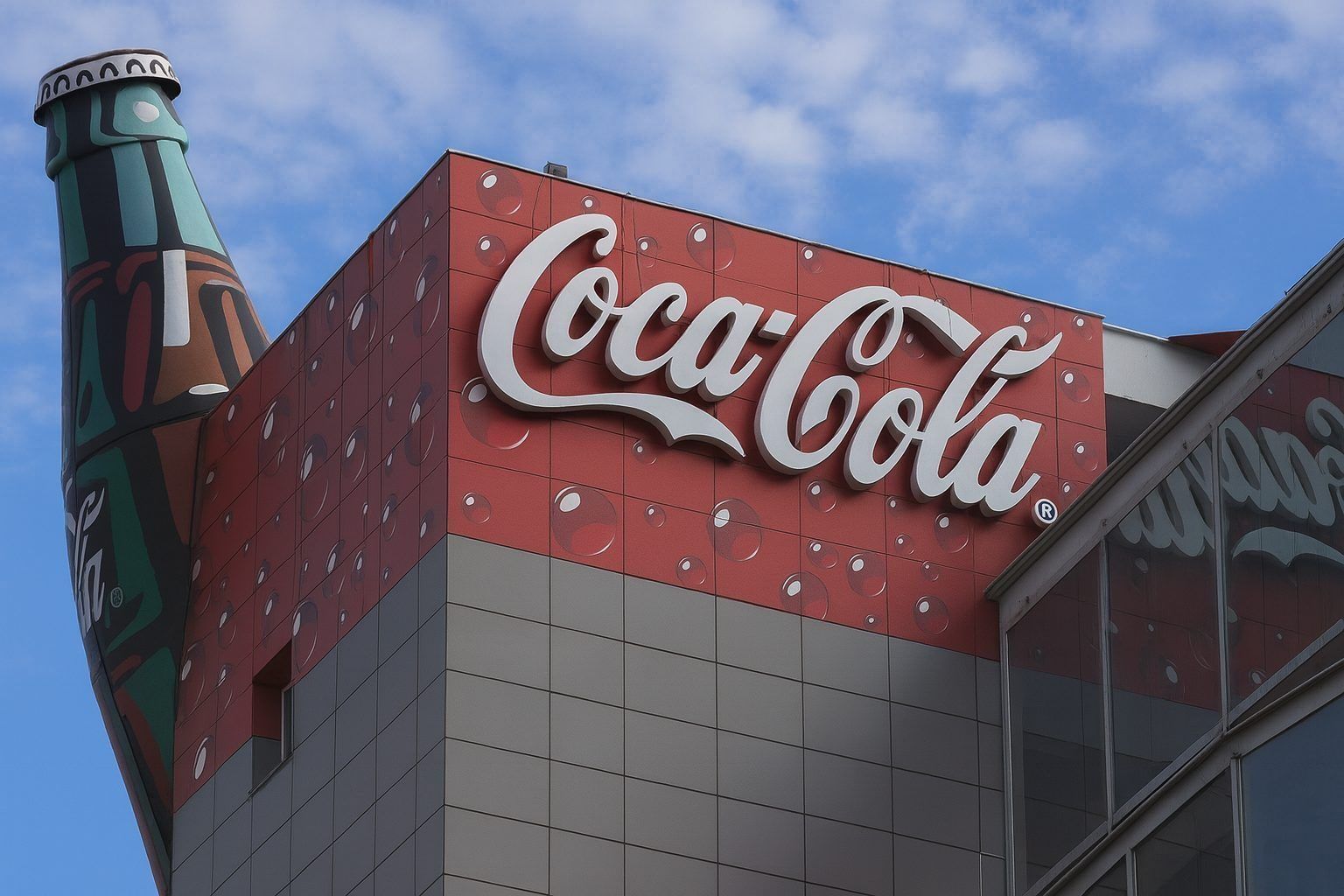
Coca-Cola shares head into Monday’s session with investors balancing a fresh leadership transition, renewed headlines around a potential Costa Coffee sale, and the company’s steady-but-price-led growth story.
If you’re watching The Coca-Cola Company (NYSE: KO) before the opening bell on Monday, December 15, 2025, here’s what matters most—from the latest price action and dividend timeline to key company catalysts, Wall Street forecasts, and the risks that could move the stock.
Coca-Cola stock price check: where KO stands heading into Monday
Coca-Cola ended the most recent regular session Friday, Dec. 12, 2025, at about $70.52, up roughly 2% on the day. New York Stock Exchange+1
That finish is notable because it followed a choppy early-December tape for consumer staples, with KO trading in the low-$70s range and reacting to both market-wide risk appetite and company-specific headlines. Recent daily trading data shows KO’s Dec. 12 high near $70.62 and low near $69.04, with volume around 18.4 million shares. Investing.com+1
For longer-term context, KO’s 52-week range has been roughly $60.62 to $74.38 (based on widely followed historical quote aggregators). Investing.com
The headline everyone saw: Coca-Cola’s CEO succession plan
One of the biggest overhangs (and, for many investors, a “continuity positive”) is the company’s planned CEO transition.
- Coca-Cola announced that Henrique Braun—currently Executive Vice President and Chief Operating Officer—will become CEO effective March 31, 2026, succeeding James Quincey, who will transition to Executive Chairman. The Coca-Cola Company+1
- The board also said it plans to nominate Braun for election as a director at Coca-Cola’s 2026 annual meeting. The Coca-Cola Company
Why this matters for KO stock now:
- Investors generally dislike uncertainty, and Coca-Cola’s move reads as a planned handoff rather than a surprise departure.
- Reuters framed the appointment as a bet on Braun’s global operating experience—particularly in Latin America and China—at a time when beverage companies are trying to expand “better-for-you” options and defend margins. Reuters
- Leadership transitions also tend to be a catalyst for portfolio reshaping—which connects directly to the next big headline: Costa.
Costa Coffee sale talks: potential deal, uncertain outcome
Over the weekend, markets digested a Reuters report citing the Financial Times that Coca-Cola’s proposed sale of Costa Coffee could be at risk.
- Reuters reported Coca-Cola was in “last-ditch” talks with private equity firm TDR Capital to salvage a potential sale, with negotiations reportedly stumbling over price and a structure where Coca-Cola would retain a minority stake. Reuters+1
- The report also reminded investors that Coca-Cola bought Costa from Whitbread in 2018 for an enterprise value of $5.1 billion. Reuters
What to watch in Monday’s trade:
- Confirmation (or denial): Coca-Cola did not immediately comment in the Reuters piece, and Reuters said it could not independently verify the FT report. Reuters
- Strategic read-through: If Costa is sold—especially at a valuation meaningfully below the 2018 purchase price—investors may debate whether it’s a disciplined move to refocus on core beverages or an admission the asset didn’t fit the model.
- Capital allocation: Any proceeds, retained stake structure, or reinvestment plan could influence sentiment around buybacks, debt, and M&A under the next CEO.
Dividend watch: KO’s Dec. 15 payment date is here
Monday, Dec. 15, 2025, is also a dividend payment date for Coca-Cola.
- Coca-Cola’s latest quarterly dividend is $0.51 per share, with an ex-dividend date of Dec. 1, 2025, and a pay date of Dec. 15, 2025. StockAnalysis+1
- Several trackers put KO’s annualized dividend at about $2.04 per share, translating to a yield around 2.9% at recent prices. StockAnalysis+1
Important nuance: because the ex-dividend date already passed on Dec. 1, Monday’s payment is more of a cash-flow milestone for holders than a catalyst that changes who is entitled to the dividend.
The fundamentals backdrop: Q3 results, pricing power, and 2025 guidance
Coca-Cola’s most recent quarterly report (Q3 2025) reinforced a theme investors have watched all year: pricing and mix are doing heavy lifting, while volumes are uneven by region.
From Coca-Cola’s Q3 release:
- Net revenues grew 5% to $12.5 billion and organic revenues grew 6%, with price/mix up 6%. The Coca-Cola Company+1
- EPS grew to $0.86, while comparable EPS was $0.82 (with currency headwinds noted). The Coca-Cola Company
- The company said it expects to deliver full-year 2025 organic revenue growth of 5% to 6% (no update), and comparable EPS growth of ~3% vs. $2.88 in 2024 (no update). The Coca-Cola Company+1
- Coca-Cola also guided to free cash flow (excluding the fairlife contingent consideration payment) of at least $9.8 billion, updated from $9.5 billion. The Coca-Cola Company
A key “before the bell” takeaway: KO’s near-term narrative remains anchored on brand strength + price realization + disciplined cost control, especially as consumers remain value-conscious.
Reuters’ earnings coverage added more color on management’s playbook:
- CFO John Murphy emphasized “affordability and value,” including plans for mini 7.5-ounce cans priced at less than $2 in U.S. convenience stores—an attempt to keep lower-income shoppers engaged. Reuters
- Reuters also noted Coca-Cola maintained annual targets and pointed to resilience in zero-sugar drinks and Fairlife demand. Reuters
Cane sugar Coke: a product shift with real supply-chain implications
The push toward ingredient scrutiny and “healthier” positioning has been one of the most watched undercurrents for big food and beverage names in 2025—and Coca-Cola has been pulled into it.
Earlier this year, Reuters reported:
- Coca-Cola said it would introduce a Coke product made with cane sugar in the U.S., positioned to complement existing offerings. Reuters
- Reuters also detailed the operational friction: shifting more of the U.S. system toward cane sugar would be difficult and expensive, requiring supply-chain changes, labeling changes, and potentially higher costs—while also being “mostly negative” for some U.S. farm interests tied to corn syrup supply chains. Reuters
- On the Q3 call, Reuters reported the rollout would be phased and constrained by U.S. cane sugar supply and the ability to ramp glass bottle production. Reuters+1
For Monday’s session, investors will likely treat cane sugar headlines as a medium-term margin and logistics story rather than an immediate earnings driver—but it’s part of the broader narrative around consumer preferences and regulatory scrutiny.
Portfolio and bottling moves: Africa impairment charge and bottler reshuffling
Two additional corporate developments remain in the background and could matter as investors look toward Q4 and 2026:
1) Africa bottling stake sale and expected impairment charge
Reuters reported Coca-Cola expects an impairment charge of about $1 billion in Q4 2025 related to selling part of its interest in African bottling operations. Reuters
That report tied the move to Coca-Cola HBC’s agreement to buy a 75% stake in Coca-Cola Beverages Africa in a deal expected to close by late 2026. Reuters
2) EU antitrust scrutiny involving bottlers
In March, Reuters reported EU antitrust regulators raided Coca-Cola bottlers as part of a broader probe into possible market-sharing or trade restrictions across Europe, noting potential fines can reach up to 10% of global annual revenues if wrongdoing is found. Reuters
This isn’t necessarily a day-to-day trading catalyst now, but it’s a reminder that the bottling ecosystem can generate legal and regulatory risk that eventually feeds back into sentiment on KO.
Legal headline risk: Johnny Cash estate lawsuit
Coca-Cola also faces headline risk on the legal front.
- Reuters reported the estate of Johnny Cash sued Coca-Cola in late November, alleging the company exploited his likeness via a “soundalike” in an advertisement. Reuters
Most investors will likely view this as manageable relative to systemic regulatory or demand issues, but it adds to the background noise around brand stewardship and marketing practices.
Analyst forecasts and valuation: what Wall Street expects for KO stock
Consensus ratings and price targets
Across analyst and market-data aggregators, sentiment remains broadly constructive:
- StockAnalysis lists an average rating of “Strong Buy” and a 12-month price target around $78.15 (implying low-double-digit upside from recent levels). StockAnalysis
- MarketBeat’s compiled data points to a next-year earnings growth expectation and places the next earnings window at Feb. 10 (estimated), before market opens, though the company may not have formally confirmed the date yet. MarketBeat
- UBS reiterated a Buy rating with an $82 price target after meetings with executives, according to Investing.com’s report of UBS commentary (a data-point investors may watch for “quality-of-growth” narrative, including tech and execution). Investing.com
Valuation versus peers
A common debate around KO is whether investors are paying a premium for stability.
Reuters noted Coca-Cola’s forward P/E multiple around 21.86, versus lower forward multiples for peers like PepsiCo and Keurig Dr Pepper (based on LSEG-compiled data cited by Reuters). Reuters
That premium can be a feature (defensive, predictable cash flows) or a bug (less room for multiple expansion) depending on the macro backdrop and whether growth stays price-led.
What could move Coca-Cola shares on Dec. 15
Going into Monday’s open, KO’s most likely “market-moving” triggers fall into three buckets:
- Costa Coffee sale developments
Any confirmation of deal progress—or headlines suggesting the process is breaking down—could sway sentiment, mainly as an indicator of how aggressive Coca-Cola will be about streamlining under the incoming CEO. Reuters - Leadership-transition framing
The market has largely treated the CEO succession as orderly, but investors will keep listening for signs of whether Braun signals more emphasis on cost discipline, acquisitions, or portfolio pruning. The Coca-Cola Company+1 - Macro risk appetite (consumer staples positioning)
Consumer staples often behave defensively when the broader market turns risk-off. Investopedia’s “before the bell” roundup recently flagged how quickly sentiment can shift around rates and big-tech volatility, which can create rotational flows into or out of staples like Coca-Cola. Investopedia
The key dates to keep on your calendar after Monday
If you’re looking past the open:
- Dec. 15, 2025: KO dividend payment date ($0.51/share). StockAnalysis
- Feb. 10, 2026 (estimated): Next earnings release window for Q4 2025 (per market trackers; company confirmation may vary). MarketBeat
Bottom line for Monday’s open
Coca-Cola heads into Dec. 15 with its core bull case intact—global distribution scale, pricing power, and shareholder returns—but with several active storylines that could shape sentiment:
- a planned CEO transition to Henrique Braun,
- uncertain Costa Coffee divestiture talks,
- ongoing ingredient/health scrutiny and the operational realities of a cane sugar rollout,
- and a steady drumbeat of regulatory and legal headlines.
For investors, the “before the bell” question is less about whether Coca-Cola is still Coca-Cola—and more about whether the next phase of strategy (portfolio moves, cost control, and growth mix) supports the premium valuation KO has historically commanded.