
CoreWeave NASDAQ:CRWV is back at the center of the AI trade—and the debate over whether today’s AI infrastructure boom is durable or dangerously overheated. After a sharp rebound late last week, the AI-focused cloud infrastructure provider is entering the holiday-shortened trading week with fresh optimism tied to a U.S. Department of Energy initiative, alongside renewed scrutiny of leverage, execution risk, and customer concentration.
Below is what’s moving the story today (December 22, 2025)—and why CoreWeave has become a litmus test for the broader AI buildout narrative on Wall Street.
Why CoreWeave is trending again: a powerful rebound after a brutal slide
CoreWeave shares surged on Friday (Dec. 19) after Citigroup resumed coverage with a “Buy” rating while attaching a “High Risk” label—an important qualifier that underscores how volatile and headline-sensitive the stock has been. Multiple reports described Citi as cutting its target to $135 from $192, a reset that acknowledges both upside potential and meaningful downside risk. Barron’s+1
The move came after a rough stretch for the stock: coverage described CoreWeave as having fallen sharply from its mid-year highs before staging a rebound.
CoreWeave’s surge also benefited from a broader AI-related bounce, with enthusiasm returning to parts of the tech complex late last week and into today’s session as investors reassess demand signals and macro conditions.
The DOE “Genesis Mission”: what it is, and why it matters to CoreWeave
The biggest fundamental headline still rippling through the market is CoreWeave’s announcement that it has joined the Department of Energy’s “Genesis Mission,” a national initiative designed to use AI to accelerate scientific discovery, strengthen national security, and drive energy innovation. CoreWeave+1
From CoreWeave’s perspective, the strategic logic is straightforward:
- The company says it plans to make its purpose-built AI cloud platform available to support advanced scientific workloads.
- CoreWeave’s CEO Michael Intrator framed the initiative as a “vital national commitment” and positioned CoreWeave as a provider of secure, high-performance infrastructure for advanced AI workloads. CoreWeave
- The company tied its Genesis participation to an expanding public-sector push, including its recently launched CoreWeave Federal unit, which it says is preparing for compliance requirements such as FedRAMP.
From the government side, the DOE says it has signed collaboration agreements with 24 organizations to advance the Genesis Mission—and CoreWeave is explicitly listed among them. The partner list spans major cloud and AI players including Amazon Web Services, Google, Microsoft, NVIDIA, OpenAI, Oracle, Anthropic, AMD, Intel, IBM and others.
The DOE also emphasized that Genesis-related outputs will be architecture-agnostic, and it is actively expanding participation via open RFIs with deadlines in January 2026.
Why investors care: In a market that has punished AI infrastructure names for delays and balance-sheet stress, a high-profile federal initiative can function as a credibility signal—and a potential path to diversify demand beyond a narrow set of hyperscaler and AI-lab customers.
The other side of the coin: bubble anxiety, debt questions, and execution risk
CoreWeave’s rebound doesn’t erase what triggered the selloff in the first place—and several recent reports have outlined the central investor concerns:
1) Data-center delays and shifting timelines
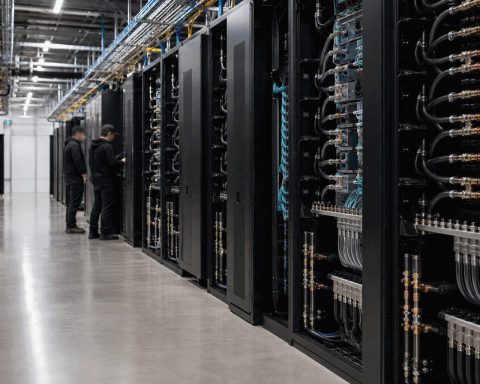
The Wall Street Journal reported that CoreWeave’s stock decline intensified after construction delays at a major Texas data center, linked to summer storms and design changes, alongside concerns about inconsistent messaging from management.
2) A capital-intensive model that leans heavily on financing
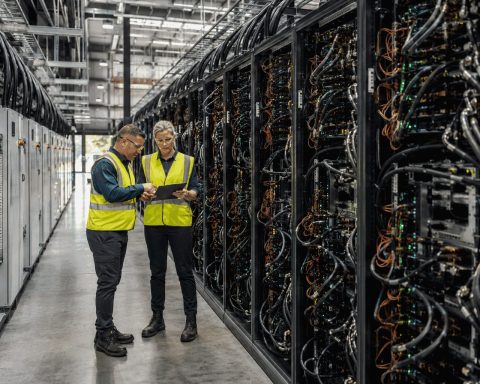
CoreWeave’s business model—buying large amounts of advanced GPU capacity and renting compute to customers—can require significant ongoing investment. In a climate where markets are increasingly sensitive to the cost of capital, that model can become a flashpoint.
MarketWatch summarized a mid-December selloff across AI-related names as investors worried about whether the ecosystem behind AI—especially data-center infrastructure—can be financed smoothly at scale, with CoreWeave cited among the companies facing scrutiny.
3) Customer concentration and competitive tension
Even bulls acknowledge the structural challenge: CoreWeave’s largest customers can overlap with the largest companies capable of building similar capacity in-house. Commentary around the Friday rally highlighted that if hyperscalers can satisfy demand internally, they may reduce reliance on an intermediary.
4) The “AI bubble” narrative has a real-world proxy—and CoreWeave has become it
WSJ’s framing is telling: the publication described CoreWeave as a prominent AI-infrastructure bellwether whose volatility is feeding broader “AI bubble” fears, especially as the sector confronts construction bottlenecks, financing costs, and the question of how quickly AI spending converts into sustainable profit. The Wall Street Journal
What’s new on Dec. 22: the AI trade is rebounding—again
Today’s market context matters because CoreWeave does not trade in isolation. On Monday (Dec. 22), Reuters reported U.S. stock index futures ticking higher in a holiday-shortened week, helped by renewed enthusiasm around AI and tech after a benign inflation reading and upbeat signals from Micron.
Global markets reflected a similar tone: the AP described world shares as mixed but supported by a late-week U.S. rally that leaned on AI-related stocks such as Nvidia.
And Axios captured the psychological battle line: many Wall Street bulls are actively reframing classic bubble warning signs—high valuations, massive capex, and data-center overbuild risk—as evidence the AI shift is still early and investable.
At the same time, Reuters’ ROI column underscored why the skepticism persists: U.S. equity valuations look stretched, market leadership is concentrated, and investors are increasingly looking for ways to position for 2026 without relying entirely on “AI euphoria.” Reuters
How the Genesis Mission headline fits into CoreWeave’s bigger story
It’s tempting to view CoreWeave’s DOE headline as a single news catalyst. But strategically, it plugs into three longer-running questions investors are asking about CRWV:
Can CoreWeave turn “AI compute demand” into durable, less cyclical revenue?
CoreWeave argues that its platform is engineered for predictable performance and resilience, and that Genesis participation helps accelerate scientific workflows and national priorities.
Can it expand beyond a narrow customer base—and reduce concentration risk?
Citi’s “High Risk” framing and other coverage points to customer concentration as a core volatility driver. If public-sector workloads scale over time, that could help rebalance the mix—though the ramp would likely be gradual and compliance-heavy. Barron’s+1
Can it execute—on schedule and on budget—in an era of data-center bottlenecks?
Even supportive commentary has stressed that execution is the make-or-break variable: bringing new sites online on time, filling them with contracted demand, and doing so without capital costs rising faster than operating gains.
What investors are watching next (the practical checklist)
As CoreWeave heads into year-end, the questions below are likely to keep driving daily volatility:
- Buildout cadence: Are new sites and expansions coming online on schedule, or are delays recurring? The Wall Street Journal+1
- Cost of capital: Can CoreWeave fund expansion without punitive dilution or sharply higher financing costs? (This is a market-wide concern for AI infrastructure.
- Customer concentration: Are revenues broadening across more customers (and more “investment-grade” counterparties), or remaining dependent on a small handful? Barron’s+1
- Federal readiness: How quickly can CoreWeave Federal translate compliance work (like FedRAMP preparation) into meaningful contracts? CoreWeave
- Macro + sentiment: With thin holiday liquidity, moves in the AI complex can amplify—especially when investors are already split between “AI revolution” and “AI bubble” narratives. Reuters+1
Bottom line
CoreWeave is experiencing a classic “AI infrastructure crosscurrent” moment: a credible, high-profile government collaboration headline (Genesis Mission) is colliding with the market’s ongoing stress test of debt-funded buildouts, execution risk, and the economics of AI data centers. CoreWeave+2energy.gov+2
On December 22, the broader AI trade is finding its footing again in a shortened holiday week—helping CRWV stay in focus. But the very fact that Citi’s bullish stance arrived with a “High Risk” tag captures the current reality: CoreWeave isn’t just an AI growth story; it’s also a referendum on how sustainably the AI boom can be financed and built. Barron’s+2Reuters+2
Related articles: NASDAQ:CRWV