
CSL Limited (ASX:CSL; USOTC:CSLLY) has spent 2025 reminding the market of an awkward truth: even “defensive” healthcare giants can deliver very non-defensive share price swings. After a year dominated by vaccine-market volatility, a reshaped strategy for CSL Seqirus, and investor nerves around China pricing, the stock heads into late December with a familiar question hanging in the air—is CSL Limited stock a bruised blue-chip bargain, or a business still working through its hardest chapter? TradingView+1
As of the latest available pricing data around A$175 (weekend markets closed), CSL is trading much closer to its 52‑week lows than its highs (52‑week range shown around A$168 to A$290 on widely followed market screens).
CSL share price: why the market is still arguing about the story
At a high level, CSL’s debate splits into two opposing forces:
1) The “Seqirus overhang” and near-term uncertainty.
CSL’s vaccine business (Seqirus) has faced an unusual mix of demand volatility and policy-driven headwinds—most visibly in the United States, its key vaccine market. In late October, CSL cut its outlook and delayed the Seqirus spin-off, citing volatility in the U.S. vaccine market and a sharp drop in vaccination rates—news that triggered a steep single-day sell-off at the time. Reuters+1
2) The “plasma engine” and long-term margin rebuild.
CSL Behring—built on plasma-derived therapies—remains the economic heart of the group. In November, CSL committed US$1.5 billion to expand U.S. plasma-therapy manufacturing over the next five years, framing it as supply-chain security and capacity expansion, on top of more than US$3 billion invested in U.S. operations since 2018. Reuters
Investors are effectively trying to weigh a messy, near-term vaccine reset against a much larger, longer-cycle plasma business that’s investing, optimizing, and (importantly) buying back stock.
What’s new for CSL Limited stock in December 2025
CSL share buyback: progress update shows ~A$588m spent so far
CSL continues to execute an on-market share buyback intended to total up to A$750 million (running from 4 September 2025 to 30 June 2026, per ASX filings).
In CSL’s 18 December 2025 daily notification (reporting activity from the prior trading day), the company disclosed:
- Total shares bought back: 2,955,365 before the prior day, plus 65,217 on the prior day (about 3,020,582 shares cumulatively)
- Total consideration paid: about A$577.0m before the prior day, plus A$11.37m on the prior day (roughly A$588.4m total) CSL Limited
In plain English: by mid-December, CSL had already deployed the bulk of the announced buyback capacity, leaving roughly A$160m remaining (based on the disclosed spend versus the A$750m cap).
Why it matters: buybacks don’t fix operating challenges, but they can support earnings per share and signal management’s confidence in long-run cash generation—especially when the stock is down sharply from prior levels.
Broker pressure continues: Macquarie downgrade adds to “wait-and-see” mood
On the broker front, one of the more market-moving notes in December came from Macquarie, which downgraded CSL to “neutral” from “outperform” and cut its price target to A$188 from A$275. TradingView
Macquarie’s logic (as summarized in Reuters-distributed notes) centered on a weaker outlook and risk management into FY26:
- EPS estimate cuts of roughly 4%/5%/5% for FY26/FY27/FY28
- Risk to FY26 guidance, with the second half reliant on containing China albumin impacts
- A longer-range worry: potential immunoglobulin share pressure in CIDP (chronic inflammatory demyelinating polyneuropathy), with an estimated 4% EPS impact by FY33 in their scenario TradingView
That’s the cautious camp in one neat package: “CSL will be fine eventually, but the path from here to ‘fine’ is noisy.”
Jefferies takes the opposite view on China albumin: pain now, recovery later
A competing take came from Jefferies, which argued that China’s albumin demand hit looks short-term, keeping a Buy rating and maintaining a A$237 price target.
Jefferies highlighted that China cost containment—reimbursement limits, centralized procurement, pricing caps—appears to weigh mainly in H1 FY26, with a rebound anticipated from H2 FY26, and pointed to relatively low hospital penetration (around 15%, per their estimates), implying room for longer-term growth.
This matters because “China albumin” has become one of the market’s favorite levers for marking CSL down: it’s a real revenue driver, and it’s also a headline magnet.
CSL forecasts and analyst price targets: consensus stays “Buy,” but dispersion is wide
Despite the drama, CSL still attracts a notably positive analyst skew on aggregated data. Reuters-distributed market summaries show the stock rated “buy” on average, with a median price target around A$237 from LSEG-compiled analyst data. TradingView+1
Broader market screens put the consensus in a similar neighborhood:
- Investing.com lists 16 analysts with an average target around A$237.7, with a low around A$189 and a high near A$293.
- TradingView shows a one-year target around A$234.6, with a range roughly A$188 to A$274.
With the stock sitting around the mid‑A$170s on those same screens, you can see why the “value opportunity” narrative keeps resurfacing: the implied upside to the mid‑A$230s is substantial. Investing.com+1
But the dispersion—Macquarie at A$188 versus bullish brokers around the A$230s+—is the key tell. The market isn’t struggling to model CSL’s existence. It’s struggling to model the timing of normalization.
The operational thesis CSL wants investors to focus on: plasma productivity and margin expansion
If you want the cleanest “company’s-eye view” of how CSL plans to grow beyond the vaccine volatility, CSL’s November Capital Markets Day materials are revealing.
CSL outlined a profitability strategy anchored in efficiency and yield, including:
- Plasma cost per litre down ~15% since the COVID peak
- Donor fees down ~25% since the COVID peak
- “iNomi” (a donor/plasma collection initiative) enabling roughly a ~10% increase in average donor plasma volume CSL Limited
CSL also talked about yield programs (Horizon initiatives) intended to reduce the plasma needed to meet demand—an important lever in a business where supply chain lead times can stretch across months.
And importantly for long-run shareholders, CSL’s stated “beyond FY26” outlook messaging emphasized:
- Gross margin expansion and operating leverage
- Mid single-digit revenue growth
- High single-digit NPAT growth
- Continued dividends and multi-year on-market share buybacks CSL Limited
None of this guarantees an easy FY26. But it explains why many analysts remain reluctant to abandon the stock: the underlying engine is still being tuned for scale.
Seqirus isn’t “dead,” but it’s clearly being re-positioned
CSL’s vaccine arm has been at the center of 2025’s equity story. Earlier in the year, CSL announced a major restructure including plans to spin off Seqirus into a listed entity, alongside cost actions and job cuts; later, it delayed the spin-off amid U.S. vaccine market volatility.
At the same time, Seqirus continues pushing into non-U.S. growth lanes. For example, Reuters reported an agreement involving Saudi Arabia to localize manufacturing of cell-based seasonal and pandemic influenza vaccines—a strategic move given the regional focus on health security and large-scale event readiness.
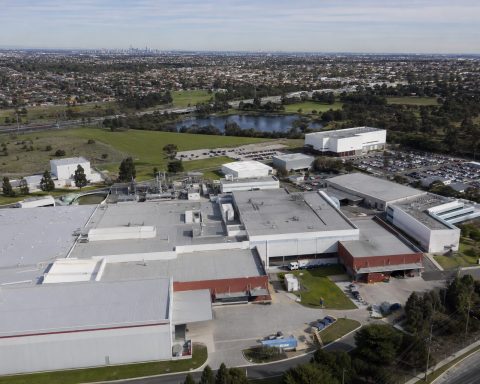
On the manufacturing front, CSL also opened a new A$1 billion vaccine and antivenom facility in Melbourne in early December, designed to produce cell-based influenza vaccines and with unique national capabilities (including Australia’s antivenoms and Q fever vaccine).
In other words: Seqirus is volatile, but it is not idle.
A quieter (but important) December signal: pipeline credibility still matters
While “vaccine season” and “China albumin” dominate daily price action, CSL’s pipeline and specialty products still shape long-term valuation.
In December, CSL highlighted data published in the New England Journal of Medicine supporting the long-term durability and safety of HEMGENIX over five years (a gene therapy used in hemophilia B).
This kind of news rarely moves the stock in a single session the way a guidance cut does—but it’s part of the cumulative case for CSL as more than a plasma-and-flu-vaccines business.
What investors are watching next: the February 2026 catalyst
The next major scheduled moment on the near-term calendar is CSL’s 2026 half-year financial results webcast on 11 February 2026 (AEDT), per the company’s investor communications.
Between now and then, the market’s likely to stay fixated on a handful of measurable signals:
- Plasma collection economics: do cost-per-litre improvements and donor-fee normalization continue as expected? CSL Limited
- China albumin: is the slowdown contained to early FY26 as some brokers expect, or does pricing/reimbursement pressure linger longer? TradingView+1
- Seqirus narrative: any clarity on U.S. vaccination dynamics, margins, and whether/when a demerger plan re-accelerates.
- Capital returns: the pace and completion path of the remaining buyback authorization.
Bottom line for CSL Limited stock on 20 Dec 2025
CSL’s 2025 storyline is a tug-of-war between near-term turbulence (Seqirus volatility, China albumin uncertainty, and guidance sensitivity) and long-cycle strength (plasma scale, cost-down execution, U.S. manufacturing expansion, and disciplined capital returns).
Analysts are still mostly constructive—median targets clustering around the mid‑A$230s—yet the stock’s sharp year-to-date decline and wide target dispersion signal a market that wants evidence, not promises.
Related articles: ASX:CSL