December 24, 2025 (U.S. markets — Christmas Eve early close)
D-Wave Quantum Inc. stock (NYSE: QBTS) ended the Christmas Eve session sharply lower, underscoring just how fast sentiment can flip in 2025’s “quantum trade.” In a holiday-shortened market that closed at 1:00 p.m. ET, QBTS finished down 5.49% at $27.52, after swinging from an intraday high near $29.68 to a low around $26.94. StockAnalysis+1
The drop capped a volatile three-day run: QBTS surged 20.02% on Dec. 22, slid 9.54% on Dec. 23, then sank again on Dec. 24. StockAnalysis That kind of turbulence has become a defining feature of the pure-play quantum stocks—especially when a hot retail narrative meets thin holiday liquidity.
Below is a full roundup of the current news, forecasts, and analyses circulating on Dec. 24, 2025, plus the key catalysts investors are watching as the calendar flips toward CES 2026 and early-2026 earnings season.
QBTS stock price action on Dec. 24: a pullback in a shortened session
Christmas Eve trading is routinely “weird”—lower volume, wider intraday swings, and more exaggerated moves when big orders hit a thinner tape. This year was no exception: the NYSE confirms an early close at 1:00 p.m. ET for Dec. 24, 2025. New York Stock Exchange
For D-Wave, the weirdness was amplified because the stock is coming off a headline-driven surge earlier in the week. Fast Company described the broader holiday-week pattern as quantum names jumping hard and then giving back gains, with D-Wave among the stocks that popped by double digits before reversing—while noting the “exact catalyst” behind the spike was not fully clear. Fast Company
On the tape, Dec. 24 looked like classic post-surge digestion: sellers pressed the stock lower after an early attempt to hold the high-$29 area, and QBTS closed well off the day’s highs. StockAnalysis
The big near-term catalyst: D-Wave’s CES 2026 push (and why it mattered to the stock)
The most concrete corporate catalyst in the immediate backdrop is D-Wave’s plan to showcase its technology at CES 2026, specifically as a sponsor of the CES Foundry event on January 7–8, 2026 in Las Vegas. D-Wave Quantum+1
In its Dec. 22 announcement, D-Wave said it will highlight annealing quantum computing, hybrid quantum-classical solvers, and real-world customer use cases, positioning quantum as something businesses can use “today,” not only as a long-term science project. D-Wave Quantum
Two details from that CES plan are getting repeated across finance coverage:
- D-Wave’s Murray Thom is scheduled to deliver a masterclass and demo on Jan. 7 (1:00–1:30 p.m. PT) aimed at explaining how organizations can realize value from quantum computing now. D-Wave Quantum
- The company is also promoting its Qubits 2026 user conference, set for Jan. 27–28, 2026 in Boca Raton, Florida. D-Wave Investor Relations
That CES headline was explicitly cited by Nasdaq’s coverage of the Dec. 22 pop, which described QBTS jumping intraday after the company said it would present its technology and discuss quantum/AI/blockchain synergy at CES. Nasdaq
Put simply: QBTS ripped on a visibility catalyst, then started to fade as traders rotated to the next headline and liquidity thinned into the holiday.
Insider selling becomes part of the story (and the SEC filings are real)
Another key thread in the Dec. 24 news cycle is insider activity—specifically, Form 4 filings showing that two top executives executed option exercises and sold shares on Dec. 22, 2025:
- CFO John M. Markovich exercised options for 100,000 shares at $0.92 and sold 100,000 shares at a weighted average price of $30.0262. SEC
- President & CEO Alan E. Baratz exercised options (reported as 793,712 shares) and reported transactions dated 12/22/2025; the filing also indicates it was done pursuant to a Rule 10b5‑1 plan (a pre-scheduled trading plan). SEC
Two things can be true at the same time:
- 10b5‑1 plans reduce the “signal” value of a sale because trades are scheduled ahead of time, and
- In a stock that’s been moving on momentum, big insider sales can still hit sentiment and add supply right when traders are looking for reasons to lock in gains.
In late-December momentum names, perception matters almost as much as fundamentals—sometimes more.
Options market read-through on Dec. 24: bulls vs. bears are literally trading different futures
One of the most “today-only” datapoints comes from an options-focused Benzinga note published Dec. 24, 2025 (10:01 a.m.), which flagged eight unusual options trades in QBTS and framed the flow as leaning bearish overall (with a mix of calls and puts). Benzinga
Benzinga’s breakdown is worth highlighting because it shows how wide the market’s implied disagreement is:
- The article found 37% of traders bullish vs. 50% bearish among the flagged trades. Benzinga
- Based on the options activity it reviewed, the “price territory” investors seemed to be targeting spanned roughly $23 to $45. Benzinga
That range is basically the entire QBTS personality in one line: this stock is being traded like a narrative-driven volatility instrument, not a sleepy hardware company.
Analyst forecasts and price targets: Wall Street has gotten meaningfully more engaged
While retail momentum has clearly played a role, 2025 also brought a wave of institutional coverage initiations across the quantum sector.
On the pricing side, Investing.com’s consensus table for QBTS shows an average 12‑month price target around $38.753, and it lists multiple recent initiations/ratings, including:
- Wedbush: Buy, $35 (initiated Dec. 17, 2025)
- Jefferies: Buy, $45 (initiated Dec. 16, 2025)
- Mizuho: Buy, $46 (initiated Dec. 11, 2025)
- Evercore ISI: Buy, $44 (initiated Dec. 3, 2025) Investing.com
That’s a meaningful cluster: mid-$30s to mid-$40s targets from recognizable firms, all landing within a two-week window.
Media coverage has echoed that bullish framing, while still emphasizing risk:
- Investopedia reported that Wedbush initiated “outperform” ratings across several quantum names and assigned D-Wave a $35 target, while framing the group as volatile and still early-stage. Investopedia
- Investors.com highlighted the broader trend of Wall Street paying attention to pure-play quantum stocks in 2025 and noted D-Wave among the leaders in ratings/targets heading into 2026. Investors.com
In other words: the Street is showing up, but that doesn’t magically turn QBTS into a low-volatility compounder. It just means there’s now a more formal “valuation debate” happening on top of the meme-speed trading.
One of today’s loudest takes: a bearish 2026 forecast from The Motley Fool
The most explicit Dec. 24, 2025 forecast piece in circulation is The Motley Fool’s article titled “Prediction: D-Wave Quantum Stock Will Be Worth This Much by Year-End 2026.” The Motley Fool
Its core argument is blunt:
- D-Wave’s 2025 run has pushed the stock into what it considers extreme valuation territory, and
- If the quantum trade behaves like prior hype cycles, QBTS could see a sharp correction.
The piece even sketches an illustrative downside scenario where the stock could be “hovering at around $7 per share” by this time next year (year-end 2026), if a bubble-like unwind takes hold. The Motley Fool
That is not a consensus view—and it shouldn’t be treated as a “forecast” in the scientific sense. But it matters because it reflects what skeptics are circling: tiny revenues today, large losses, and a valuation built on future adoption.
Fundamentals: what D-Wave actually does—and what the financial tension is
D-Wave’s business model and technology approach are often misunderstood in the stock chatter, so here’s the clean version.
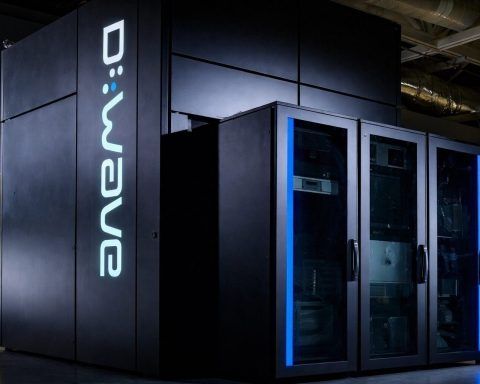
According to its SEC filings, D-Wave provides quantum computing systems, professional services, and cloud access through its Leap™ quantum cloud service, historically centered on its superconducting annealing systems (such as the Advantage™ system). SEC
The company also positions itself—on its investor site—as building both annealing and gate-model quantum computers, emphasizing “commercial use cases in optimization today” alongside longer-term development. D-Wave Investor Relations
The financial tension is equally straightforward: the tech may be compelling, but commercialization is still uneven.
A GuruFocus note published in today’s news cycle framed D-Wave as having strong gross margins but major profitability challenges, citing negative earnings/margins and highlighting how the stock’s market value has expanded despite those fundamentals. GuruFocus
That mismatch—big market cap narrative vs. still-small revenue base—is the fulcrum on which QBTS swings.
What to watch next for QBTS stock heading into 2026
A stock like QBTS doesn’t move on one variable. It moves on a bundle of catalysts and risks that trade against each other in real time. Here are the big ones the market is clearly keying on right now:
CES 2026 visibility and “proof of commercial value”
D-Wave is explicitly using CES Foundry as a platform to tell a “commercial quantum now” story—demos, customer use cases, and hybrid solver workflows. D-Wave Quantum+1
If the company delivers new customer references or measurable ROI narratives, that can reinforce the bull case that D-Wave’s annealing approach has nearer-term traction than some gate-model peers.
U.S. government push
D-Wave disclosed the formation of a U.S. government-focused business unit (announced Dec. 2, 2025) intended to drive adoption of its products with government customers. SEC
Government-related traction can be meaningful for quantum companies—but it can also come with long sales cycles and “lumpy” revenue recognition.
The analyst target “gravity well”
With multiple major firms clustering around targets in the mid-$30s to mid-$40s, those levels can become psychological magnets in both directions: bulls cite them as upside, bears cite them as “priced in,” and traders use them to structure options and swing positions. Investing.com
Volatility and insider supply
Even when insider transactions are under 10b5‑1 plans, they can still shape short-term perception—especially after a parabolic run. SEC+1
Bottom line: QBTS is a battleground stock — and Dec. 24 proved it
As of Dec. 24, 2025, D-Wave Quantum stock is sitting at the intersection of:
- A high-profile CES 2026 catalyst that helped ignite a surge, Nasdaq+1
- Fresh analyst optimism with price targets well above today’s price, Investing.com+1
- Options-market crosscurrents signaling aggressive positioning on both sides, Benzinga
- And the ever-present question of whether quantum pure plays are experiencing a durable re-rating or a late-cycle momentum overshoot. The Motley Fool
If there’s a single lesson from today’s price action, it’s that QBTS is not trading like a typical “fundamentals-first” tech stock right now. It’s trading like a story stock with real technology underneath it—and stories are powerful, but they’re also fragile.
Nothing about that guarantees upside or downside. It just means anyone covering (or trading) QBTS needs to track both: the company’s execution milestones and the market’s mood swings.