As of 9:28 p.m. ET on Friday, Dec. 26, 2025, D‑Wave Quantum Inc. (NYSE: QBTS) is in a cooling-off phase after a sharp end‑of‑week move that reminded investors why quantum computing remains one of the market’s most volatile “future tech” themes.
QBTS last traded around $25.29, down $2.24 (-8.14%) versus the prior close, after swinging between roughly $24.78 and $27.79 on Friday and moving more than 33.5 million shares.
For context, broad U.S. equity benchmarks were comparatively steady into the close of after‑hours trading: SPY and QQQ were essentially flat on the day.
With U.S. exchanges now closed for the weekend, the next regular session is Monday, Dec. 29, 2025—and D‑Wave investors will be watching closely for fresh catalysts, new analyst notes, and any company updates that could re‑ignite momentum (or extend the pullback).
QBTS stock price action: what happened Friday
Friday’s decline followed a period of intense attention on D‑Wave and the broader quantum computing group, where dramatic percentage swings have become common. Reuters has highlighted that “pure‑play” quantum names can be difficult to value, which can amplify volatility when sentiment shifts quickly. Reuters
MarketBeat’s summary of the session described the move as an ~8% drop on Friday with tens of millions of shares traded, framing it in the context of active analyst coverage and recent insider transaction disclosures.
Important nuance for investors: a single down day doesn’t necessarily signal a fundamental change—especially in a story stock with rapid repricing, thin holiday liquidity, and frequent headline-driven moves. But it does raise the bar for what comes next: bookings, customer traction, and credible commercialization milestones.
Why D‑Wave and other quantum computing stocks remain so volatile
Quantum is drawing new investor interest, but it’s still early—and that tension shows up in prices.
Reuters’ reporting captures the push-pull well. Defiance ETFs CIO Sylvia Jablonski told Reuters the sudden excitement can feel like “science fiction” turning into “real technological possibility,” while Interactive Brokers strategist Steve Sosnick posed the core valuation question: “What is the right price to pay for a piece of the future?” Reuters
That uncertainty can be amplified by macro headlines, too. In October, Reuters reported a rally across quantum stocks after a report about potential U.S. government stake talks—while also noting the U.S. Department of Commerce denied it was negotiating with the companies at that time.
The latest D‑Wave news: government push, Europe expansion, and CES 2026 visibility
While the stock can move on sentiment, D‑Wave has also been stacking tangible announcements—particularly around deployments and government-focused positioning.
U.S. government: new business unit and Alabama system access
On Dec. 2, 2025, D‑Wave announced the formation of a U.S. government-focused business unit, led by Jack Sears Jr. The company framed the move as a response to growing demand for quantum applications and positioned its technology for national security and infrastructure-oriented problem sets.
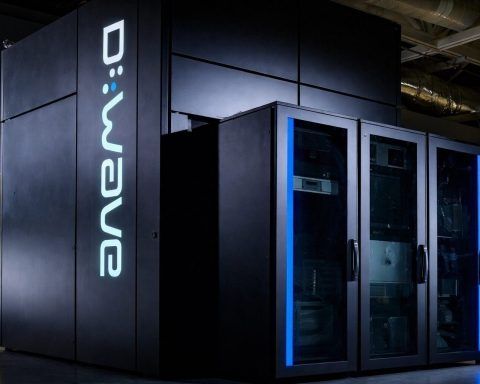
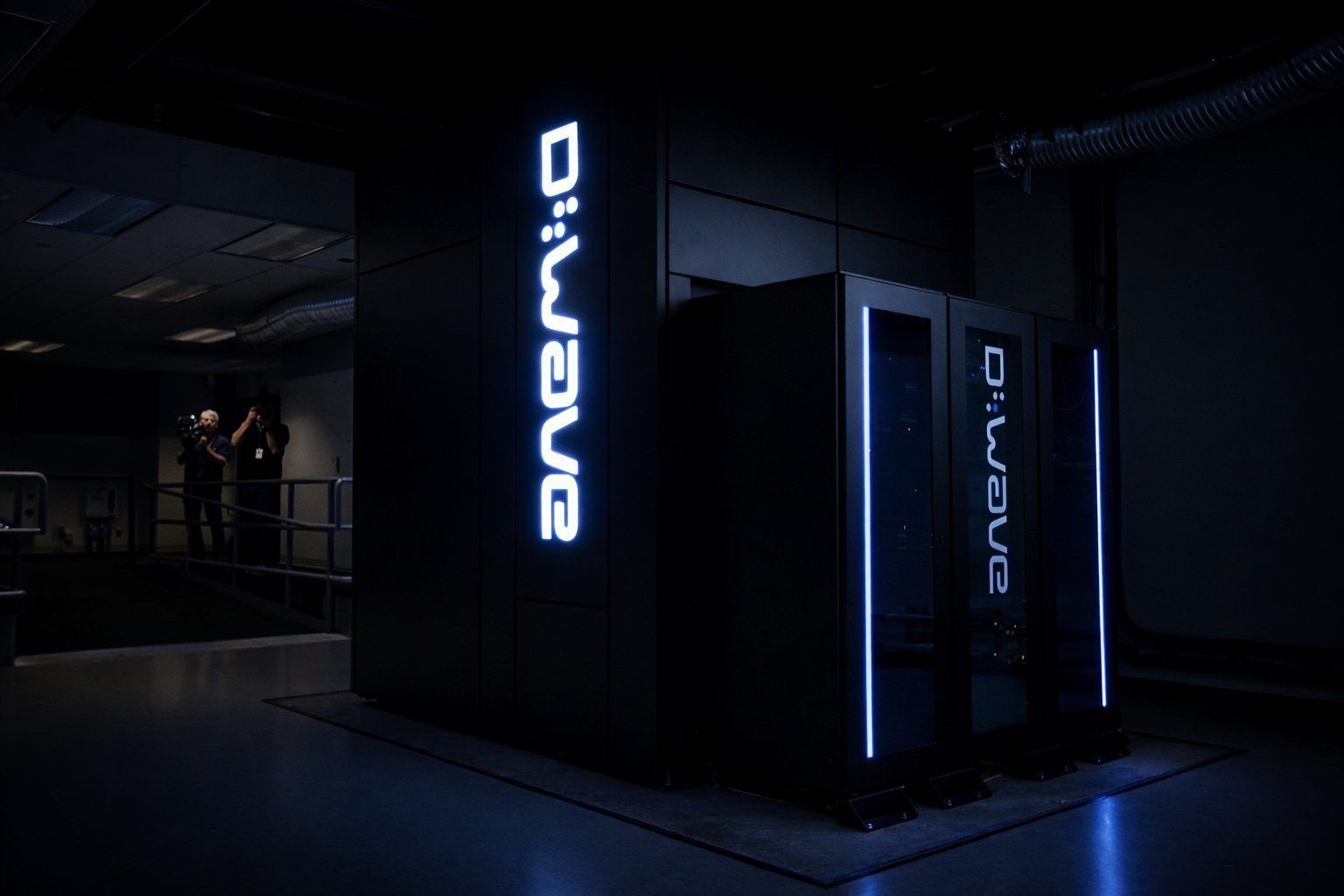
Earlier, on Nov. 3, 2025, D‑Wave and Davidson Technologies announced that an Advantage2 quantum computer was operational at Davidson’s headquarters in Huntsville, Alabama, with the companies exploring use cases spanning areas such as logistics optimization and national security. D‑Wave CEO Dr. Alan Baratz called it “a significant step forward” in accelerating government use cases, while Davidson CEO Dale Moore emphasized national security outcomes. D-Wave Quantum
That Alabama installation also appears in D‑Wave’s SEC disclosures, underscoring that this isn’t just marketing—it’s being treated as a material corporate development.
Europe: €10M Advantage2 agreement
On Oct. 15, 2025, D‑Wave announced an agreement with Swiss Quantum Technology SA (SQT) for a €10 million commitment tied to deploying an Advantage2 system in Europe, with an option to purchase the system. D‑Wave said the system would be accessible via its Leap quantum cloud service and highlighted the platform’s 4,400+ qubits Advantage2 roadmap.
CES 2026: a mainstream stage (and a near-term headline catalyst)
D‑Wave also disclosed plans to participate in CES 2026 as a sponsor of the CES Foundry event in Las Vegas on Jan. 7–8, 2026—a notable “visibility” milestone that can matter for narrative-driven stocks. The company said it would showcase customer use cases and positioned quantum as increasingly mainstream; D‑Wave VP Murray Thom said appearing at CES signals the tech is “quickly moving into the mainstream.” D-Wave Quantum
Financial snapshot: what D‑Wave reported most recently
In its Q3 2025 results (reported Nov. 6, 2025), D‑Wave highlighted:
- Revenue of $3.7 million, up 100% year over year
- Bookings of $2.4 million in Q3 (and the company said it closed over $12 million in additional bookings after quarter end)
- Cash balance over $836 million, described as the highest in company history
- GAAP gross margin of 71.4%
- A GAAP net loss of $140.0 million, which D‑Wave attributed largely to non-cash warrant-related accounting impacts tied to the company’s capital structure and warrant liability remeasurement
Those details matter because they speak directly to two of the biggest investor debates:
- Commercial traction (revenue, bookings, customers)
- Runway (cash to fund R&D and go-to-market before profitability)
Capital structure update: the warrant overhang has been cleared
One market concern in fast-moving “theme stocks” is dilution risk and structural overhangs. D‑Wave has taken steps to simplify that.
On Nov. 21, 2025, D‑Wave announced it had completed the redemption of all outstanding public warrants, and disclosed that 4,746,358 warrants were exercised, resulting in approximately 6.9 million shares issued and about $54.6 million in cash proceeds. The company said no warrants remain outstanding after the redemption process.
Investors often view this kind of cleanup as positive for transparency—though it can also coincide with periods of heavy trading as the market digests an evolving share count and liquidity profile.
Insider activity: what SEC filings show (and how to read them)
Insider transactions can become a talking point quickly—especially after a strong run.
Two filings stand out from late 2025:
- CEO Alan Baratz: A Form 4 shows an option exercise and sale of 806,288 shares on Nov. 11, 2025, with the filing noting the trades were executed under a Rule 10b5‑1 trading plan adopted on Aug. 11, 2025.
- CFO John M. Markovich: A Form 4 shows an option exercise and sale of 200,000 shares on Nov. 20, 2025.
There’s also a separate Form 144 filing record on the SEC’s EDGAR system for Markovich dated Dec. 15, 2025, indicating a proposed sale notice was filed (investors typically use this as a “watch list” item, not a guaranteed sale). SEC+1
How pros interpret this: insider selling is not automatically bearish (executives diversify, cover taxes, and execute plans), but large or frequent sales can pressure sentiment—especially when the stock has already been hot.
Analyst forecasts and price targets: where Wall Street sees QBTS
Analyst coverage has expanded meaningfully in late 2025, and targets vary widely—a hallmark of early-stage tech stories.
A Benzinga aggregation of recent analyst notes lists:
- Mizuho: high target $46 (Dec. 11, 2025)
- Jefferies: target $45 (Dec. 16, 2025)
- Wedbush: target $35 (Dec. 17, 2025)
Separately, Investors.com reported that Evercore ISI initiated coverage with an Outperform rating and a $44 price target, highlighting D‑Wave’s commercial revenue status and liquidity.
On the forecasts side, a Nasdaq analysis citing Zacks estimates projected 2026 revenue growth of 61.1% for QBTS and discussed upside implied by analysts’ short-term targets (noting those targets were calculated off a higher “last close” at the time of publication). Nasdaq
Bottom line: Wall Street’s target range suggests substantial perceived upside if D‑Wave converts interest into repeatable revenue and larger bookings—but the dispersion in targets also signals high uncertainty.
What investors should know before Monday’s market open
With the NYSE closed now and the next session starting Monday morning, here are the practical, near-term items many QBTS traders focus on:
- Watch for weekend news and filings
D‑Wave has issued frequent press releases around events, deployments, and partnerships. Any weekend update can gap the stock at Monday’s open. - Know the near-term catalyst calendar
- CES Foundry (Las Vegas): Jan. 7–8, 2026
- Qubits 2026 (Boca Raton): Jan. 27–28, 2026
Events can spark headlines, analyst commentary, and speculative positioning—especially in thematic sectors.
- Expect volatility at the open
Reuters has repeatedly emphasized how difficult quantum pure-plays are to value, making them particularly sensitive to shifts in sentiment. - Use Friday’s range as a reference point
Friday’s $24.78–$27.79 range offers a clear map of where buyers and sellers recently fought hardest. - Separate “visibility wins” from revenue proof
CES presence and government positioning can be meaningful, but the market ultimately tends to re-price on bookings, recurring demand, and execution consistency—metrics D‑Wave emphasized in its most recent quarterly report. D-Wave Quantum
The takeaway for QBTS investors heading into the final week of 2025
D‑Wave Quantum stock enters the weekend after a significant Friday decline, even as the company continues to push visible catalysts—U.S. government initiatives, European deployments, and high-profile January events.
For Monday’s session, the key question isn’t whether quantum is exciting—it clearly is. The question is whether fresh news and measurable commercial progress can support valuations in a sector where, as Reuters put it, pricing “the future” is still more art than science. Reuters