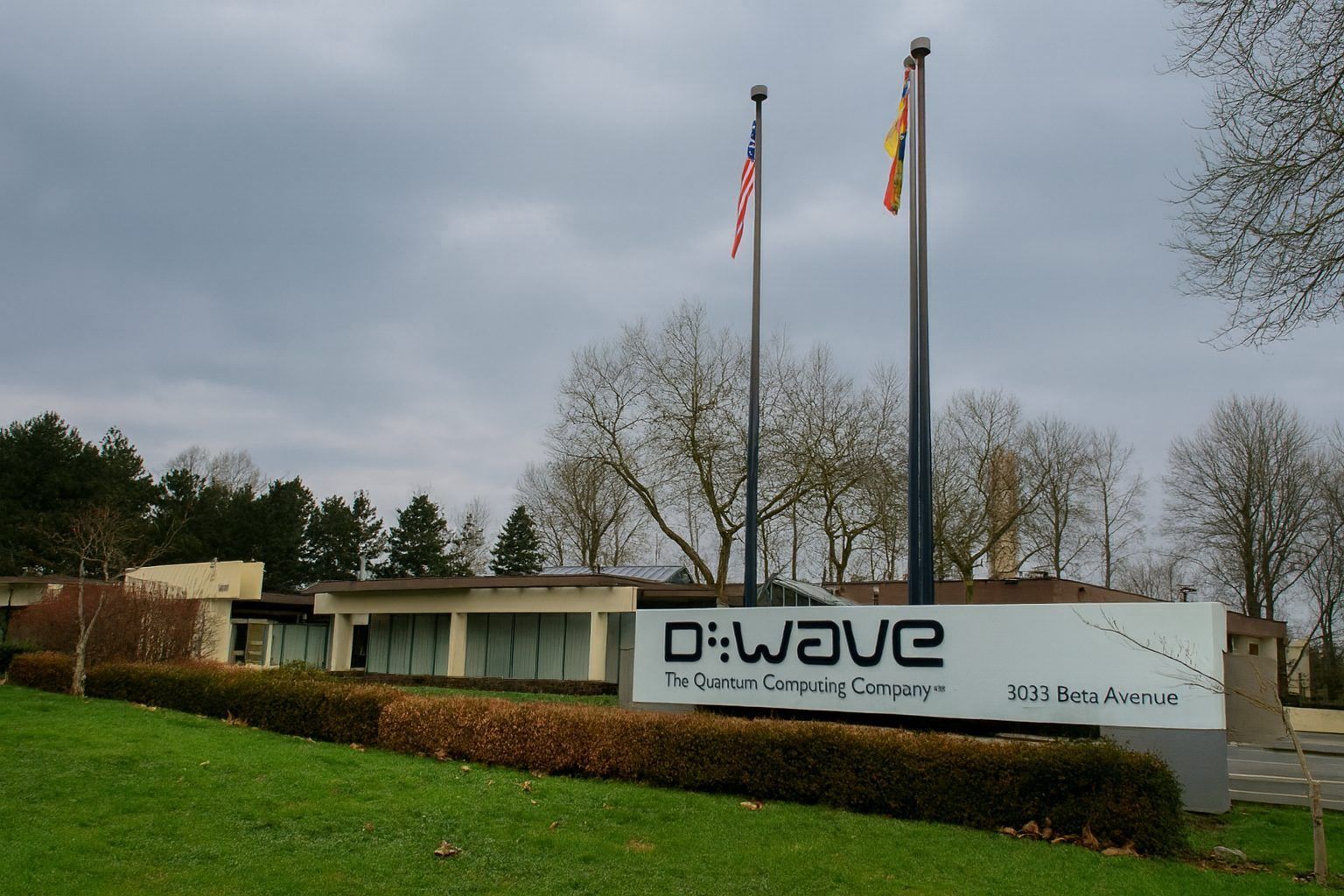
Snapshot: D‑Wave Quantum stock on December 8, 2025
As of the close on Monday, December 8, 2025, D‑Wave Quantum Inc. (NYSE: QBTS) remains one of the most volatile AI–adjacent names on the market.
Key stats today
- Last price: about $27.78 (+~2.9% on the day)
- Intraday range: roughly $26.64 – $29.13
- 52‑week range:$3.71 – $46.75 MarketBeat
- Market cap: ~$9.4 billion
- Valuation: negative P/E around ‑20, reflecting ongoing losses MarketBeat
- Liquidity & leverage: extremely high current ratio (~55) and low debt‑to‑equity (~0.05), thanks largely to warrant exercises bolstering cash. MarketBeat+1
According to TipRanks, QBTS has climbed more than 220% year‑to‑date in 2025 after starting the year in the single digits, even though the stock has sold off sharply from a peak near $40–$47. TipRanks+1
At the same time, the stock remains a battleground:
- Short interest: about 42.25 million shares sold short, equal to 12.25% of the free float, with a days‑to‑cover ratio around 1 day. Short interest is down 4.3% versus the prior report but still above the ~9.3% peer average. Benzinga
All of this sits on top of a flood of new corporate news, bullish analyst upgrades, and loud warnings that quantum computing stocks could be in a bubble.
What is driving QBTS today? Government pivot and Qubits 2026
Two December announcements are dominating the D‑Wave Quantum stock narrative.
1. New U.S. government business unit
On December 2, 2025, D‑Wave announced the creation of a U.S. Government Business Unit, led by long‑time federal contracting executive Jack Sears Jr. dwavequantum.com
- The unit’s mandate is to accelerate adoption of D‑Wave’s quantum systems and services across U.S. federal agencies, particularly in defense, national security, and logistics. dwavequantum.com
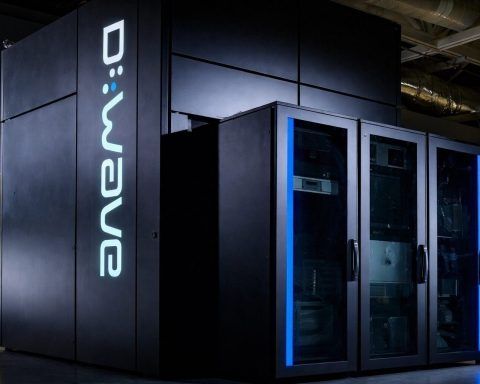
- The company highlighted its Advantage2™ annealing quantum computer installed at Davidson Technologies in Alabama, intended to tackle “mission‑critical” U.S. government workloads and eventually handle sensitive applications. dwavequantum.com+2dwavequantum.com+2
A MarketBeat piece published today directly links D‑Wave’s latest 22%+ early‑December rally to this government‑focused pivot, noting that the announcement itself did not include any new contracts, only a clearer strategy and dedicated leadership. MarketBeat+1
Investors are effectively pricing in the possibility that this new unit converts into sizeable U.S. defense and federal deals at a time when the Trump administration is signaling increased interest in quantum infrastructure. MarketBeat+1
2. Qubits 2026 user conference
On December 8, 2025, D‑Wave announced Qubits 2026, its flagship user conference, to be held January 27–28, 2026 in Boca Raton, Florida. dwavequantum.com
The company says Qubits 2026 will:
- Showcase “award‑winning” annealing systems and hybrid‑quantum solvers with real customer case studies across manufacturing, logistics, life sciences and AI. dwavequantum.com
- Provide an updated product roadmap for both its annealing systems and its long‑term gate‑model program, plus hybrid‑quantum and quantum‑AI offerings. dwavequantum.com+1
- Highlight government and defense use cases, including resource deployment, radar detection and logistics optimization. dwavequantum.com+1
Speakers include executives and researchers from the U.S. defense ecosystem, telecoms, chemicals, life sciences, European HPC centers, and universities, underscoring D‑Wave’s bid to position itself as the commercial face of practical quantum computing. dwavequantum.com+1
For traders, Qubits 2026 is seen as a near‑term catalyst: a high‑profile event where the company could unveil new customers, technical milestones, or government partnerships.
Under the hood: Q3 2025 earnings and the balance sheet
Before the December headlines, D‑Wave’s third‑quarter 2025 results, released on November 6, set the financial backdrop. dwavequantum.com
Revenue growth is real – from a tiny base
For the quarter ended September 30, 2025, D‑Wave reported:
- Q3 revenue:$3.7 million, up 100% year‑on‑year (from $1.9M) and up 8% sequentially from $3.1M in Q2. dwavequantum.com
- Nine‑month 2025 revenue:$21.8 million, up 235% from $6.5M in the same period of 2024. dwavequantum.com
- Over the last four quarters, D‑Wave has served 100+ paying customers, including nearly two dozen Forbes Global 2000 companies. dwavequantum.com
Bookings were more mixed:
- Q3 bookings: $2.4M, up 3% vs. Q3 2024 and up 80% vs. Q2 2025.
- However, year‑to‑date bookings through Q3 were down about 7% vs. 2024, a point some skeptics highlight when questioning the depth of demand. dwavequantum.com+1
Margins are improving, but losses are huge
Profitability metrics show improving unit economics but heavy overall losses:
- GAAP gross margin Q3:71.4% (vs. 55.8% a year earlier).
- Non‑GAAP gross margin Q3:77.7%, up from 67.2%. dwavequantum.com
- Q3 net loss:$140.0 million, vs. $22.7M in Q3 2024, driven largely by $121.9M of non‑cash charges related to warrant remeasurement and exercises as the share price surged. dwavequantum.com
- Adjusted net loss Q3:$18.1M, an improvement from $23.2M a year earlier. dwavequantum.com
For the first nine months of 2025:
- GAAP net loss:$312.7M, up sharply from $57.8M in 2024, again dominated by fair‑value charges tied to warrants.
- Adjusted net loss:$52.8M, slightly better than the prior‑year $57.8M. dwavequantum.com+1
Simply Wall St points out that, even excluding non‑cash items, D‑Wave is still losing over $300 million a year on a GAAP basis, a key reason they view the stock as high‑risk and potentially over‑optimistic at current levels. Simply Wall St+1
Cash war chest thanks to warrants
The wild rally in QBTS during 2025 had a side effect: it made the company much richer.
- As of September 30, 2025, cash stood at $836.2M, the highest balance in company history, up over 2,700% from $29.3M a year earlier and slightly above the Q2 total. dwavequantum.com
- In Q3 alone, D‑Wave raised $39.9M from warrant exercises; between quarter‑end and November 4 it raised another $21.3M the same way. dwavequantum.com
- On November 21, D‑Wave completed the redemption of all public warrants:
- About 4.75M warrants were exercised into 6.9M shares, bringing in $54.6M in cash.
- Roughly 271k warrants that went unexercised were redeemed for $0.01 each.
- After November 19, no public warrants remain outstanding. dwavequantum.com
This leaves D‑Wave with a huge cash runway relative to its current revenue, something bulls highlight as giving the company years to invest in R&D and sales without immediate dilution—although the warrant exercises themselves have already expanded the share count. dwavequantum.com+1
Wall Street view: “Moderate Buy” with targets in the mid‑30s to mid‑40s
Analysts are, on paper, strongly positive on QBTS—but their targets vary widely.
Consensus ratings and price targets
A fresh MarketBeat alert on December 7 reports that: MarketBeat
- 14 research firms currently cover D‑Wave Quantum.
- Consensus rating is “Moderate Buy”: 12 buys, 1 hold, 1 sell.
- The average 12‑month target price is about $29.85—only slightly above today’s ~$28 spot price.
QuiverQuant’s consolidated data show nine analysts issuing targets in the last six months, with a median target of $35. Quiver Quantitative
Recent targets include: Quiver Quantitative+1
- Evercore ISI: $44, “outperform” (initiated December 3, 2025)
- Benchmark: $35, “buy” (November 10)
- Cantor Fitzgerald: $40, “overweight” (November 7)
- Rosenblatt: $40, “buy” (November 7)
- Canaccord Genuity: $41, “buy” (November 7)
- B. Riley Securities: $33, “buy” (September 22)
- Piper Sandler: $13, “overweight” (August 8; now a conservative outlier given the rally)
TipRanks, aggregating its own analyst universe, pegs the average target around $39.40, implying roughly 46% upside from the high‑20s. TipRanks
In short, most professional analysts expect further gains, with a cluster of targets in the mid‑30s to mid‑40s, even though current levels already reflect a huge run‑up.
Quant models and technical forecasts for QBTS
Beyond human analysts, several data‑driven and AI‑based models updated their views on D‑Wave today.
A synthesis of publicly available model summaries (aggregated in TS2’s December 8 recap) shows: TechStock²
- CoinCodex technical model (Dec 8 update):
- Current price modeled around $28.06.
- Short‑term projection: a modest pullback toward ~$27 (about ‑3.5% in the coming days).
- 30‑day stats: 17 “green days” out of 30 (~57%) and volatility near 17.8%, flagged as “very high.”
- Overall technical sentiment: “Bullish”, even while its Fear & Greed index sits in the “Fear” zone, reflecting nervousness about the huge run.
- Intellectia AI model:
- 1‑day to 1‑month forecasts: small negative returns (‑1.9% to ‑3.3%), suggesting short‑term overextension.
- 2026 projection: around $47.7 (~77% upside from current levels).
- 2030 projection: an extreme $875+ per share, which even the summarizing analysis frames as an aggressive model artifact rather than a realistic base case. TechStock²
These tools reinforce the core theme around QBTS: very high volatility, a short‑term risk of mean‑reversion, and hyper‑bullish long‑term scenarios that rest on speculative assumptions about quantum adoption.
Who is buying and who is selling? Institutions, insiders and short sellers
Institutional buying is intense
QuiverQuant’s latest holdings data (through Q3 2025) indicate that institutional interest surged into the rally: Quiver Quantitative+1
- 314 institutions increased their positions; 149 reduced.
- Notable Q3 moves:
- Vanguard Group: +11.2M shares (+41.2%)
- UBS Group: +10.2M shares (+541.6%)
- Price T. Rowe Associates: +3.7M shares (+448.3%)
- BlackRock: +3.0M shares (+12.8%)
- MarketBeat’s analyst‑alert piece estimates institutional ownership around 42–43% of the float. MarketBeat+1
Nasdaq‑syndicated coverage has also highlighted that hedge fund powerhouse Citadel Advisors initiated a position (about 122,600 shares) in Q3—small relative to the float but symbolically important to some momentum traders. TechStock²
Insiders are heavy net sellers
If institutions are leaning in, insiders are clearly taking chips off the table.
QuiverQuant tallies 31 insider trades over the last six months: 30 sales and just 1 tiny purchase. Quiver Quantitative+1
According to Quiver’s breakdown: Quiver Quantitative
- CEO Alan Baratz: 0 purchases, 3 sales, disposing of about 1,005,759 shares for roughly $28.5M.
- CFO John Markovich: 0 purchases, 9 sales, selling about 756,054 shares for roughly $16.8M.
- Several directors and executives (including Kirstjen Nielsen, Diane Nguyen and others) have also been consistent net sellers.
TipRanks reports that in early December alone, the CFO sold 400,000 shares over two days, after QBTS had rallied more than 220% year‑to‑date, though he still holds around 1.58 million shares. TipRanks+1
While some of these transactions are option‑related and partially tax‑driven, the scale and concentration of insider selling is one of the biggest red flags cited by bearish commentators.
Short sellers remain active
On the other side of the trade, short sellers continue to target QBTS heavily:
- Benzinga’s latest short‑interest update (Dec 8) shows 42.25M shares sold short, or 12.25% of the freely tradable float, with a days‑to‑cover of just 1.0 day at current volumes. Benzinga
- Short interest as a percent of float has fallen 4.3% since the last report, but remains well above the ~9.3% peer‑group average for similar names. Benzinga+1
That leaves QBTS in a classic tension zone: high institutional ownership and bullish research versus significant short interest and aggressive insider selling.
Bull case vs. bear case for D‑Wave Quantum stock
Today’s Google News flow highlights a sharp split between bulls and bears.
The bull case: first‑mover, real revenue, big government story
Supportive research notes and quant models emphasize several points: TechStock²+3dwavequantum.com+3dwavequantum…
- Commercial traction is finally visible
- Revenue more than doubled year‑on‑year in Q3, and nine‑month revenue is up 235%.
- D‑Wave now counts 100+ paying customers, including major airlines, banks, manufacturers, semiconductor fabs, and police forces exploring logistics and optimization use cases. dwavequantum.com
- Differentiated technology stack
- D‑Wave is the only major player simultaneously pursuing annealing and gate‑model quantum hardware, plus cloud access (Leap), open‑source tools (Ocean), and hybrid solvers. dwavequantum.com+1
- Its Advantage2 systems are already installed in places like the Jülich Supercomputing Centre in Germany and at Davidson Technologies in Alabama, giving it a “live, working” footprint tied to real institutions. dwavequantum.com+2dwavequantum.com+2
- Strengthened balance sheet and long runway
- The $836M+ cash balance gives D‑Wave years of funding for R&D and sales efforts without an immediate need for new equity raises. dwavequantum.com+1
- Government and defense as a growth engine
- The new U.S. Government Business Unit and operational Advantage2 hardware on U.S. soil position D‑Wave to benefit from rising U.S. spending on quantum technologies in defense, logistics and infrastructure. dwavequantum.com+2dwavequantum.com+2
- Qubits 2026 provides a platform to showcase defense and public‑sector success stories right as Washington turns quantum into a national‑security priority. dwavequantum.com+2MarketBeat+2
- Analyst and AI‑model support
- Human analysts are overwhelmingly in the Buy/Overweight camp, with median targets in the mid‑$30s and some as high as $44. MarketBeat+2Quiver Quantitative+2
- AI‑driven platforms like Intellectia see the potential for large upside by 2026 and beyond (with massive caveats). TechStock²
In this view, D‑Wave is a first‑mover quantum pure play with real customers, rapidly improving margins and enough cash to ride out the early commercialization years.
The bear case: quantum bubble, heavy losses, and insider exodus
On the other side, several commentaries circulating today argue that D‑Wave and its peers may be in a classic speculative bubble. MarketBeat+2Simply Wall St+2
Key points:
- Tiny revenues vs. huge valuation
- Even after strong growth, Q3 revenue is only $3.7M and nine‑month revenue is ~$22M—minuscule relative to a ~$9–10B market cap. dwavequantum.com+2MarketBeat+2
- Some analysts note that D‑Wave sold its first quantum computer over a decade ago, yet 2024 revenue was still smaller than that single system sale, underscoring how slowly the market has matured. TechStock²
- Massive GAAP losses and dilution
- GAAP losses exceed $300M annually, even if much of that is non‑cash. dwavequantum.com+1
- The cash pile largely comes from warrant exercises and equity issuance; future financing could further dilute shareholders if growth disappoints. dwavequantum.com+2dwavequantum.com+2
- Insider selling vs. promotional narratives
- CEO, CFO and multiple directors have steadily sold into the rally, with Quiver counting 30 sales vs. 1 tiny buy in six months. Quiver Quantitative+1
- TipRanks’ Form 4 analysis shows the CFO alone selling 400k shares in early December after a 220% YTD run. Bears argue that this is hard to square with the idea of a deeply undervalued long‑term compounder. TipRanks+1
- Elevated short interest and bubble warnings
- With 12.25% of the float sold short, skeptics are still betting heavily against D‑Wave. Benzinga
- A widely shared “quantum bubble” thesis compares valuations of D‑Wave, IonQ and Rigetti to late‑1990s dot‑com stocks and predicts that quantum names could “crater in 2026” if expectations don’t catch up with reality. TechStock²
- Competition from tech giants
- Big players like Alphabet, Microsoft and others are pursuing alternative quantum architectures (gate‑based, trapped ions, photonics). Bears question whether D‑Wave’s annealing‑first approach will retain a durable moat as the market matures. TechStock²+1
Even some neutral voices, including commentators cited by TS2, describe D‑Wave as a “venture‑style bet priced in public markets” rather than a conventional growth stock. TechStock²
Key risks for investors to watch
Drawing from today’s news, recent filings and third‑party analysis, several risk themes stand out: TechStock²+4dwavequantum.com+4dwavequantum…
- Execution in a nascent market
Commercial quantum computing remains early‑stage. A few delayed or cancelled system deals could materially affect growth. - Dependence on capital markets
The current cash buffer stems heavily from warrant exercises and rising equity prices. If sentiment reverses, future financing could be more dilutive and more expensive. - Governance and insider‑selling optics
Persistent insider selling may undermine confidence, particularly when paired with highly promotional forecasts and AI‑model scenarios. - Valuation compression if the “quantum bubble” thesis gains traction
In a risk‑off environment, names like QBTS—with high short interest, speculative revenue and rich multiples—can see rapid, severe drawdowns. - Technological and competitive uncertainty
The long‑term race between annealing and various gate‑model architectures is unresolved. Larger, better‑funded rivals could leapfrog D‑Wave’s technology or absorb key enterprise and government customers.
What to watch next for D‑Wave Quantum (QBTS)
For readers following QBTS on Google News and Discover, here are the main upcoming signposts:
- Qubits 2026 (Jan 27–28, 2026): Look for new customer announcements, government pilots, and updates on the gate‑model roadmap and quantum‑AI integration. dwavequantum.com+1
- Progress of the U.S. Government Business Unit: Any concrete contracts or multi‑year agreements with DoD‑linked agencies or other federal departments would be more important than strategy statements. dwavequantum.com+1
- Next earnings release (Q4 / FY 2025): Watch whether revenue growth remains triple‑digit, whether bookings and remaining performance obligations (RPO) re‑accelerate, and how fast cash burn (on an adjusted basis) is trending. dwavequantum.com+1
- Insider and institutional flows: Continued heavy insider selling or a reversal in institutional buying would send a strong sentiment signal. Quiver Quantitative+1
- Short‑interest updates: A sharp drop could signal shorts covering into strength; a renewed rise might reflect growing doubts about the government‑driven bull thesis. Benzinga
Final word
D‑Wave Quantum stock today sits at the intersection of big narratives (AI, quantum, national security) and hard fundamentals (tiny revenue, big losses). The December 8 news flow—government pivot, Qubits 2026, bullish targets and bubble warnings—doesn’t resolve that tension; it amplifies it.
For anyone considering QBTS, this remains a high‑risk, high‑volatility quantum computing stock, where policy moves, conference headlines and investor psychology may matter as much as quarterly numbers for some time.
This article is for information only and is not investment advice. If you’re thinking about trading or investing in D‑Wave Quantum, it’s important to consider your own financial situation, risk tolerance and to consult a qualified financial adviser where appropriate.