New York time check: As of 3:17 a.m. ET on Saturday, December 27, 2025, U.S. markets are closed for the weekend.
D-Wave Quantum Inc. (NYSE: QBTS) is heading into the final stretch of the year with the kind of price action that makes quantum-computing stocks famous (or infamous): fast rallies, sharp pullbacks, and headlines that can move sentiment quickly.
The latest quote available from the market data feed shows QBTS at $25.29, after a -$2.24 move versus the prior close (roughly -8.1%, based on the change and implied previous close), with 33.6 million shares traded and a session range of $24.775 to $27.79. The most recent trade in the feed was timestamped 00:59 UTC on Dec. 27 (which corresponds to 7:59 p.m. ET on Friday, i.e., late after-hours).
Because it’s Saturday, the next key question for investors is less “what can I do right now?” and more “what matters before Monday’s open?”
QBTS stock recap: what happened into the weekend
Friday’s tape was broadly quiet at the index level, but not at the single-stock level—especially in high-beta, story-driven corners of the market like quantum computing.
Market commentary outlets that tracked the session noted D-Wave falling more than 8% on the day, even as the broader market stayed close to flat in post-Christmas trading. Investors+1
That combination—index calm + single-name turbulence—is common during the last trading days of December, when liquidity can thin out and individual order flow can have an outsized impact on price.
The broader backdrop: thin holiday liquidity and a Fed that just cut rates
Two big context points are shaping how traders interpret moves like Friday’s in QBTS:
1) Holiday conditions can amplify swings
Post-holiday trading is often characterized by lighter volume and fewer major scheduled catalysts, which can exaggerate day-to-day moves in volatile names. Barron’s described the market as trading on light volume as it reopened after Christmas, with no major economic reports driving the session. Barron’s
Russell Investments has also highlighted that market participation typically declines into late December, a setup that can widen spreads and make price moves look “louder” than the underlying fundamentals. Russell Investments
2) The Fed just lowered rates
On December 10, 2025, the Federal Reserve cut the federal funds target range by 0.25 percentage point to 3.50%–3.75%, citing a shift in the balance of risks and elevated uncertainty in the outlook. Federal Reserve
Rate cuts can be supportive for long-duration growth narratives (the kind often attached to emerging tech), but they can also come with a “yeah, but why are they cutting?” mood if investors think the economy is slowing. Either way, the macro picture matters because quantum stocks often trade as sentiment vehicles, not just cash-flow stories.
D-Wave fundamentals: what the company has recently reported
One reason D-Wave stands out among pure-play quantum names is that it has emphasized commercial activity, bookings, and deployments—metrics markets can at least try to anchor on.
In its Q3 2025 results (quarter ended Sept. 30, 2025), D-Wave reported:
- Revenue of $3.7 million, up 100% year over year
- Bookings of $2.4 million, up 80% versus the prior quarter
- A record cash balance of $836.2 million as of Sept. 30, 2025
- A net loss of $140.0 million (or $0.41/share), which the company attributed largely to non-cash, non-operating warrant-related charges; it also reported an adjusted net loss of $18.1 million (or $0.05/share) D-Wave Quantum+2D-Wave Quantum+2
That cash number is especially important for investors to keep in mind going into 2026: in a sector where many companies are pre-profit and spending heavily, liquidity and dilution risk can drive sentiment as much as technology milestones.
Recent company news: D-Wave’s push into U.S. government demand
A major late-2025 headline for D-Wave is its formal push to expand government-focused activity.
On December 2, 2025, D-Wave announced it formed a U.S. government business unit and named Jack Sears Jr. to lead it as vice president of U.S. government solutions. The company framed the move as a response to rising demand for quantum applications in defense-related and public-sector problems such as logistics and transportation. D-Wave Quantum
D-Wave CEO Dr. Alan Baratz said the company aims to “facilitate the rapid development of quantum applications” for national security, defense, and infrastructure challenges (company statement). D-Wave Quantum
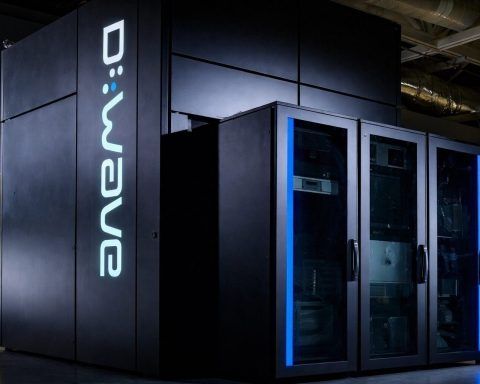
The release also pointed to real deployment footing: D-Wave said its Advantage2 system was operational at the Alabama headquarters of Davidson Technologies, positioning it for mission-focused use cases. D-Wave Quantum
For markets, government-facing initiatives can cut two ways:
- Bull case: longer contracts, credibility, and potentially “sticky” workloads
- Bear case: longer sales cycles, procurement complexity, and headline risk if expectations get ahead of signed dollars
Analyst forecasts and price targets: what Wall Street is modeling
This is where the weekend homework gets interesting, because QBTS is a stock where expectations can move faster than fundamentals.
Consensus-style targets (aggregators)
- TipRanks shows an average price target around $39–$40, with a reported range roughly $35 to $48 (as presented on the platform). TipRanks
- Zacks lists an average price target around $37.20 based on the analysts it compiles. Zacks
A named “expert” call: Evercore ISI on D-Wave
Investor’s Business Daily reported that Evercore ISI initiated coverage on D-Wave with an “Outperform” rating and a $44 price target, citing factors like commercial revenue, ecosystem positioning, and liquidity (IBD report). Investors
That kind of initiation matters in a momentum-heavy sector, because it can:
- pull in new institutional attention,
- shape the narrative for retail traders,
- and set visible “reference points” (price targets) that traders anchor to.
A bullish-but-cautious take: “upside… and still speculative”
A widely syndicated Nasdaq.com piece (from The Motley Fool) argued that D-Wave’s commercial traction and customer count make it “less speculative” than some quantum peers—while still emphasizing that the stock is highly speculative and valued aggressively relative to near-term revenue. Nasdaq
That tension—real activity, but very early economics—basically is the QBTS story in one sentence.
A bearish scenario to know: Trefis flags downside risk
On the other side of the debate, Trefis published a note suggesting QBTS could plausibly fall further—floating a bearish scenario down to $18 and pointing to the recent pullback from late-December levels. Trefis
Whether you agree or not, it’s useful because it highlights what skeptics focus on: valuation sensitivity, drawdown history, and how quickly “hot narrative” stocks can cool off.
What investors should watch before the next session
Because the exchange is closed now, the actionable edge comes from preparation. Here’s what typically matters most for QBTS going into Monday:
1) Know the clock: regular hours vs. extended hours
The NYSE core trading session runs 9:30 a.m. to 4:00 p.m. ET. Liquidity and spreads can look very different outside those hours. NYSE
Why it matters for QBTS: high-volatility names can gap on thin premarket volume, and those gaps sometimes reverse once full liquidity returns.
2) Watch the “quantum basket,” not just QBTS
Quantum names often move in sympathy on risk-on/risk-off shifts. Recent sector coverage has highlighted how quickly sentiment can rotate across the group—IonQ, Rigetti, and others—especially after sharp runs. Yahoo Finance
Practical takeaway: if QBTS moves Monday, check whether peers are moving too. A basket move implies sector sentiment; a solo move implies stock-specific news/flow.
3) Re-anchor to fundamentals: cash, bookings, and what losses mean
If you’re holding through volatility, it helps to keep a short list of “real” fundamentals to revisit:
- cash runway and dilution risk,
- bookings trajectory,
- evidence of repeatable customer wins,
- and whether losses are operating losses vs. accounting-driven items (like warrant remeasurement).
D-Wave’s Q3 release is explicit that warrant-related accounting effects materially impacted the GAAP net loss figure. D-Wave Quantum+1
4) Upcoming catalysts: conferences and earnings
D-Wave said its Qubits 2026 user conference will take place January 27–28, 2026 in Boca Raton, Florida—events like this can generate partnership announcements, customer case studies, or roadmap updates that shift near-term sentiment. D-Wave Quantum+1
For the next formal financial update, Zacks lists D-Wave’s next expected earnings report date as March 12, 2026 (dates can move, but it’s a widely watched placeholder). Zacks
5) Don’t ignore the macro “vibe”: liquidity + Fed + year-end positioning
Even if nothing company-specific drops, the macro setup can still move QBTS:
- thin late-December liquidity can exaggerate swings, Russell Investments
- and the Fed’s recent rate cut remains part of the backdrop investors are digesting. Federal Reserve
Bottom line for QBTS heading into Monday
As of early Saturday morning in New York, QBTS is coming off a sharp down day, but the broader setup is bigger than one session: D-Wave has demonstrated rising revenue and bookings off a small base, a very large cash balance, and a string of government- and deployment-oriented headlines—while the stock remains extremely sentiment-driven and prone to fast drawdowns. D-Wave Quantum+2D-Wave Quantum+2
For Monday’s reopening, the most useful investor mindset is less “predict the next tick” and more “know what would change the story”:
- a real contract/customer headline,
- a sector-wide rotation,
- or a liquidity-driven gap that may or may not hold once regular-hours trading returns.