
NEW YORK, Dec. 27, 2025, 7:05 a.m. ET — Market closed (weekend)
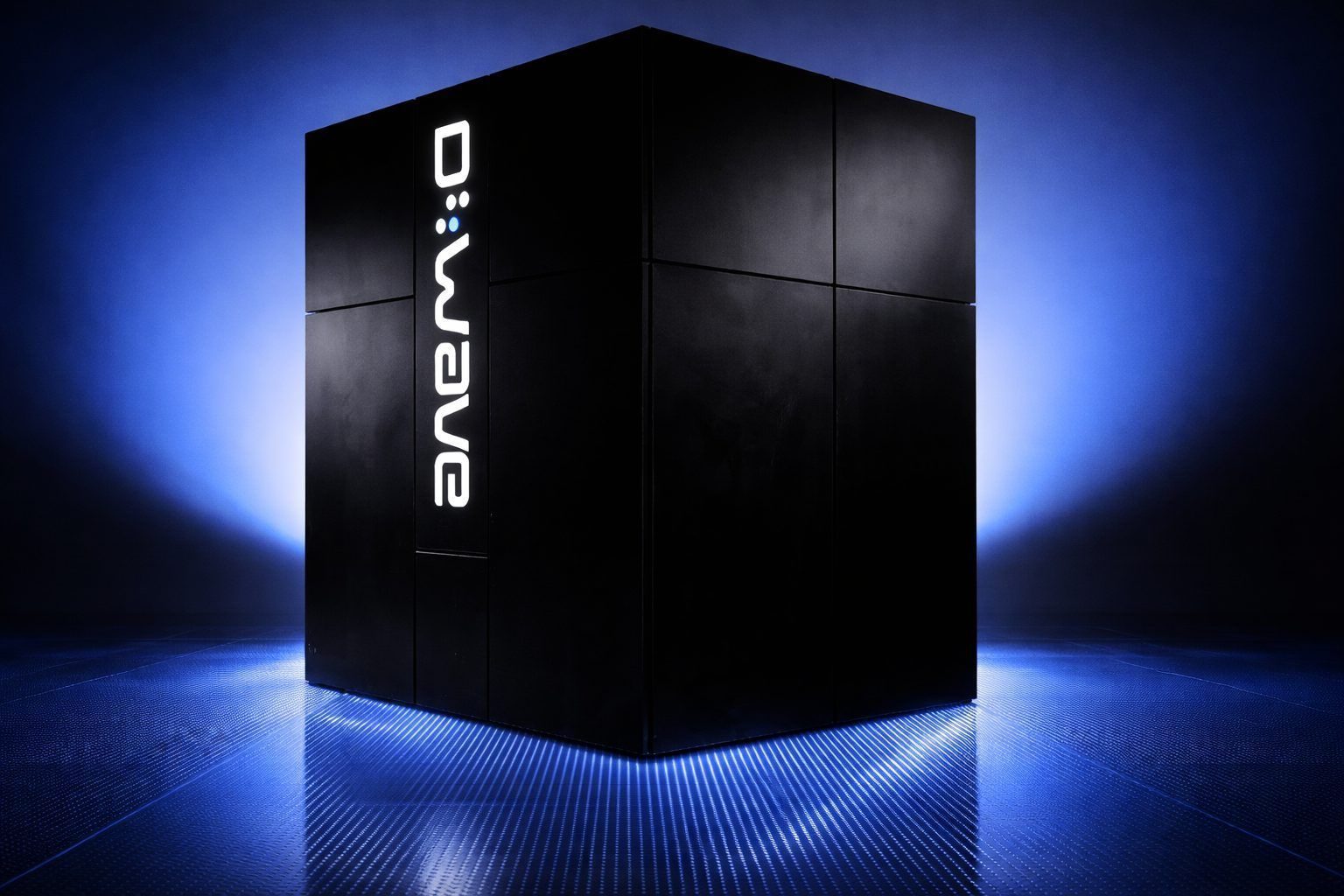
D-Wave Quantum Inc. (NYSE: QBTS) is closing out a volatile holiday week with investors digesting a sharp Friday pullback — and with the New York Stock Exchange closed for the weekend, the next real test for sentiment arrives when trading resumes Monday.
As of the latest available trade, QBTS last changed hands at $25.29, down $2.24 (about 8.1%) from the prior close, after ranging between $24.775 and $27.79 on the day and posting volume of roughly 33.6 million shares.
MarketWatch data showed after-hours trading near $25.18 late Friday, suggesting relatively limited additional movement once the closing bell had passed.
What happened to QBTS on Friday — and why the move matters
Friday’s decline followed a choppy sequence that has become familiar for quantum-computing stocks in 2025: outsized rallies, fast reversals, and heavy retail attention.
StockAnalysis’ recent tape shows QBTS jumped 20.02% on Dec. 22 (closing at $32.19), then fell three straight sessions: -9.54% (Dec. 23), -5.49% (Dec. 24), and -8.10% (Dec. 26) to end the week at $25.29. StockAnalysis
MarketBeat similarly flagged Friday’s drop and noted the stock traded down to the mid-$24 area during the session.
With the market now closed, that sequence is important because it frames the current setup: QBTS isn’t just “down on the day.” It’s coming off a rapid unwind after a surge — the kind of pattern that can attract both dip-buyers and momentum short-sellers when trading reopens.
The catalyst investors were trading earlier this week: CES 2026
One clear reason QBTS drew attention heading into the week: D-Wave announced it will participate in CES 2026 as a sponsor of the CES Foundry event in Las Vegas on Jan. 7–8, 2026, where it plans to showcase customer use cases and hybrid quantum-classical work.
The company’s Murray Thom, vice president of quantum technology evangelism, framed the CES appearance as a signal that quantum is moving toward the mainstream.
Notably, D-Wave’s own newsroom list shows its most recent press release is dated Dec. 22, 2025 — meaning there hasn’t been a brand-new corporate announcement in the past day or two to “explain” Friday’s selloff by itself. D-Wave Quantum
That pushes attention back toward positioning, valuation debates, and the broader “quantum trade” narrative.
Insider sales are part of the backdrop — but the filings show context
A second topic that has circulated among active traders: recent insider transactions, disclosed via SEC Form 4 filings.
In filings covering transactions dated Dec. 22, 2025, D-Wave CEO Alan Baratz reported exercising options and selling 793,712 shares at a weighted-average sale price of $30.1282; the filing also states the trades were executed under a Rule 10b5-1 plan adopted earlier in 2025. SEC
D-Wave CFO John M. Markovich likewise reported an option exercise and sale of 100,000 shares at a weighted-average sale price of $30.0262, also under a Rule 10b5-1 plan.
These plans don’t automatically make insider selling “bullish” or “bearish” — but the combination of (1) large, headline-grabbing numbers and (2) a stock already swinging widely can influence short-term sentiment, especially in a retail-heavy name.
Short interest and options positioning can amplify QBTS volatility
QBTS also trades with meaningful short interest, which can act like a volatility accelerant — pushing moves further in both directions.
Finviz lists short interest of ~41.81 million shares and a short float around 12.40%, alongside a market cap around $8.85B. Finviz+1
Fintel’s short-interest dashboard shows a similar magnitude and notes a key structural detail: U.S. short-interest figures are published on a twice-monthly schedule set by FINRA, which means the most cited “short interest” stats can lag fast-moving price action. Fintel
For investors, the practical takeaway going into Monday is simple: if QBTS gaps up or down on relatively modest news, market structure (short positioning + options flow + thin liquidity) can be a bigger driver than fundamentals in the opening hour.
Wall Street targets skew bullish — but the range is wide
Despite the pullback, published analyst targets across major aggregators remain upbeat overall — with big differences in the numbers depending on which dataset you follow.
MarketBeat’s forecast page shows an average price target around $33.67, with a stated spread as high as $46 and as low as $10, and an overall “Moderate Buy” style consensus. MarketBeat+1
Finviz’s analyst timeline lists notable initiations in December, including:
- Evercore ISI initiating Outperform with a $44 target (Dec. 3)
- Mizuho initiating Outperform with a $46 target (Dec. 11)
- Wedbush initiating Outperform with a $35 target (Dec. 17) Finviz
Separately, an Investor’s Business Daily report on quantum-computing coverage cited Evercore ISI analyst Mark Lipacis assigning a $44 price target and highlighting D-Wave’s liquidity (including a reference to roughly $800 million in cash). Investors
Investopedia also reported that Wedbush initiated “outperform” ratings on the sector and set $35 targets for both Rigetti and D-Wave. Investopedia
The key nuance: optimistic targets don’t remove near-term risk — they mostly tell you how polarized the debate is. When price targets are far above (and sometimes far below) the current quote, it’s a sign the stock is trading in “story + optionality” territory, not slow-and-steady compounding territory.
The valuation argument is getting louder after the pullback
A major reason QBTS can whipsaw this hard is that valuation is difficult to anchor when revenue is still small and profits are negative.
Finviz lists QBTS with a price-to-sales multiple in the hundreds and notes trailing financial metrics that reflect substantial losses (common for early-stage deep-tech companies). Finviz
Simply Wall St’s discounted cash flow model estimated an intrinsic value around $20.95 per share and concluded the stock was ~31% overvalued on that particular framework.
On the more bearish side, Trefis published an analysis dated Dec. 27 arguing QBTS could potentially fall further — even floating $18 as a downside scenario — after noting the stock’s decline from the $32.19 area to the mid-$20s in less than a month.
Meanwhile, a widely circulated Motley Fool/Nasdaq column earlier this week argued that enthusiasm around quantum-computing names could correct sharply and sketched an aggressive downside scenario for 2026 based on historical “bubble” analogies. Nasdaq
That’s not a forecast investors have to agree with — but it captures what the market is currently pricing: a lot of uncertainty.
What investors should know before the next session opens Monday
With markets closed today, investors’ edge comes from preparation — not reaction. Here are the practical items to have on your radar before the opening bell:
1) Watch for any fresh company updates (or the lack of them).
D-Wave’s newsroom list shows the latest press release was Dec. 22. If there’s no new corporate news into Monday, price action may be driven mostly by positioning and sentiment rather than a new fundamental datapoint.
2) Keep the near-term catalyst calendar in view.
Two dates are likely to keep QBTS in the conversation:
- CES Foundry (Jan. 7–8, 2026), where D-Wave plans demos and customer stories.
- Qubits 2026 (Jan. 27–28, 2026) in Boca Raton, Florida, which the company says will include executives, customers, industry leaders, and technology roadmap updates (including both annealing and gate-model initiatives).
3) Expect volatility to stay elevated — and size risk accordingly.
Between a ~12% short float, heavy options attention, and a stock that just moved double-digits several days in a row, Monday’s open could be fast.
4) Treat insider headlines with context, not reflex.
The recent CEO/CFO sales were disclosed as being executed under Rule 10b5-1 plans. That doesn’t eliminate all interpretive debate, but it does matter for understanding whether a trade is discretionary or pre-scheduled.
Bottom line
D-Wave Quantum stock enters the weekend in “high narrative, high volatility” mode: a steep Friday drop, a rapid reversal from Monday’s spike, meaningful short interest, and an analyst community that is generally optimistic but far from unanimous on valuation.
When the market reopens Monday, the crucial question likely won’t be whether quantum computing is real (it is), but whether QBTS’s current price is a reasonable bridge between today’s revenue and tomorrow’s promise — and whether traders, for at least one more session, are willing to pay up for that promise.
Related articles: Quantum Computing