- Soaring Stock: Denison Mines Corp. (NYSE American: DNN) has surged roughly 100% year-to-date, recently trading around $2.65 per share as of Oct. 22, 2025 ts2.tech. The stock hit a multi-year intraday high near $3.35 in mid-October before a brief pullback ts2.tech, vastly outperforming broader market indices in 2025 ts2.tech ts2.tech.
- Uranium Price Boom: A uranium market rally is fueling DNN’s gains. Spot uranium prices spiked above $83 per pound in early October – the highest since 2011 ts2.tech ts2.tech – amid a structural supply deficit of ~50 million lbs per year ts2.tech. Analysts predict uranium could test $90–$100/lb by year-end if current trends continue ts2.tech, providing a major tailwind for uranium miners like Denison.
- Project Breakthroughs:Denison resumed uranium production in July 2025 at its McClean Lake joint venture (22.5% owned by Denison), extracting ~250 tonnes of ultra-high-grade ore (>10% U₃O₈) via a novel SABRE borehole method ts2.tech ts2.tech. CEO David Cates hailed this as “a significant milestone… as the joint venture returns to active mining operations for the first time since 2008” ts2.tech. Meanwhile, the flagship Wheeler River project in Saskatchewan secured key provincial environmental approval, and final federal licensing hearings are underway (Oct/Dec 2025) to clear the path for construction of the high-grade Phoenix uranium mine ts2.tech ts2.tech.
- Analysts Bullish: Wall Street coverage is overwhelmingly positive on DNN. All five analysts covering the stock rate it “Buy” or “Outperform” ts2.tech americanbankingnews.com. The consensus 12-month price target is around $2.75 per share americanbankingnews.com, with some far more optimistic calls – e.g. Desjardins Capital Markets recently reiterated a C$5.00 target (~US$3.65) ts2.tech. Raymond James also boosted its target to C$4.35 (from C$4.05) in October marketbeat.com. These targets reflect confidence that rising uranium prices and Denison’s project milestones can drive further upside.
- Uranium Market Context: A global “nuclear renaissance” is underway, with over 30 countries planning to triple nuclear capacity by 2050 as they pursue clean energy goals ts2.tech. Primary uranium mine output (~130 Mlbs/year) falls well short of reactor demand (~180 Mlbs) ts2.tech ts2.tech, forcing utilities into a frenzy of long-term contracting at elevated prices ts2.tech. Geopolitical factors – from Kazakhstan’s production cuts to sanctions on Russian enrichment and unrest in Niger – are stoking supply fears ts2.tech. In the U.S., policymakers even invoked the Defense Production Act in Oct. 2025 to boost domestic uranium fuel supply ts2.tech. This tight market benefits junior miners like Denison, whose once-marginal projects become economically attractive at higher uranium prices ts2.tech ts2.tech.
- Investor Buzz:Investor sentiment is running high. Online forums and social media (Reddit, Stocktwits) are abuzz over uranium stocks, with retail traders touting Denison as a prime play on the “nuclear revival.” Options traders have also piled in – on one mid-October day, call option volume on DNN jumped to ~35,928 contracts, +245% above typical levels americanbankingnews.com, reflecting bullish bets on further upside. Institutions likewise have increased exposure; roughly 36–37% of Denison’s float is now held by institutional investors and funds ts2.tech americanbankingnews.com, up sharply as several hedge funds added positions in recent quarters.
Stock Surge Amid Nuclear Revival
Denison’s stock price has been on a tear in 2025 thanks to the resurgence of nuclear energy. After spending much of last year languishing near $1, DNN began climbing steadily in mid-2025 alongside uranium’s rebound. The rally accelerated this fall: shares spiked to an intraday high of about $3.35 in mid-October (a level not seen in over a decade) ts2.tech. Even after some profit-taking, DNN was recently hovering in the high-$2 range – around $2.65 as of October 22 ts2.tech – which still represents a year-to-date gain of over 100% ts2.tech. Such returns have dwarfed major indices and put Denison among the top-performing mining equities this year ts2.tech ts2.tech.
This sharp ascent has come with high volatility. It’s not uncommon for DNN to swing 10%+ intraday amid shifting market sentiment ts2.tech ts2.tech. For example, during the week of Oct. 17, the stock whipsawed from about $3.09 down to $2.91 within a single session on broad market jitters before stabilizing ts2.tech. Still, the overall momentum remains positive – even after the recent pullback, Denison trades well above its longer-term moving averages (50-day around $2.45, 200-day near $1.95) ts2.tech americanbankingnews.com. In short, 2025’s nuclear revival has propelled Denison’s stock to levels unseen in years, and investors are closely watching whether this momentum can be sustained.
Uranium Boom Fuels the Rally
The primary engine behind Denison’s surge is the explosive rally in uranium prices. After a decade in the doldrums following Fukushima, uranium has become one of 2025’s best-performing commodities ts2.tech. In early October, spot uranium broke above $83/lb, the highest price since 2011 ts2.tech. (For context, uranium was barely $30/lb two years ago.) The spike is driven by a structural supply-demand mismatch: global mining output (≈130 million lbs annually) is far below reactor requirements (≈180M lbs) ts2.tech ts2.tech. That ~50M lb/year gap has been drawing down inventories and forcing nuclear utilities into aggressive procurement. Industry forecasts now see a real possibility of $90–$100+ uranium by late 2025 if current trends persist ts2.tech.
Multiple factors underpin this uranium boom. On the demand side, nuclear energy is enjoying a renaissance as countries pursue carbon-free power and energy security. Over 30 nations – including China, India, and the U.S. – have announced plans to expand nuclear capacity threefold by 2050, significantly boosting long-term uranium demand ts2.tech. Even tech sector growth plays a role: energy-hungry AI data centers are prompting companies and governments to consider more nuclear power ts2.tech. On the supply side, geopolitical and production issues are constraining output. Kazakhstan (which provides ~40% of the world’s uranium) signaled it will cut production 10% starting in 2026 ts2.tech. Meanwhile, sanctions on Russia (a major uranium enricher) and political turmoil in key mining regions like Niger have cast uncertainty over future supply ts2.tech. By October, utilities had only secured ~70-75% of their near-term uranium needs, leading to a scramble for long-term contracts at premium prices ts2.tech ts2.tech.
For uranium mining companies like Denison, this backdrop is extremely favorable. Rising uranium prices directly increase the projected value and viability of Denison’s undeveloped deposits. As one industry analysis put it, Denison “offers high leverage to uranium price increases,” since each uptick in the commodity significantly improves project economics ts2.tech. In practical terms, resources that were uneconomical at $40–$50/lb uranium could generate substantial profits at $80+/lb. This leverage has not been lost on investors: money has been “flooding the junior mining sector” on the expectation that higher prices will turn projects like Denison’s into big winners ts2.tech. In sum, the uranium bull market has both boosted DNN in the near term and strengthened the long-term investment thesis for the company’s assets.
Key Company Developments (Wheeler River, McClean Lake, etc.)
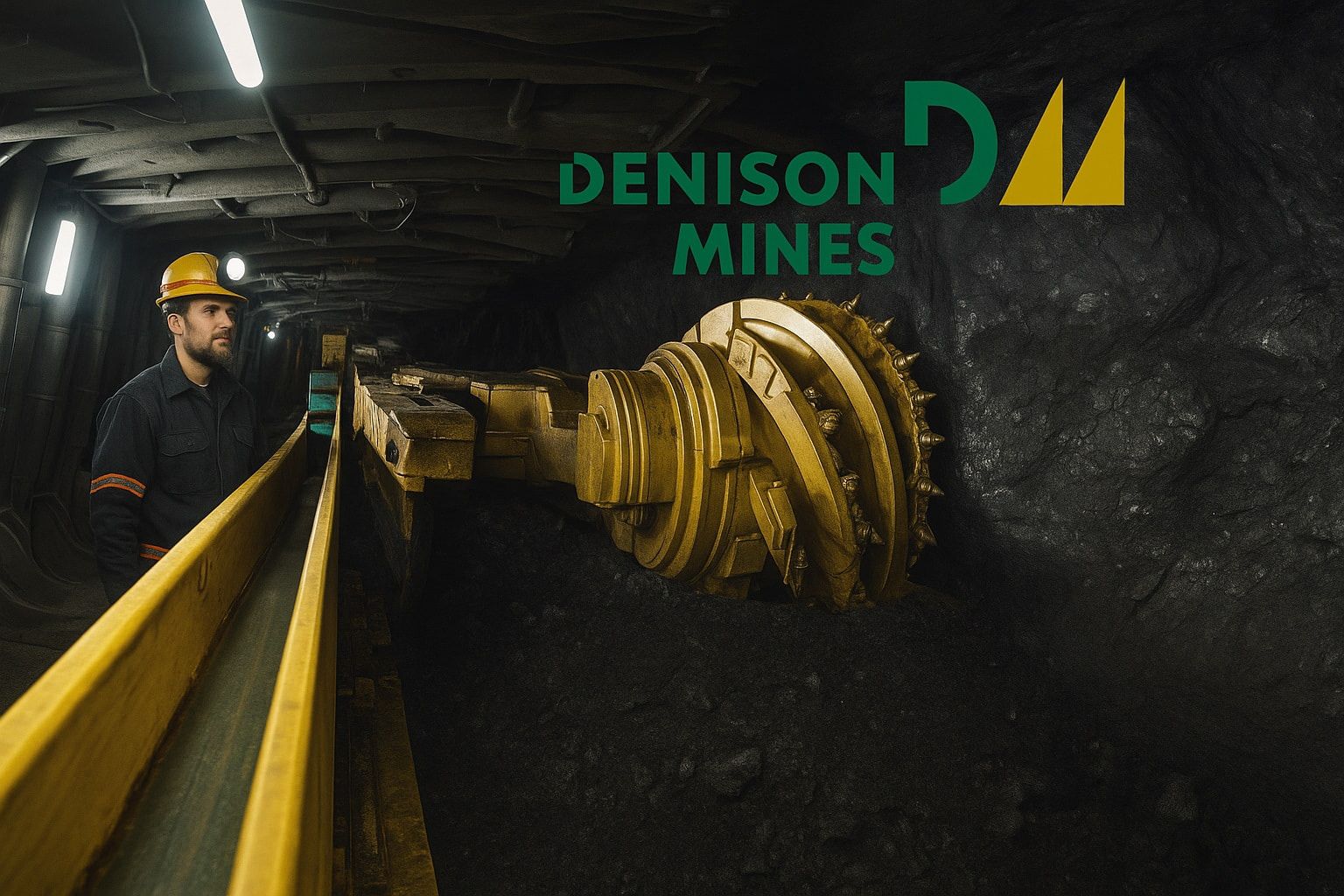
While macro trends lit the fuse, Denison’s own achievements in 2025 have added fuel to the rally. After years as a uranium developer with no active mines, Denison officially returned to production this summer. In July 2025, its McClean Lake joint venture in Canada’s Athabasca Basin (Denison 22.5% interest, with Orano Canada) successfully began mining uranium ore using the innovative SABRE drill technique ts2.tech. Roughly 250 tonnes of extremely high-grade ore (averaging over 10% U₃O₈, which is many times the industry average grade) were extracted from the first borehole cavity ts2.tech. The ore was processed at the McClean mill, producing Denison’s first packaged “yellowcake” uranium concentrate in over 15 years ts2.tech. As CEO David Cates noted, this marks “a significant milestone” for the company, signifying a return to active mining operations after a long hiatus ts2.tech. Although the initial production is modest, Denison plans to sell its share of output in upcoming quarters – meaning the company will soon record its first uranium sales revenue since 2008 ts2.tech.
Even more consequential for Denison’s future is the progress at its flagship Wheeler River project. Wheeler River (95% owned) is considered one of the world’s most promising undeveloped uranium assets, located in the high-grade Athabasca region. In 2025, Wheeler took major strides toward becoming a producing mine. In August, the province of Saskatchewan granted Ministerial Approval of Wheeler’s Environmental Assessment, effectively clearing the key provincial permitting hurdle ts2.tech. Now all eyes are on the federal regulator: the Canadian Nuclear Safety Commission (CNSC) has been conducting public licensing hearings (the first held on Oct. 8, with a final session scheduled for Dec. 8–12, 2025) to review Wheeler’s environmental and technical plans ts2.tech ts2.tech. If, as expected, the CNSC grants a construction license after the December hearings, Denison could begin initial site work in early 2026 ts2.tech ts2.tech. The company is targeting first production by around 2028 for Wheeler’s Phoenix deposit, which would become the first In-Situ Recovery (ISR) uranium mine in Canada ts2.tech ts2.tech. Notably, Phoenix boasts extraordinarily rich ore grades (in excess of 15-19% U₃O₈ in some zones) coupled with a low-cost ISR extraction method – a combination that promises very robust economics if executed successfully.
Denison’s management has also highlighted other pipeline projects and improvements this year. In October, the company released a new Preliminary Economic Assessment (PEA) for its Midwest project (Denison 25% stake). The results were eye-popping: projected operating costs of only about $11.70 per pound U₃O₈ and an after-tax internal rate of return >80% (for Denison’s share) at mid-$50s/lb uranium prices ts2.tech ts2.tech. Such low costs suggest that even if uranium prices retreat, Midwest would remain profitable – underscoring what Denison calls the “hidden value” in its portfolio ts2.tech. The company also discovered additional high-grade mineralization at Wheeler’s Gryphon deposit (further bolstering that project’s resource base) stocktitan.net stocktitan.net. And beyond its own projects, Denison has been investing strategically: it increased its stake in fellow Athabasca explorer Foremost Energy to ~19% ts2.tech and entered a joint venture with Cosa Resources for new exploration ground ts2.tech. These moves aim to expand Denison’s footprint in the uranium-rich region ahead of what many expect to be a prolonged upcycle.
On the financial front, Denison has raised substantial capital to fund its growth. In August 2025, the company upsized and closed a US$345 million convertible note financing, bolstering the war chest for Wheeler River’s development ts2.tech. This comes on top of ~$50M in equity raised in 2023 and a $75M credit facility secured earlier in 2025 ts2.tech. Thanks to these financings, Denison reports having ample liquidity to advance Wheeler and other initiatives in the near term. The balance sheet strength is reflected in a quick ratio of ~3.7, indicating plenty of short-term liquidity stockstotrade.com. However, Wheeler’s construction will ultimately require hundreds of millions of dollars, and management will need to execute carefully to avoid excessive dilution or debt burden as funding needs arise ts2.tech.
What Analysts and Experts Are Saying
Analysts have largely applauded Denison’s trajectory, pointing to both the uranium macro tailwinds and the company’s project pipeline. According to MarketBeat, all five brokerages covering DNN (including Scotiabank, TD Securities, Raymond James, National Bank and Desjardins) rate the stock a “Buy” or “Outperform.” americanbankingnews.com This unanimous bullish stance is accompanied by a rising tide of price targets. The average 12-month target among analysts sits around $2.75 per share americanbankingnews.com, slightly above current trading levels. But several analysts see significantly higher upside: for instance, Desjardins Capital Markets’ Bryce Adams maintains a C$5.00 target (~$3.65 USD), arguing that Denison’s combination of higher uranium prices and imminent project approvals justifies a premium valuation. Similarly, Raymond James raised its target price to C$4.35 this month marketbeat.com, and other Canadian banks have issued targets in the C$4+ range, reflecting growing confidence as Denison transitions from explorer to producer.
Beyond traditional equity research, technical and quantitative models are also optimistic about DNN. One trend-based analysis projects another 30–45% share price rise by early 2026 – roughly targeting the $3.70 to $4.70 range – if uranium prices remain strong and Denison hits its milestones ts2.tech. A compilation of Wall Street forecasts by TickerNerd yields a median 2026 price around $3.75 (about 28% above today) ts2.tech. These models essentially bet that the current momentum can continue in the short to medium term. As TS2.tech notes, the positive outlook hinges on Denison obtaining final Wheeler River permits on schedule and uranium pricing staying elevated or climbing further ts2.tech. Some industry forecasters are even “flirting with $90–$100/lb” uranium scenarios by year-end ts2.tech, which would likely propel all uranium stocks higher.
Crucially, analysts emphasize that Denison’s recent achievements have “de-risked” its story to an extent. CEO David Cates himself has said that hitting milestones like initiating McClean Lake production and nearing Wheeler River approval “de-risk” the company’s pipeline ts2.tech. These tangible steps reduce uncertainty around Denison’s transition toward production status. Investor confidence in Denison has grown as a result – evidenced by fresh capital flowing into the stock and uranium-focused ETFs that hold it ts2.tech. In the words of one market note, Denison’s transformation “has convinced many that [the company] is transitioning into a producer,” which in turn has drawn new institutional interest ts2.tech.
That said, not everyone is unabashedly bullish at current levels. Some experts caution that DNN’s torrid run may have already priced in much of the good news. As Denison’s stock doubled this year, its valuation multiples have become stretched relative to fundamentals. The company remains pre-revenue (aside from the very small McClean output just begun) and is still reporting net losses, so traditional earnings metrics are not applicable (trailing P/E is negative) ts2.tech americanbankingnews.com. One analysis by Simply Wall St. warned that Denison’s “weak financials, unprofitability [and] high valuation multiples” pose risks for investors at the current market cap ts2.tech. Denison’s price-to-book ratio, for instance, is well above the sector average ts2.tech, reflecting a lot of future growth expectation baked into the share price. The bullish analysts counter that Denison’s asset quality and leverage to uranium justify a rich valuation – but even they acknowledge that flawless execution will be needed to grow into the market’s high hopes.
Investor Sentiment and Social Media Buzz
Denison’s dramatic rise hasn’t gone unnoticed among the wider investment community. Retail investors on platforms like Reddit and Stocktwits have been enthusiastically discussing uranium stocks, and DNN often features in those conversations. The narrative of a “nuclear renaissance” – with governments supporting atomic energy and uranium prices spiking – has a meme-worthy quality that has captured the imagination of some traders. In fact, a popular post on Reddit’s WallStreetBets forum recently dubbed Denison + a pending U.S. government nuclear fuel meeting as “the easiest DD of your life,” highlighting the company’s ultra-high-grade resources and strategic importance. While such hyperbole should be taken with a grain of salt, it illustrates the buzz that has built up around uranium plays. Online sentiment trackers show DNN among trending tickers in the materials/mining space in recent weeks as the stock hit new highs.
Beyond message boards, trading activity patterns also speak to heightened speculative interest. On October 15, traders purchased nearly 36,000 call options on DNN – about 3.5 times the typical daily volume americanbankingnews.com. Elevated call option activity often signals that investors are positioning for near-term upside (or hedging shorts, though in this case the bullish uranium backdrop suggests the former). Furthermore, Denison’s trading volume on U.S. exchanges spiked well above its 3-month average during the early October rally, indicating a lot of new money rotating into the name. Some of this is likely retail momentum chasing, but institutional flows have also been substantial. Filings show multiple hedge funds and asset managers significantly increased their holdings of DNN over the last two quarters americanbankingnews.com. As a result, roughly 36–37% of Denison’s shares are now owned by institutional investors (up from around 25% a year ago) ts2.tech americanbankingnews.com. This mix of grassroots enthusiasm and institutional accumulation has created a virtuous cycle of demand for the stock – though it could also mean volatility if sentiment shifts.
Overall, the investor mood around Denison is a blend of excitement and optimism, tempered by awareness of the long road ahead. In forums, you’ll find plenty of uranium bulls touting DNN as a “sleeper” play on clean energy. At the same time, more seasoned investors often note the challenges (permitting, construction, financing) that lie between today’s story and the eventual goal of producing 5–10 million pounds of U₃O₈ annually. For now, however, the bulls have had the upper hand, as reflected in Denison’s strong stock performance and the relatively easy capital raises the company pulled off this year.
Outlook: Catalysts and Risks Ahead
Looking forward, several near-term catalysts could influence where Denison’s stock heads next. The most immediate is the outcome of the CNSC’s Wheeler River hearings in December 2025. A favorable ruling and the granting of a federal construction license for Phoenix would remove the last major regulatory hurdle for Denison’s crown jewel project. Such news could be a trigger for another leg up in the stock, as it would officially transition Wheeler into the build phase (a milestone years in the making) ts2.tech. Conversely, any delay or unexpectedly tough conditions imposed by regulators might disappoint investors and cause a pullback. Thus far, indications from the initial October hearing were positive, but the final decision is still pending ts2.tech. Investors are clearly pricing in a successful approval, so this is a binary event to watch.
Another key factor is, of course, the uranium price trajectory. If the current uranium uptrend continues (with prices pushing toward the $90-$100/lb range), it will reinforce the bull case for all miners – Denison included – heading into 2026. Some analysts believe that even at $80+/lb, many utilities remain under-covered on supply and will keep contracting aggressively, which would support prices ts2.tech ts2.tech. However, any sign of uranium price cooling could quickly reverberate through uranium equities. Denison’s beta to uranium is high: a 10–15% dip in uranium quotes in mid-October coincided with a similar percentage pullback in DNN ts2.tech, illustrating how sensitive the stock is to the commodity. Macro factors (e.g. global economic slowdowns or a resolution of geopolitical tensions easing supply fears) could introduce volatility in the nuclear fuel market, and by extension Denison’s share price.
Beyond those external drivers, execution and financing remain important variables. While Denison is well-funded for now, the full development of Wheeler River (and other projects like Midwest) will require significant capital outlays. The company will be evaluating partnerships, offtake agreements, or additional financing options to support construction. New equity raises are a possibility down the road – which could dilute existing shareholders if not managed carefully ts2.tech. Investors will be watching how management navigates this phase. The good news is Denison has strong backers and a higher stock price to leverage; the challenge is to secure funding without undermining the per-share value proposition.
It’s also worth noting that until Phoenix and McClean Lake ramp up, Denison will not have substantial operating cash flow, and its valuation is based largely on future potential. This leaves it exposed to market sentiment swings. The stock’s lofty valuation multiples imply that a lot of the best-case scenario is already priced in ts2.tech. If any hiccups occur – whether a permitting delay, a construction setback, or simply uranium prices stalling – DNN could see a sharp correction as speculative money moves to the sidelines. As one analysis cautioned, much of 2025’s share price gain “already prices in the good news.” ts2.tech Investors should be prepared for continued volatility.
That said, the long-term opportunity that Denison represents is hard to ignore. If management delivers on its plan, by late this decade Denison could evolve from a junior explorer into a mid-tier uranium producer with one of the lowest-cost, highest-grade mines in the world. In that scenario, the company’s earnings and cash flow could increase dramatically, potentially justifying a far higher stock price than today’s – some bulls even talk about multi-bagger returns if the stars align ts2.tech. Achieving this will require patience: the nuclear cycle moves slowly, and major projects take years to come online. But with global sentiment shifting in favor of nuclear energy and a structural supply shortfall persisting, Denison finds itself in a sweet spot in the industry’s cycle.
Bottom Line: Denison Mines Corp. has ridden the wave of the uranium boom to impressive heights in 2025. The stock’s doubling reflects both surging uranium prices and the company’s success in moving its flagship projects closer to reality. Enthusiasm runs high – from research analysts with bullish price targets, to retail forums buzzing about a nuclear comeback. Yet risks remain in this high-stakes bet on a cleaner energy future. Investors will be closely monitoring upcoming milestones like Wheeler River’s final approval and broader uranium market trends. For now, Denison stands as a prime example of the renewed optimism surrounding nuclear energy, offering a potentially powerful reward if it can execute, but not without significant challenges that must be carefully navigated in the months and years ahead.
Sources: Company press releases/filings stocktitan.net ts2.tech; TS2.tech analysis and financial media ts2.tech ts2.tech ts2.tech; uranium market data from industry reports ts2.tech ts2.tech; MarketBeat/American Banking News for analyst and investor statistics americanbankingnews.com americanbankingnews.com. These materials provide the latest insights and commentary on Denison Mines and the factors influencing its stock.