Frankfurt, Feb 22, 2026, 07:49 CET — The market is closed.
- Deutsche Börse kicks off the week with a new buyback underway, shares having just finished higher.
- Germany and euro zone macro data have the potential to shake up rate expectations and move trading volumes.
- Traders are eyeing whether the calm sticks or if hedging demand snaps back.
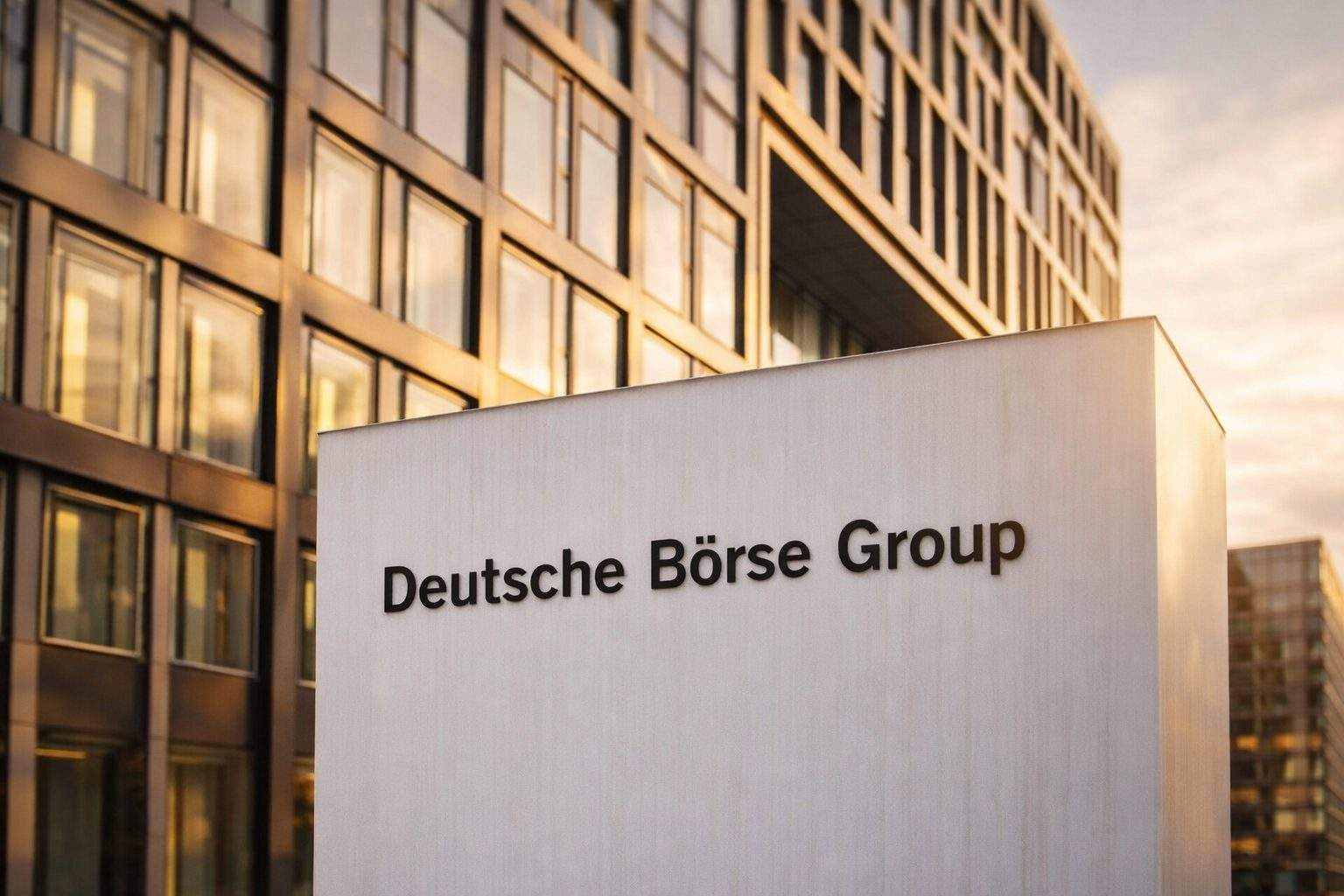
Deutsche Börse (DB1Gn.DE) finished Friday at 219.90 euros, gaining 1.62%. The exchange operator kicked off its share buyback, snapping up its own shares in the market. Investing.com
The buyback stands out right now—there aren’t many other company-triggered moves for traders to lean into ahead of the next slate of corporate updates. On quieter sessions, it has the potential to shift the mood on the tape.
The timing coincides with the stock shifting alongside the usual market drivers—rate bets, swings in volatility, shifts in risk appetite. Deutsche Börse’s bottom line hinges on trading, clearing, and data. Those segments typically pick up whenever investors step up hedging.
Friday brought a constructive tone. Europe’s STOXX 600 posted a record close, while Germany’s DAX added 0.79% following the U.S. Supreme Court’s decision to strike down President Donald Trump’s broad tariffs. Chris Beauchamp, chief markets strategist at IG, described the outcome as a “mixed bag,” noting it takes away one risk but also “increase[s] this legendary uncertainty.” Reuters
U.S. inflation data late this week pushed back on the idea of near-term rate cuts. Core PCE inflation, which strips out food and energy and is watched closely by the Fed, climbed 0.4% in December. That’s above the 0.3% economists had expected, according to a Reuters poll. The annual core rate stands at 3.0%. Barclays economist Pooja Sriram cited a spike in legal services inflation, though she flagged it as “a very volatile category.” Reuters
Europe delivered a different signal. February’s survey pointed to a stronger-than-forecast pickup in euro zone business activity, with manufacturing snapping back into expansion territory. Andrew Kenningham at Capital Economics called the figures evidence that the region is growing at a moderate clip, Germany out in front. The PMI—purchasing managers’ index—uses 50 as the dividing line; anything higher means growth. Reuters
Another rates signpost hits midweek: Eurostat is set to publish the complete January inflation figures on Feb. 25. That’s also when the ECB’s calendar puts a Governing Council non-monetary policy meeting. No rate move on deck, but investors often parse central banker gatherings for hints of changing sentiment. European Commission
Deutsche Börse’s bigger play is still its drive to expand in fund services. Back in January, the company struck a deal to acquire Allfunds for 5.35 billion euros. Jefferies analysts called the move “should be welcomed” from a strategic standpoint. Deutsche Börse expects the transaction to wrap up in the first half of 2027. Reuters
The company laid out its projections, aiming for net revenue of roughly 5.7 billion euros in 2026, not counting treasury results, and targeting EBITDA of about 3.1 billion euros—again, before treasury results. This comes after a 4% slide in fourth-quarter profit. Reuters
Rivals are looking to expand access too. London Stock Exchange Group CEO Dame Julia Hoggett said the group’s new Private Securities Market expects its inaugural deal within weeks, operating under the UK regulator’s PISCES framework—a move aimed at putting more private-company trades on an “exchange-enabled” footing. Nasdaq, for its part, already operates a private market segment, Reuters reported. Reuters
None of this lands squarely on Deutsche Börse’s results next week. Still, the focus lingers on the exchange world’s trajectory—think growing data business, the expansion into private-market infrastructure, and a shift toward fee streams that hinge on trust, not just trading volumes.
DB1 bulls face a clear risk here. Should the relief rally after the tariff ruling lose steam and volatility remain subdued, trading and clearing could slow down, with the buyback possibly acting more as a stabilizer than a real driver for the stock. On the flip side, a sudden rates shock might send trading volumes higher but could also hurt valuations.
Germany’s ifo business climate index lands next on Feb. 23 at 10:30 CET—a fresh pulse-check on sentiment and demand with the potential to jolt the DAX. The read comes ahead of several inflation prints and central-bank events on the week’s docket. ifo Institut