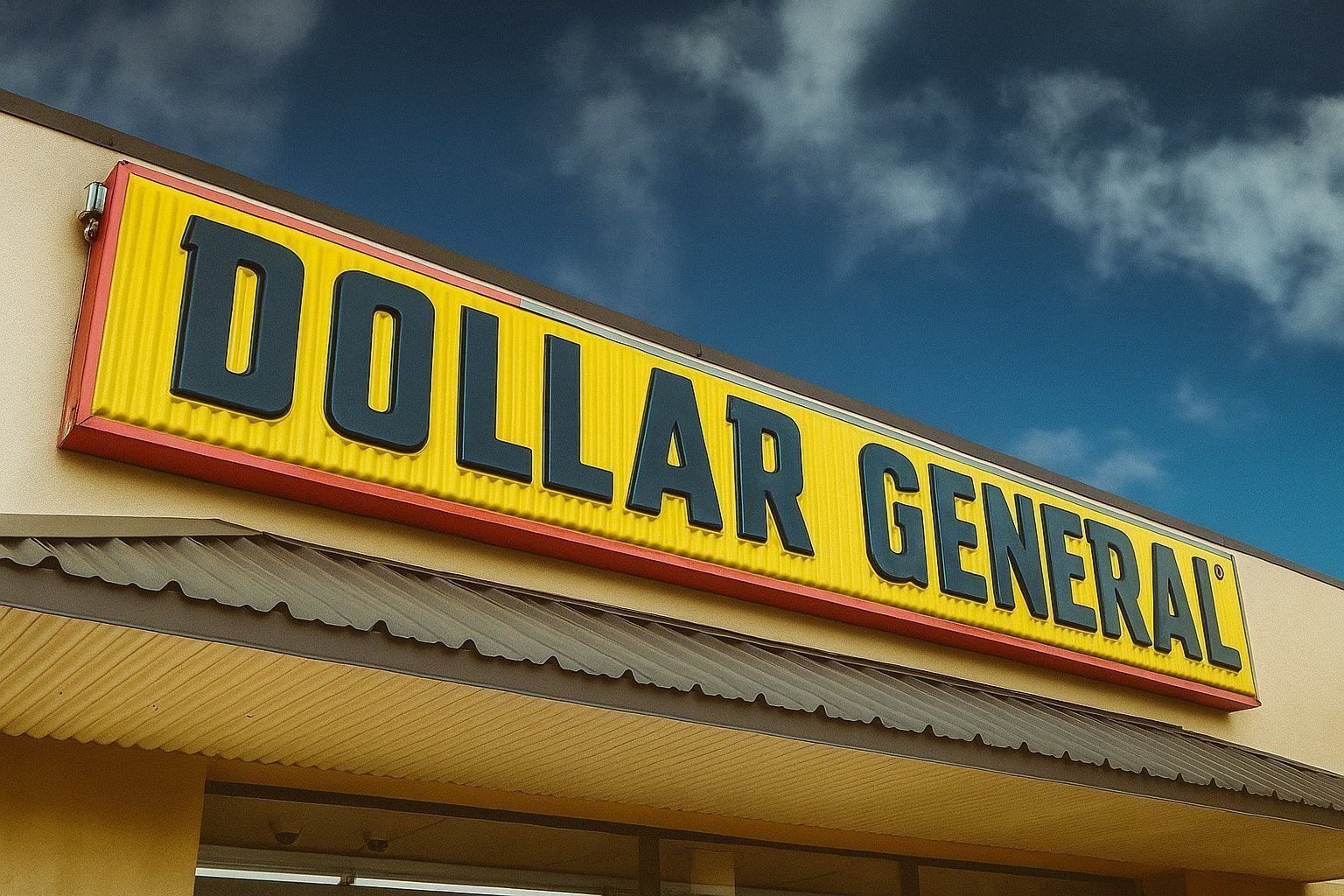
As of 7 December 2025, Dollar General (NYSE: DG) has re‑entered the market spotlight. The discount retailer’s stock has ripped higher following a strong third‑quarter 2025 earnings beat, raised guidance, and a wave of analyst upgrades, even as regulators scrutinize its pricing practices and consumers show mounting financial strain.Reuters+2Investopedia+2
DG stock closed around $132 per share on 5 December 2025, near a one‑year high and up sharply from its 2024 lows.StockAnalysis With the rally, investors are asking a simple question with a not‑so‑simple answer: what’s priced in now, and what comes next for DG stock?
DG Stock Snapshot: Price, Valuation and Momentum
- Recent price: about $132.4 at the close on 5 December 2025.StockAnalysis
- 52‑week range: roughly $66–131, putting the shares close to their yearly high.MarketBeat+1
- Market cap: roughly $28–29 billion.MarketBeat
- Valuation: DG trades on a price‑to‑earnings (P/E) ratio of about 24x and a PEG ratio near 2.7, with a low beta (~0.27), reflecting its defensive retail profile.MarketBeat+1
Simply Wall St estimates DG has risen around 75% year‑to‑date, after a brutal 2023–2024 period when earnings and sentiment deteriorated.Simply Wall St The stock has effectively re‑rated from “turnaround story” back toward “defensive growth,” which explains why much of Wall Street’s published price targets now sit below the current share price.
Q3 2025 Earnings: What Sparked the DG Stock Rally
Dollar General’s third‑quarter 2025 results (quarter ended 31 October) were the catalyst for the latest leg of the rally.
Key headline numbers:
- Revenue: around $10.6–10.65 billion, slightly ahead of analyst expectations.Investing.com+3Reuters+3Investopedia+3
- Same‑store sales (comps):+2.5%, in line with or slightly above industry growth rates.Reuters+2Investopedia+2
- Earnings per share (EPS):$1.28, versus consensus around $0.93–0.95, a beat of roughly 35%.Reuters+2Investopedia+2
The market’s reaction was emphatic:
- Shares jumped 11–14% on the day of the release, topping the S&P 500 and registering one of the index’s best single‑day gainers.Investopedia+2Investopedia+2
Guidance Hike: A Re‑Built Profit Story
Just as important as the backward‑looking numbers was Dollar General’s decision to raise full‑year 2025 guidance:
- FY25 EPS guidance: lifted to $6.30–$6.50 from $5.80–$6.30 previously.Reuters+1
- Same‑store sales growth: raised to 2.5–2.7%, from 2.1–2.6%.Reuters+1
- Net sales growth: nudged up to around 4.7–4.9% for fiscal 2025.Market Chameleon+1
Analysts highlighted that the beat and raise were powered by:
- Demand for essentials (consumables, groceries, household basics) as shoppers look for lower prices.Reuters+2Investopedia+2
- Early benefits from shrink‑reduction efforts, including changes to self‑checkout and inventory control.mediagrouponlineinc.com+1
- A “back‑to‑basics” focus after operational missteps in 2023, including better in‑stock levels and more disciplined merchandising.Reuters+2mediagrouponlineinc.com+2
Who’s Shopping at Dollar General Now?
Management and third‑party research point to an important shift in DG’s customer mix.
- DG’s core base remains low‑income households (often under $35,000 annual income) that depend on the chain for basics. The company still keeps roughly 25% of its assortment priced at or below $1 to serve this segment.Reuters+2Investopedia+2
- At the same time, CEO Todd Vasos noted “disproportionate growth” from higher‑income shoppers, as middle‑ and upper‑income households trade down to discounters for everyday items.Investopedia+2Investopedia+2
Investopedia’s reporting on the broader grocery and retail landscape backs this up:
- Middle‑income consumers are making smaller, more frequent trips and cutting discretionary purchases like snacks, meat and alcohol.
- Low‑income shoppers are even more focused on absolute basket cost, leaning heavily on low‑priced, small‑pack items.
- DG’s “$1 sections” grew sales by about 7.6% year‑over‑year last quarter, highlighting just how sensitive customers are to headline price points.Investopedia
Taken together, DG is positioned as a kind of pressure‑valve for the U.S. consumer: as economic stress rises, both lower‑ and higher‑income cohorts slide toward the yellow‑and‑black storefront.
Store Expansion, Remodels and the 11,000‑Location Opportunity
Despite slowing the pace of store growth, Dollar General is nowhere near done building.
2025–2026 Expansion Plan
- For fiscal 2025, the company plans roughly 575 new U.S. stores, plus up to 15 new stores in Mexico, along with thousands of remodels.Investopedia+1
- In 2026, new openings are expected to slow to about 450 stores, still a sizable footprint expansion but a step down from 2025.Business Insider+1
At the same time, DG is investing aggressively in remodels and relocations—about 1,620 store remodels were planned as part of its shrink‑reduction and customer‑experience strategy, especially as self‑checkout is removed from many stores.mediagrouponlineinc.com+1
11,000 Potential New Locations
On the Q3 2025 earnings call, CEO Todd Vasos made headlines by noting that Dollar General has identified roughly 11,000 potential store locations across the continental U.S., many of them in vacant real estate left behind by closing pharmacies, competitors like Family Dollar, and other retailers.Business Insider+1
This doesn’t mean DG will open 11,000 stores, but it gives management a long runway. Vasos emphasized that:
- Competitors “are really not opening a lot of stores”,
- DG doesn’t feel compelled to rush expansion,
- Yet the availability of attractive sites makes the long‑term opportunity “very bullish” from management’s perspective.Business Insider+1
Given DG already operates over 20,000 stores in 48 states—more locations than any other U.S. retailer—the possibility of thousands more locations raises questions about market saturation and cannibalization, but it also underscores DG’s ambitions to dominate small‑box discount retail.The Guardian+1
Operational Changes: Fighting Shrink and Cleaning Up Stores
Shrink—the industry term for inventory losses due to theft, damage and errors—has been one of DG’s biggest headaches.
In 2024, the company began a major self‑checkout reversal:
- DG announced plans to eliminate self‑checkout in the “vast majority” of its stores, keeping it only in a limited number of high‑volume locations.
- By mid‑2024 it had already removed self‑checkout from about 12,000 of its more than 20,000 stores.mediagrouponlineinc.com
Alongside this, DG is:
- Removing high‑shrink SKUs,
- Boosting front‑end staffing,
- Tightening supply chain processes and deliveries,
- Increasing focus on store manager retention.mediagrouponlineinc.com+1
These moves are designed to reduce shrink and improve customer experience, even if they raise labor costs in the short term. Analysts see the early impact in improved margins and more stable same‑store sales in 2025.Reuters+2mediagrouponlineinc.com+2
Valuation and Forecasts: What Wall Street Thinks About DG Stock
Despite the strong rally, the analyst picture is more nuanced than the price action might suggest.
Consensus Ratings and Targets
Different data providers show slightly different snapshots, but the broad picture is:
- Consensus rating: “Buy” or “Hold/Buy leaning”, depending on the platform.
- StockAnalysis: 22 analysts, consensus “Buy”, average 12‑month price target $123.68 (about 6.6% below the current price), with a range of $80–$143.StockAnalysis
- MarketBeat: consensus rating “Hold”, with an average price target around $123.6, also below current trading levels, and a mix of 1 Strong Buy, 11 Buy, 14 Hold, 1 Sell.MarketBeat
- Public.com aggregates 20 analysts at a “Buy” consensus and a 2025 price prediction near $125.35.Public
Recent notable target moves:
- Morgan Stanley: raised DG’s price target from $125 to $135, rating “equal weight”, implying only low‑single‑digit upside from recent prices.MarketBeat
- Jefferies: lifted its target from $130 to $142 with a “Buy” / “Strong Buy” stance.GuruFocus+1
- Oppenheimer: raised its target to $145 with an “outperform” rating, suggesting roughly 9% upside from recent levels.MarketBeat
- Truist and Piper Sandler: moved targets into the $129 range while maintaining Hold/neutral ratings.StockAnalysis+1
In plain language:
- Analysts broadly like DG’s recovery, but
- The stock price has run ahead of the average target,
- So many houses are shifting from “deep value” framing to “solid but fairly‑valued defensive” framing.
Earnings and Revenue Forecasts
Looking beyond 2025, analyst consensus (via StockAnalysis) anticipates:
- FY2025 revenue: about $43.8 billion, up ~7.8% from 2024.
- FY2026 revenue: around $45.6 billion, up another ~4.2%.
- FY2025 EPS: about $6.35, up ~24% from 2024’s compressed $5.11.
- FY2026 EPS: roughly $6.95, implying ~9% EPS growth.StockAnalysis
This profile—mid‑single‑digit sales growth, high‑single‑digit EPS growth, defensive category, and deep national footprint—is exactly the kind of setup that supports mid‑20s P/E multiples in a world where investors are paying up for stable cash flows. The question is whether growth and margins can keep justifying that multiple as macro conditions evolve.
Fundamental Valuation: Is DG Stock Expensive or Undervalued?
One of the more interesting recent analyses comes from Simply Wall St, which looked at DG through multiple valuation lenses:Simply Wall St
- Discounted Cash Flow (DCF):
- They estimate DG’s intrinsic value at around $175 per share, based on projected free cash flows out to 2030.
- That implies the stock could be roughly 24% undervalued relative to recent prices near $132.
- P/E vs peers:
- DG trades at about 22–24x earnings, slightly above the consumer retail average near 21x and peers around 20x.
- On this metric, their “fair ratio” approach suggests DG may be modestly overvalued relative to its growth profile.
Their conclusion is essentially:
On cash‑flow assumptions, DG looks cheap. On simple earnings multiples, DG looks a bit rich.
That tension matches the broader market narrative: long‑term DG bulls can reasonably argue that the market is still underpricing a normalized margin structure and multi‑year growth runway; skeptics can argue that a lot of the turnaround and discount‑retail boom is already baked into the share price.
Controversies and Risks: Pricing Scrutiny and Legal Overhang
Investors in DG can’t just look at comps and EPS; they also have to weigh rising regulatory and reputational risk, especially around price integrity.
A major Guardian investigation in December 2025 found that Dollar General and Family Dollar often charge more at checkout than the prices advertised on shelves, especially in low‑income communities. Key findings for DG included:The Guardian
- Dollar General stores failed more than 4,300 government price‑accuracy inspections in 23 states since January 2022.
- Error rates in some stores topped 70–80%, far above state thresholds.
- DG has settled with multiple states, including Colorado, New Jersey, Vermont, Wisconsin and Ohio, over alleged deceptive pricing practices.
- Shareholder lawsuits allege that understaffing, poor inventory control and overcharging distorted both customer experience and the company’s portrayal of its financial health.
DG says it is committed to accurate pricing and that perfect alignment between shelf and register prices is impossible in practice. But regulators, attorneys general and consumer‑advocacy groups are increasingly focused on the issue—especially since the customer base is overwhelmingly low‑income.The Guardian+1
For DG stockholders, this introduces several risks:
- Fines and settlements may continue, although they’ve been relatively modest so far compared to DG’s scale.
- Mandatory operational changes (more staff, more inspections, better labeling systems) could weigh on margins.
- Reputational damage among its own customer base—those least able to absorb small overcharges—could hurt traffic or invite heavier regulation.
This risk is not currently front‑and‑center in most analyst price targets, which tend to focus on margins, comps and store growth. That makes it an important wild card in the DG story.
Macro Backdrop: Stressed Consumers, Discount Winners
The macro environment continues to favor discounters like DG—for now.
- Grocers like Kroger report that middle‑income households are increasingly strained, making smaller trips and cutting discretionary items.Investopedia
- Low‑income shoppers are focused purely on keeping total spend down, even if that means paying more per unit for small packs. DG’s micro‑packaged and $1‑priced items align directly with that behavior.Investopedia+1
- Affluent shoppers, meanwhile, are more frequently visiting dollar stores and discount chains, creating a broader customer funnel for DG and its peers.Investopedia+2Investopedia+2
In this K‑shaped economy, Dollar General acts as both a pressure‑valve for the lower leg of the “K” and a bargain‑hunting destination for the upper leg. That combination is a big part of the bull case for DG stock as a defensive‑growth play in a slower, more volatile economic environment.AInvest+1
DG Stock Outlook: What to Watch Into 2026
Putting it all together, here’s how the DG setup looks going into 2026:
Positives for DG stock
- Earnings momentum: clear Q3 beat and higher FY25 guidance, with analysts modeling further EPS growth in 2026.Reuters+1
- Defensive demand: essentials‑heavy mix and low prices appeal across income tiers as consumers remain stressed.Investopedia+1
- Long runway for growth: thousands of potential locations plus heavy remodel activity, including international expansion into Mexico.Business Insider+2FOX 13 Tampa Bay+2
- Operational clean‑up: shrink‑reduction efforts and back‑to‑basics strategy appear to be stabilizing stores and margins.mediagrouponlineinc.com+1
Key risks and debates
- Valuation tension: DG trades near the high end of historical and peer P/E ranges, while average Street price targets sit below the current share price—even as some firms see further upside.MarketBeat+1
- Regulatory and legal overhang: ongoing scrutiny of pricing practices and store conditions could lead to more fines, operational constraints or reputational damage.The Guardian
- Saturation / cannibalization risk: with 20,000+ stores and thousands more planned, DG must avoid simply shifting sales from one location to another.The Guardian+2Business Insider+2
- Consumer fatigue: DG benefits from stressed shoppers, but there’s a limit—if low‑income customers simply run out of spending power, traffic could flatten or decline despite the value proposition.
For now, DG stock sits at the intersection of macro‑driven discount shopping trends and company‑specific execution risk. Bulls see a repaired franchise with still‑underappreciated cash‑flow power; bears see a fully‑valued retailer with mounting political and regulatory headaches.