
Today: 13 May 2026
Did the New York Times Really Unmask Satoshi Nakamoto? Adam Back Denies Bitcoin Founder Claim as Doubts Persist
13 April 2026
2 mins read

Did the New York Times Really Unmask Satoshi Nakamoto? Adam Back Denies Bitcoin Founder Claim as Doubts Persist

LONDON, April 13, 2026, 15:17 BST

Another burst of reporting over the weekend and into Monday put British cryptographer Adam Back right back in the Satoshi Nakamoto spotlight. Still, the headlines lacked what matters: definitive proof. Back continues to reject claims tying him to Satoshi, following last week’s New York Times piece naming him the leading suspect so far.

That carries extra weight these days. Since U.S. regulators greenlit spot bitcoin ETFs in January 2024, bitcoin has dug in further with institutional investors. On Monday, the token hovered near $71,580; at that price, the roughly 1.1 million coins often linked to Satoshi would fetch about $78.7 billion.

The divide is obvious now. In just the last two days, Yahoo Finance pushed out both explainer and profile stories focused on Back. But on Monday, Tyler Cowen, writing for The Free Press, said the new case only gives “plausible hints—but no certainty.” Some investors and analysts, for their part, say the network’s scale means its founder’s identity doesn’t really matter anymore. Yahoo Finance

Back isn’t some peripheral figure. As Blockstream’s co-founder and CEO, he’s also the creator of Hashcash—the proof-of-work mechanism referenced in Bitcoin’s 2008 white paper. That proof-of-work system underpins the puzzles miners crack to safeguard the network and mint new coins.

Back responded to the New York Times piece on X, writing, “i’m not satoshi.” He pointed to his years working in cryptography, privacy, and digital cash as the reason for any similarities with Satoshi’s style or priorities. Back has maintained that Bitcoin is stronger precisely because there’s no public founder. X (formerly Twitter)

Follow-up reports have pointed to writing-pattern analysis and the stretch when Back kept quiet publicly in Bitcoin’s early days as the foundation of the case against him. After a year and a half investigating, Yahoo Finance quoted reporter John Carreyrou as “99.5%” confident he’d found the right person. The Times

Not everyone wants to make that leap. Aggelos Kiayias, who leads the Blockchain Technology Laboratory at the University of Edinburgh, called the link between Back’s research and Bitcoin “a clear connection,” but refrained from naming Back as Nakamoto. Sarah Meiklejohn at University College London pointed out that most users don’t pay much attention to protocol debates—ultimately, she said, “bitcoin stands by itself.” The Independent

Proof remains the biggest hurdle. Frederic Fosco, co-founder at bitcoin software outfit OP_NET, pointed out that “any identification will never be believed by everyone” unless someone actually signs a message using the original cryptographic keys linked to Satoshi’s wallets. That sort of digital signature is what many in the Bitcoin community would call definitive. The Independent

Markets haven’t reacted much. According to MarketWatch, a number of investors see Satoshi’s identity as mostly immaterial—unless it turns out to be a government official, or someone poised to move the coins. Lately, price moves seem more connected to geopolitical events than any buzz over Back’s name in the press.

This isn’t the first time the guessing game has gone sideways. Earlier speculation fixated on Nick Szabo, Hal Finney, and Peter Todd. Newsweek, back in 2014, tried to pin the name on Dorian Nakamoto — that unravelled quickly. Then there’s Craig Wright: his years-long insistence he’s Satoshi met a dead end in London’s High Court in 2024, with the judge later calling him out for having lied “extensively and repeatedly” to the court. The Independent

That backstory keeps things open-ended, despite all the speculation. Satoshi went silent back in 2011. Back insists he isn’t the person behind the pseudonym. And there’s still no signed message from those original keys. So, for now, the oldest riddle in Bitcoin is still hanging.

Stock Market Today

  • Nokia Partners with Nvidia and Anduril to Boost AI Network and Defense Technology
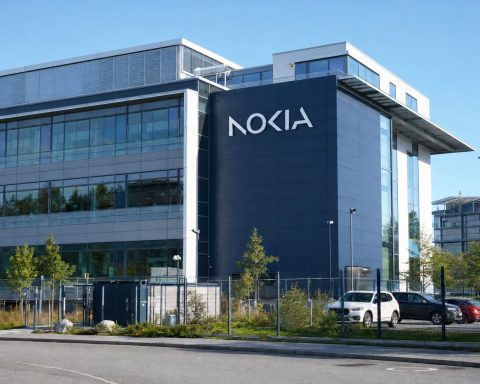
    May 13, 2026, 3:11 PM EDT. Nokia (NYSE: NOK) is transforming from a traditional telecom provider into a key player in AI-native networking. The company recently secured a partnership with Anduril and a $1 billion investment from Nvidia (NASDAQ: NVDA) to develop AI-powered radio access networks (RAN) for 5G and 6G. This collaboration integrates Nvidia's GPUs and AI computing platforms into Nokia's telecommunications infrastructure, reducing latency by processing data at the edge. Nokia's AI and cloud-related sales jumped 49% year-on-year in Q1 2026, with new orders hitting 1 billion euros. The firm raised its AI and cloud growth forecast to a 27% CAGR through 2028, driven by hyperscale data center demand. Nokia's pivot positions it not just as a telecom supplier but as a critical enabler of AI infrastructure and defense technology expansion.

Latest articles

Nu Holdings Stock Slides Before Nubank Earnings. The Q1 Bar Is High

Nu Holdings Stock Slides Before Nubank Earnings. The Q1 Bar Is High

13 May 2026
SAO PAULO, May 13, 2026, 16:02 BRT Nu Holdings shares fell on Wednesday as investors waited for Nubank’s first-quarter report, a test of whether the Brazilian digital lender can keep expanding profit while credit growth and funding costs stay under scrutiny. The company, which trades as NU in New York, is scheduled to publish results after the market closes on Thursday. Its investor-relations site lists a conference call for 6 p.m. Eastern time, or 7 p.m. in Brasília. The timing matters. Nu ended 2025 with fast customer growth and record profit, but the stock sold off after the last report
Palantir Stock Slides as Zelenskiy Meeting Puts War-AI Bet in Focus

Palantir Stock Slides as Zelenskiy Meeting Puts War-AI Bet in Focus

13 May 2026
Palantir shares fell 4.4% to $129.97 Wednesday as CEO Alex Karp met President Volodymyr Zelenskiy in Kyiv to discuss expanding AI use in Ukraine’s war effort. Kyiv’s Brave1 Dataroom project, launched with Palantir, is training AI models to intercept Russian drones. Russia fired at least 800 drones at Ukraine on Wednesday, killing six. Palantir’s U.S. government and commercial revenue surged in the first quarter.
Why Grab Holdings Stock Is Back Under Pressure After a Big Q1 Beat

Why Grab Holdings Stock Is Back Under Pressure After a Big Q1 Beat

13 May 2026
Grab shares fell 1.1% to $3.60 in New York after first-quarter revenue beat estimates, rising 24% to $955 million. Profit jumped to $120 million from $10 million a year earlier. Investors weighed strong results against Indonesia’s new 8% ride-hailing commission cap. Grab kept its 2026 revenue and adjusted EBITDA outlook unchanged.

Popular

QuantumScape Stock Jump: Eagle Line Puts $11 Million Behind Battery Bet

QuantumScape Stock Jump: Eagle Line Puts $11 Million Behind Battery Bet

13 May 2026
QuantumScape shares closed up 4.9% at $8.42 Tuesday and rose further after hours, following news of $11 million in first-quarter customer billings and progress at its Eagle Line pilot facility. The company reported a $100.8 million GAAP net loss for the quarter and continues to operate at a loss while ramping solid-state battery production.
Stock Market Today: US Futures Slide Before the Bell as Oil Tops $100; Goldman Falls, Exxon and Baker Hughes Rise
Previous Story

Stock Market Today: US Futures Slide Before the Bell as Oil Tops $100; Goldman Falls, Exxon and Baker Hughes Rise

IBM Stock Gets Citi Buy Call Despite Worst Start Since 2002 as BofA Cuts Target Ahead of Earnings
Next Story

IBM Stock Gets Citi Buy Call Despite Worst Start Since 2002 as BofA Cuts Target Ahead of Earnings

Go toTop