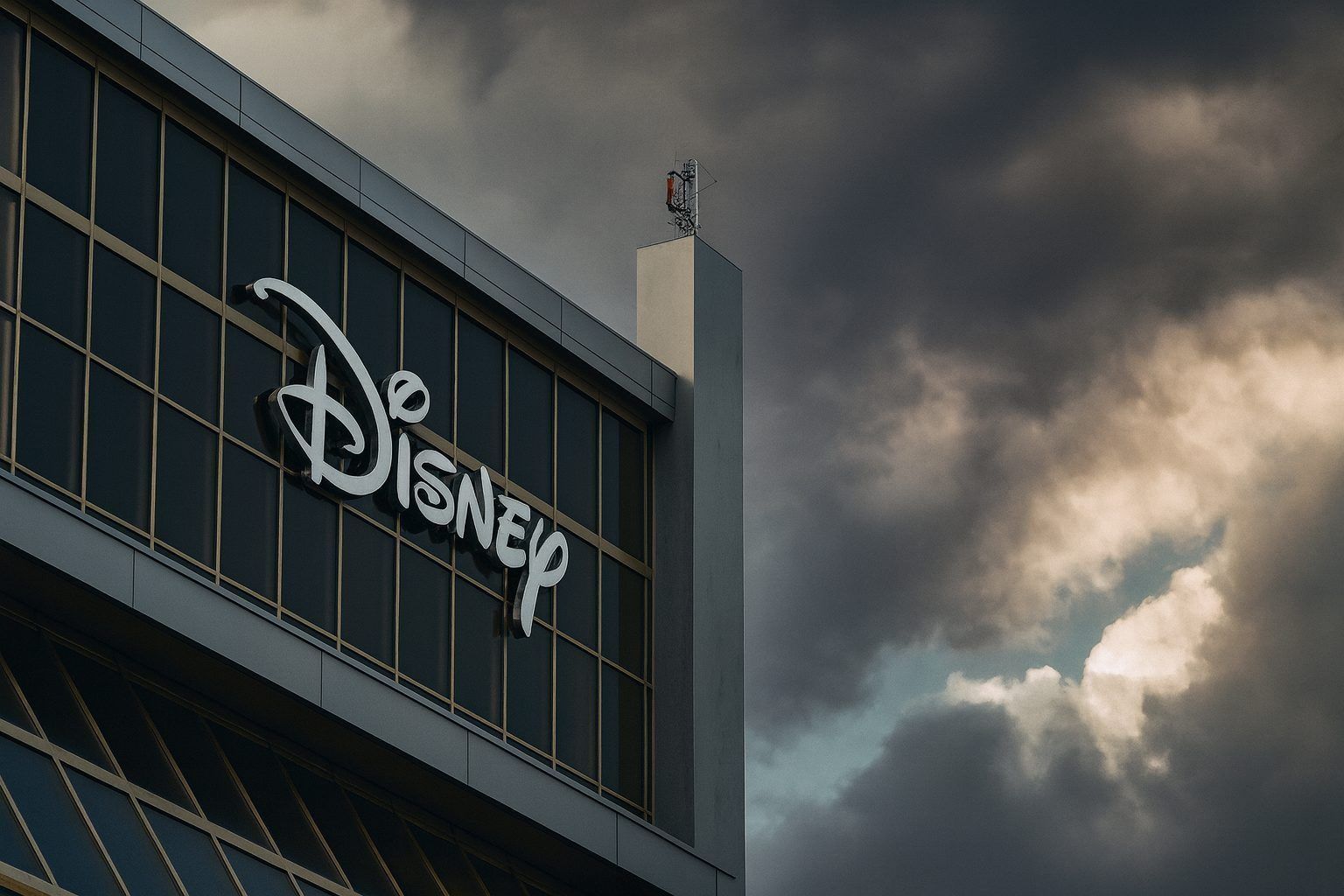
Disney stock (NYSE: DIS) was higher in Friday trading, extending a rally sparked by a headline-grabbing move into generative AI. As of Friday, December 12, 2025, shares traded around $112.75 after opening near $111.79 and moving between roughly $111.59 and $113.32 during the session.
The jump follows Thursday’s surge after Disney unveiled a $1 billion equity investment in OpenAI and a licensing deal that brings Disney’s characters to OpenAI’s Sora video generator—while Disney simultaneously escalated a separate fight over AI copyright, sending Google a cease-and-desist letter alleging infringement. Reuters+2Axios+2
Below is a roundup of the big Disney stock news, the latest company outlook, and what analysts and technical indicators are signaling as of 12/12/2025.
What’s moving Disney stock on December 12, 2025
Disney’s $1 billion OpenAI investment and Sora licensing pact
Disney’s biggest near-term catalyst is its newly announced partnership with OpenAI. The deal pairs a $1 billion equity investment with a three-year licensing agreement that allows Sora and ChatGPT Images to generate content using licensed Disney characters (with guardrails). Disney also becomes a major OpenAI customer, deploying ChatGPT internally and working on new consumer experiences that could touch Disney+. Reuters+1
Key elements investors are focusing on:
- A new distribution and engagement lever for Disney+: Reuters and the Los Angeles Times report Disney expects “fan-inspired” short-form content to become part of the Disney+ ecosystem, potentially turning user-generated video into a platform feature rather than a competitive threat. Reuters+1
- Strict talent protections: The agreement excludes talent likenesses and voices, aiming to reduce one of the biggest labor flashpoints in AI media. Reuters+1
- More than a tech headline: The market is reading this as Disney trying to monetize and police its IP in the AI era—choosing an “authorized, paid” pathway for fans and creators while challenging unauthorized use elsewhere. Reuters+2Axios+2
The Google cease-and-desist adds another layer to the AI story
Disney’s AI posture isn’t just partnership—it’s also enforcement.
- Axios reports Disney sent Google a cease-and-desist letter alleging Google infringed Disney works to train and develop generative AI models without compensation; the letter was sent by attorney David Singer and includes claims that Google’s AI tools “free ride” on Disney IP. Axios
- Reuters separately reported the cease-and-desist, citing CNBC’s reporting. Reuters
- The Verge adds Disney’s letter calls out Google AI products (including Gemini and others), while Google responded by pointing to its longstanding relationship with Disney and referenced tools like YouTube’s Content ID and other copyright controls. The Verge
For Disney stock, the enforcement angle cuts both ways: it underscores the value of Disney’s character library, but it can also raise legal costs and heighten regulatory scrutiny around AI licensing, copyright, and consumer safety.
Labor unions react: why it matters for DIS investors
Hollywood labor concerns remain a real overhang on any large-scale generative AI rollout.
TheWrap reports that the Writers Guild of America (WGA) and SAG-AFTRA issued statements reacting to the Disney–OpenAI deal, saying they will monitor implementation and seek more details. TheWrap also notes the deal’s character limits (excluding prominently featured live-action likenesses while allowing “masked, animated or creature characters”), and that a curated selection of fan videos is expected to reach Disney+ next year. TheWrap
From an investor perspective, this is a key point: Disney’s AI upside may depend on how effectively it can scale a new kind of fan content without triggering labor conflict, brand-safety incidents, or reputational backlash.
Fundamentals check: the latest earnings and Disney’s official 2026 outlook
While the OpenAI deal drove the latest move, Disney’s own operating trajectory remains the core valuation story—especially streaming profitability, parks performance, and ESPN’s evolution.
What Disney reported for fiscal 2025
In its fiscal 2025 results (released November 13, 2025), Disney reported:
- Q4 revenue of $22.5 billion, and full-year revenue of $94.4 billion The Walt Disney Company
- Q4 diluted EPS of $0.73 (up from $0.25 a year earlier) and Q4 adjusted EPS of $1.11; full-year diluted EPS of $6.85 and full-year adjusted EPS of $5.93 The Walt Disney Company
- A notable streaming profitability milestone: Direct-to-Consumer operating income increased to $352 million in Q4 The Walt Disney Company
- 196 million Disney+ and Hulu subscriptions at quarter-end (and 132 million Disney+ subscribers) The Walt Disney Company
- Experiences remained the profit engine, with record full-year Experiences segment operating income of $10.0 billion The Walt Disney Company
Reuters’ coverage of that earnings cycle highlighted the market tension: streaming and parks improvement versus ongoing pressure in traditional TV economics. Reuters
Disney’s guidance: what the company is forecasting for fiscal 2026 and beyond
Disney’s earnings release also contained several forward-looking targets that matter for the DIS investment narrative:
- Fiscal 2026: Disney guided for double-digit adjusted EPS growth versus fiscal 2025, and also projected double-digit Entertainment segment operating income growth (weighted to the second half). The Walt Disney Company
- Disney expects Entertainment DTC SVOD operating margin of 10% for fiscal 2026. The Walt Disney Company
- Capital allocation: Disney said it is doubling its share repurchases target to $7 billion (vs fiscal 2025) and declared a $1.50 per share cash dividend, paid in two $0.75 installments in January 2026 and July 2026. The Walt Disney Company
- Cash and investment: Disney guided to $19 billion cash provided by operations and $9 billion capex for fiscal 2026, alongside $24 billion in content investment across Entertainment and Sports. The Walt Disney Company
These corporate forecasts are important context for today’s AI headlines: the OpenAI partnership may be seen as an accelerant to engagement and monetization, but the investment case still hinges on Disney delivering the margin and cash-flow targets it has already put on the table.
Wall Street view: consensus targets and what “upside” looks like now
Analyst price targets and ratings
A widely tracked snapshot from MarketBeat shows:
- Consensus rating: “Moderate Buy”
- Ratings breakdown: 18 Buy, 8 Hold, 1 Sell (based on 27 analyst ratings)
- Average 12‑month price target:$134.41, implying roughly 19% upside from around the $112 area MarketBeat
It’s worth treating price targets as directional rather than precise, but the headline takeaway for readers is straightforward: the Street’s consensus still sees upside, even after this week’s rally.
How commentators are framing the OpenAI move
Several market write-ups published into Friday emphasize that the OpenAI partnership adds a potential new long-term growth layer—especially if Disney successfully turns short-form, fan-driven content into a controlled, monetizable format inside Disney+. Investing.com+1
Meanwhile, Barron’s highlighted Disney among a set of stocks it views as attractive for 2026, framing the call as part of a more value-oriented approach after strong broader-market gains—though the thesis depends on execution and a durable profit outlook. Barron’s
Technical picture: momentum is strong, but some signals look stretched
Technical signals on Disney stock strengthened after Thursday’s jump.
- Investing.com’s technical summary showed “Strong Buy” signals as of Dec 12, 2025 (3:30 PM GMT), while also flagging RSI(14) at ~77.6 (overbought)—a classic sign that momentum is strong but the stock may be short-term extended. Investing.com
- ChartMill, by contrast, characterizes DIS as “extended to the upside” and suggests waiting for consolidation; it also lists a support zone around ~$101.94–$106.75 and resistance zones including ~$114.78–$116.32 and higher levels beyond that. ChartMill
Put together, the technical message is mixed in a way investors often see after big news-driven moves: trend improves, but near-term pullback risk rises.
ESPN and sports strategy: a quieter catalyst investors still watch
Beyond AI, ESPN’s transition remains a central long-term question for Disney’s valuation—because Sports profitability and the trajectory of the pay-TV bundle still matter.
Earlier this week, The Desk reported Disney shut down ESPN3 and shifted distribution toward ESPN Unlimited, positioning the newer offering as a more comprehensive package for ESPN programming (and noting impacts for certain pay-TV and streaming bundle configurations). TheDesk.net
This is not the headline driver of Friday’s trading—but for longer-horizon investors, it is part of the “how does Disney monetize sports in a post-cable world?” storyline that frequently moves DIS around earnings and major rights negotiations.
Risks to watch after the OpenAI pop
Even with bullish headlines, Disney stock still carries several identifiable risks:
- Execution and product risk: Turning “fan-inspired” AI content into meaningful Disney+ engagement (and revenue) is not guaranteed—and could backfire if quality control or guardrails fail. Reuters+1
- Legal and regulatory risk: The Google dispute highlights the broader AI copyright battlefield; outcomes could affect licensing economics across the sector. Axios+2The Verge+2
- Labor relations risk: Union scrutiny may intensify if AI is perceived as displacing creative labor or exploiting protected works. TheWrap+1
- Core business cyclicality: Parks and experiences are highly profitable but can be sensitive to consumer spending trends; streaming remains fiercely competitive; and linear TV headwinds haven’t disappeared. The Walt Disney Company+1
Bottom line for Disney stock today
Disney stock’s December 12 move is being driven by a clear market narrative: Disney is trying to “license and lead” in AI rather than purely litigate and resist. The $1 billion OpenAI investment and Sora licensing pact offers a plausible path to new engagement formats and IP monetization—especially if Disney+ becomes a destination for curated fan-made short-form content. Reuters+1
But the longer-term performance of DIS will still come down to the fundamentals Disney has already laid out: streaming profitability progress, experiences durability, the ESPN transition, and meeting its fiscal 2026 targets for earnings growth, cash flow, repurchases, and dividends. The Walt Disney Company