
New York, Jan 23, 2026, 06:00 ET — Premarket
U.S. stock index futures dipped on Friday, with Dow Jones futures shedding 110 points, or 0.2%. Intel’s underwhelming earnings cast a shadow over Wall Street’s recent two-day rally. S&P 500 futures dropped 15 points, while Nasdaq 100 futures lost 90 points. Investors are now focused on January’s business-activity surveys and the University of Michigan’s consumer sentiment data due later this morning.
The early drop is notable since the market’s been reacting strongly to headlines. Next week steps up the challenge with the Federal Reserve’s first policy meeting of the year alongside a flood of megacap earnings. Investors also want clearer signals on a U.S.-Europe de-escalation linked to Greenland, following tariff fears that rattled markets earlier this week.
The Dow Jones Industrial Average jumped 306.78 points, or 0.63%, closing at 49,384.01 on Thursday. The S&P 500 rose 0.55%, and the Nasdaq added 0.91%. Despite these gains, the S&P 500 and Nasdaq were still down 0.4% for the week, with the Dow holding steady. This came after President Donald Trump dropped tariff threats against European allies and strong U.S. economic data reinforced hopes of a “resilient economy.” “You do not know whether it is Christmas morning or Friday the 13th,” remarked Gregg Abella, CEO of Investment Partners Asset Management. Reuters
Intel raised concerns after warning it can’t fully meet demand for server chips powering AI data centers, despite running factories at full tilt. The company projected first-quarter revenue between $11.7 billion and $12.7 billion, falling short of the $12.51 billion consensus. Adjusted earnings are expected to break even. Shares tumbled about 13% in after-hours trading. CEO Lip-Bu Tan admitted, “In the short term, I’m disappointed that we are not able to fully meet the demand in our markets.” Finance chief David Zinsner added that customers “were all a little bit caught off guard” by the sudden AI-driven surge. Reuters
Earnings season is revealing cracks in defensive sectors that often influence the Dow’s mood. Abbott projected current-quarter profits below estimates after missing revenue targets. CEO Robert Ford noted that “growth in nutrition is going to be challenged,” as the company grapples with price pressures and softer demand in certain areas. Bernstein analyst Christian Moore highlighted the “potential for a negative aura on formula usage,” citing increased scrutiny of infant formula following batch recalls over contamination concerns. SRN News
Consumer staples grabbed attention after McCormick flagged that tariffs and rising commodity costs will hit margins in 2026, estimating an extra $50 million in tariff-related expenses. CEO Brendan Foley noted, “Inflation, commodity cost volatility, and the macro-environment created incremental costs that impacted our margin.” Deutsche Bank’s Steve Powers cautioned the stock might see short-term headwinds despite bullish sales forecasts linked to its Mexico deal. Reuters
Bulls face a clear risk: the trade truce driving Wednesday and Thursday’s rally might not last. On Thursday, Trump mentioned a Greenland deal was still under negotiation, leaving investors uneasy about a potential policy shift. That uncertainty hits cyclical Dow stocks hardest.
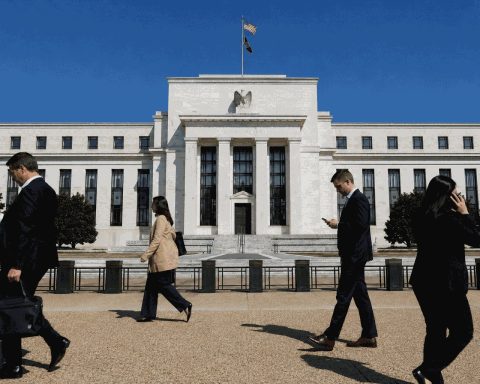
Traders are focused on the Fed’s January 27–28 meeting, with the rate decision expected on January 28 and a press conference at 2:30 p.m. ET. For the Dow, signals on interest rates and how much the market can shrug off earnings shortfalls will shape the mood heading into the end of the month.
Related articles: NASDAQ:INTC