
New York, May 21, 2026, 12:09 EDT
- The Dow hovered near the 50,000 level on Thursday, swinging as gains in oil and higher Treasury yields cooled risk appetite.
- Brent crude moved higher as investors questioned progress on U.S.-Iran talks, bringing inflation worries back into focus.
- Walmart shares dropped after the company gave a cautious outlook. Nvidia posted strong results but did not kick off another AI rally.
Dow trades near 50,000 as Nvidia beat falls flat, oil jumps
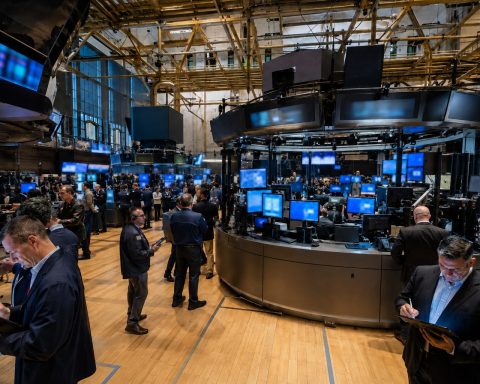
The Dow Jones Industrial Average hung near 50,000 on Thursday, swinging between gains and losses after giving up some of Wednesday’s advance. Oil prices climbed. Nvidia’s latest earnings beat did little to help the broader market. The S&P 500 and Nasdaq were down in early trading, while the Dow kept moving around the flatline.
Stocks pushed higher Wednesday as bonds eased and crude fell back. The Dow finished up 645.47 points, or 1.3%, at 50,009.35. The S&P 500 gained 1.1% and the Nasdaq climbed 1.5%, according to AP data.
Stocks slipped after Brent crude climbed 2.2% to $107.32 a barrel, Reuters said, as a report pointed to Iran’s Supreme Leader telling officials not to send near-weapons-grade uranium overseas. The yield on the 10-year Treasury rose to 4.609%. Higher yields can pressure stocks because bonds look better and borrowing costs go up.
Dow was down 24.51 points, or 0.05%, at 49,987.34 just before 10 a.m. ET, with the S&P 500 losing 0.30% and the Nasdaq Composite slipping 0.46%, according to Reuters. By 10:30 a.m. Eastern, the Dow moved 37 points higher, AP reported, but the S&P 500 was still down 0.3% and the Nasdaq down 0.6%. The moves kept trading mixed.
Walmart pulled down the blue-chip average. Shares dropped after Walmart kept its annual sales and profit guidance steady. This was despite first-quarter net sales rising 7.1% to $175.7 billion and operating income up 5% to $7.49 billion. “An affirmed outlook for the full year simply was not enough,” said Bryan Hayes, stock strategist at Zacks Investment Research. Reuters
Walmart felt pressure in a wider retail selloff. CFO John David Rainey said customers could see “somewhat higher retail price inflation” if costs stay up. The company reported U.S. comparable sales up 4.1%, with global e-commerce climbing 26%. Target raised its annual sales outlook but cautioned on a hard macro environment. Reuters
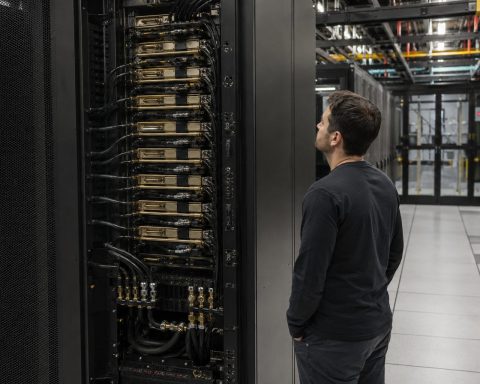
Nvidia didn’t give bulls much to work with. The chipmaker posted record first-quarter revenue of $81.6 billion, an 85% jump year over year. Second-quarter revenue was guided at $91 billion, give or take 2%. The board signed off on another $80 billion in share buybacks. CEO Jensen Huang said AI factory construction was “accelerating at extraordinary speed.” Shares fell. Investors shrugged off the big quarter. NVIDIA Newsroom
Investors are talking more about Nvidia’s competition. Reuters reported that some expect pressure to come from both major tech clients and chipmakers like Intel and Advanced Micro Devices as the AI trade draws in more players. Nvidia’s earnings are still solid.
Initial jobless claims dropped by 3,000 to 209,000 for the week ended May 16, coming in under the 210,000 forecast in a Reuters poll. The new numbers leave the Federal Reserve with little reason to push sooner on easier policy. Matthew Martin, senior U.S. economist at Oxford Economics, said the labor market still has “enough stability” for the Fed to hold steady on rates. Reuters
Manufacturing improved in May, though it didn’t look strongly bullish. The S&P Global flash U.S. manufacturing PMI came in at 55.3, up from 54.5 in April. Above 50 signals expansion. Chris Williamson, chief business economist at S&P Global Market Intelligence, said second-quarter annualized growth could struggle to top 1%.
Oil, yields, and the Fed could all turn on stocks at the same time. If the Strait of Hormuz stays blocked, higher energy and input costs might keep inflation up, send Treasury yields higher, and lead investors to expect a tougher Fed. That’s a tougher market for expensive AI stocks and consumer names hit by fuel and food prices.
U.S. equity markets traded normal hours Thursday. Memorial Day, Monday, May 25, will be the next stock-market holiday. Bond markets will close early at 2 p.m. ET Friday going into the long weekend.
Related articles: NASDAQ:NVDA