DroneShield Limited (ASX:DRO) has just logged another wild trading day on the ASX, with the counter‑drone specialist’s share price falling sharply after a new equity issuance – only 24 hours after it was one of the index’s top gainers.
DroneShield share price today (11 December 2025)
As of the close on Thursday, 11 December 2025:
- Closing price:A$2.11 per share
- Daily move:‑6.64% (down from A$2.26 at Wednesday’s close) StockInvest+1
- Intraday range: roughly A$2.05 – A$2.36 StockInvest+1
- Turnover: around 24 million shares, worth about A$50.5 million StockInvest
Short‑term performance:
- The stock has fallen in 6 of the last 10 sessions, yet it’s still about 5.5% higher over the past two weeks. StockInvest
- Over 12 months, DroneShield remains an enormous winner, up around 230–235%, despite a ~70–75% drop from its October peak near A$6.70. Simply Wall St+1
At today’s price, third‑party data providers estimate DroneShield’s market capitalisation at roughly A$1.7–2.0 billion, depending on whether they reference yesterday’s close or today’s. TipRanks+1
Why DroneShield shares fell today
Small equity issue, big reaction
The immediate catalyst for today’s sell‑off was news that DroneShield will issue 50,000 new fully‑paid ordinary shares on the ASX under code DRO. TipRanks
- TipRanks’ automated newsdesk notes that the issuance is intended to “strengthen DroneShield’s market position and support growth”, describing it as part of a broader push to bolster the capital structure. TipRanks
- Primary Ignition reports that the market reacted negatively, with the share price falling 6.64% to A$2.11, a sharp reversal from Wednesday’s 16% rally. Primary Ignition+1
In pure dilution terms, 50,000 shares are tiny compared with an implied share count of hundreds of millions (based on a market cap near A$1.7 billion and a price around A$2.11). But investors are clearly on edge after a month of governance drama and heavy insider selling, so any sign of new stock hitting the market is being treated as another reason to de‑risk.
Primary Ignition also highlights that over the last 12 months DroneShield has generated about $107 million of revenue and $5.6 million of net profit, with an estimated cash balance around $200 million, underlining that the company is not raising capital from a position of obvious distress. Primary Ignition
From top gainer yesterday to big loser today
Wednesday (10 December) looked very different:
- DroneShield led the S&P/ASX 200 gainers, jumping 16.2% to A$2.26 in a strong session for high‑beta names. The Economic Times+1
Today’s drop therefore:
- Erases part of yesterday’s surge,
- Leaves the stock still modestly above where it traded two weeks ago,
- But keeps it far below early‑October levels, when Reuters notes the shares were up roughly 800% year‑to‑date before the rout began. Reuters+1
A separate wrap of ASX activity on Thursday lists DroneShield as the second‑most active stock on the exchange, with:
- Last trade around A$2.05,
- Intraday range A$2.05–2.36, and
- Volume near 18.5 million shares by late session – which ultimately climbed to ~24 million by the close. TechStock²+1
That combination – huge volume, double‑digit intraday swings and rapid reversals – has become DroneShield’s trademark over the past month.
The governance cloud that still hangs over DroneShield
November’s brutal rout
Today’s nervous reaction can’t be separated from what happened in November.
Reuters recently chronicled how DroneShield’s spectacular rally “unravelled” when governance questions exploded into public view: Reuters
- The stock had soared about 800% by early October on the back of huge contract wins and index inclusion.
- Since then, shares have dropped roughly 75%, wiping out about A$4.3 billion in market value.
- The sell‑off accelerated after CEO Oleg Vornik, chairman Peter James and director Jethro Marks collectively sold around A$70 million of shares over just six days, shortly after a large batch of performance options vested. Reuters+1
- At the same time, the company mis‑stated a US$7.6 million US government deal, initially presenting it as new business before clarifying that the contracts were actually previously signed orders re‑issued for regulatory reasons. Capital Brief+1
ABC and the Australian Financial Review have both reported that some of those director sales took place within hours of the erroneous US contract announcement and before the correction, amplifying investor anger. ABC+1
MarketIndex’s record of director transactions shows the intensity of November’s selling, with tens of millions of shares offloaded by key insiders across 6–12 November alone. Market Index
ASX queries and DroneShield’s response
Regulators and the market pushed back:
- The ASX issued a price and disclosure query to DroneShield, and the company responded in a series of announcements explaining the timing of Appendix 3Y director notices and the nature of the US contracts. ASX Announcements+2Market Index+2
- DroneShield subsequently released a detailed “Response to recent media reporting”, acknowledging investor concern and setting out changes to its incentive structures. The company said non‑executive directors would no longer receive performance options, and promised an independent review of the options framework and disclosure practices. Company Announcements+1
Media coverage has remained intense. The Australian’s “Margin Call” column, for example, highlighted Vornik’s A$49.5 million share sale in early November and compared his overall pay packet to leaders of much larger resource companies, while also flagging staff frustration over the impact on their own performance rights. The Australian+2The Australian+2
All of this has left DroneShield trading, in the words of one European market commentary, “under a crisis of confidence” where governance and trust, not contracts or technology, are driving the short‑term share price. Ad Hoc News+1
Fundamentals: a fast‑growing defence tech business
Beneath the noise, DroneShield remains a high‑growth defence technology company.
What the business actually does
DroneShield:
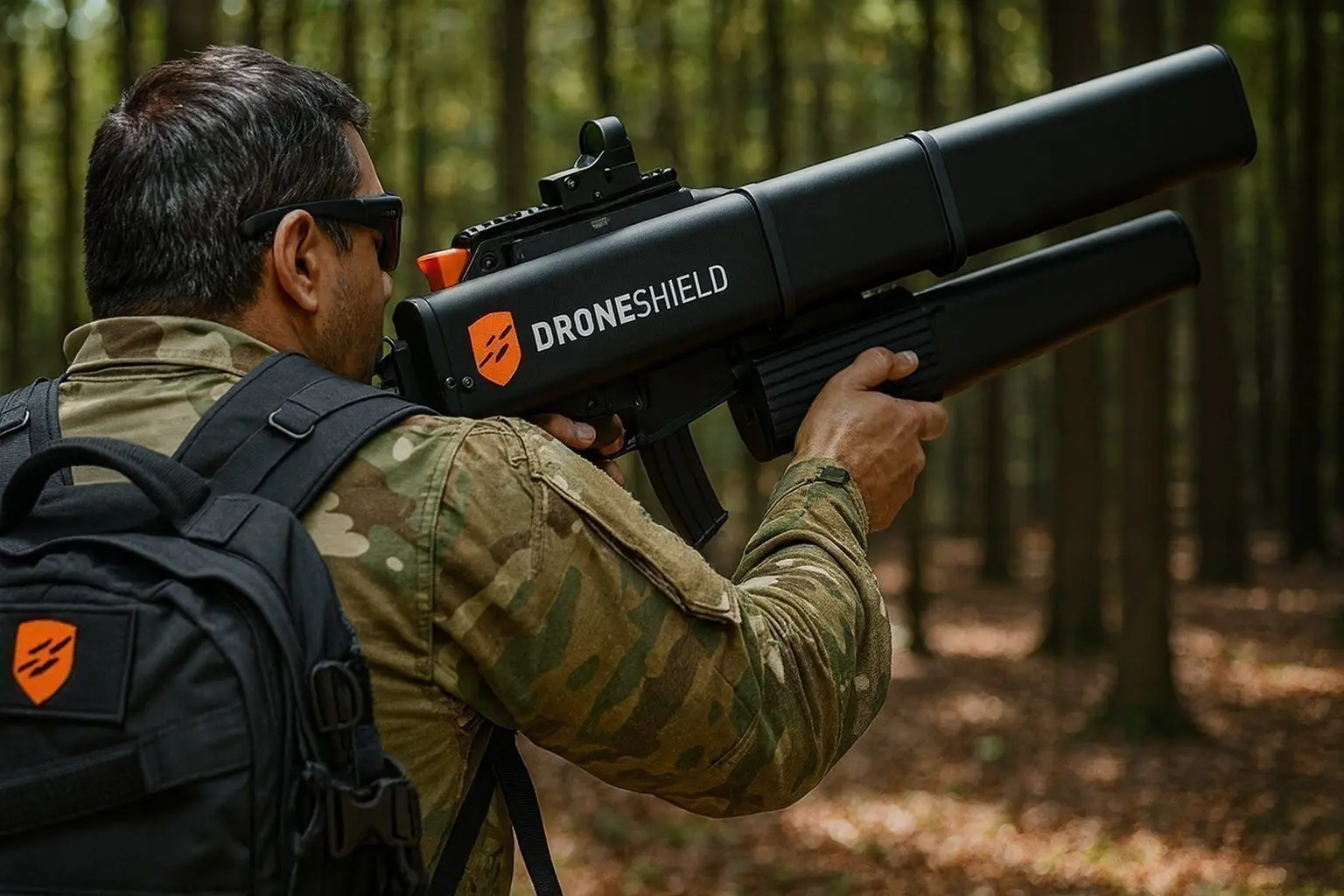
- Builds AI‑powered hardware and software to detect, track and defeat drones and other unmanned systems,
- Sells to military, intelligence, law‑enforcement, critical infrastructure and airports across allied markets, Market Index+1
- Markets itself as the only pure‑play listed counter‑UAS company globally. DroneShield
Explosive revenue growth in 2025
Recent results have been undeniably strong:
- For 1H FY25, DroneShield reported record revenue of A$72.3 million, up 210% year‑on‑year, and profit after tax of A$2.1 million versus a loss a year earlier. iTWire
- iTWire notes that year‑to‑date revenue by mid‑August was already A$114.4 million, with similarly strong growth in cash receipts. iTWire
- Another company update earlier in the year said secured FY25 revenue had reached A$176.3 million by late July. iTWire
On the contract side:
- In Latin America, DroneShield signed a record A$25 million deal for counter‑drone and electronic warfare equipment with a long‑standing government customer, according to The Bull. The Bull
- In Europe, a more recent roughly $5.2 million military contract has been flagged as helping stabilise sentiment after November’s crash. Ad Hoc News
- DroneShield has also reported US government orders totalling about A$7.6 million to be delivered in Q4 2025–Q1 2026, though those particular contracts were at the centre of the mis‑communication that later had to be corrected. ASX Announcements+1
To meet demand, DroneShield is investing heavily in manufacturing:
- The Bull highlights a new 3,000 m² production facility in Sydney, with around A$13 million of capex, intended to lift annual capacity to around A$900 million of product by mid‑2026 and A$2.4 billion by the end of 2026. The Bull
European coverage on 9 December also notes a stated sales pipeline of around A$1.1 billion, with investors now focused on how much of that pipeline can be converted into firm orders before next February’s results. Ad Hoc News
How the market is valuing DroneShield now
Price action and volatility
Simply Wall St’s data gives a quick snapshot of how extreme the last year has been:
- Current share price: A$2.11
- 52‑week low: A$0.58
- 52‑week high: A$6.71
- 1‑year change: about +235%
- 1‑month change:‑36%. Simply Wall St
StockInvest, which specialises in technical analysis and short‑term trading signals, characterises DroneShield as “high risk” and “highly volatile”:
- Daily volatility over the past week is above 8% on average.
- Yesterday’s trading alone saw a 15.1% intraday swing between low and high.
- The stock sits in the middle of a “very wide and falling” short‑term trend channel. StockInvest
Valuation vs peers
On fundamentals, valuation signals are mixed:
- Simply Wall St’s valuation model actually suggests DroneShield is trading roughly 75–80% below its estimate of fair value, based on long‑term earnings forecasts of around 64% annual growth. iTWire
- At the same time, their price‑to‑sales (P/S) ratio table shows DroneShield trading on about 18x trailing sales, versus a global aerospace & defence industry average near 4.2x, and even above the service’s own “fair” PS ratio of ~16.8x. Simply Wall St
In other words, relative to its sector the stock screens expensive, but relative to its own growth assumptions some models still flag deep value – a classic recipe for disagreement between bulls and bears.
What analysts and forecasting services are saying
Short‑term technical forecast: caution
StockInvest’s latest report (updated after today’s close) makes several key points: StockInvest
- Rating: downgraded from Hold to “Sell candidate”.
- Three‑month outlook: model projects around 41% downside within the existing down‑trend, with a 90% probability of trading somewhere between A$0.61 and A$2.60 in three months.
- Support & resistance:
- Near‑term support is clustered just below the market around A$2.00–2.00‑ish, then again around A$1.97 and A$1.89.
- Short‑term resistance they highlight sits near A$2.17–2.33.
- For tomorrow’s session (Friday 12 December), they expect an opening around A$2.17 and a trading range of roughly A$1.98–2.24, implying another potential ±13% intraday swing.
Those forecasts are purely technical and assume recent volatility persists; they don’t incorporate any new fundamental announcements.
Broker and quant analyst targets
On the fundamental side, there’s a wide spectrum of views:
- Traditional brokers:
- The Bull notes that in September 2025, Bell Potter and Shaw & Partners both had Buy ratings on DroneShield with price targets of A$3.70 and A$3.60 respectively, and an average 12‑month target around A$5.25 after a 41% upward revision earlier in the year. The Bull
- Simply Wall St aggregates two current broker targets into an average 12‑month fair value around A$5.15 (range A$5.00–5.30), implying well over 100% upside from A$2.11 if those estimates were still valid. Simply Wall St
- TipRanks:
- A more conservative note today shows the most recent analyst rating as “Hold” with a A$2.00 price target, just below the current price. It also tags the stock’s technical sentiment as “Hold” and lists a market cap of about A$1.73 billion and average trading volume around 23.7 million shares. TipRanks
Narrative split: growth vs governance
A widely shared analysis of today’s ASX action summarises the three competing narratives surrounding DroneShield: TechStock²+2Ad Hoc News+2
- Structural bull case
- Global demand for counter‑drone and electronic warfare systems is rising rapidly.
- DroneShield’s order book, pipeline and revenue growth support the idea that it could grow into its premium valuation over time.
- Governance and execution risk
- The director share sales, erroneous contract announcement, ASX queries and cancelled investor calls have damaged trust. Reuters+2Capital Brief+2
- Some institutional investors have stepped back, while short interest and media scrutiny have surged. Ad Hoc News+1
- Speculative rebound thesis
- After a 70%+ drop from the peak, some traders see potential for sharp bounces if sentiment improves or if governance reforms and new contracts restore confidence.
- But those potential rebounds come with extreme volatility and downside risk if further negative headlines emerge. TechStock²+1
Key risks and catalysts to watch
For anyone tracking DroneShield (whether or not they invest), today’s move sits within a broader set of risks and catalysts.
1. Governance reforms and regulatory stance
- The board’s independent review of incentives and disclosure policies, including the decision to stop issuing performance options to non‑executive directors, will be closely watched as a sign of cultural change. Company Announcements+1
- ASX and media scrutiny of past director trading and announcement timing is likely to continue; any further findings could move the stock sharply. Reuters+1
2. Execution on pipeline and contracts
- Investors will look for on‑time delivery and cash collection on the Latin American and European deals, plus the clarified US contracts. The Bull+2Ad Hoc News+2
- The February 2026 earnings release is emerging as a key milestone: European coverage framed it as the moment when DroneShield must prove it can convert its A$1.1 billion pipeline into revenue despite leadership churn. Ad Hoc News+1
3. Balance sheet and capital raises
- With a strong cash position and no history of dividends, the company currently has flexibility, but today’s small share issue raises questions about how often investors might be tapped for capital as the business scales. Primary Ignition+2TipRanks+2
4. Valuation vs volatility
- A P/S multiple around 4–5x the sector average means expectations remain high, even after the crash. Simply Wall St
- Technical services are signalling elevated downside risk in the short term, with very wide trading ranges. StockInvest+1
What today’s move means in plain language
Putting it all together:
- Today’s drop is mostly about sentiment, not solvency. A tiny new share issue landed in a market that is highly sensitised to anything that looks like dilution or poor communication. Primary Ignition+1
- The core business is still growing quickly, with record revenue, profits and a deep order pipeline in a structurally growing niche (counter‑drone defence). iTWire+2iTWire+2
- But governance and trust now dominate the share price. Director selling, mis‑steps in disclosure and ASX scrutiny have turned DroneShield from a momentum favourite into a “show me” story where investors want proof of cultural change. Reuters+2Company Announcements+2
- Forecasts range from short‑term technical “sell” calls to fundamental 12‑month targets more than double the current price, underlining just how divided the market is. The Bull+3StockInvest+3Simply Wall St+3
For readers, the key takeaway is that DroneShield has become a quintessential high‑risk, high‑volatility defence stock. Any decision to buy, hold or sell should factor in:
- Your risk tolerance,
- Time horizon, and
- Comfort level with governance risk and big daily price swings.
This article is for information only and is not financial advice. Anyone considering an investment in DroneShield or any other security should do their own research and, where appropriate, consult a licensed financial adviser.